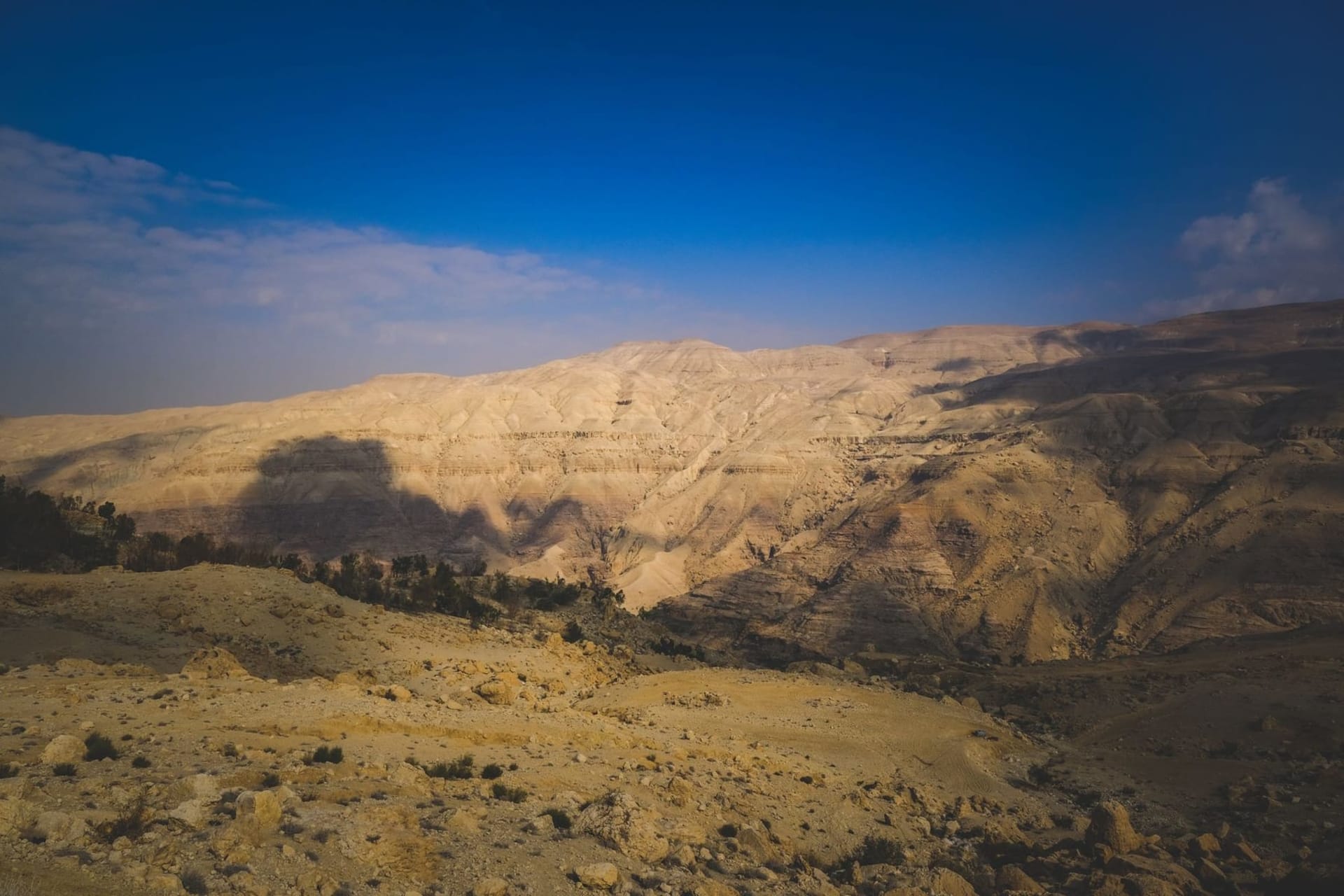
A spectacular river gorge carved into the Dead Sea escarpment — Jordan's answer to the Grand Canyon.
The ranger at the Mujib Biosphere Reserve trailhead handed me a waterproof bag with the particular look of someone who has watched overconfident tourists ruin their phones. He said nothing else. The sign behind him listed the Siq Trail as “moderate to strenuous.” I filed that information away and stepped into the water.
Into the Gorge
The canyon opens without ceremony. One moment there is dry scrubland, ochre dust, the hiss of wind off the Dead Sea lowlands four hundred meters below sea level — and then the rock walls close around you and the world becomes narrow, cold, and loud. The Wadi Mujib river runs year-round, fed by springs in the Moab highlands above, and in April its current is serious enough that you have to lean into it, hand over hand on fixed ropes, feet finding purchase on the slick sandstone floor.
The light inside the Siq gorge behaves strangely. It arrives late, leaves early, and in the middle hours it catches the water at an angle that turns the whole canyon a luminous copper-green. I kept stopping to look up at the walls — layers of Nubian sandstone reading like geological pages, each stratum a different shade of rust and cream — and each time I stopped I was pushed sideways by the current and had to grab the rope again.
The Waterfall
Nobody warned me about the waterfall at the gorge’s inner chamber. Lia and I rounded a tight bend in the rock and found ourselves at the base of a cascade maybe eight meters high, the water white and absolutely deafening after the relative quiet of the approach. The pool beneath it was the color of glacial melt — that impossible milky turquoise that looks artificial until you put your hand in it and feel the cold hit your wrist like a diagnosis.
We climbed up and through using iron rungs bolted into the cliff face. The spray was cold enough to make your teeth ache. Above the falls the canyon widened slightly, the walls pulling apart to reveal a strip of sky so blue against the sandstone that it looked painted on.
What Stays With You
The descent is faster than the ascent, the current now working with you. By the time we reached the reserve’s small canteen near the Dead Sea Highway, we were waterlogged, scraped at the knuckles, and in possession of the particular quiet that comes after a place has taken something out of you and left something else in return. We ate fried chicken from a plastic tray and didn’t talk much.
When to go: April through October is the official season for the Siq Trail, with April and May offering manageable water levels and bearable heat. Avoid the gorge in winter, when flash floods can close it without warning — the canyon has no margin for error when the water rises.