
Petra
"The Siq narrowed, the light changed, and then the Treasury appeared — and everything stopped."
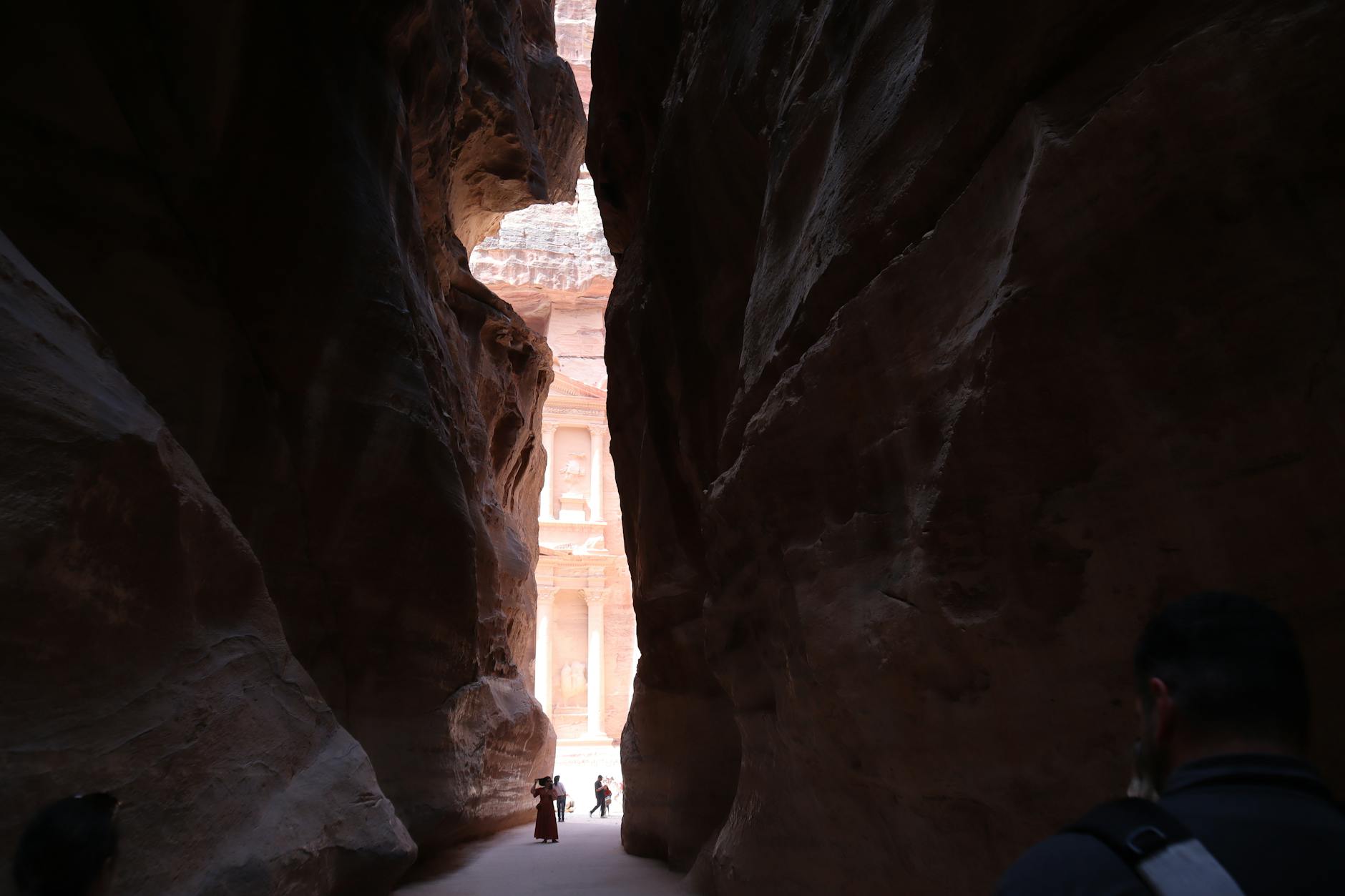
Petra is one of those places that exceeds the legend. I had seen it in photographs so many times — the narrow canyon, the rose-gold facade — that I assumed familiarity would soften the impact. It did not. The walk through the Siq begins gently, a wide gravel path that narrows imperceptibly until the walls are close enough to touch on both sides, the sandstone rising eighty metres overhead in bands of red, pink, orange, and cream that look painted rather than geological. Ancient water channels are still carved into the rock at ankle height, a two-thousand-year-old engineering solution that kept a desert city alive. The light changes with every turn — shifting from warm amber to cool shadow and back — and then, at the final bend, the canyon opens by perhaps a metre and the Treasury appears.
The Treasury and Beyond
Nothing prepares you for the scale. The facade is carved directly into the cliff, twelve columns and an elaborate Hellenistic pediment rising forty metres from the canyon floor, its surface smoothed by two millennia of wind into something that looks less like stone and more like rose-coloured silk. The Nabataeans carved this in the first century BC — a people who controlled the incense trade routes and built a city so hidden that it was lost to the Western world for six hundred years. I stood in the Siq opening with my back against the cool stone and stared, and for a long moment the only sound was wind.
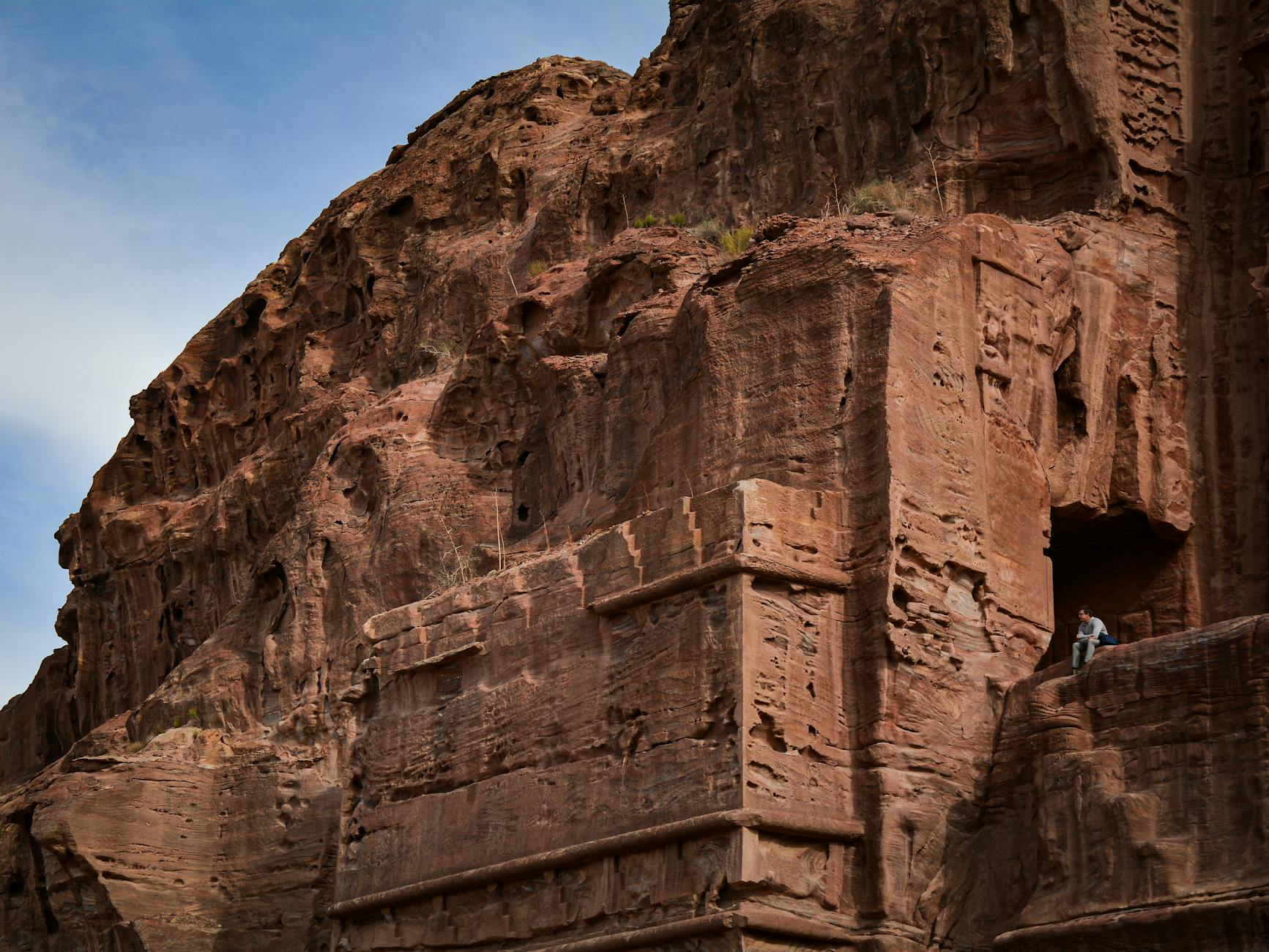
But the Treasury is only the beginning. Beyond it, Petra unfolds across a vast valley that most visitors never fully explore. The Street of Facades lines the path with dozens of tomb fronts carved into the cliff, each one different, each one eroding at its own pace. The Royal Tombs — the Urn Tomb, the Silk Tomb, the Corinthian Tomb — sit high on the eastern cliff face, reached by stone staircases worn smooth by twenty centuries of feet. The Urn Tomb’s interior was later converted into a Byzantine church, and you can still see the arched windows and the faded remnants of painted plaster layered over Nabataean stone. The Colonnaded Street runs through the center of what was once the civic heart of the city, lined with the remains of markets, a temple to the Nabataean god Dushara, and a Byzantine church whose floor mosaics were discovered intact under centuries of sand.
The Monastery
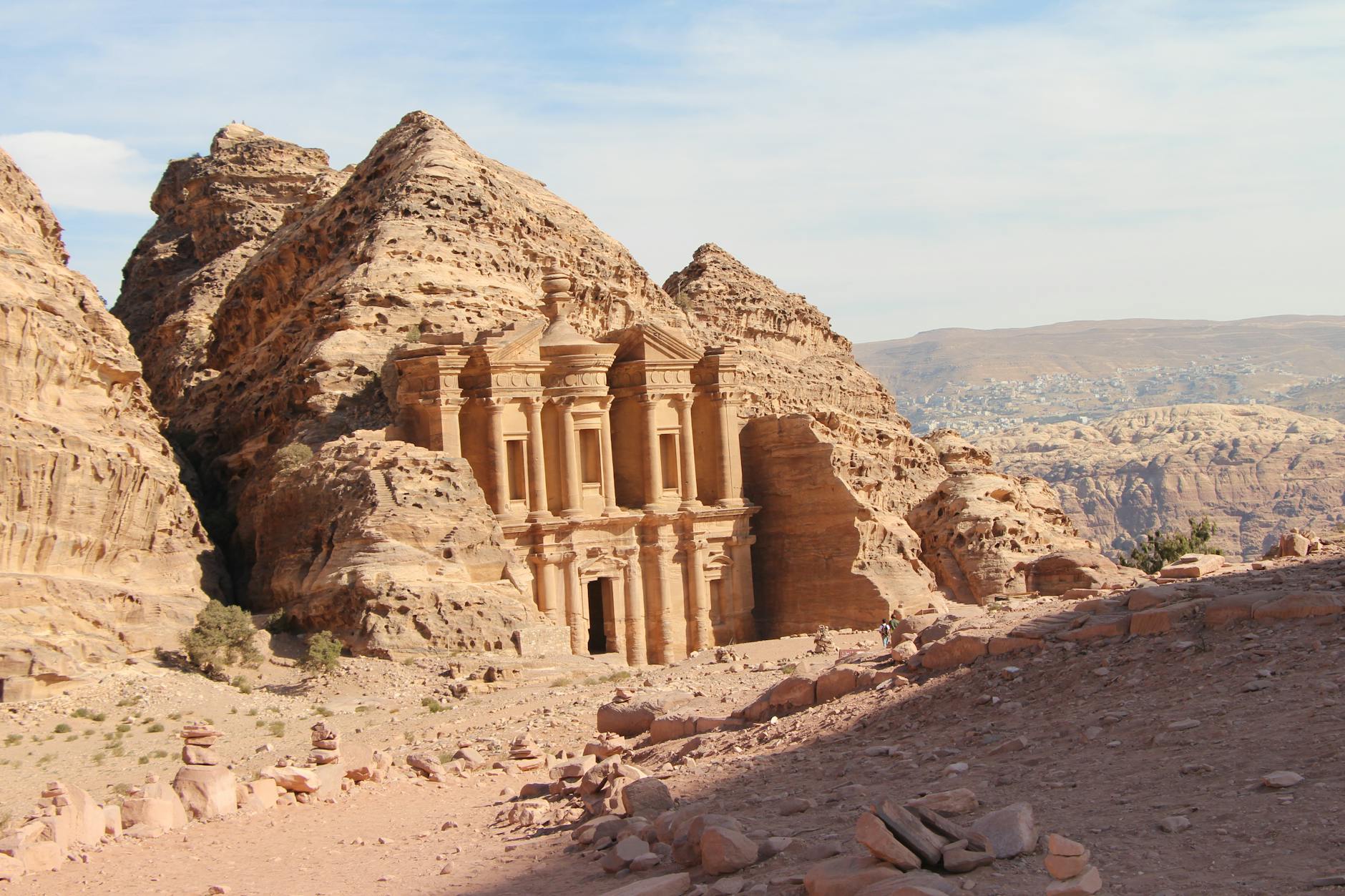
The climb to the Monastery is eight hundred steps up a mountain path that winds through narrow canyons and past Bedouin tea stalls strategically placed at every point where your resolve might falter. The path was carved by the Nabataeans themselves, and the steps — worn, uneven, occasionally terrifying — are the original stonework. I counted them. I lost count around four hundred and decided that the Bedouin tea sellers had the right idea. At the top, the Monastery appears — Ad Deir — a structure even larger than the Treasury, its facade forty-seven metres wide and forty-eight metres tall, with a simplicity of design that feels almost modern. The urn at the very top is nine metres tall. From the terrace in front of it, the view stretches across the Wadi Araba to the mountains of Israel and Palestine, and the silence is total.
Petra by Night
Petra by Night runs on Monday, Wednesday, and Saturday evenings, and it is worth rearranging your schedule to attend. You walk through the Siq in near-darkness — the path lit only by paper-bag lanterns placed along the ground — and the canyon, which is dramatic enough in daylight, becomes something else entirely. The walls tower above you as darker shapes against a sky you can barely see, and the sound of your footsteps on the gravel is the only noise. At the Treasury, fifteen hundred candles are laid out in the courtyard, and a Bedouin musician plays the rababa — a single-stringed instrument whose sound is somewhere between a violin and a human voice. Tea is served. The Treasury glows amber in the candlelight. It is theatrical and genuinely moving, and I am not someone who uses that word lightly.
We spent two full days and barely scratched the surface. The High Place of Sacrifice, reached by a steep climb from the city center, offers a panoramic view and a sacrificial altar with drainage channels that leave nothing to the imagination. The less-visited back trails lead to tombs and temples that see perhaps a dozen visitors a day. Petra is not a site. It is a city — a vast, layered, endlessly surprising city — and treating it as a day trip is the surest way to miss what makes it extraordinary.
When to go: March to May and September to November offer mild temperatures. Summer exceeds 40 degrees. Petra by Night runs Monday, Wednesday, and Saturday. Buy the two-day or three-day pass — one day is not enough.