
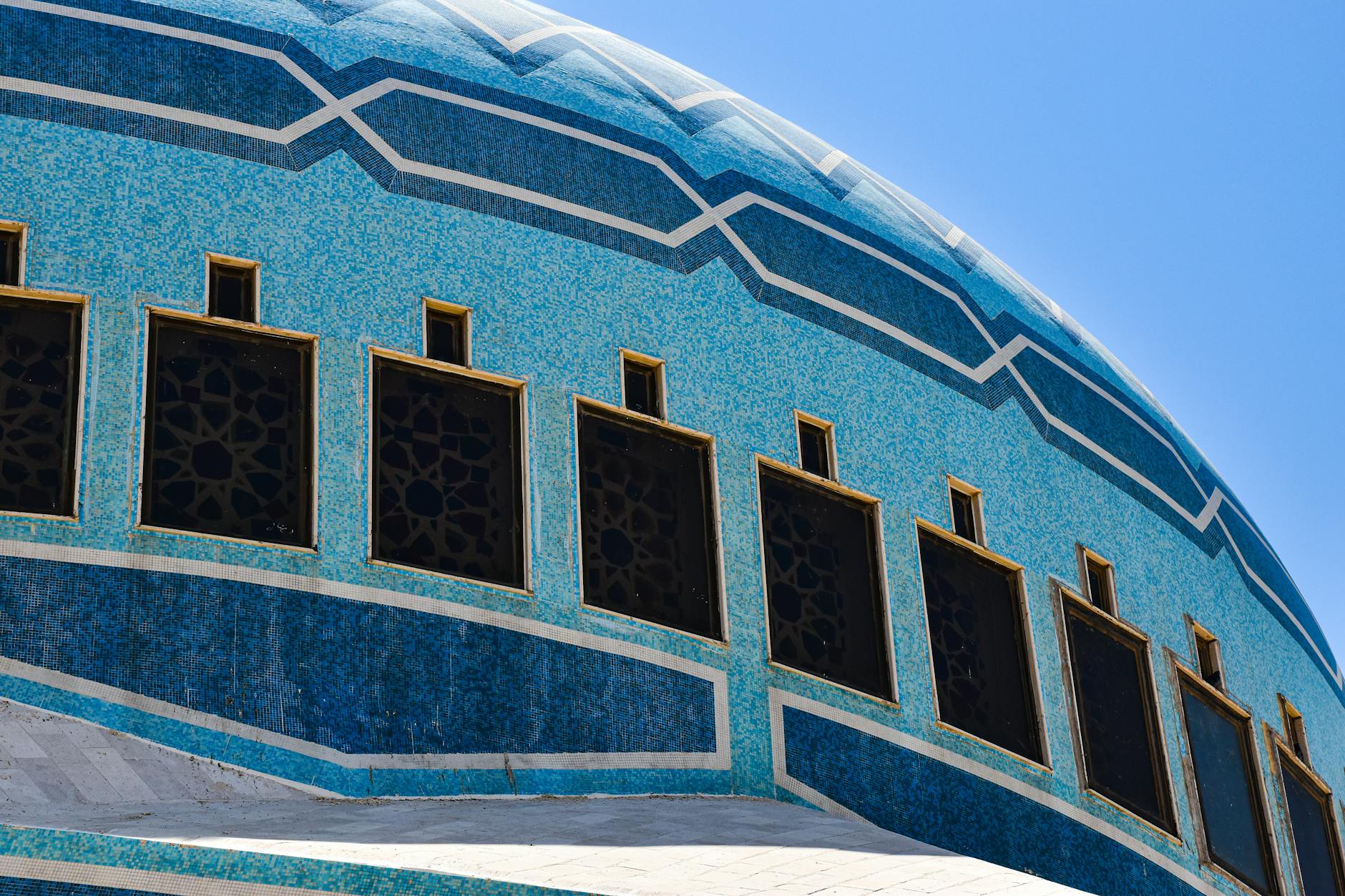
Madaba is a small town with an outsized treasure, and the experience of standing above the Madaba Map — looking down at a sixth-century cartographic masterpiece embedded in the floor of a functioning church — is one of those moments where the past feels not distant but present, as though the artisan who placed the last tessera might walk back in to check his work.
The Map
The Madaba Map is the oldest surviving cartographic representation of the Holy Land, and its ambition is staggering. Two million tesserae — tiny coloured stones, each one placed by hand — depict Jerusalem, the Dead Sea, the Nile Delta, the Jordan River, and dozens of biblical sites with a geographical precision that still impresses modern cartographers. Jerusalem sits at the center, rendered in bird’s-eye view with the Cardo Maximus clearly visible running north-south through the city, the Damascus Gate recognizable, the Church of the Holy Sepulchre marked with a red roof. I stood above it in St. George’s Church — a Greek Orthodox church that is still active, still holding services, still treating this masterpiece as a floor rather than a museum exhibit — and traced the route from Jerusalem to Jericho, from the Jordan River to the Dead Sea, across a landscape I had been travelling through all week. The map was made around 560 AD. It was buried under subsequent floors, forgotten, and rediscovered in 1884 when the church was being rebuilt. Only about a third of the original survives, but what remains is extraordinary.
The Mosaic City
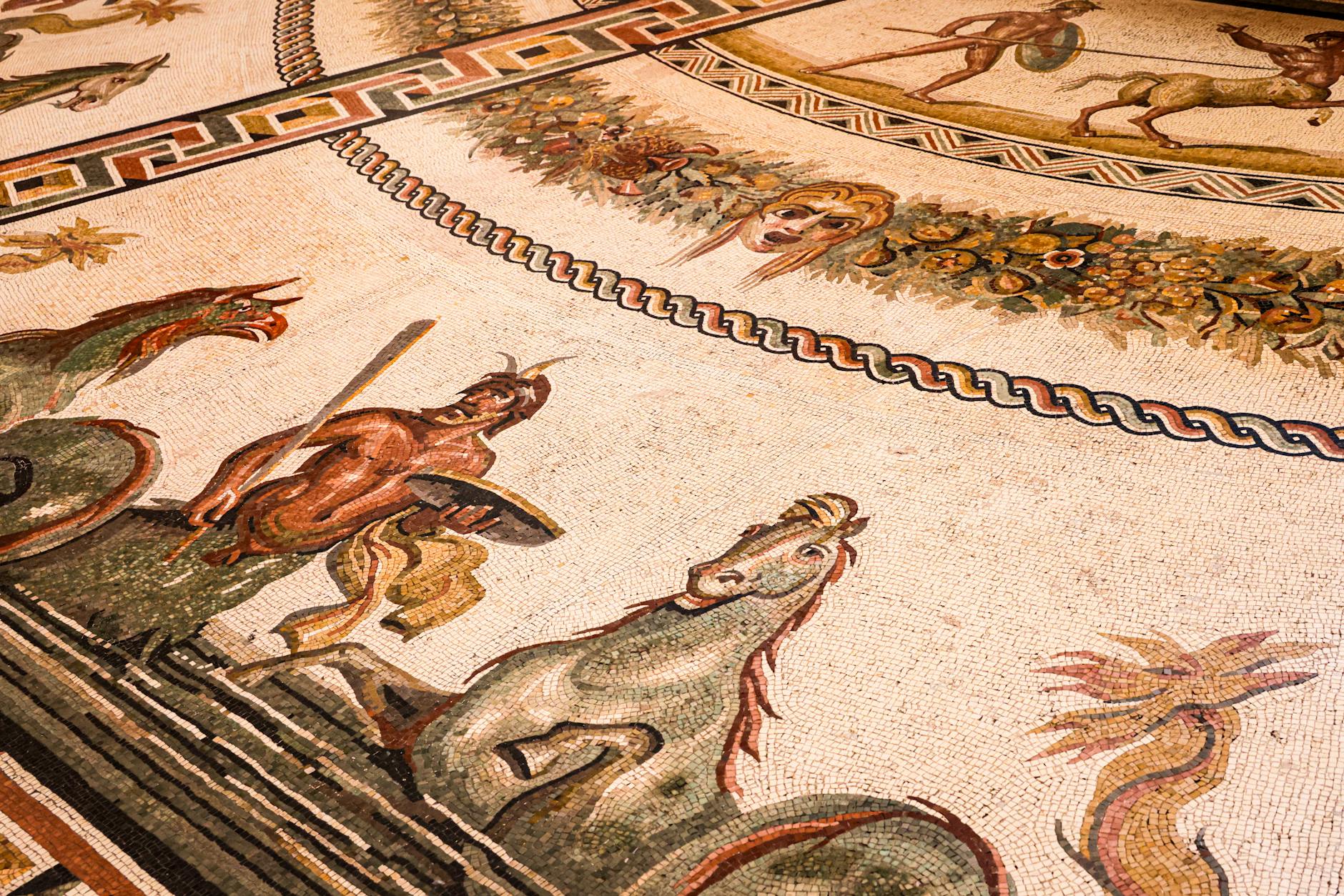
Beyond the map, Madaba is a centre of mosaic art that stretches back to Roman and Byzantine times. The Archaeological Park houses additional mosaics of remarkable quality — scenes of hunting, fishing, mythology, and daily life rendered in stone with a precision and liveliness that makes you reconsider everything you thought about medieval art. The Church of the Apostles contains a mosaic of Thalassa — the personification of the sea — surrounded by fish, marine creatures, and a border of geometric patterns so complex they look like they were designed by algorithm. They were designed by an artist working on their knees with tweezers and a vision.
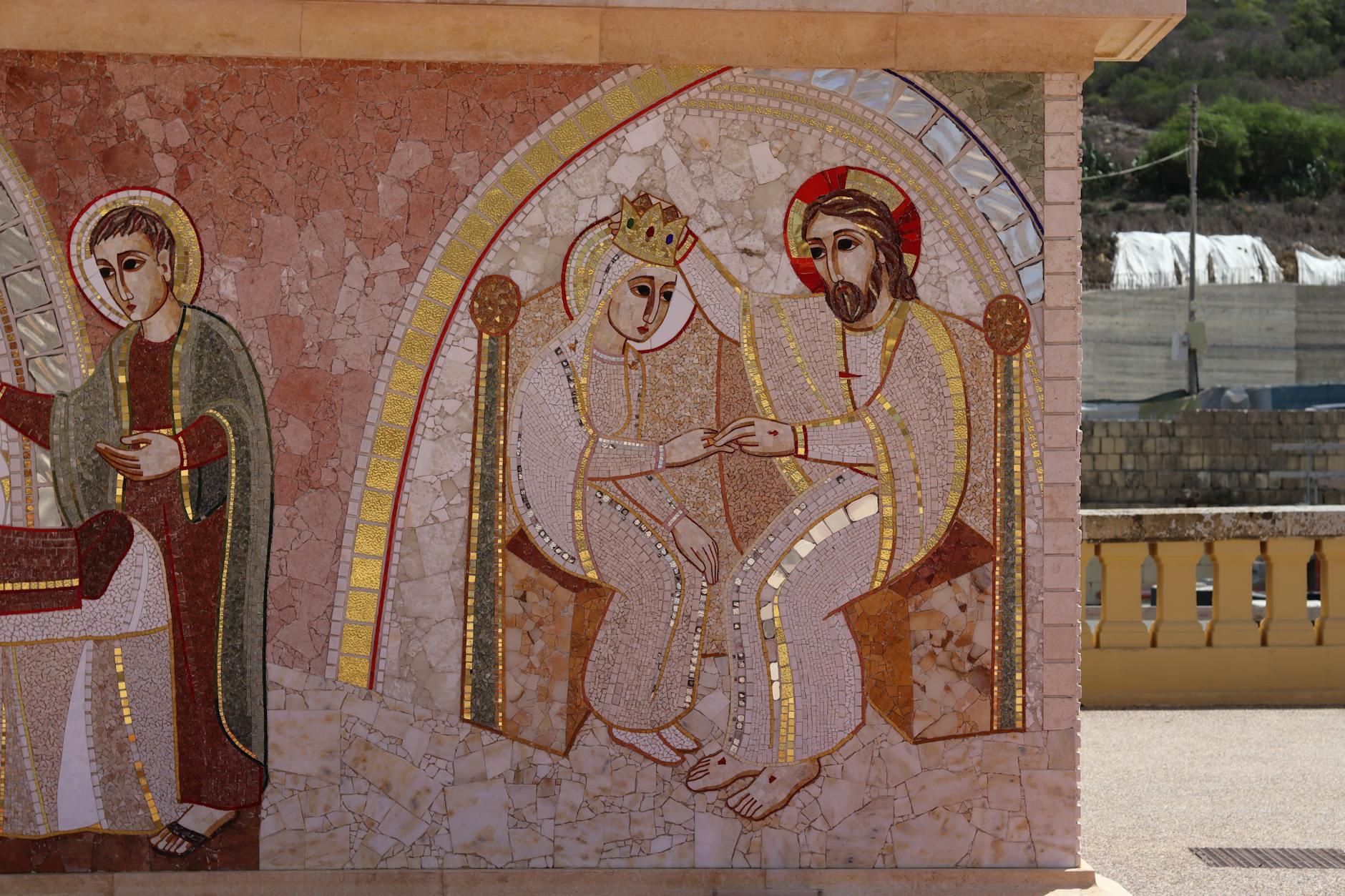
The mosaic workshops of modern Madaba continue this tradition. We visited one where artisans — many of them women — sat at wooden frames, placing tesserae one by one into cement, reproducing ancient designs and creating new ones with a patience that borders on the monastic. A single square metre of mosaic can take weeks. The finest work uses natural stone in thirty or forty colours, each one sourced from a different quarry, each one cut to the exact size needed to create the curve of a cheek, the scale of a fish, the ripple of water. I bought a small piece — a pomegranate tree, no larger than a book — and watched the artisan wrap it with the care of someone who knows that what she has made will outlast her.
Mount Nebo
Mount Nebo sits ten kilometres from Madaba, and its significance is difficult to overstate. This is where Moses, according to the Book of Deuteronomy, stood and looked out over the Promised Land — the land he would never enter. On a clear day, the view from the summit stretches across the Jordan Valley to Jerusalem, the Dead Sea, and the hills of the West Bank, and the scale of it — the flatness of the valley, the shimmer of the Dead Sea, the haze over the distant hills — makes the biblical narrative feel less like literature and more like geography. A modern sculpture of the Brazen Serpent marks the viewpoint, and the Franciscan church behind it houses floor mosaics from the sixth century that rival anything in Madaba. Whether you arrive as a believer, a historian, or simply a traveller with a weakness for panoramic views, Mount Nebo delivers.
When to go: March to May and September to November. Madaba is easily visited as a day trip from Amman or en route to the Dead Sea. Mount Nebo is best on clear mornings when the view extends to Jerusalem.