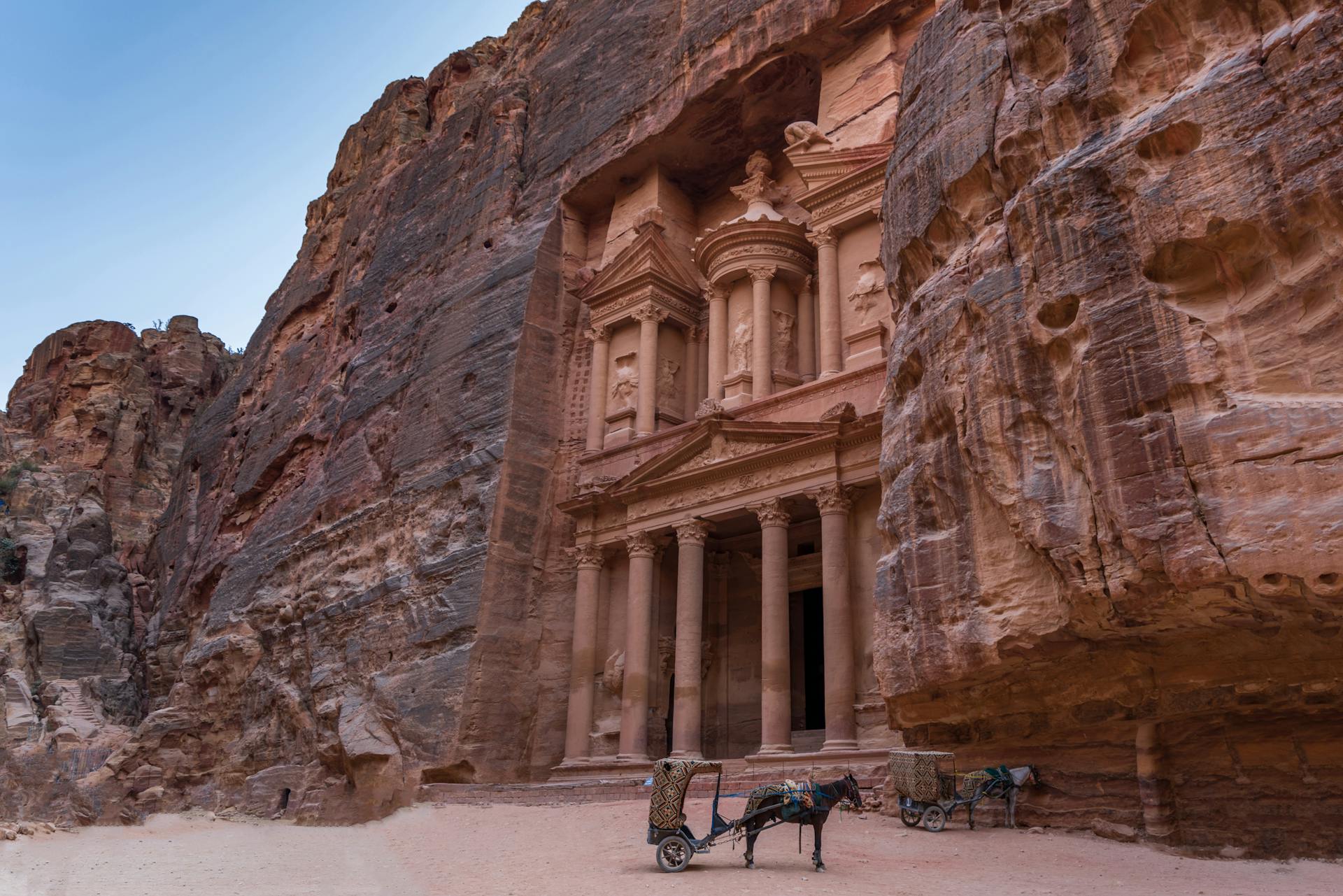
Jerash
"The columns still stand in rows so perfect they look like they are waiting for someone to return."
Jerash is the Roman city that time partially forgot. An hour north of Amman, it sits on a hillside surrounded by modern Jordanian life — apartment buildings, shops, school children in uniforms — and yet the moment you pass through Hadrian’s Arch and enter the ancient city, you are in Rome. Not the Rome of the Colosseum and the Forum, which are magnificent ruins. The Rome of a complete, walkable, comprehensible city whose streets and plazas and temples and theatres survived intact enough that you can understand not just what was built but how it was lived in.
The Oval Plaza
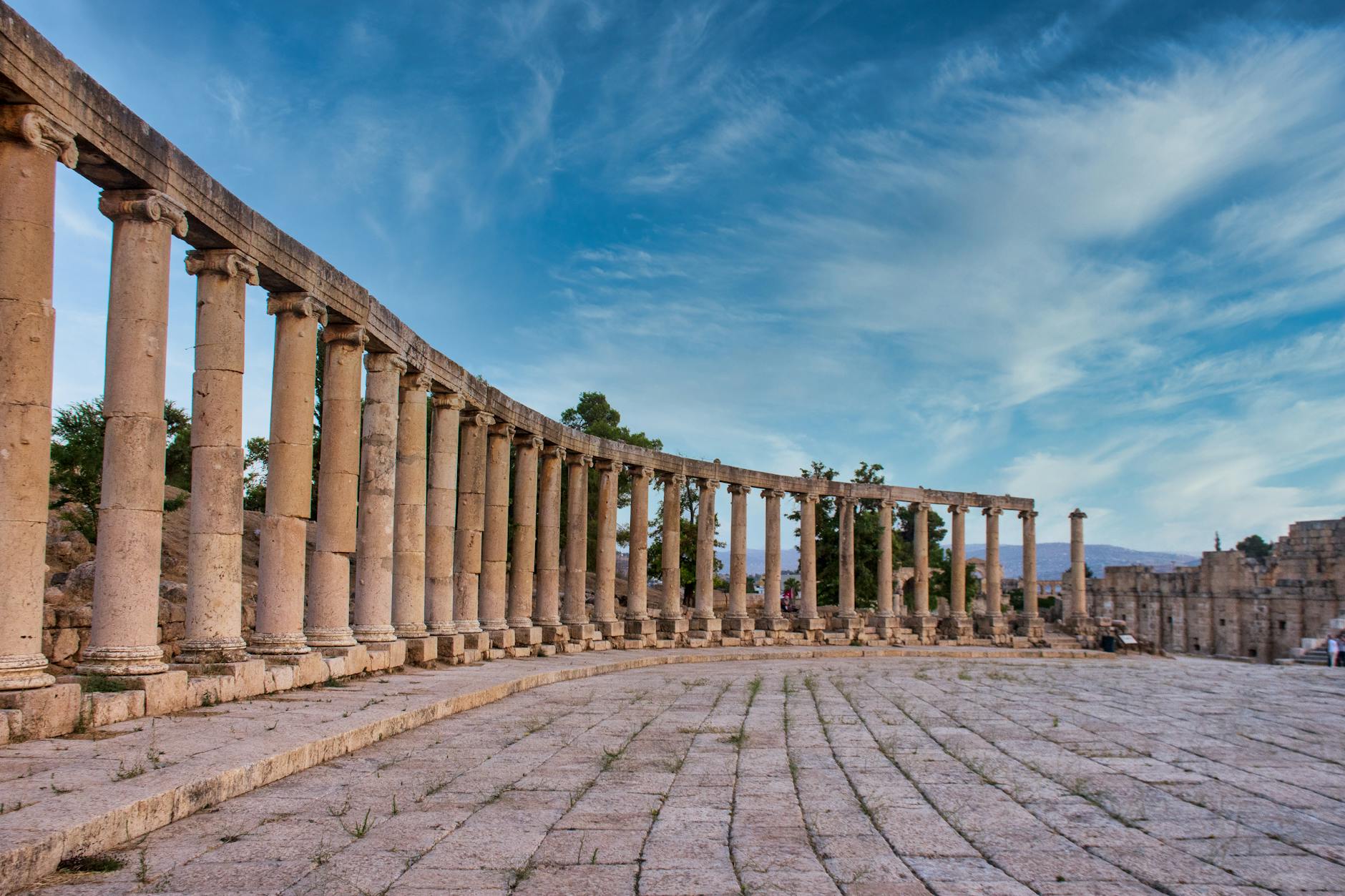
The Oval Plaza is the civic heart of Gerasa, and it is breathtaking. Fifty-six Ionic columns ring an elliptical space that was once paved in limestone and served as the city’s public square — a place of commerce, debate, and the daily negotiation of civic life. The ellipse is unusual for Roman architecture, which preferred right angles, and historians still argue about why the Jerash architects chose this form. Standing in the center and looking up at the columns — most still standing, most still crowned by their original capitals — I understood why. The curve creates an embrace. The columns do not wall you in; they hold you. It is a public space that manages to feel intimate, and the effect, two thousand years later, is undiminished.
The Cardo and the Temples
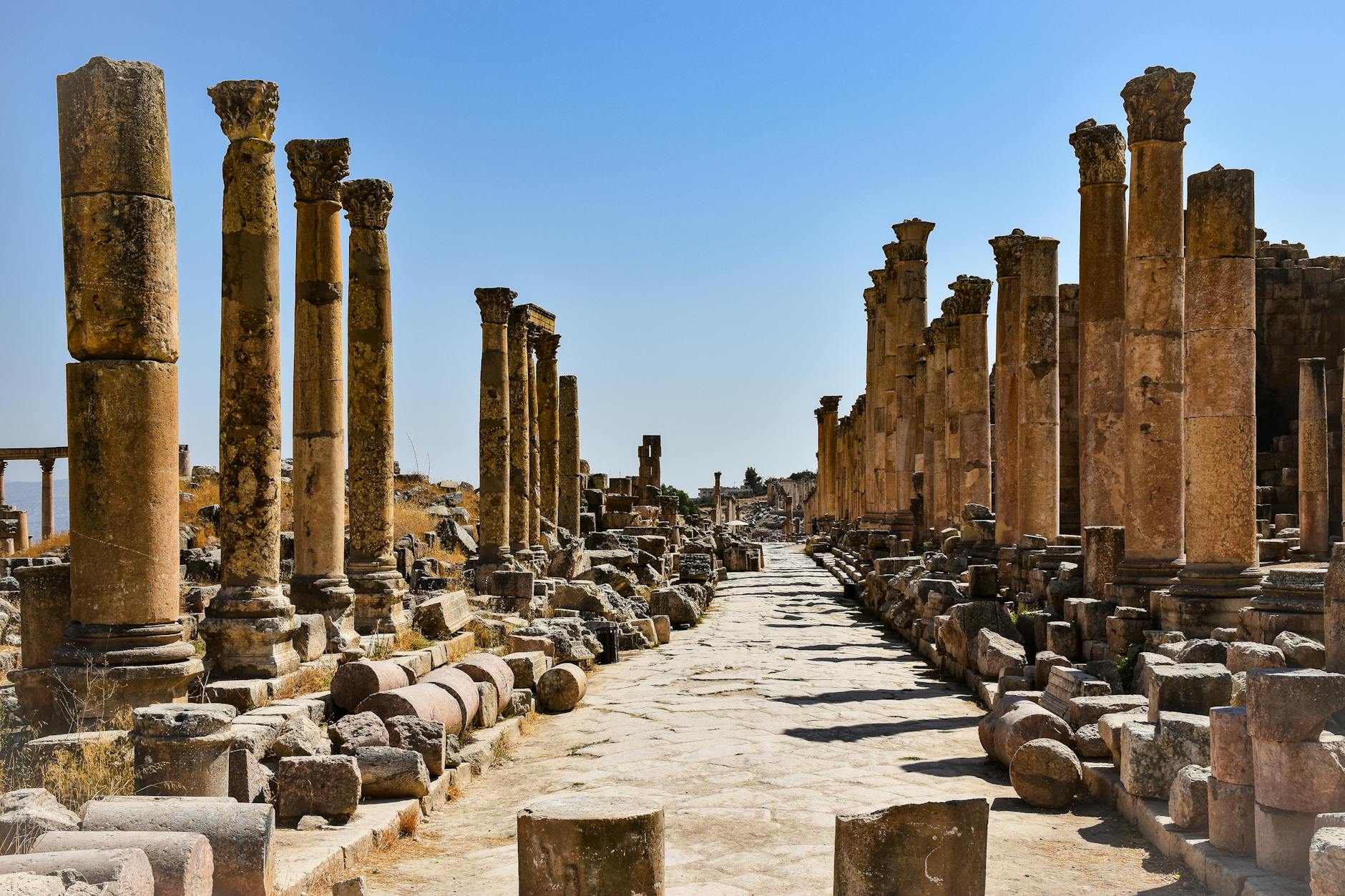
From the Oval Plaza, the Cardo Maximus stretches north — a colonnaded main street whose paving stones still show the ruts carved by chariot wheels. We walked its length in the late morning, the sun warm on the stone, the only sounds birdsong and wind through the columns. Every few metres a cross-street opened to the east or west, leading to baths, markets, churches — the infrastructure of a city that housed perhaps twenty thousand people at its peak and that felt, walking through it, not ruined but simply paused.
The Temple of Artemis crowns the highest point of the city — twelve Corinthian columns rising above the surrounding rooftops with a theatricality that would impress any modern architect. The temple was dedicated to the patron goddess of Gerasa, and the columns — each one eleven metres tall, carved from single blocks of limestone — still support fragments of their entablature. There is a famous trick here: insert a spoon or a key into the gap at the base of one particular column, and you can see it sway. The column moves in the wind — has been moving for two thousand years — and the fact that it still stands is a testament to Roman engineering so precise that even flexibility was calculated.
The Theatres
The South Theatre seats three thousand and its acoustics still work perfectly. We tested them — standing in the center of the orchestra circle, speaking at a normal volume, and hearing our words bounce back from the top row with startling clarity. The annual Jerash Festival of Culture and Arts fills these seats with music and dance every summer, bringing the ruins back to life in a way that feels less like a cultural event and more like a continuation. The North Theatre, smaller and more intimate, was used for political meetings rather than performances — a town council chamber whose architectural ambition suggests that the citizens of Gerasa took their civic duties as seriously as their entertainment.
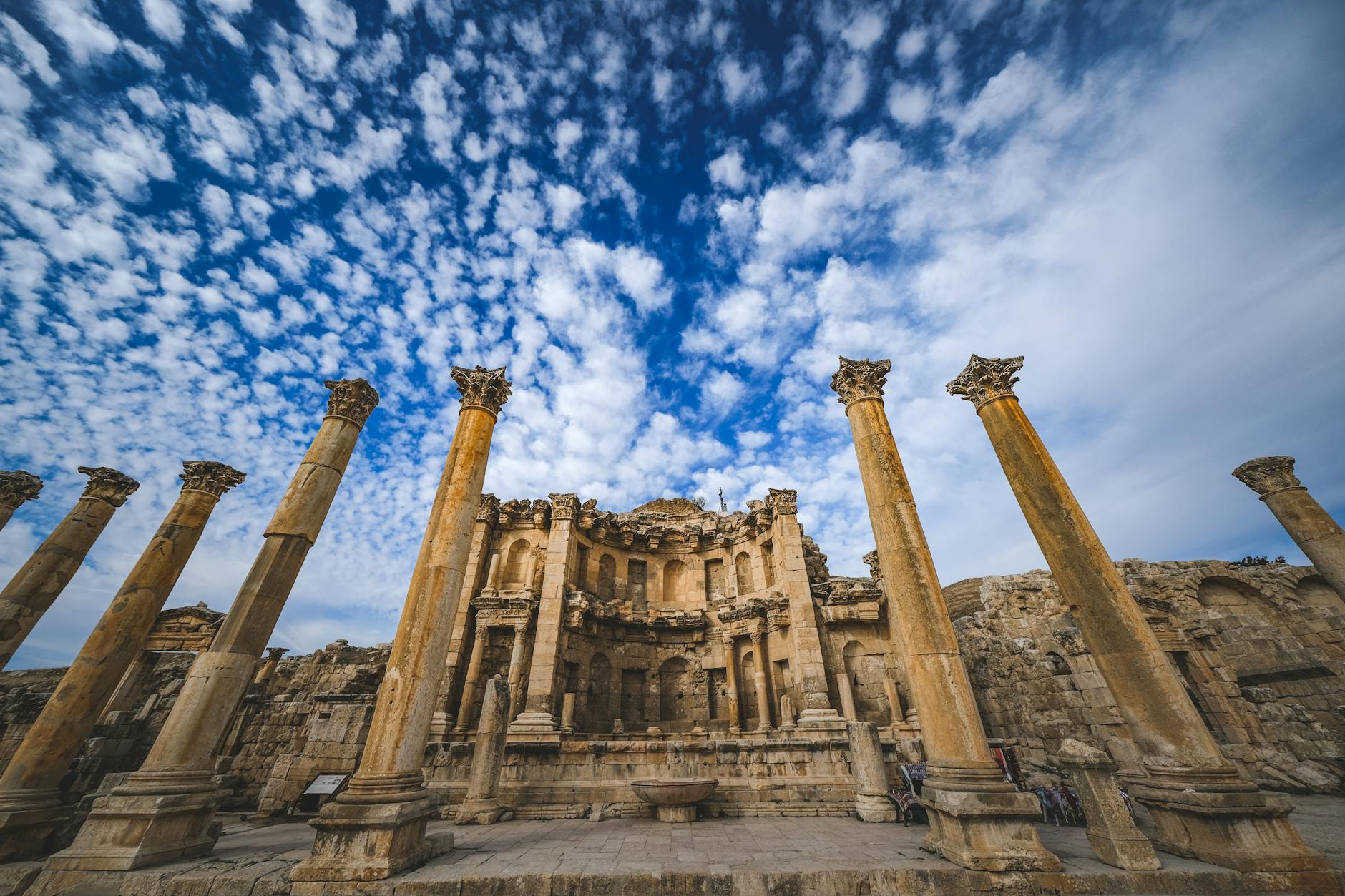
Jerash receives a fraction of Petra’s visitors, which means you can explore in relative solitude. We spent a full morning wandering between temples, churches, and colonnaded streets, and encountered perhaps thirty other people. The Nymphaeum — the ornamental fountain that once marked the intersection of the Cardo and the main cross-street — still stands, its niches and carved decoration proof that even municipal plumbing was treated as an art form. Jerash is not famous enough, and that is precisely what makes it so rewarding.
When to go: March to May and September to November for mild temperatures. The Jerash Festival runs in July — hot but atmospheric. Easily combined as a half-day trip from Amman. Arrive early for the best light and fewest visitors.