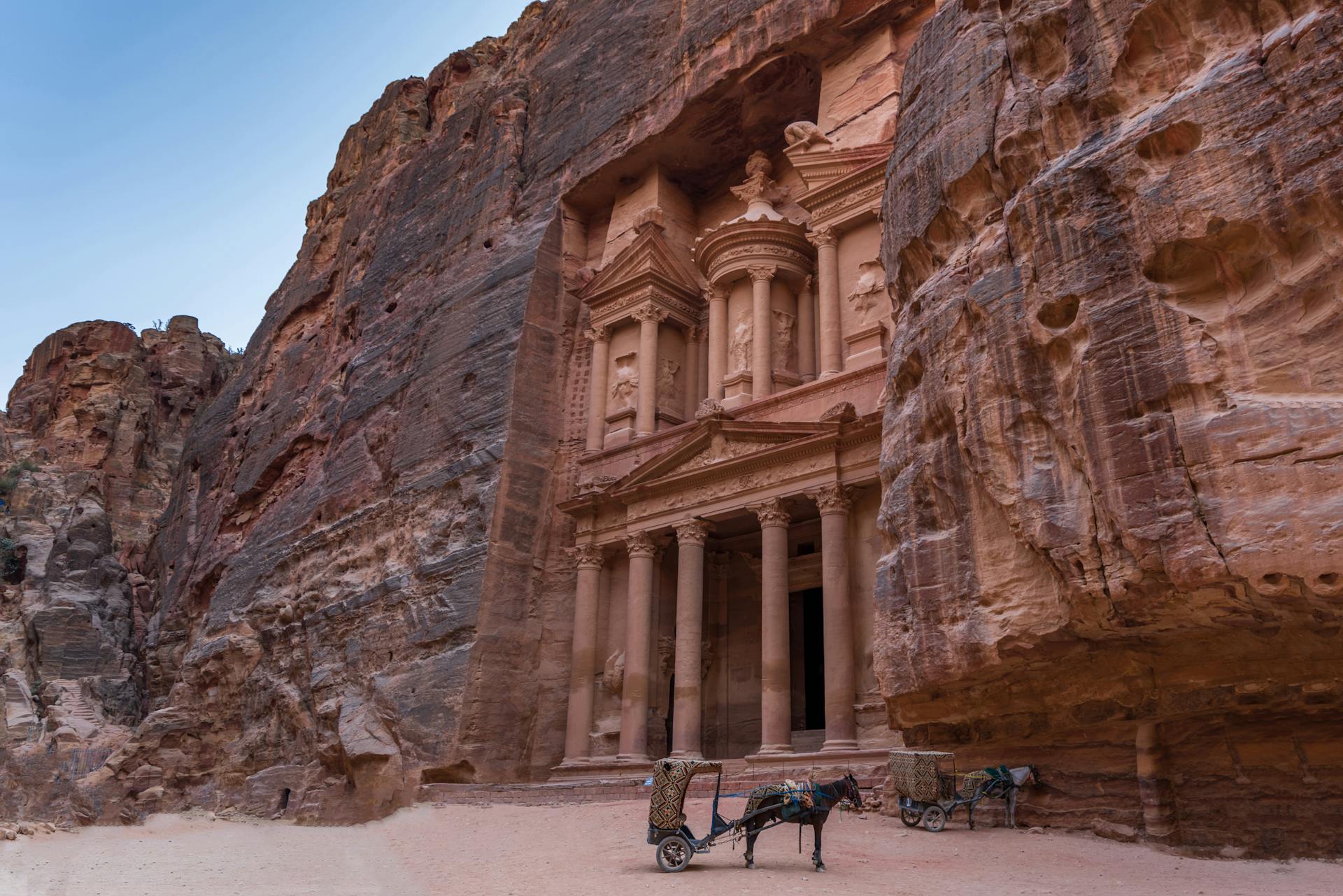
Amman
"The Citadel watches over a city that has been welcoming strangers for ten thousand years."
Amman surprises people who expected a transit stop. I arrived at midnight, took a taxi from Queen Alia Airport through empty highways, checked into a hotel in the Jabal Amman neighborhood, and woke the next morning to discover a city that cascades across seven hills in every shade of white and sand, the call to prayer rising from a hundred minarets at once in a harmony that was clearly unplanned but felt orchestrated. Most travellers give Amman a night on either end of their Jordan itinerary. I gave it three, and I could have used a fourth.
The Citadel
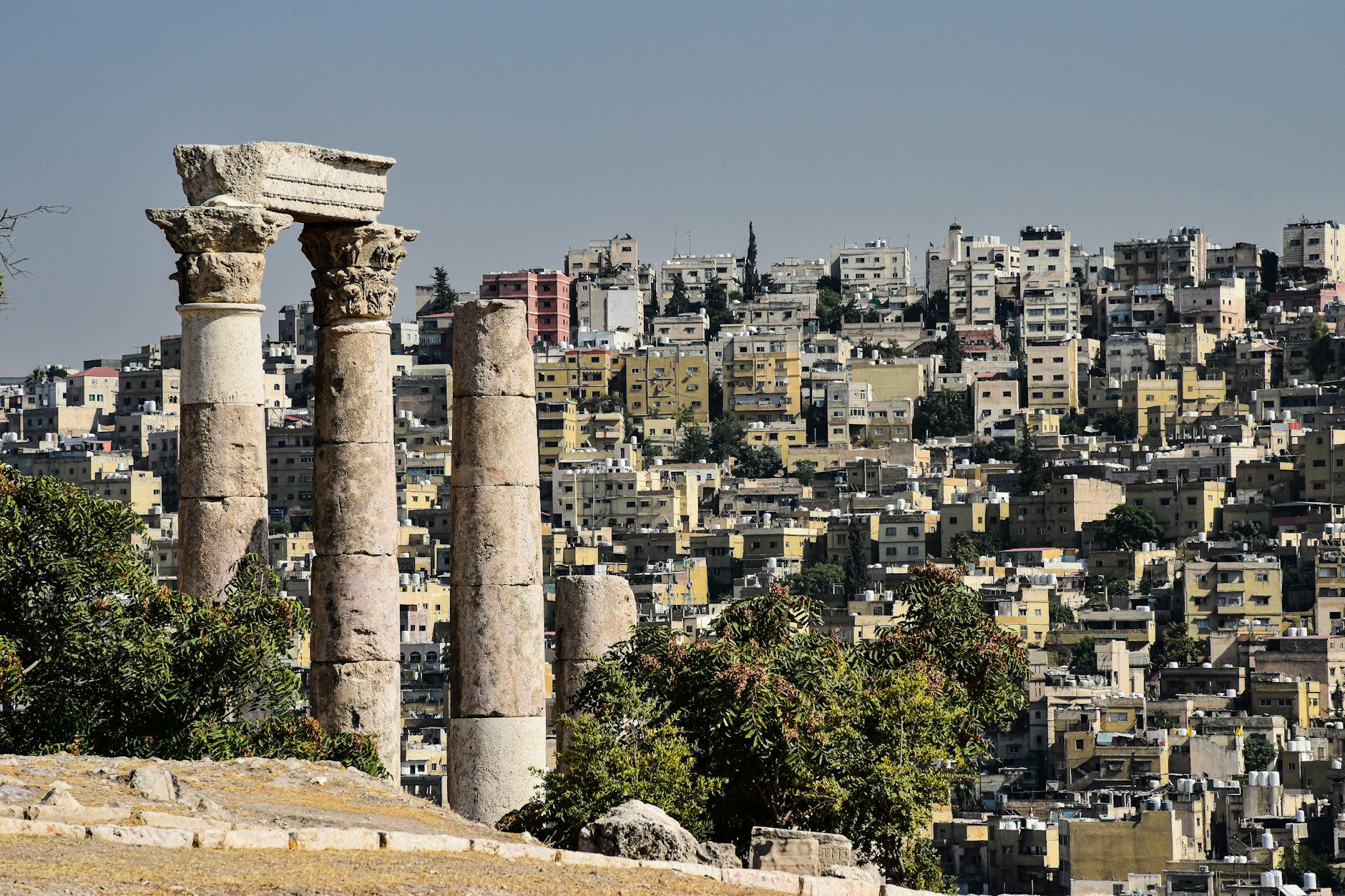
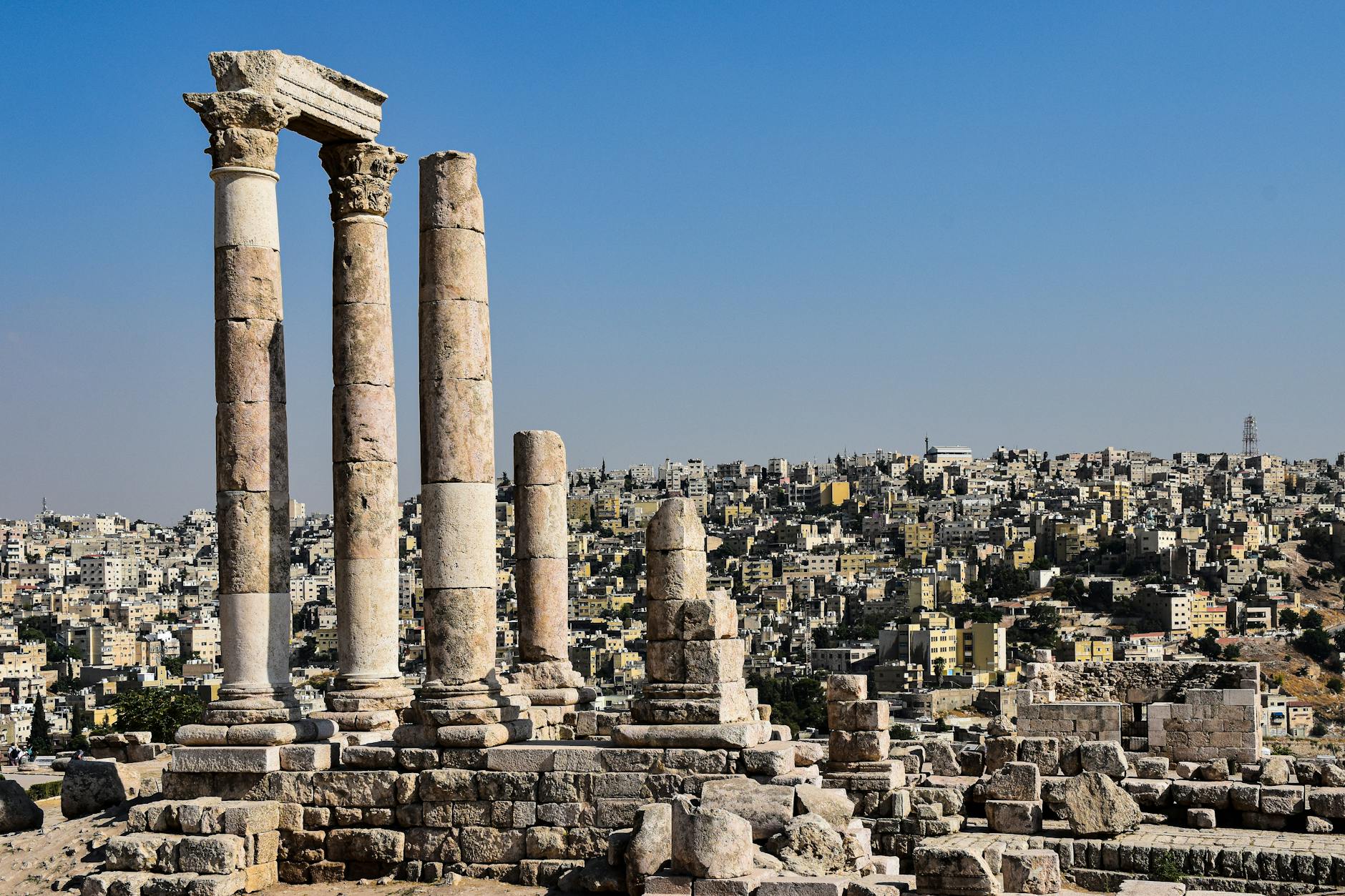
The Citadel — Jabal al-Qala’a — crowns the highest of the city’s hills with ruins layered atop each other like a geological record of civilisation. Roman columns stand beside Byzantine churches beside Umayyad palaces, each era building on the foundations of the last, each one confident it would be the final word. The Temple of Hercules survives as two enormous columns and a stone hand so large it makes you reconsider everything you assumed about the original statue. The view from here at sunset — white stone cascading in every direction, the Roman Theatre’s perfect semicircle below, the call to prayer rising from the valley — is one of the most stirring urban panoramas in the Middle East. I sat on a Roman wall and drank coffee from a paper cup and watched the city turn gold, and I thought: this place has been inhabited for ten thousand years, and it still feels alive.
Downtown
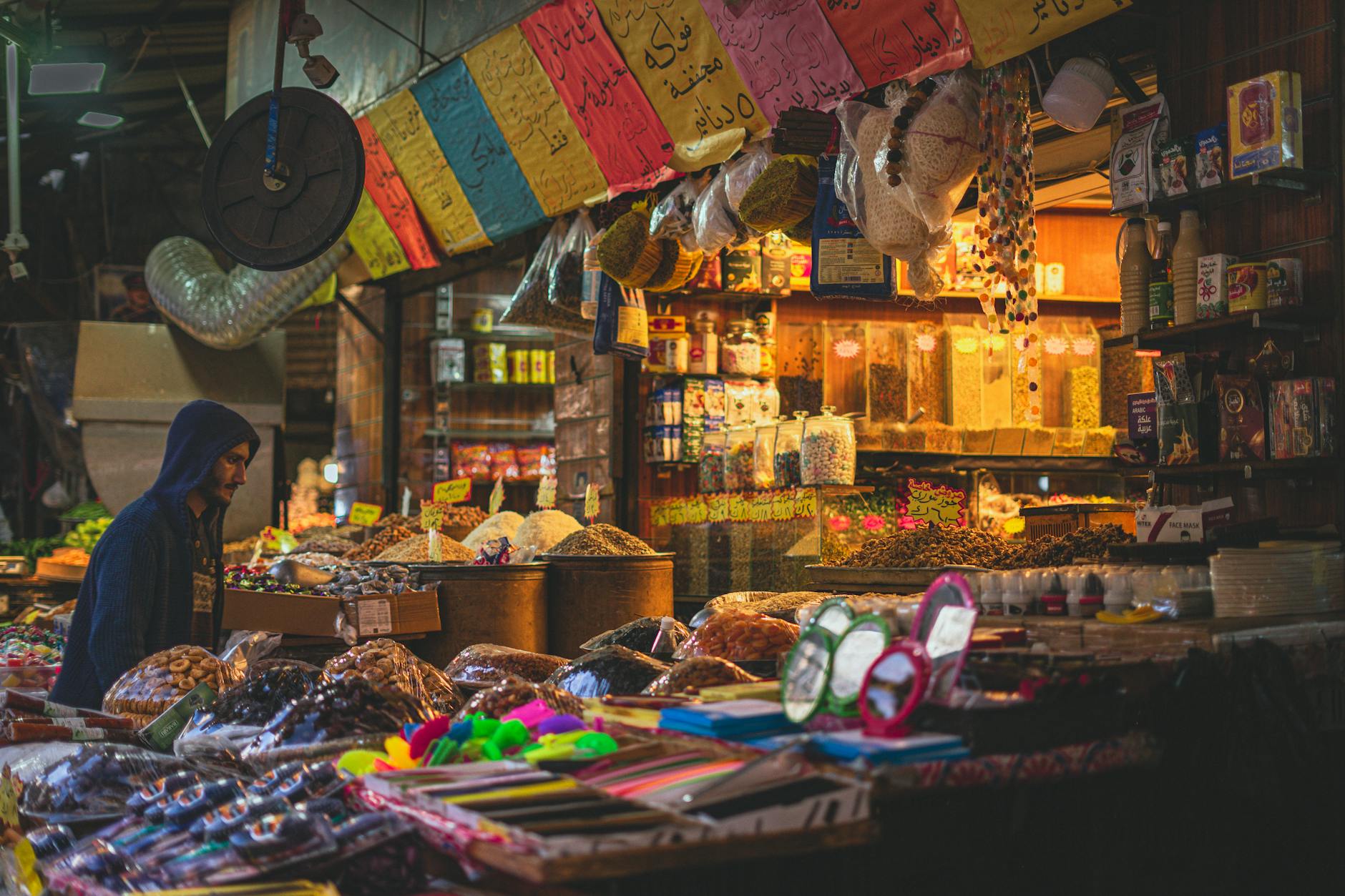
Downtown Amman is sensory overload in the best possible way. The Roman Theatre seats 6,000 and is still used for performances — I watched a group of local teenagers rehearsing a dance routine on a stage where gladiators once stood, and the acoustics were as perfect as they were two thousand years ago. The souks around Al-Balad hum with the commerce of spice merchants, gold sellers, and juice vendors pressing pomegranate and orange with the urgency of people who believe that freshness has an expiration measured in seconds. The fabric merchants will show you their entire stock whether you ask or not. The tea arrives before you sit down. The hospitality is not performed. It is constitutional.
The Food
We ate mansaf — lamb cooked in dried yoghurt, served on a vast platter of rice — at a restaurant in downtown where the recipe has not changed in decades and the owner greeted us as though we were returning family members. Mansaf is Jordan’s national dish and it is eaten with the right hand, which I managed with the grace of someone who has clearly eaten most of his meals with a fork. The hummus in Amman is different from the Lebanese hummus I grew up eating in France — heavier on the tahini, served warm, with pools of olive oil and whole chickpeas scattered on top. At Hashem, a legendary falafel restaurant that has operated from the same downtown alley since 1952, we ate ful, hummus, and falafel at plastic tables under fluorescent lights, surrounded by families, soldiers, and businessmen who all seemed to know each other. The bill was less than what a coffee costs in Paris.
Rainbow Street in Jabal Amman is where the city’s younger energy concentrates — cafes, galleries, bookshops, and restaurants that mix Jordanian tradition with global ambition. I drank arak at a rooftop bar and looked out over the city and thought about how Amman manages to be both ancient and contemporary without the tension that marks so many Middle Eastern capitals. It wears its history lightly. It lets you in easily. And it feeds you extraordinarily well.
When to go: March to May is ideal — mild days, wildflowers on the hills. September to November is equally pleasant. Summers are hot and dry. Ramadan changes the rhythm — restaurants open after sunset and the city comes alive at night.