
Ajloun surprises every visitor who has pictured Jordan as nothing but desert. The hills here are covered in pine and oak forests, terraced olive groves, and wildflowers that in spring carpet the slopes in colours that would not look out of place in Provence. I arrived from Jerash, thirty minutes to the south, and the landscape shift was so dramatic I checked the map twice. The air was cooler, the light was greener, and the smell — pine resin and wild thyme — was Mediterranean in a way that made me homesick for a France I had not visited in two years.
The Castle
Ajloun Castle — Qala’at ar-Rabad — was built by one of Saladin’s generals, Izz ad-Din Usama, in 1184. The purpose was strategic: control the iron mines of Ajloun, guard the trade routes between Damascus and Egypt, and counterbalance the Crusader fortress of Belvoir across the Jordan Valley. The castle sits on the highest hilltop in the region, and from its towers you understand exactly why they chose this spot. The view stretches north to the Golan Heights, west across the Jordan Valley to the hills of Palestine, and south toward the Dead Sea — a panorama that converts geography into military strategy at a glance.
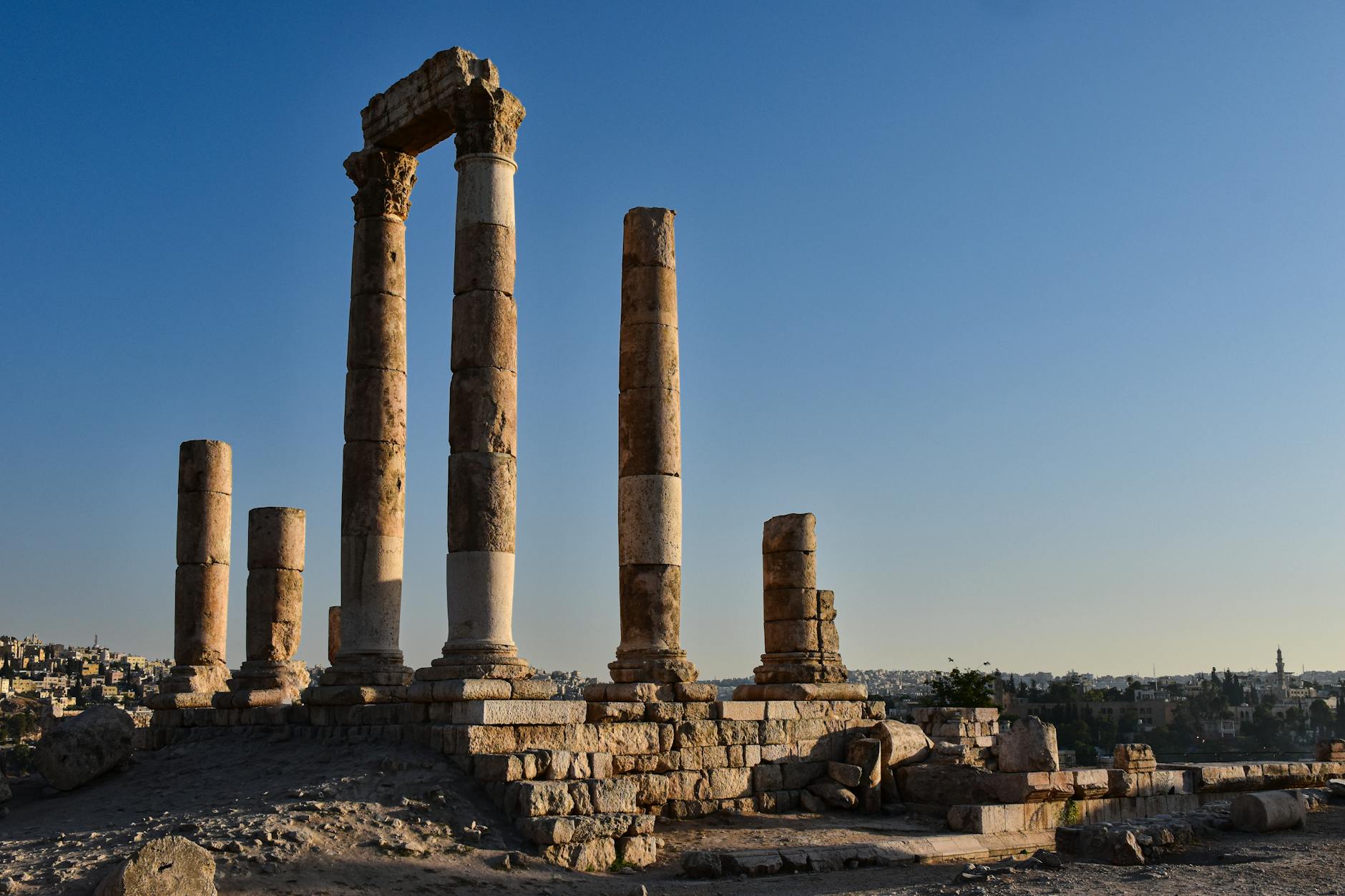
The castle itself is a labyrinth of vaulted halls, narrow staircases, arrow slits, and a dry moat that once held attackers at bay. The stonework is massive and rough — this was built for defence, not beauty — but there is an austere grandeur to the arched corridors and the way the light falls through the murder holes. A small museum inside displays artefacts from the castle’s history: Ayyubid pottery, Mamluk coins, Ottoman-era inscriptions. I climbed to the highest tower and stood where Saladin’s soldiers once stood, looking out over a landscape so green it seemed impossible given what I had seen in the rest of the country. Below, the village of Ajloun spread across the hillside, its minarets rising above the olive groves, the call to prayer echoing off the castle walls.
The Forest Reserve
The Ajloun Forest Reserve, managed by the Royal Society for the Conservation of Nature, is a different kind of Jordan — one of oak and pistachio woodland, hiking trails through dappled shade, and an eco-lodge where the accommodation is simple wooden cabins and the meals are prepared by local women’s cooperatives using recipes passed down through generations. We hiked the Rockrose Trail in the late afternoon, the path winding through evergreen oak forest with occasional clearings that opened onto views of the valley below. The birdsong was constant — warblers, jays, woodpeckers — and the wildflowers included species I recognized from botanical walks in the south of France.
The cooperatives that operate within the reserve produce olive oil, jams, dried herbs, and handmade soaps, and the quality is genuinely excellent. I bought olive oil pressed from trees that have been producing for centuries — the oldest olive trees in the Ajloun region are estimated at over five hundred years — and soap made with the same oil, scented with wild lavender. Ajloun pairs naturally with Jerash for a full day of northern Jordan exploration, and together they make a compelling argument that Jordan’s diversity extends far beyond the desert landscapes that dominate its reputation.
When to go: March to May when wildflowers carpet the hills. Autumn (September to November) is equally pleasant. The forest reserve’s eco-lodge should be booked ahead. Combine with Jerash for a day trip from Amman.