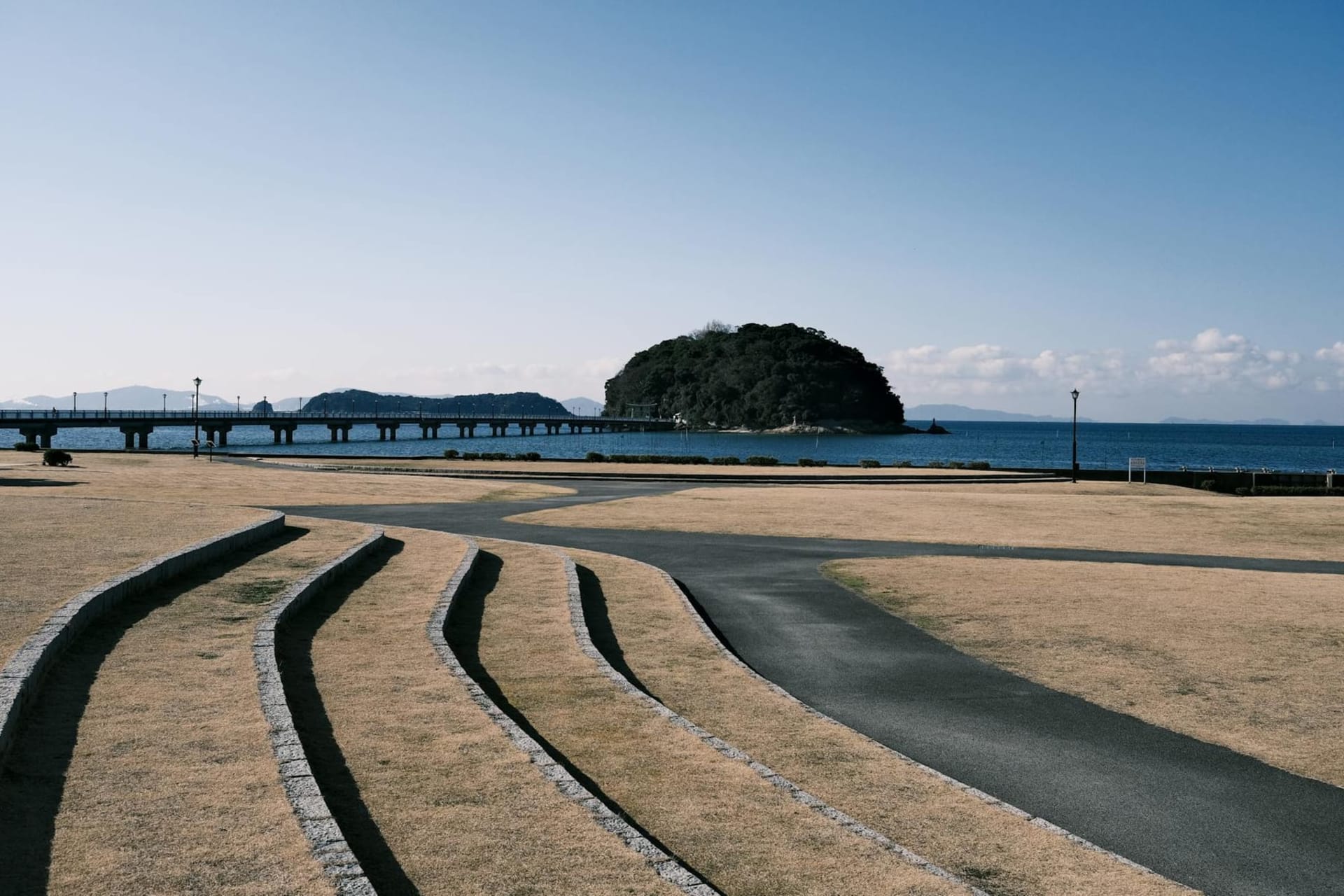
The ferry from Uno Port takes about thirty-five minutes, and by the time Teshima materializes out of the Seto Inland Sea haze, you already feel the mainland’s urgency drain away. I watched the island grow from a smudge to a silhouette — forested ridgeline, then the pale geometry of a small harbor, then an old man in rubber boots standing absolutely still at the end of the pier, watching us arrive. He did not wave.
The Museum That Breathes
The Teshima Art Museum is not a museum in any conventional sense. Architect Ryue Nishizawa shaped it like a water droplet pressed flat against the earth — a concrete shell with two elliptical openings in the ceiling, open to the sky. There are no exhibits inside. There is only the interior, and the light, and the water that seeps up through tiny holes in the floor and trembles along in thin rivulets before pooling and evaporating. Lia sat cross-legged on the smooth concrete for nearly forty minutes, watching a bead of water find its path. I timed her. I also sat for nearly forty minutes.
Outside, the terraced rice fields of Karato — restored over the past two decades by island residents averaging well into their seventies — wrap around the hillside in deliberate curves. The smell on a humid morning is deep and ferrous, water and clay and something faintly sweet from whatever the farmers burn at the field edges. I walked the narrow berm paths slowly, aware that the ground I was standing on had been shaped by hand, season after season, for generations before contemporary art arrived to complicate the landscape.
Shiofuki and the Unexpected Kitchen
The discovery that genuinely surprised me was in Karato, tucked behind a wall of hydrangeas: a tiny open-air kitchen run by an elderly woman whose name I never caught, where she was quietly grilling fresh shellfish over charcoal and serving them with cold barley tea in ceramic cups. No sign. No menu. She gestured toward a low wooden bench and set a plate in front of me before I had finished deciding whether to stop. The shellfish were small and briny, the tea was bitter and cold, and the whole transaction cost four hundred yen. I have thought about that plate more than I have thought about most restaurant meals.
The Hamaura fishing port on the island’s south side is worth an evening. The light there in late afternoon goes amber-orange across the water, and the wooden boats rock gently against the dock while cats arrange themselves on the concrete seawall with the conviction of residents who arrived first.
When to go: Late April through early June brings mild temperatures and the rice planting season, when the terraces flood and reflect the sky. Avoid August, when the island’s modest infrastructure strains under the summer crowds drawn by the Setouchi Triennale festival.