Yawatahama
"The whole town smelled of oranges and diesel, and I decided on the spot that I loved it."
An Ehime port town where the hillsides above the harbour are stacked with mandarin terraces, and the ferries slip out across the strait toward Kyushu. A place of citrus, salt air, and the particular restlessness of a town that has always faced the sea.
We arrived in Yawatahama on the ferry from Kyushu, and the first thing I noticed, before we had even docked, was the hillsides — impossibly steep slopes above the town cut into hundreds of narrow terraces, each one glowing with the orange of ripe mikan. Lia leaned on the railing and said it looked like someone had contour-lined the mountain in fruit. That is exactly what it looked like.
A Mountain Made of Mandarins
Yawatahama, on the western coast of Ehime, is mikan country — Japanese mandarin oranges — and the town has been growing them on these near-vertical slopes for generations. The terraces climb so steeply that farmers use little monorail carts to haul the harvest up and down, and in autumn the whole hillside turns the colour of a sunset that decided to stay. We drove one of the switchback lanes up through the groves and stopped where the road ran out, and the view back down over the terraces to the harbour and the sea beyond was one of those Japanese landscapes where human labour and steep land have made something no designer would dare to draw.
An old farmer waved us over and pressed a plastic bag of mikan into Lia’s hands, refusing payment, as citrus growers apparently do the world over. They were sweeter than anything I’d bought in a shop.
The Port That Faces West
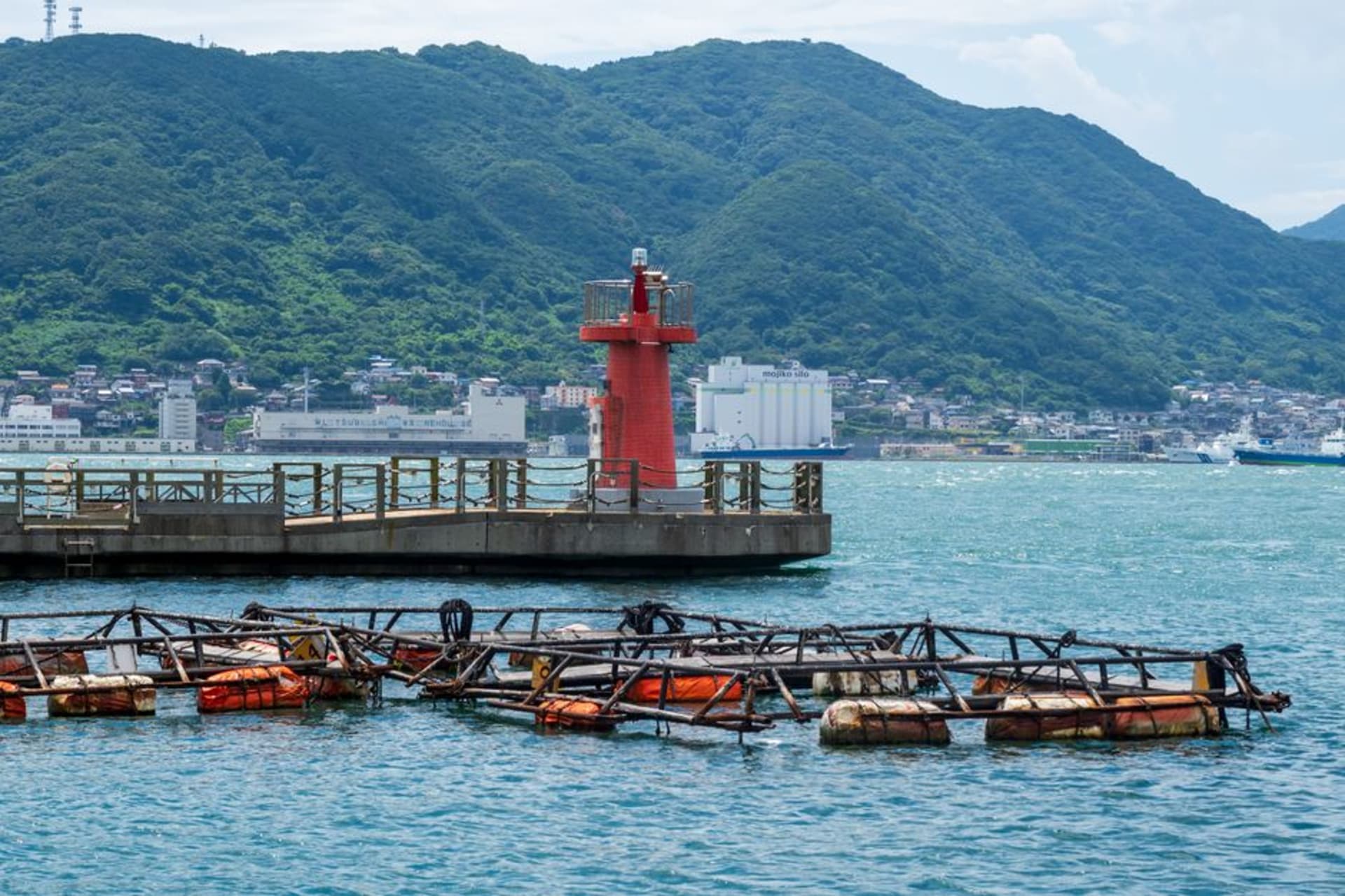
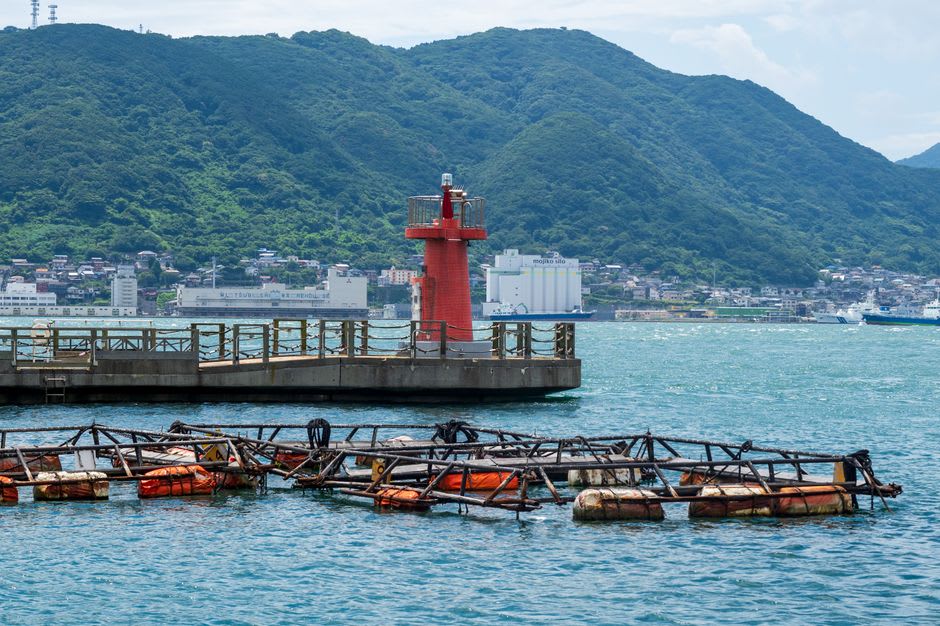
Yawatahama has always been a town of departures. Its harbour is one of the main ferry gateways between Shikoku and Kyushu, and there is a particular character to a place whose reason for existing is that ships leave from it. We spent an afternoon just at the port — the ferry terminal, the fishing boats, the fish market where the morning’s catch comes in and the auction happens at a speed I could not follow at all. The Doya Market near the harbour is where locals buy their seafood, and we ate at a counter there: jako-ten, the fried minced-fish cakes that Ehime does better than anywhere, hot and slightly chewy and completely addictive.
I like port towns for their lack of pretension. Yawatahama works for a living, and it doesn’t much care whether you’re charmed. We were, anyway.
Up to the Sadamisaki Ridge
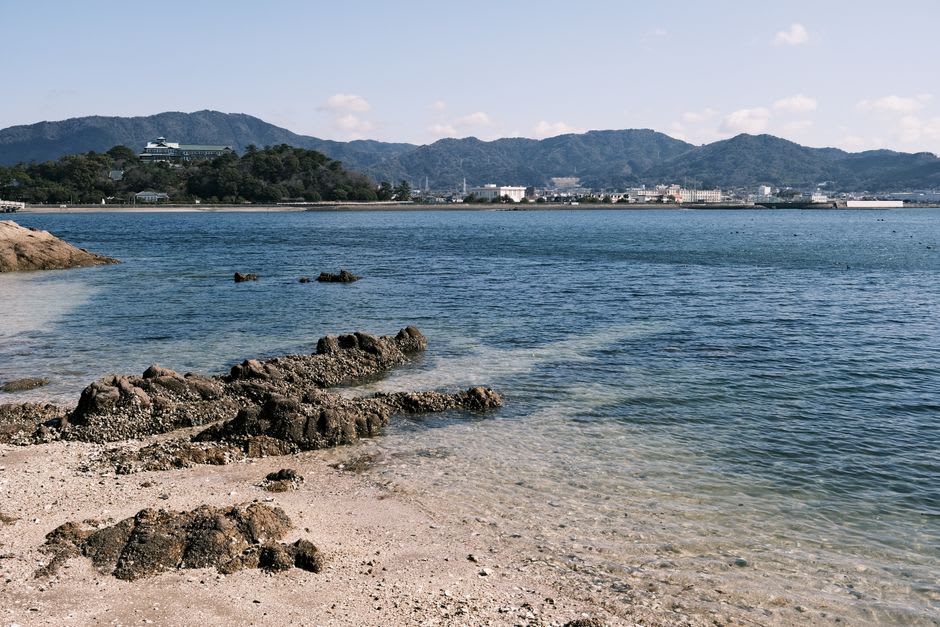
South and west of town the land narrows into the Sadamisaki Peninsula, the thinnest, longest finger of land in Japan, reaching out toward Kyushu with a line of white wind turbines running down its spine. We drove partway out along it on our last morning, the sea visible on both sides at once from the ridge road, the wind hard enough to rock the car. At the far tip stands the Sadamisaki lighthouse, though we ran short of time and turned back before reaching it — a reason, Lia said, to come again.
Standing on that ridge with water to the left and water to the right, I understood Yawatahama better. It is not a destination so much as a threshold, a place poised between two islands, and there’s a quiet romance in that.
Getting There
Yawatahama sits on the western coast of Ehime and is easiest reached as part of a crossing between Shikoku and Kyushu — the ferries from Beppu and Usuki in Oita dock right at the town’s port, which is how we came in. Overland, the JR Yosan line runs to Yawatahama Station from Matsuyama in about forty minutes to an hour, making it an easy day trip from that city if you don’t have a car. But the mandarin terraces and the Sadamisaki ridge road really want their own wheels, so we’d nudge you toward renting. Come in autumn or early winter if you can, when the mikan are ripe and the hillsides are at their most absurd and glorious. And eat the jako-ten at the harbour — standing up, fresh out of the fryer, is the correct way.
Keep exploring
More of Shikoku