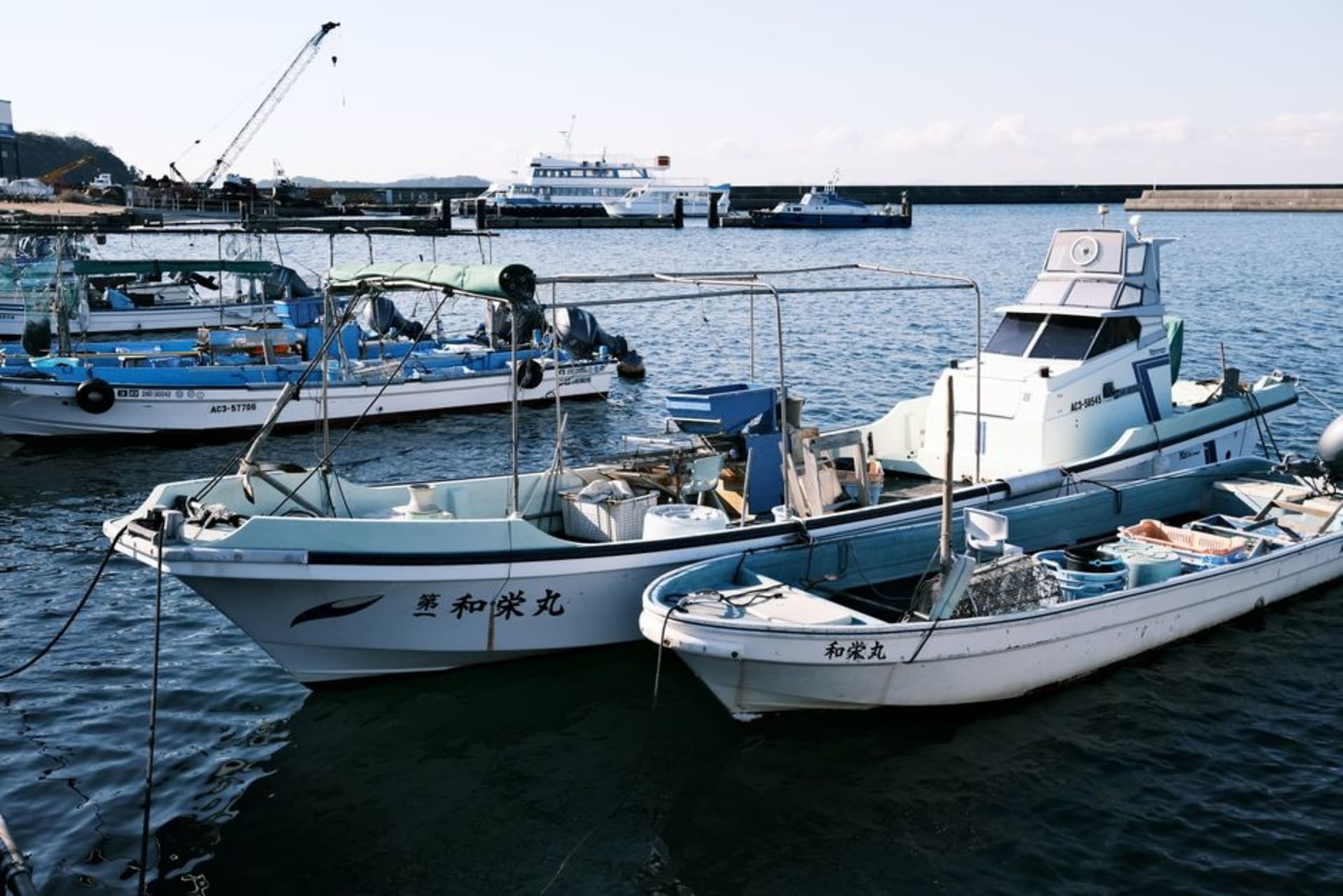
Tosa
"The straw caught, the fish caught, and for a second the whole stall smelled like a bonfire on a beach."
A Kōchi coast town where the Pacific arrives loud and open, and lunch is a fillet of bonito scorched over rice straw until the skin blisters. Between the whale boats and the paper mills, Tosa keeps a slower, saltier rhythm than the rest of Shikoku.
We came to Tosa for the fish and stayed for the fire. Lia had read somewhere that the local way with bonito — katsuo no tataki — involves searing the fillet over burning rice straw rather than charcoal, and she wanted to see it done in front of us, not slid out of a kitchen. At a stall near the Hirome Market’s edge in nearby Kōchi, a man in a headband dropped a fist of dry straw into a metal trough, touched a lighter to it, and the flames leapt up past his elbows. He held the skewered fish in that roar for maybe forty seconds a side. The straw caught, the fish caught, and for a second the whole stall smelled like a bonfire on a beach. Then he sliced it thick, still raw and cool at the centre, and laid it over a bed of raw garlic and sea salt. We ate it standing up. Lia went very quiet, which is how I know she’s happy.
The Pacific at Katsurahama
Katsurahama is the beach every Kōchi child is brought to at least once, and I understood why the moment we walked over the pine-covered rise and saw it. There’s no swimming here — the undertow is famous and forbidden — so the sea is left entirely to itself. It comes in long grey-green rollers that break with a sound you feel in your chest. On the headland stands the bronze statue of Sakamoto Ryōma, the local samurai-turned-reformer, gazing out toward America as if he’s still waiting for it to answer. We sat on the pebbles for an hour and didn’t talk much. The Pacific has a way of making conversation feel unnecessary.
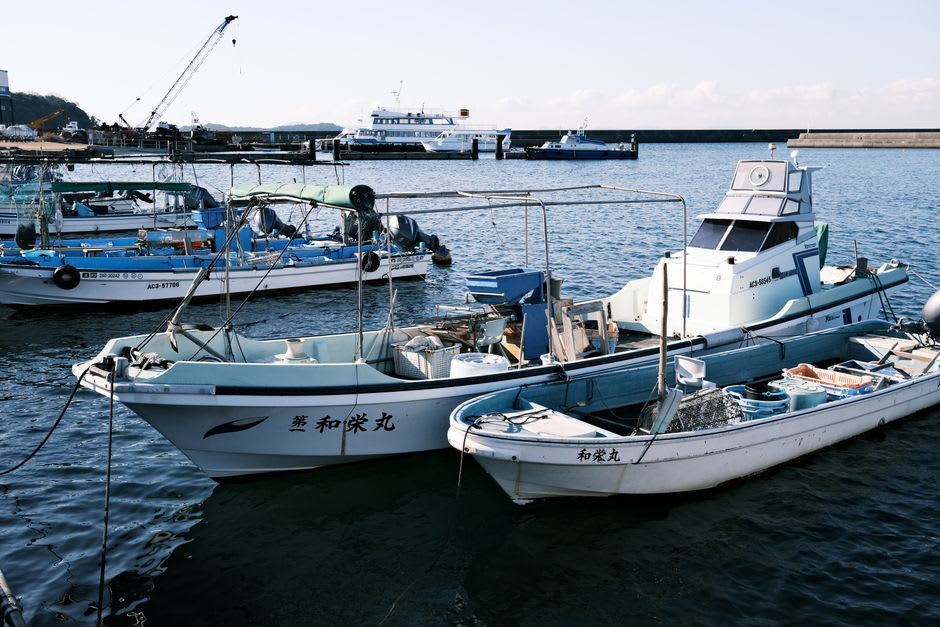
Chasing whales offshore
From the little port at Usa we took a whale-watching boat out into the Tosa Bay, which drops off deep and cold not far from shore. Our captain was a leathery man who’d fished these waters for decades and now spent his mornings finding Bryde’s whales for tourists like us. For a long while there was only the swell and Lia turning slightly green beside me. Then a spout — a soft grey exhale a few hundred metres off the bow — and the long dark back rolling up and under. It surfaced three more times. Nobody on the boat spoke above a whisper, as if we might scare it back down. On the ride home the captain shared cold barley tea and told us his grandfather had hunted these same whales; now he shows them off. He didn’t seem to think that was a contradiction, and neither did I.
Paper made by hand
Tosa has made washi paper for over a thousand years, and at the Ino-chō Paper Museum inland we watched a craftsman pull sheets from a vat of milky pulp and mulberry fibre. He rocked the bamboo screen with a fluid wrist-flick that looked effortless and clearly wasn’t — Lia tried it and produced something with the structural integrity of wet tissue. The finished Tosa paper is famously thin and strong, prized by conservators who mend old books with it. We bought a few sheets, pale and flecked with fibre, and I’ve since framed one. It holds the light like nothing machine-made ever could.

Getting There
Tosa sits on the coast just west of Kōchi city, on the island of Shikoku. The simplest route is to fly or take the train to Kōchi — the Nanpū limited express runs down from Okayama on the main island in about two and a half hours — then hire a car, which you’ll want for the coast road out to Katsurahama, Usa port and the paper mills inland at Ino. Local buses connect Kōchi station to Katsurahama in around forty minutes if you’d rather not drive. Whale-watching boats run from Usa mainly between spring and autumn, so book ahead and check the swell forecast; the Tosa Bay is generous with whales but rough with stomachs.
Keep exploring
More of Shikoku