Nikko
"Nikko dares you to call something too ornate — then adds another layer of gold lacquer for good measure."
There is a Japanese proverb — Nikko wo mizaru kereeba kekko to iu nakare — that roughly translates to: do not say something is magnificent until you have seen Nikko. I read it on a laminated card in a convenience store in Utsunomiya, twenty minutes before boarding the train north into the mountains. By the time I climbed the stone stairs beneath the first cedar, I understood it was not hyperbole. It was a warning.
The Weight of Devotion
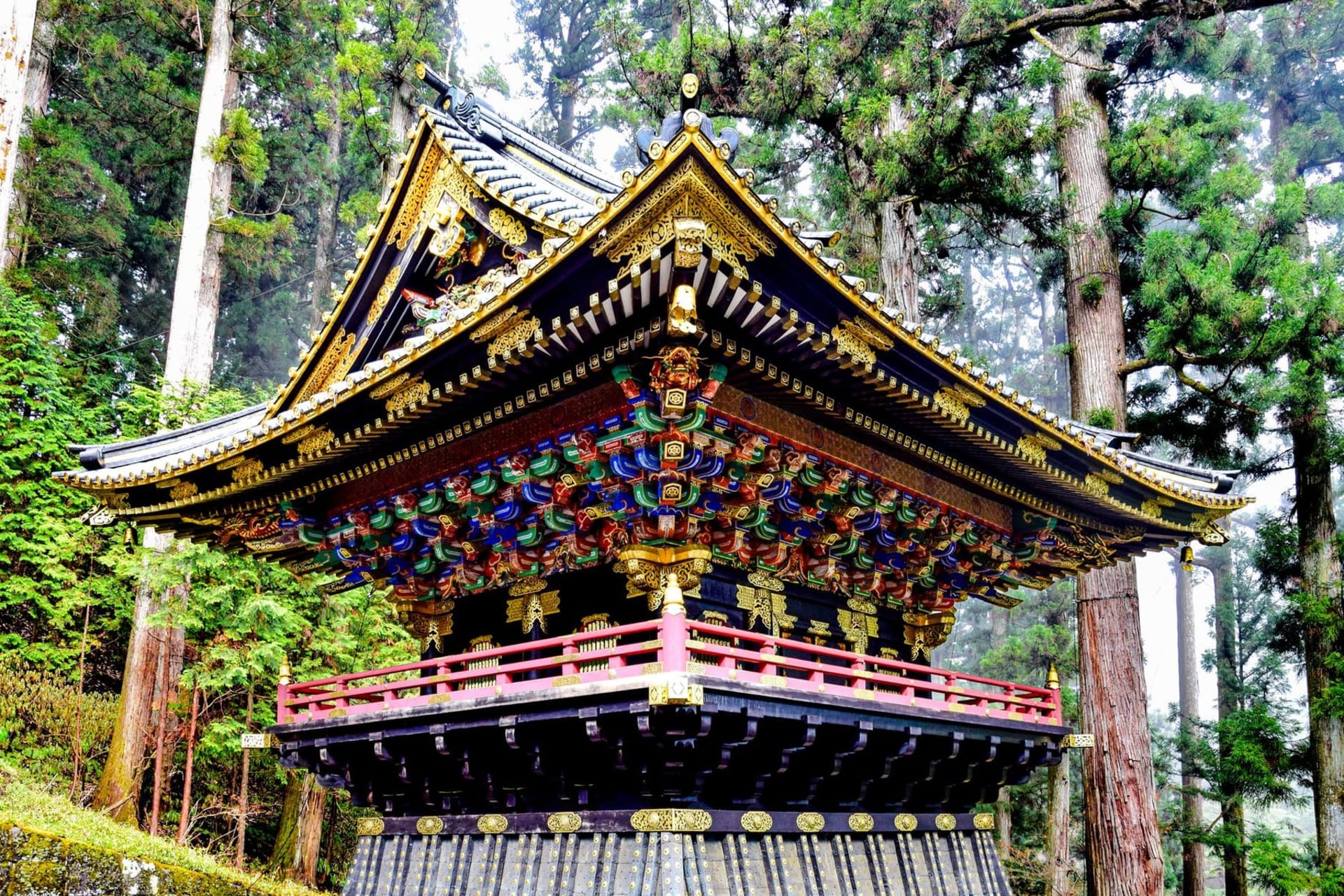
Tosho-gu Shrine does not ease you in. From the moment you pass through the Omotesando cedar avenue — trees so old and so straight they feel structural, like columns holding up the sky — the architecture begins competing with itself. The Yomeimon Gate stops the line of visitors cold. Twelve meters of carved panels, each one dense with dragons, phoenixes, and mythological scenes painted in lacquer so vivid the gold seems to emit its own warmth even on an overcast morning. I stood there for a long time, long enough that Lia looped back to find me. “You have the face,” she said. I knew what she meant. The face of someone who had overestimated their ability to process beauty quickly.
What moved me was not the opulence alone but the intention behind it. This was a mausoleum for Tokugawa Ieyasu, the shogun who ended two centuries of civil war. Every carved panel, every gilded pillar was a political statement dressed as devotion. Power had never looked so convinced of its own righteousness.
Into the Cedar and Quiet
Past the shrine complex, the path to Futarasan Jinja cuts through a cedar forest where the sound shifts noticeably — quieter, cooler, with the soft mulch underfoot absorbing footsteps. The smell is particular: wet earth, resin, and something faintly metallic from the volcanic rock beneath. This shrine feels older and less theatrical than Tosho-gu, its worn stone lanterns green with moss. I preferred it. There is relief in restraint after so much gold.
The unexpected discovery came here, not at the famous gate. Behind Futarasan, almost unmarked, a narrow path descends to a small waterfall. No crowds, no signs in English, just the sound of water over basalt and a wooden fox sculpture half-consumed by lichen. We ate rice balls beside it, watching a pair of macaques on the far bank regard us with bureaucratic indifference.
Eating Beside the Daiya River
Back in town, along Shinkyo Bridge, I ordered yuba — Nikko’s local specialty, the delicate skin that forms on simmering soy milk — at a small counter restaurant on Nishi-Sandō street. It arrived in a lacquered bowl with dashi, soft and faintly sweet. After a morning of overwhelming visual information, it was the right thing: quiet food in a quiet room, tasting like exactly what it was.
When to go: Late April through May for fresh green cedars against the shrine lacquerwork, or mid-October to early November when the maple canopy turns the mountain slopes copper and the crowds thin after the autumn-color peak passes.