Matsumoto
"Matsumoto Castle rises black against snow peaks like a sentence that says everything about this country."
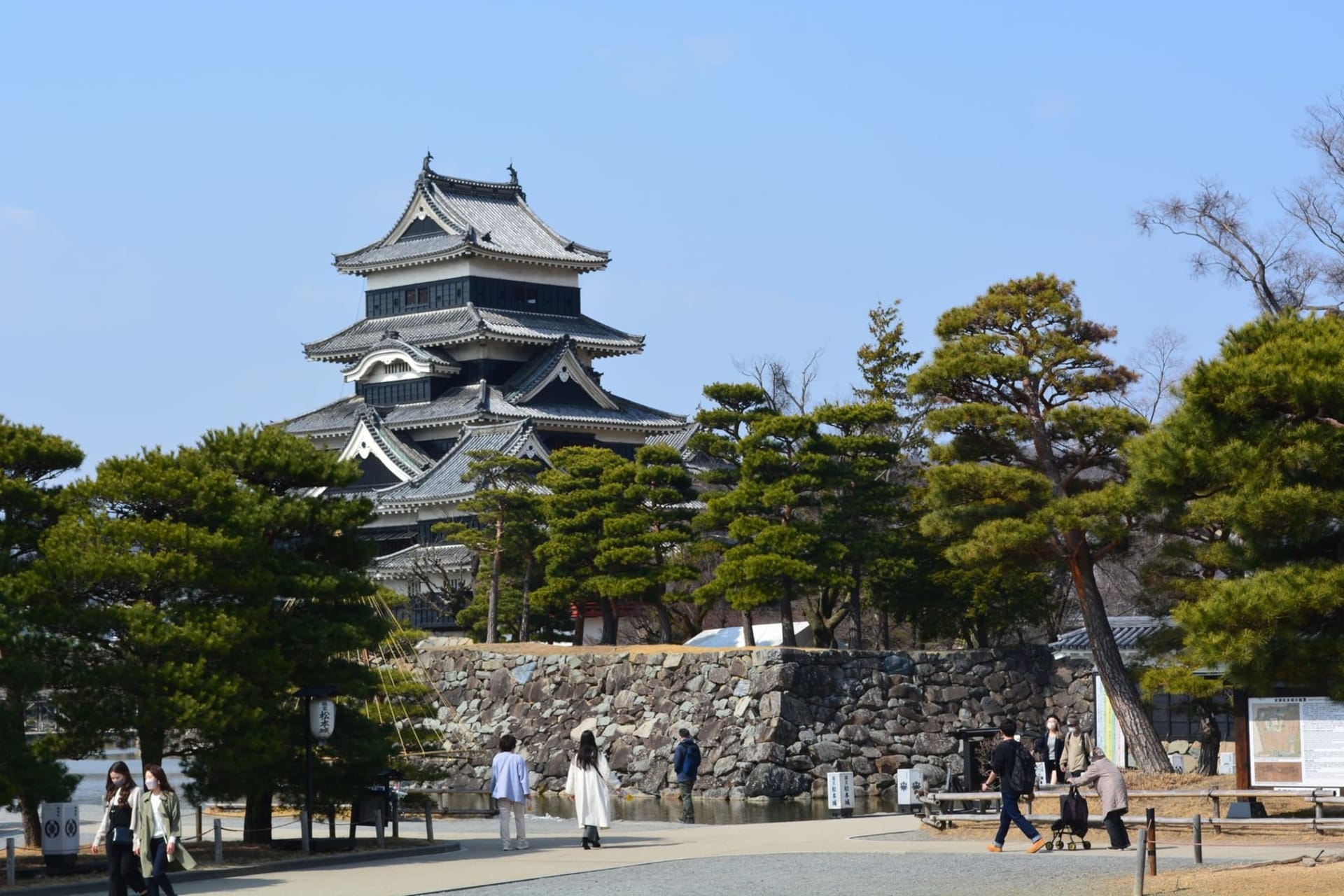
I arrived in Matsumoto on a morning cold enough to see my breath, stepping off the Azusa limited express into air that smelled faintly of cedar and whatever the mountains release when snow is close but not yet falling. The castle appeared before I expected it — at the end of a straight boulevard lined with low buildings, its black towers rising above the tree line like something printed rather than built.
The Castle That Changes Color
Matsumoto-jo is one of the few surviving original castles in Japan, and everything about it feels earned. The exterior boards are lacquered black, a choice that was meant to intimidate, and it works even now. I walked the moat path on Ote-machi, the main approach, and watched the towers shift from matte to nearly iridescent as the light moved. Lia pointed out that the reflection in the still water was cleaner than the castle itself — the moat perfectly still, the mountains inverted below the dark walls. We stayed at that corner longer than made sense.
Inside, the floors slope at angles that defeat any sense of orientation. The wooden staircases are steep enough to require both hands. On the top floor, through narrow windows cut for archers, the Hotaka peaks fill every frame. I hadn’t expected to feel altitude inside a castle.
Nakamachi and the Cold That Makes You Hungry
South of the castle, Nakamachi-dori runs through a preserved merchant district where the old kura storehouses — white plaster, black lattice — have become galleries and coffee shops. The street is short enough to walk twice without noticing. I stopped at a place on the corner that served oyaki, thick dough pockets stuffed with nozawana greens and miso, baked on an iron griddle. The woman running it spoke no French, I spoke no Japanese, and we communicated entirely through her pointing at things and me nodding. The oyaki cost three hundred yen and tasted like the specific warmth of somewhere you don’t quite belong but are being allowed to visit.
The unexpected discovery came on a side street off Ote-machi: a public bathhouse, a sento, unmarked except for a small noren curtain in the doorway. I had walked past it twice before a local gestured at it, plainly amused. The water was almost too hot. I stayed in until my fingers went numb, which is apparently the correct approach.
The Light in Late Afternoon
The best hour in Matsumoto is the one before the castle closes, when the admission crowds have thinned and the November light hits the moat at an angle that turns everything amber. The mountains hold the color longest.
When to go: Late October through early November for autumn color against the Alps, or late January for snow on the castle roof — but book accommodation weeks ahead, the town is smaller than its reputation suggests.