Taketomi
"The whole island is white sand lanes, and we walked them barefoot by afternoon."
A tiny coral island in Okinawa's far-flung Yaeyama group, keeping a whole traditional Ryūkyū village of red-tiled houses and coral walls. Here the pace is set by water buffalo and the sand itself is shaped like stars.
The ferry from Ishigaki takes barely ten minutes, but stepping off it onto Taketomi felt like stepping off the edge of modern Japan entirely. Lia and I had come south to the Yaeyama Islands almost to the limit of the country — closer to Taiwan than to Tokyo — and Taketomi is the smallest, gentlest jewel of them. There are no traffic lights, no convenience stores glowing on a corner, almost no cars. Within an hour we had slowed to the island’s rhythm without deciding to, wandering white coral lanes between low stone walls, the only sounds a rooster, the wind in the hibiscus, and somewhere the slow creak of a buffalo cart. We had meant to make it a day trip. We nearly missed the last ferry back.
A Village Preserved in Coral
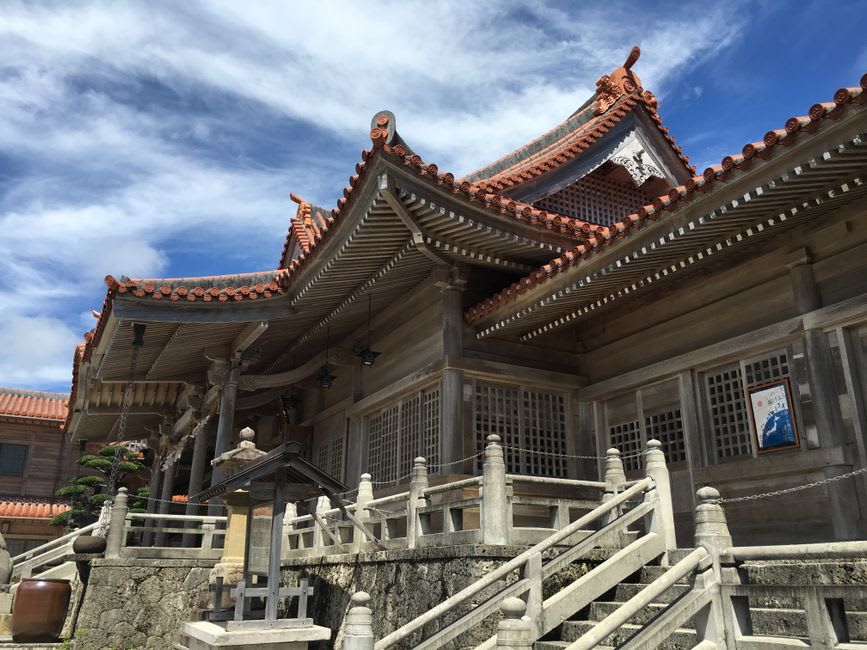
Taketomi’s whole village is a protected treasure, and rightly so — it is one of the last places you can see a traditional Ryūkyū settlement whole and alive rather than in a museum. The single-storey houses wear heavy red terracotta tiles set in white plaster, each roof guarded by a shisa lion figure with its own comic expression, and every home sits behind a low wall of stacked coral rock and a screen wall to turn away typhoons and bad spirits. The lanes between them are raked white sand, and it is genuinely someone’s job to keep them raked; we watched an elderly man doing exactly that, slowly, in the heat. People still live here, farm here, grow their own bougainvillea over their gates. It felt less like a sight than an act of quiet, communal devotion.
Water Buffalo and Sanshin Songs
The classic thing to do on Taketomi, and we did it without a shred of shame, is ride the water-buffalo cart. A single enormous, patient buffalo hauls a wooden cart at walking pace through the village while the driver plays the sanshin — the three-stringed Okinawan banjo covered in snakeskin — and sings old island songs in a dialect even mainland Japanese can’t follow. The buffalo stops when it wants, drinks when it wants, and everyone simply waits, which is the whole philosophy of the place in one animal. Our driver, sensing foreigners, slipped in a verse of something and grinned at us. Lia recorded the whole thing and still plays it sometimes when the winter here gets heavy and grey.

Star Sand and Empty Beaches
On the island’s edges, the coral gives way to beaches, and Taketomi hides a small wonder: hoshizuna, or star sand. It isn’t really sand at all but the tiny five-pointed skeletons of ancient single-celled creatures, and at Kaiji Beach you kneel, press a flat palm into the sand, lift it, and count the minute stars stuck to your skin. We spent a ridiculous, happy amount of time doing exactly this, two grown adults hunched over like children, comparing our catches. Nearby Kondoi Beach gave us the other reward — a wide, shallow, almost deserted lagoon of impossibly pale turquoise, warm as a bath, where we floated and watched the light go long and gold and finally understood why we had nearly missed the boat.
Getting There
Taketomi lies in the Yaeyama Islands at the very southwest tip of Okinawa and of Japan itself. You reach it by flying first to Ishigaki — connecting through Naha, or on direct flights from a few mainland cities — and then taking the frequent high-speed ferry from Ishigaki port, a crossing of only about ten to fifteen minutes. On the island, rent a bicycle near the harbour; it is flat, tiny, and made for pedalling between the village, the beaches, and the buffalo. Check the last ferry time before you settle onto the sand, and, unlike us, believe it.
Keep exploring
More of Kyūshū & Okinawa