Kurokawa Onsen
"A village that decided, long ago, to stay small and wooden and dim — and is all the better for it."
A rustic hot-spring village hidden in the hills of Kumamoto, all wooden bathhouses, lantern-lit lanes, and open-air baths beside a rushing river. Made for wandering from one steaming pool to the next.
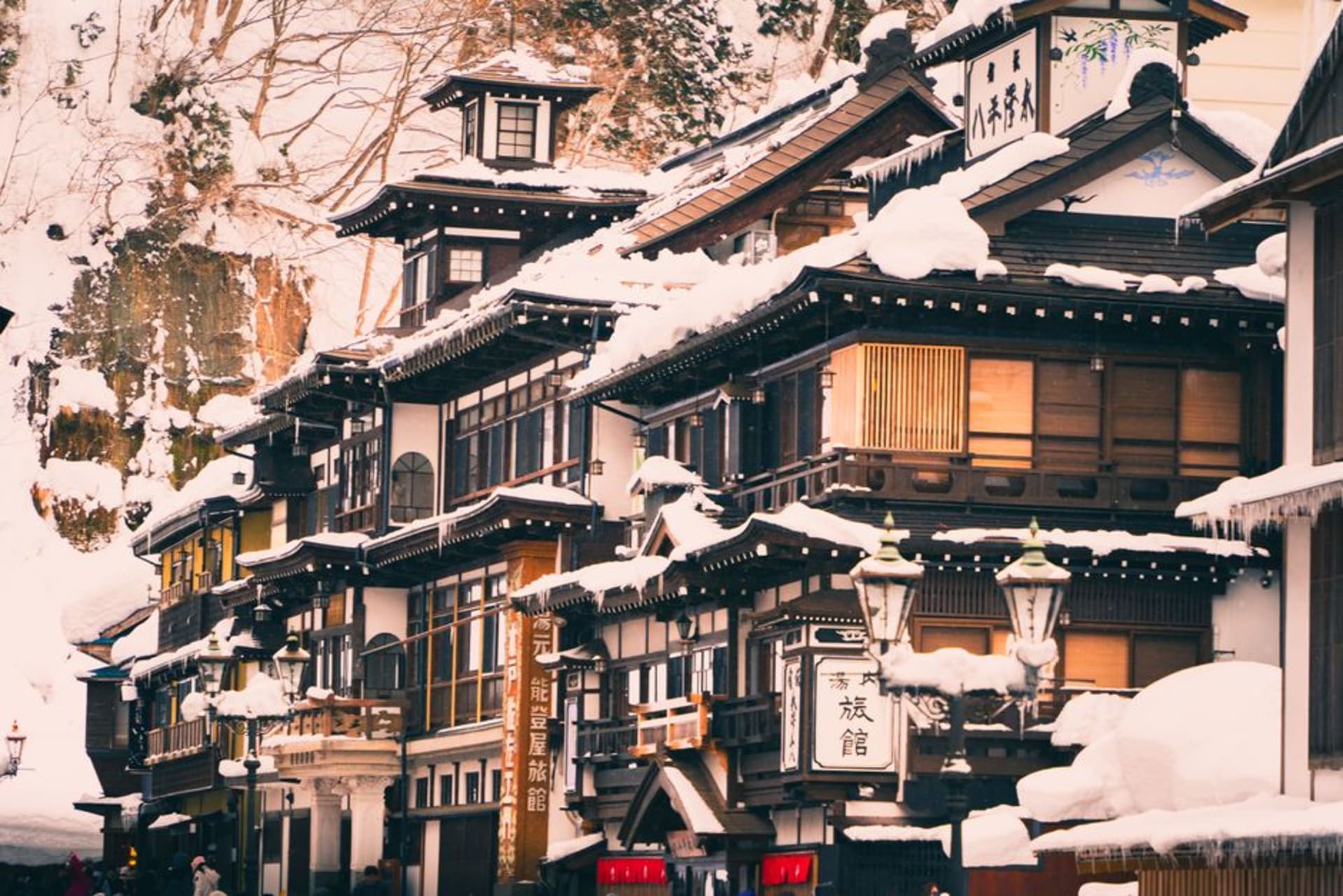
We reached Kurokawa in the last of the daylight, after a bus had wound us deep into the hills of central Kyūshū, and the first thing I felt was relief. There were no concrete hotel towers, no neon, no arcades — none of the clutter that has crept into so many Japanese hot-spring towns. Instead a small cluster of dark wooden buildings folded into a narrow river gorge, the Tanoharu River running loud through the middle of it, and steam lifting quietly from a dozen unseen baths. Kurokawa fought hard to stay this way; decades ago the village agreed together to ban the garish signs and keep everything low and wooden and warm-lit, and the result is a place that feels honestly old rather than dressed up. Lia stood on the little bridge in the fading light, breathing the mineral air, and said she already didn’t want to leave.
The Bath-Hopping Pass
Kurokawa’s genius is a wooden token called the nyūtō tegata — a bath-hopping pass, a small round disc that lets you into any three of the village’s two-dozen-odd open-air baths. We bought ours the first morning and treated it as a treasure map. Each ryokan opens its rotenburo (open-air bath) to passholders during the day, and each is different: one carved into a riverside cave, one under a waterfall, one perched high with a view down the valley.

We spent the day drifting from one to the next in yukata and wooden sandals, hair still damp from the last soak, the token growing warm in my pocket. Between baths you cool off walking the lanes, and then the next steaming pool draws you in. Lia’s favorite was a cave bath where the water glowed faintly green and the rock dripped overhead; mine was a plain riverside one where you soaked with the sound of the current a few feet away. Three baths sounds like little. By the third we were pleasantly wrung out, skin soft, minds emptied.
Lanes and Lanterns
The village itself is barely more than a handful of streets, and walking them is half the pleasure. In the evening, staff go around lighting bamboo lanterns along the river and the steps, and Kurokawa turns golden and hushed. We wandered with no aim, stopping at a tiny shop for jigoku mushi pudding steamed in the hot-spring vapor, and at a stall selling grilled rice balls charred over coals.
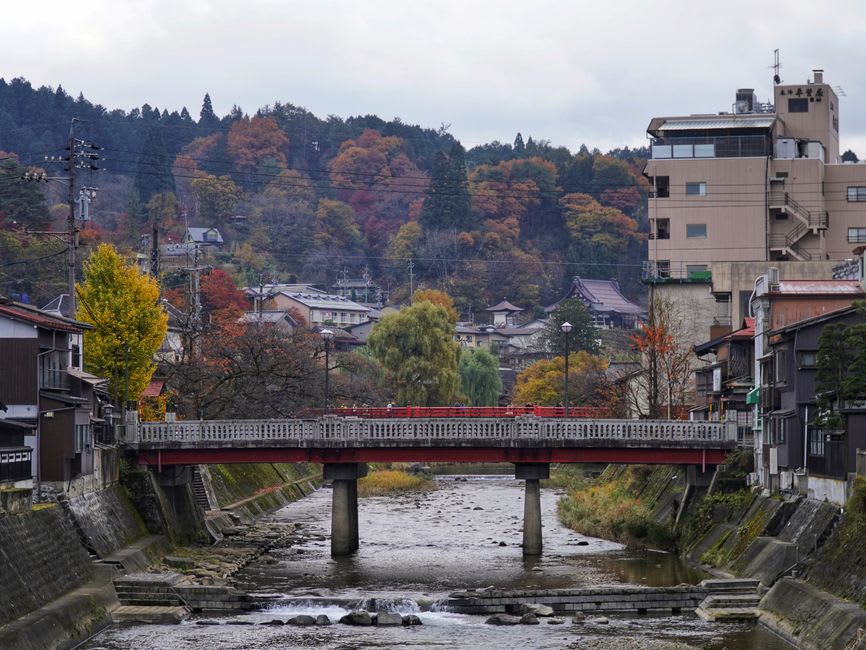
There is almost nothing to do in Kurokawa in the conventional sense, and that is exactly its gift. No sights to tick off, no queues. Just the river, the lanterns, the smell of woodsmoke and sulphur, and other guests padding by in their geta, nodding hello. We bought a hot sake from a window and drank it leaning on the bridge, watching the lanterns shiver in the black water. Lia said it was the quietest she’d felt in weeks.
A Night in a Ryokan
We had splurged on a night in one of the small ryokan, and it framed the whole visit. Our room looked straight onto the gorge; dinner was a long procession of Kumamoto mountain dishes — basashi, river fish, wild vegetables — served in the room by a woman who had worked there thirty years.
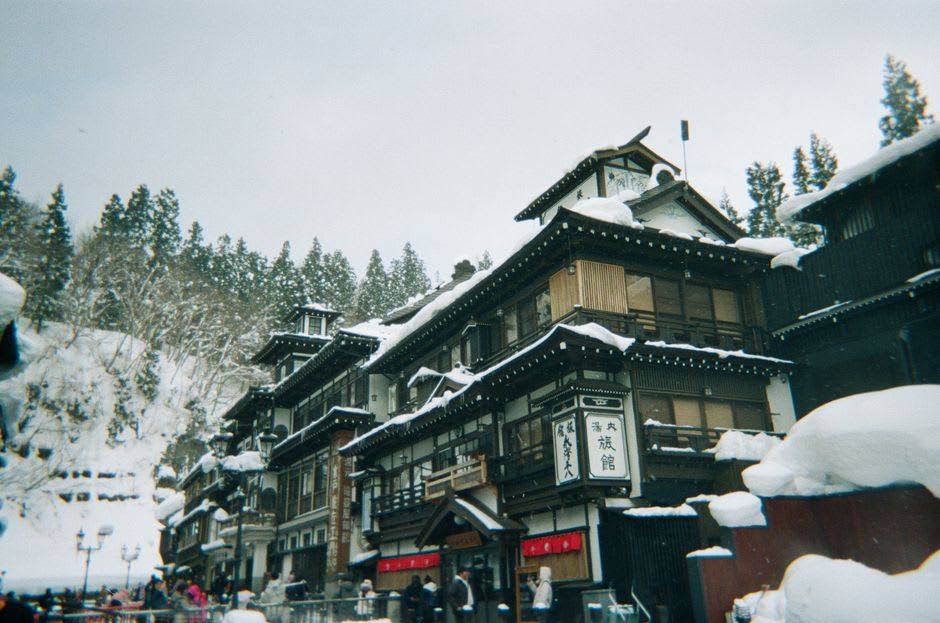
I woke before dawn and slipped down to the ryokan’s own private bath while Lia slept, and had it entirely to myself — steam rising off the surface, the sky going from black to grey, the river loud below. Sitting in that hot water in the cold morning air, listening to the valley wake up, I understood the whole point of a place like Kurokawa. It doesn’t want to impress you. It just wants to slow you down until you finally, properly, stop.
Getting There
Kurokawa Onsen sits high in the hills of northern Kumamoto Prefecture, on the flank of the Aso caldera, and getting there is deliberately a small journey. The usual approach is a highway bus from Fukuoka (Hakata), which takes around two and a half to three hours and drops you near the village, or a bus up from Aso or Kumamoto stations. There is no train to Kurokawa — that isolation is part of why it stayed unspoiled — so most visitors come by bus or car. Once you arrive, everything is on foot: the village is tiny, and the whole point is to leave the car parked, pull on a yukata, and wander from bath to bath with the river for company.
Keep exploring
More of Kyūshū & Okinawa