Kumamoto
"A city rebuilding its greatest monument stone by stone, in full view, and unashamed of the scaffolding."
A proud green castle city in central Kyūshū, anchored by one of Japan's mightiest fortresses, still healing from the 2016 earthquake — and the gateway to the vast caldera of Mount Aso.
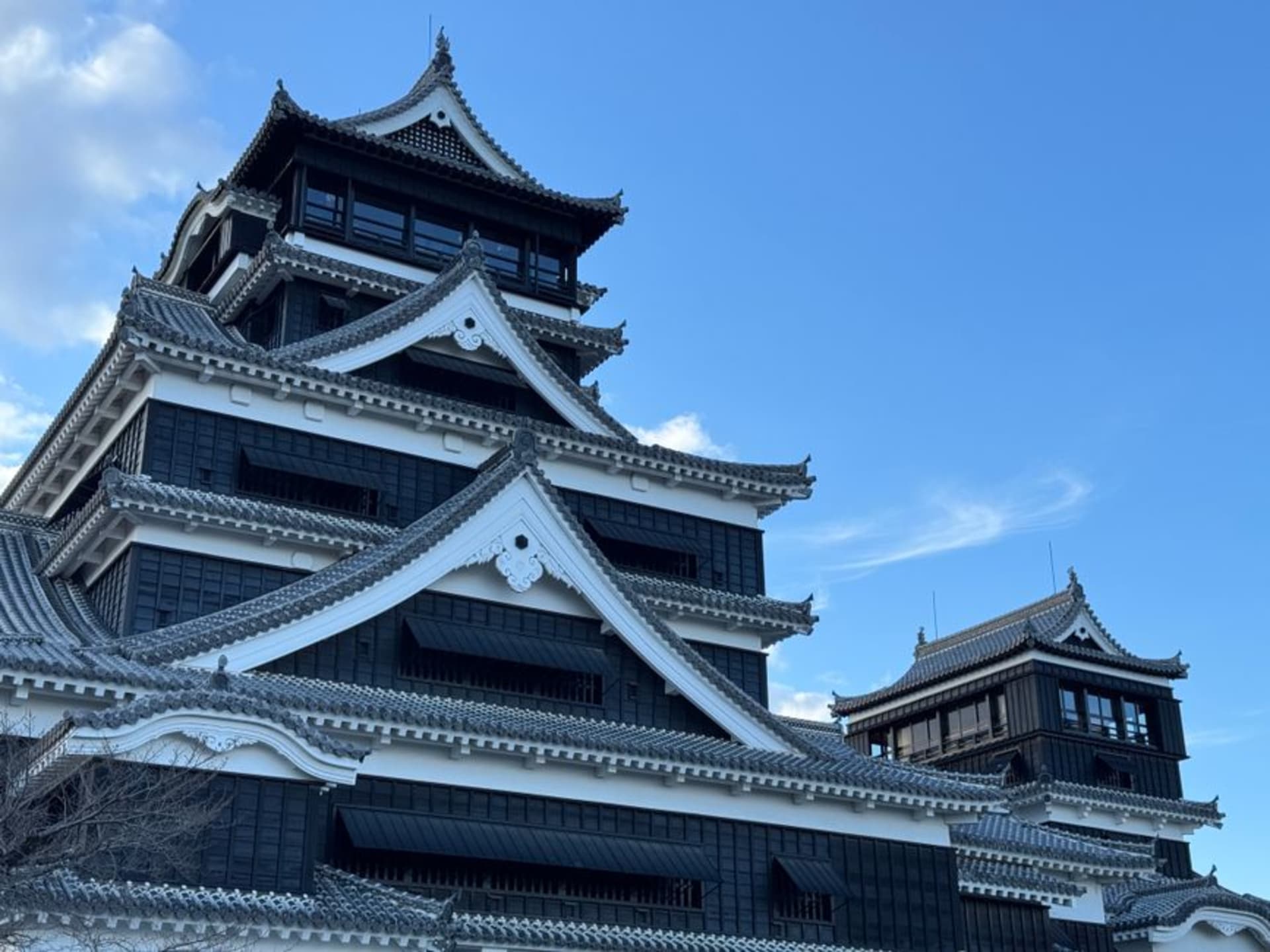
Kumamoto announced itself to us the moment we came out of the station: even from a distance, the castle dominates the city, its black-and-white keep riding above the trees on walls that seem far too large for any human purpose. Lia and I had come across Kyūshū to see it, and also to use the city as our doorway to Mount Aso, but Kumamoto turned out to be more than a staging post. It is a proud, green, self-possessed place — broad avenues, streetcars, a river running through — and it carries a recent wound with unusual dignity. The great earthquakes of 2016 struck the castle hard, toppling walls and cracking towers, and the city has spent the years since rebuilding it in the open, stone by numbered stone. We spent two days here, and I came away admiring not just what Kumamoto has been but the patient, public way it is putting itself back together.
Kumamoto Castle
Kumamoto Castle is one of the three great castles of Japan, and standing beneath its walls I understood why. The stonework alone is staggering — vast curved ramparts called musha-gaeshi, “warrior-repelling,” which flare outward as they rise so that no attacker could ever climb them. The main keep, black-boarded and white-plastered, was reconstructed and reopened after the earthquake, and walking up to it past cranes and scaffolding and neatly stacked, catalogued stones felt less like touring a monument than watching a act of collective repair.
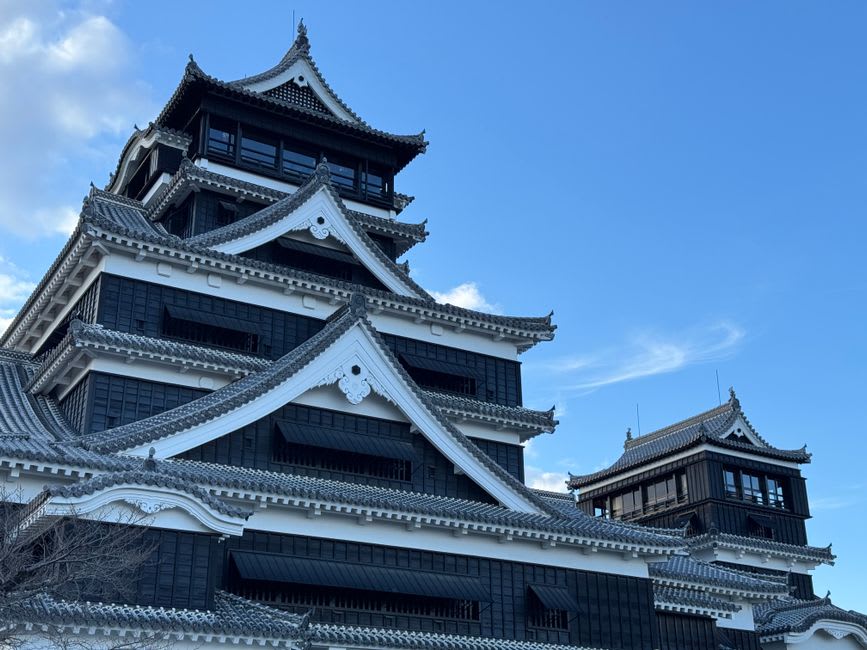
Inside, the restored keep tells the castle’s story and, unflinchingly, the story of its damage and recovery. There is a famous image from just after the quake of a single slender column of stones left standing to hold up a corner turret, everything around it fallen away, and seeing the repaired version of that turret in person moved me more than I expected. Kumamoto has not hidden its injury. It has made the healing part of the visit, and there is something quietly heroic in that.
Suizen-ji and the Strolling Garden
For a complete change of register we spent an afternoon at Suizen-ji Jōju-en, a strolling garden laid out in the seventeenth century on the far side of the city. Where the castle is all mass and defiance, the garden is all softness and suggestion. A circular path leads you around a spring-fed pond, and the whole landscape is a miniature — famously, a scaled recreation of the old Tōkaidō road between Kyoto and Tokyo, with a small grass-covered cone standing in for Mount Fuji.
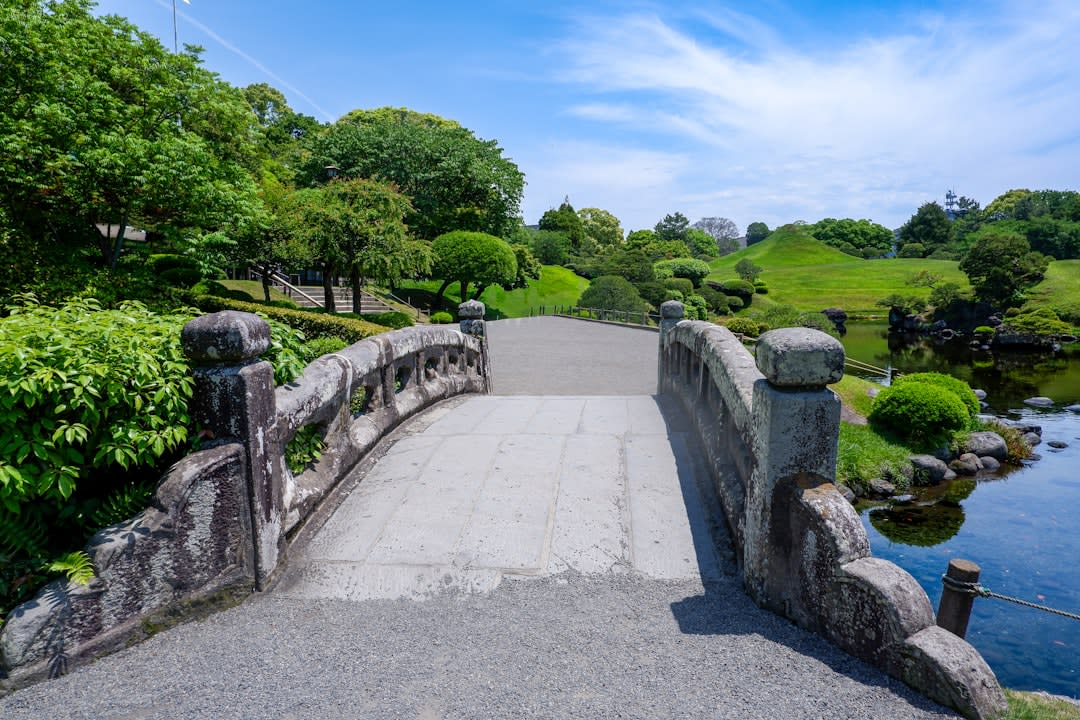
The water in the pond comes from the same Aso aquifers that give the region its famously pure springs, and it is startlingly clear — you can watch carp hanging in it as if in glass. We walked the loop slowly, then sat in a teahouse at the edge and drank matcha with a small sweet, looking out over the water. Lia pointed out that the entire journey from Kyoto to Tokyo, which had taken us weeks of trains, sat compressed here into a fifteen-minute walk. Gardens like this are arguments as much as they are art, and Suizen-ji’s argument is that the whole world can be made small enough to hold.
Toward the Aso Caldera
Kumamoto’s other gift is what lies beyond it. To the east, the land rises into Mount Aso, one of the largest active volcanic calderas on earth — a ring of old crater walls some twenty-five kilometers across, with a floor so wide that whole towns, farms, and rail lines sit inside it. We took a day to go out toward it, riding up through green pastureland where cattle and horses graze on the slopes of a still-breathing volcano, the scale of the place only really landing once you are standing inside the caldera and realize the mountains ringing the horizon are its rim.
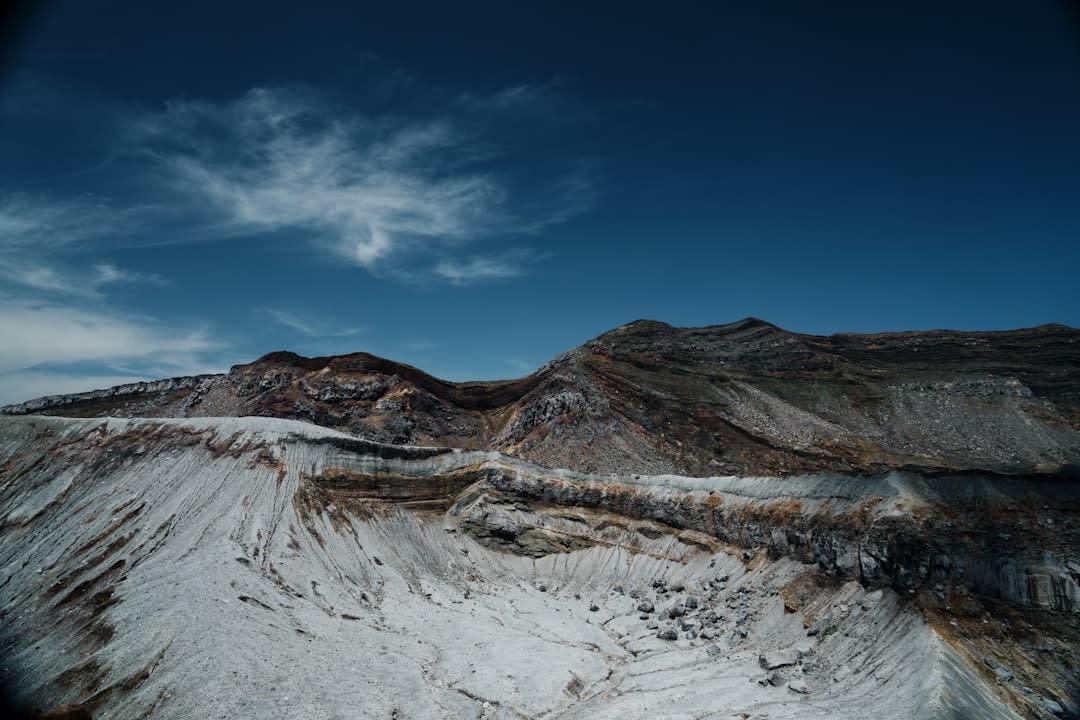
Access to the active central crater itself depends entirely on the volcano’s mood — it vents gas and sometimes closes to visitors, and it was partly restricted the day we went — but the grasslands, the ropeway approaches, and the sheer openness of the caldera were reward enough. Lia and I stood on a ridge in a strong clean wind, looking across a landscape that was green and gentle and yet unmistakably the inside of a volcano, and I thought that this is the thing Kumamoto quietly teaches: it lives at ease alongside enormous forces — earthquakes, volcanoes — and simply gets on with being proud, green, and itself.
Getting There
Kumamoto sits in central Kyūshū and is well linked by the Kyūshū Shinkansen — under an hour from Fukuoka (Hakata) and a little over three from Osaka. The city’s own streetcar runs from the station past the castle and out toward Suizen-ji, making the two main sights easy and cheap to reach. Mount Aso lies to the east: local trains and buses run out into the caldera in around an hour and a half, though services and crater access shift with volcanic conditions, so it is worth checking the day’s status before you set out. Give Kumamoto two nights if you can — one for the city, one for Aso — and you will leave with a fuller sense of Kyūshū than the guidebooks tend to promise.
Keep exploring
More of Kyūshū & Okinawa