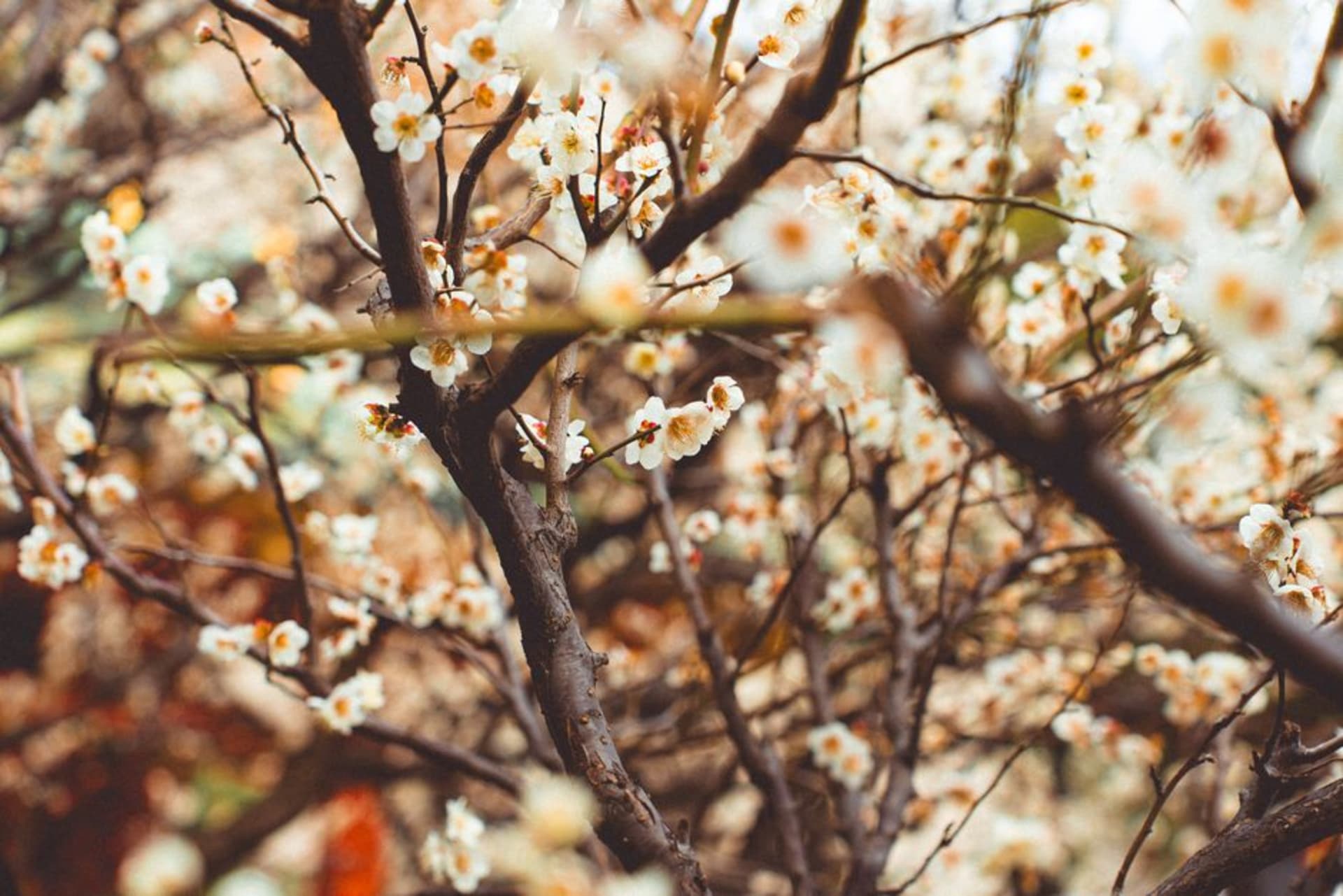
Once the ancient capital of all Kyūshū, now a temple town where students come to pray for their exams beneath the plum trees. Dazaifu wears its long history lightly, in incense smoke and falling blossom.
We went to Dazaifu on a grey February morning and found the approach to the great shrine packed with teenagers in school uniforms, all of them looking faintly nauseous. It took Lia and me a while to understand why. Dazaifu Tenmangū is dedicated to Sugawara no Michizane — a scholar exiled here in the ninth century and later deified as Tenjin, the god of learning — and every winter, as exam season closes in, students from across Kyūshū come to buy amulets and scrawl their university hopes on little wooden plaques. We stood among them in the drifting plum-blossom scent, two foreigners who had already survived our own exams long ago, feeling oddly tender toward the whole anxious crowd.
The Shrine Under the Plum Trees
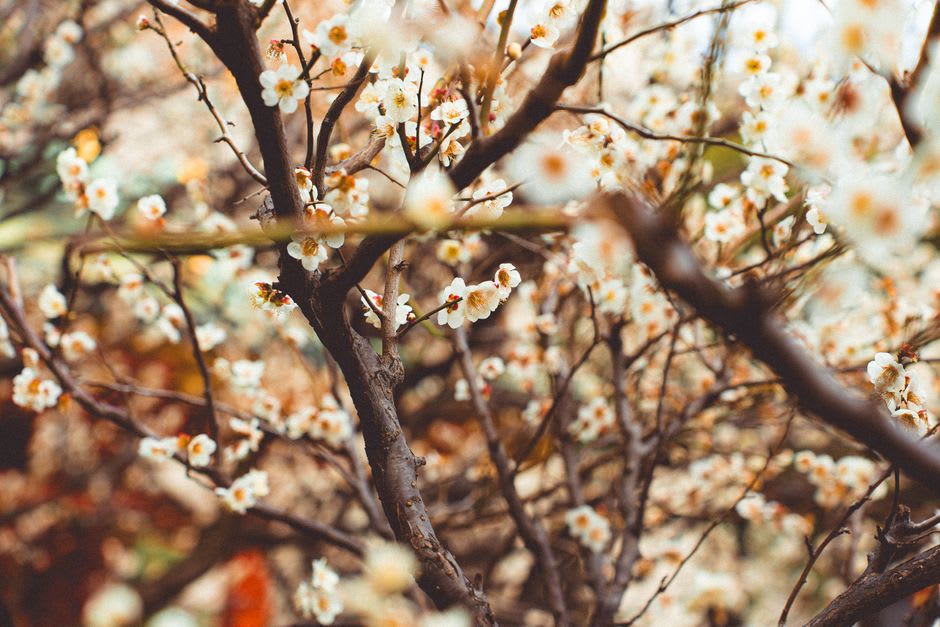
The Tenmangū itself is a beautiful, busy place — vermilion halls, arched drum bridges over a lotus pond shaped like the character for “heart,” and above all the plum trees, some six thousand of them. The most famous, the tobiume or “flying plum,” is said to have loved Michizane so dearly it uprooted itself and flew to Kyūshū to be near him, and it still blooms first each year, right beside the main hall. We arrived just as the earliest blossoms were opening, pink against the wet dark branches, and the smell was extraordinary — sweet and cold at once. Students rubbed the bronze ox by the gate for luck until its head shone. Lia bought an amulet “for anyone still taking exams,” which was very her.
The Moss Garden of Kōmyōzen-ji
A short walk from the shrine’s crowds, down an unassuming lane, sits Kōmyōzen-ji, and almost nobody was there. It is a small Zen temple whose entire reason to exist is a garden of moss and raked gravel and stone, and you take off your shoes and sit on the worn wooden veranda and simply look. The back garden is a slope of deep, luminous green moss under maples, so quiet you can hear it dripping. We sat for the better part of an hour without speaking, the roar of the shrine approach completely gone. An old monk padded through, nodded to us, and vanished. It cost a couple of coins to enter and remains, for me, the truest thing in Dazaifu.
Grilled Mochi and an Ancient Capital
Between the sacred sites, the pilgrim road is lined with shops selling umegae-mochi — a grilled rice cake stamped with a plum crest, crisp outside and molten with sweet bean paste inside, meant to be eaten hot in your hand as you walk. We ate rather more than we should have. Beyond the temple town, though, Dazaifu holds an older and quieter secret: for centuries it was the seat of the government that ruled all of Kyūshū and handled diplomacy with China and Korea, and the grassy foundations of that vanished capital still lie in a field on the edge of town. We walked out to the ruins of the old government hall, empty but for a few dog-walkers, and stood among the bare stone bases where an entire administration once hummed. History here doesn’t announce itself. You have to go looking.
Getting There
Dazaifu is an easy half-day trip from Fukuoka. The most direct route is the Nishitetsu train from Fukuoka’s Tenjin station, changing at Nishitetsu-Futsukaichi for the short branch line to Dazaifu; the whole journey runs under three-quarters of an hour. Direct buses also run from Hakata and Fukuoka Airport. The shrine, museum, and Kōmyōzen-ji are all within an easy walk of the station along the shop-lined approach, so leave the car behind and go on foot — ideally in plum season, in early spring, when the trees do their quiet, extraordinary thing.
Keep exploring
More of Kyūshū & Okinawa