Sakai
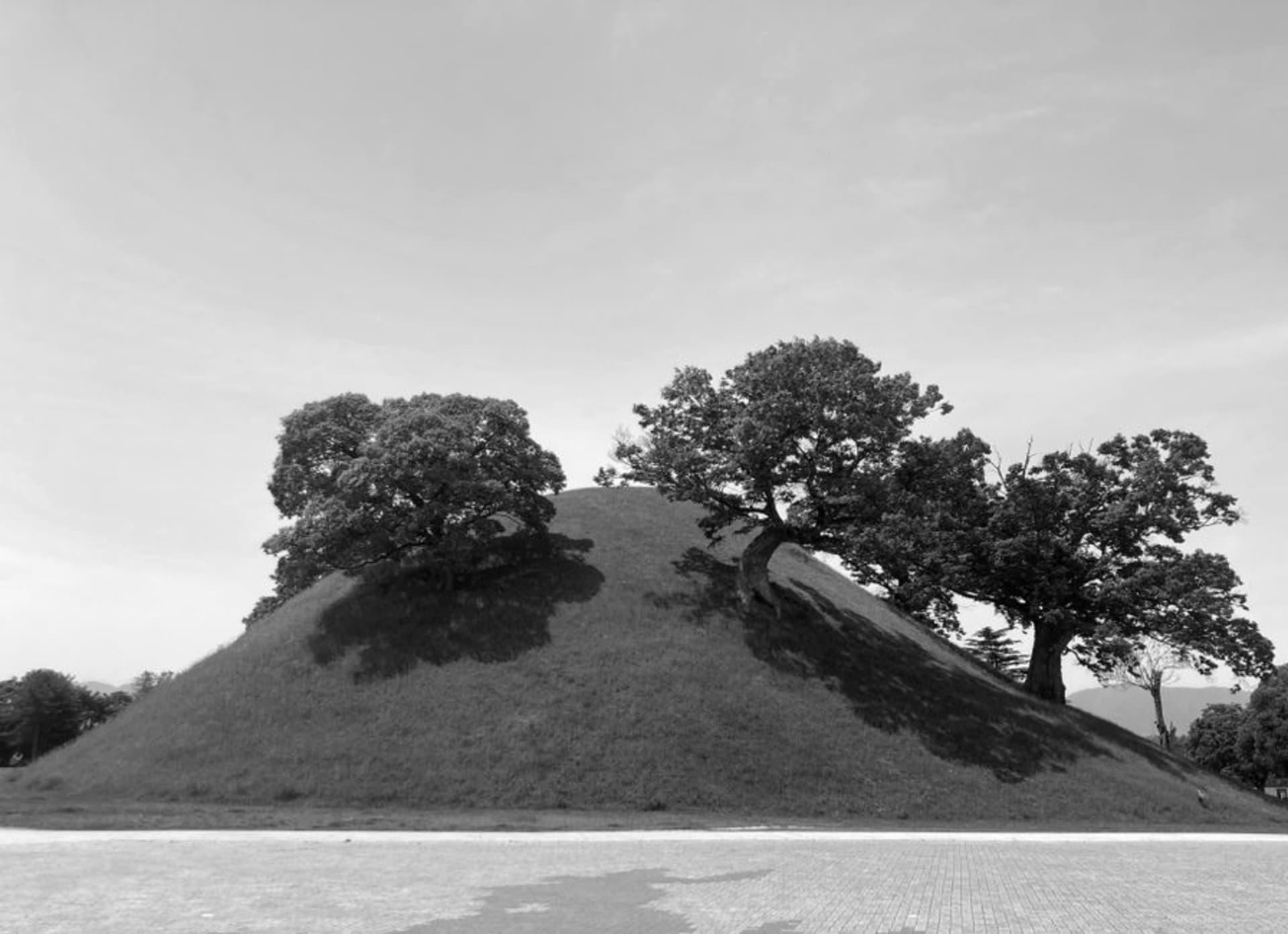
"The largest tomb in Japan, and from the ground it looks like an ordinary wood. That's the trick of it."
An old Osaka port city sitting on colossal keyhole tombs older than most of recorded Japanese history, where knife-makers still hammer steel the way tea masters once folded silence into a bowl. We went for the blades and left thinking about mounds we could not see. Sakai works on you slowly.
I went to Sakai for a knife. That was the honest reason — I’d been reading about Sakai steel for years, the forged carbon blades that professional chefs across Japan swear by, and I wanted to hold one before I bought it. Lia came along on the promise of tombs. What neither of us expected was how the two things would fold together: a city where craftsmen have hammered metal for six centuries, sitting on top of burial mounds built fifteen hundred years ago, both of them requiring you to slow down and look properly before they give anything up. We started at the Nintoku mound, walked its edge, and found ourselves standing before what is, by area, one of the largest tombs on earth — and seeing, essentially, some trees.
The Mozu Kofun
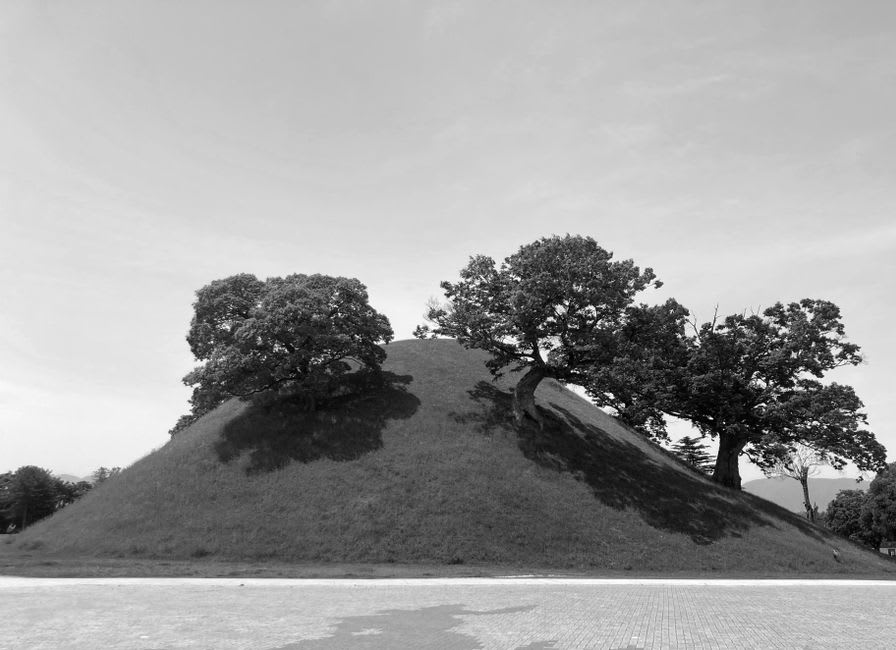
The Mozu tombs are humbling in a way that photographs can’t manage. The Daisenryō kofun, attributed to Emperor Nintoku, is a keyhole-shaped mound nearly 500 metres long, ringed by three moats, raised in the fifth century — a UNESCO World Heritage site since 2019 — and you cannot climb it, enter it, or really even see its shape from ground level. That’s the strange genius of the place. From the viewing platform at the front you face a low green rise across a moat, and only a map or the observation deck at the nearby city hall reveals the vast keyhole beneath the forest. Lia and I walked a long stretch of the outer path, the water still and dark beside us, and I found the invisibility oddly moving — a monument so large it defeats the eye, guarding whatever it guards in plain sight.
Forged Steel
Sakai has made blades since the 1400s, when the town’s smiths turned from tobacco knives to kitchen cutlery, and today a huge share of Japan’s professional chefs use Sakai-forged knives. At the Sakai Traditional Crafts Museum we watched the process laid bare — the forging, the water-quenching, the endless patient sharpening on wet stones — and I understood why these things cost what they do. The division of labour is old and strict: one artisan forges, another sharpens, a third fits the handle. I bought a single-bevel blade from a shop where the man behind the counter tested its edge on a sheet of paper without looking, and stamped my initials into the wood of the handle. Lia says I’ve never been happier holding a shopping bag. She’s not wrong.
The Way of Tea
Sakai’s third thread is the quietest. This port town was the birthplace of Sen no Rikyū, the sixteenth-century master who shaped the Japanese tea ceremony into the spare, profound art it became — wabi, the beauty of the plain and imperfect. At the Sakai Plaza of Rikyu and Akiko we learned his story and that of Yosano Akiko, the town’s famous poet, and then did the only sensible thing: sat for a bowl of matcha in a tea room, backs straight, knees complaining. There is a directness to the ceremony that rhymes with the knives and the tombs — nothing wasted, every motion meant, an attention that treats a bowl of green tea as worth doing exactly right. We drank in near-silence, and I thought that Sakai, for all its three faces, has really only one lesson: pay attention, and the ordinary opens up.
Getting There
Sakai sits just south of central Osaka and is genuinely easy to reach. The Mozu tombs are a short walk from JR Mozu station on the Hanwa line, about fifteen minutes from Tennōji; the Nankai line also serves the city centre and the older port district. Trains run frequently and the ride from Osaka is well under half an hour. Rent the flow of a half-day if you only want the tombs, or give it a full day to add the crafts museum and a tea bowl. Climb the free observation deck at the city hall for the one view that finally shows you the keyhole whole.
Keep exploring
More of Kansai