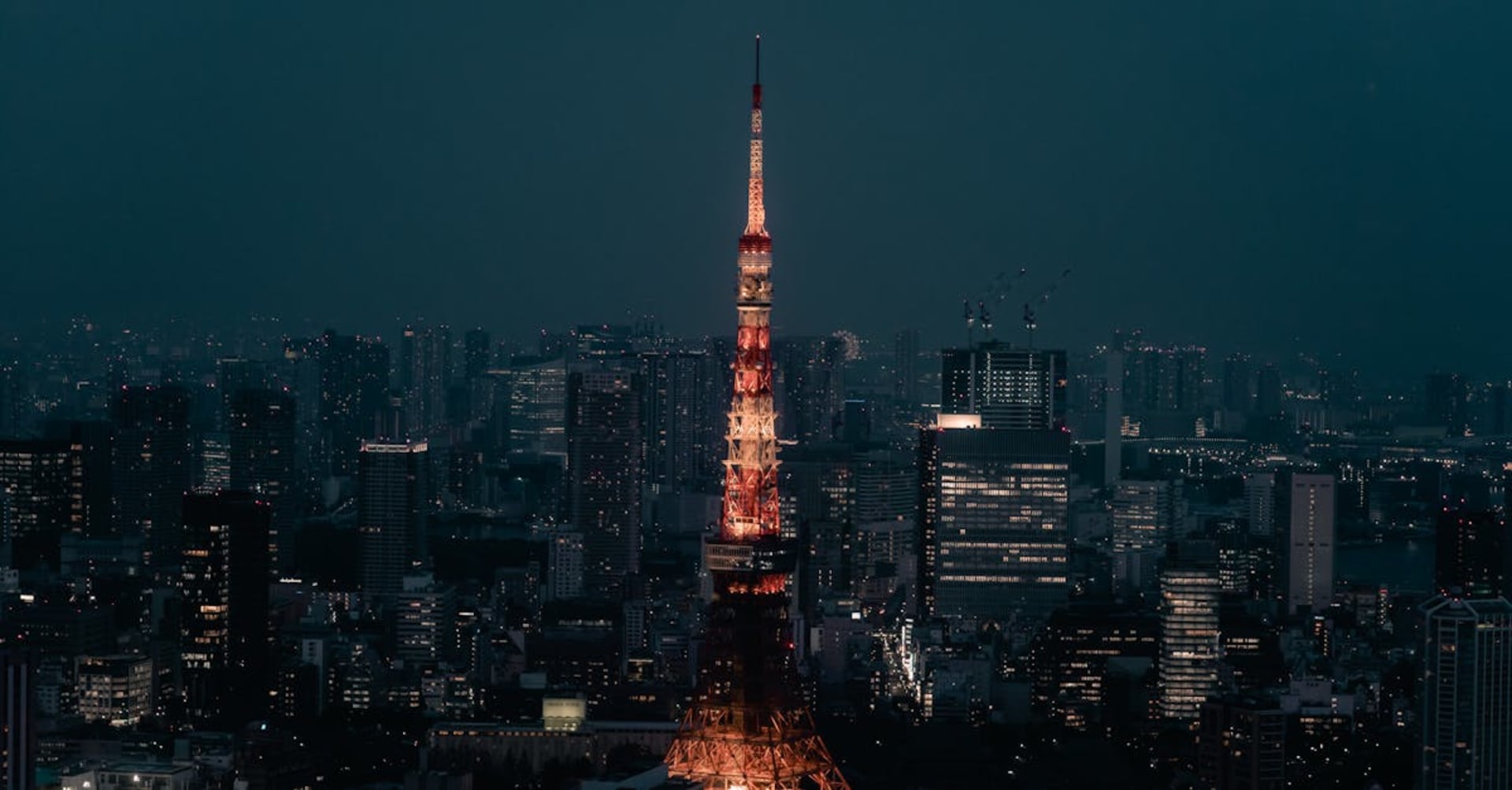
Tokyo
"The city where everything works and nothing makes sense — until suddenly it all does."
I spent eight days in Tokyo with Lia in September 2025, and by the end I was not sure whether I had scratched the surface or been swallowed whole. Probably both. Tokyo is a city that does not ease you in. You land at Narita, buy your Suica card from a woman who bows as she hands it to you, board the Sky Access Express, and within an hour you are standing in Asakusa watching incense smoke curl around Senso-ji while a grandmother in a kimono and a teenager in a Pikachu hoodie offer prayers side by side. That is Tokyo in a single frame. Ancient and absurd and completely sincere.
The city has fourteen million people and it is quieter than most towns of fifty thousand. The trains arrive at the exact second the schedule promises. The convenience stores sell better food than most restaurants in Europe. The public toilets have heated seats, ambient sound machines, and a degree of engineering that suggests someone, somewhere, has devoted their entire career to the problem of using a bathroom in comfort. Tokyo is a civilisation operating at a level of refinement that makes you realise you have been living, until now, in a rough draft.
The First Night
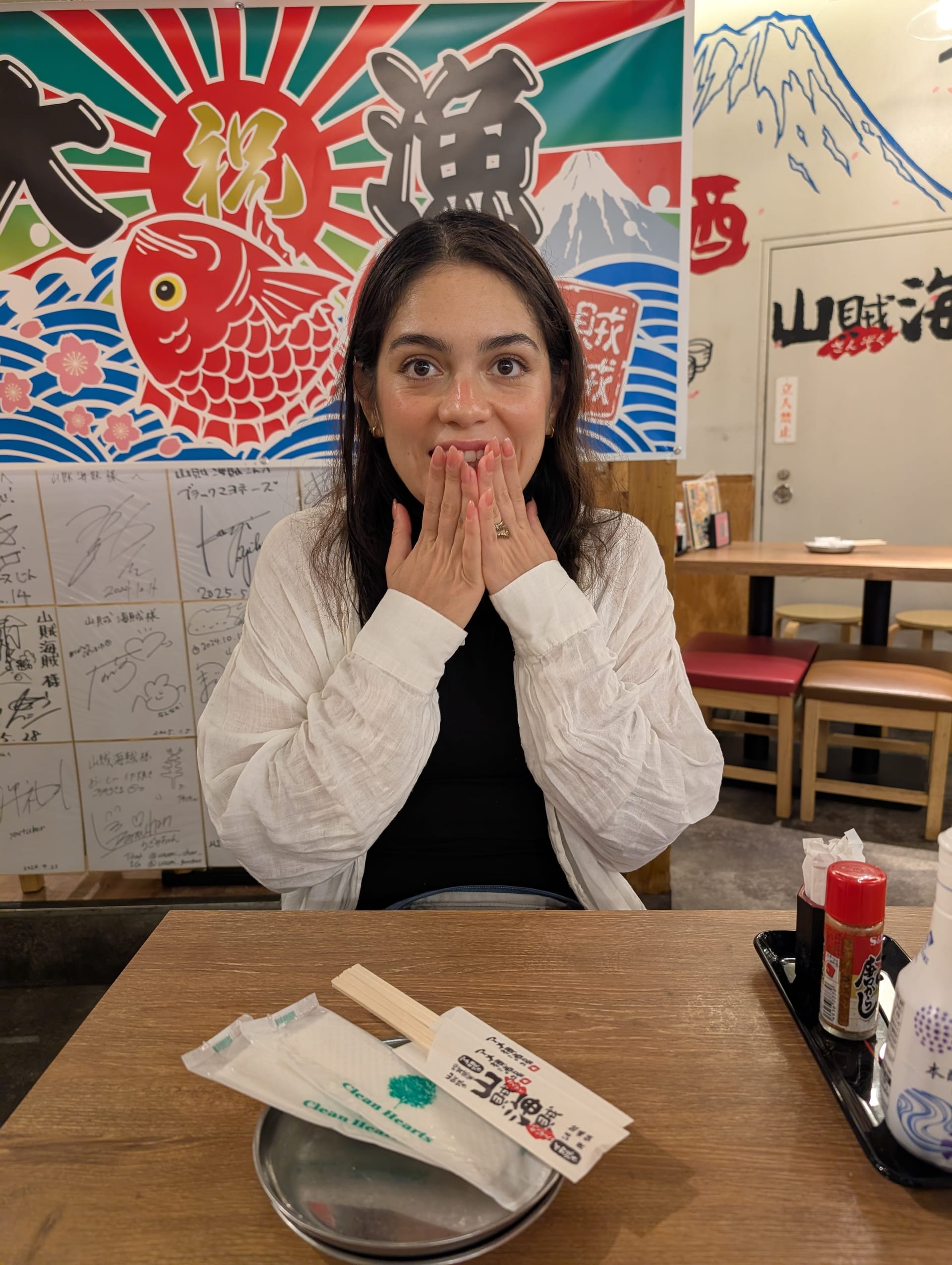
We arrived from Narita in the late afternoon and dropped our bags at the hotel. An hour later, we were sitting in an izakaya near the station — the kind of place with hand-painted fish murals on the walls and a mural of Mt. Fuji behind the counter, chopsticks in paper sleeves, and a menu we could not read. Lia sat across from me with her hands over her mouth in that expression she makes when she is simultaneously overwhelmed and delighted, which is to say: the expression she wore for most of this trip.
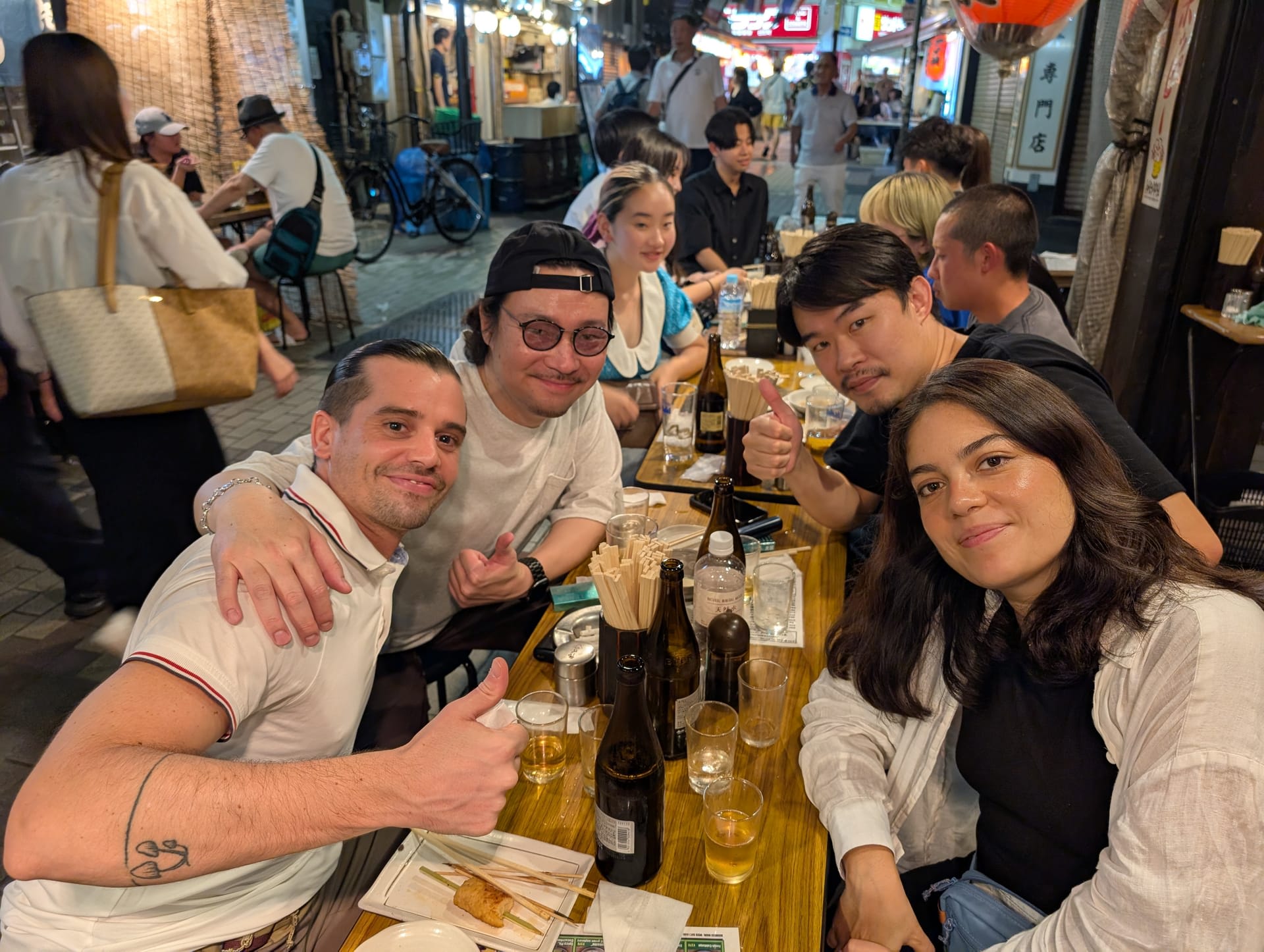
A couple of hours later, we found ourselves at an outdoor izakaya on a side street — long wooden tables, bottles of Kirin and Asahi, skewers smoking on a grill the size of a coffin. We had met people. This is the thing about Tokyo that nobody warns you about: the city is not cold. It is reserved until it is not, and then it is the warmest place on earth. A Mexican guy who had been living in Japan for three years. A Japanese couple who spoke no English and communicated through toasts and thumbs-up. By midnight we were all friends, in that specific way that only happens when strangers share food and beer in a foreign city and nobody wants the night to end.
Asakusa — The Soft Landing
We started in Asakusa and I would recommend the same to anyone arriving for the first time. The neighbourhood sits in the eastern part of the city, near the Sumida River, and it has a pace that the rest of Tokyo does not. Older, quieter, with low-rise buildings and the kind of local restaurants where the menu is handwritten and the cook has been making the same three dishes for forty years.
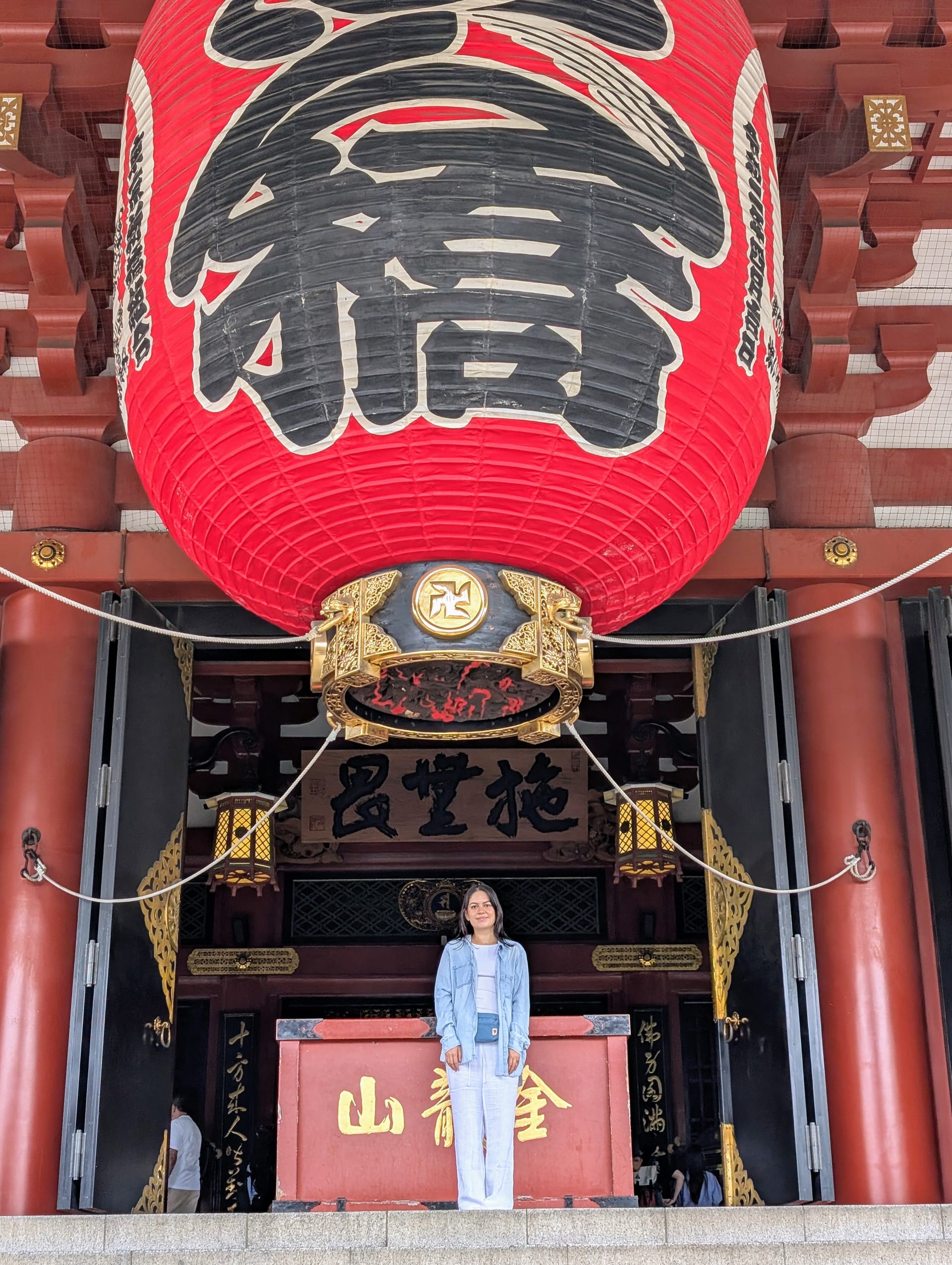
Senso-ji is five minutes from the station — Tokyo’s oldest temple, approached through the Kaminarimon gate (the one with the enormous red lantern that every photograph of Tokyo seems to include) and the Nakamise-dori shopping street, which is a corridor of colour and noise selling rice crackers, wooden combs, sensu fans, and taiyaki — fish-shaped cakes with sweet red bean or custard filling that became our default walking snack for the next three weeks. The temple itself is bigger and more beautiful than I had expected. The incense urn in front of the main hall produces a constant plume of smoke that pilgrims wave toward themselves for health and good fortune. Lia did this. I did this. An old woman beside us nodded. We were in Japan.
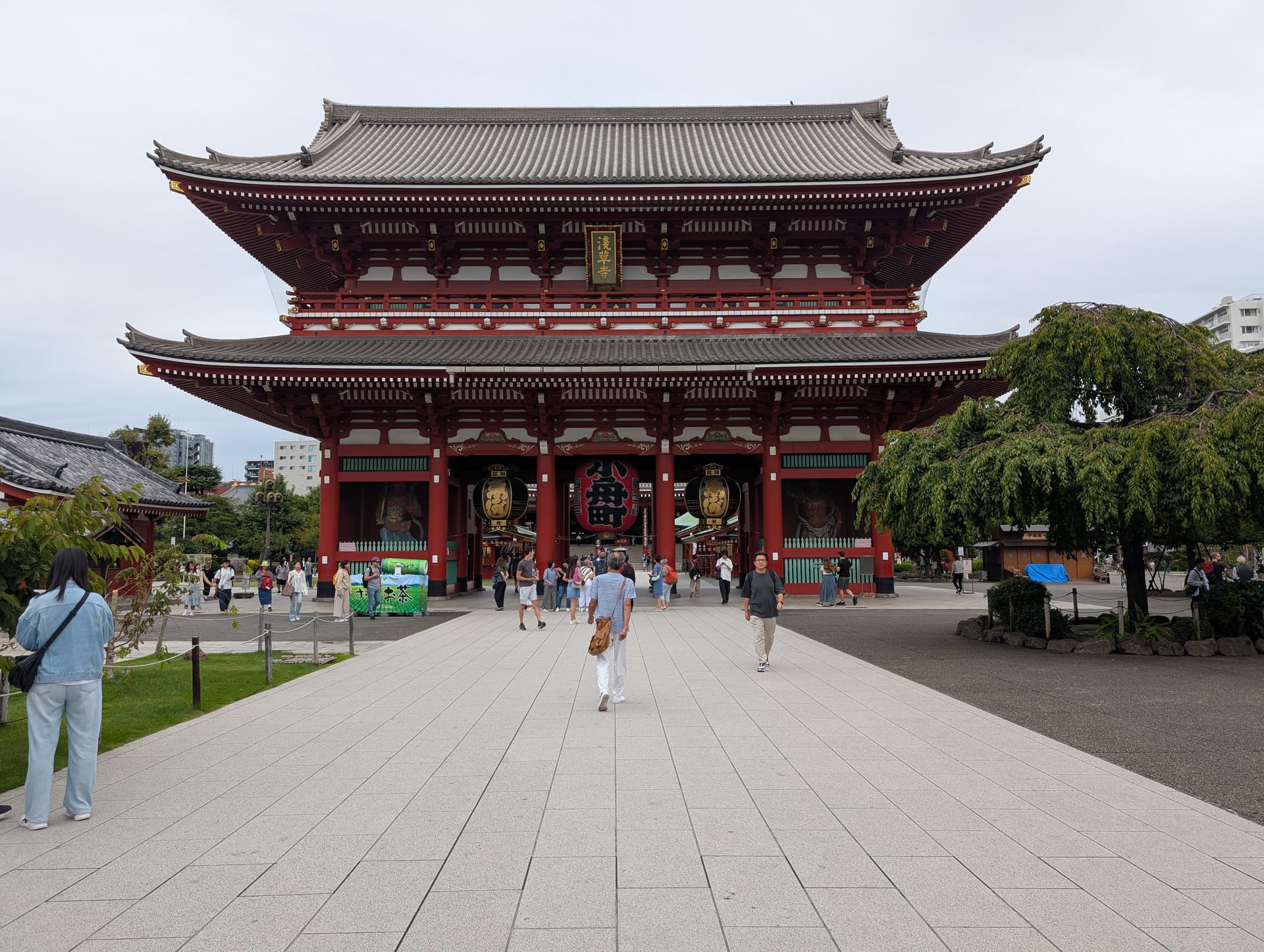
Lia stood beneath the enormous red lantern at the gate and I took a photograph that has become one of my favourites from the trip. The lantern is three metres tall and painted with kanji that I could not read, and she looked very small beneath it, and very happy, and the scale of the thing — the gate, the lantern, the temple complex stretching behind it — made everything feel like the opening scene of something important.
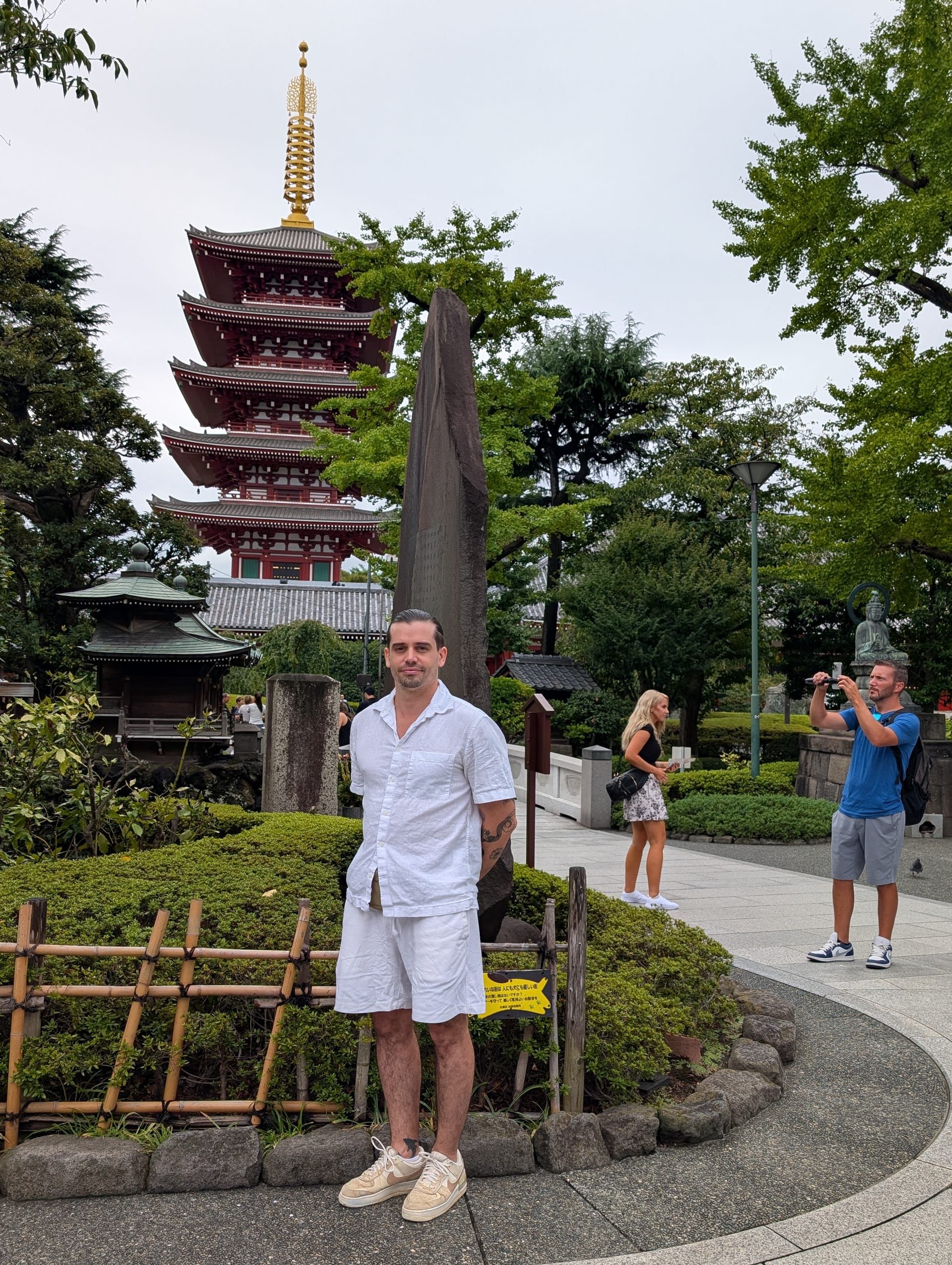
I asked someone to photograph me with the five-story pagoda behind me. I am wearing all white, which in retrospect was ambitious for a day that involved incense smoke, street food, and a matcha soft serve that dripped down my wrist.
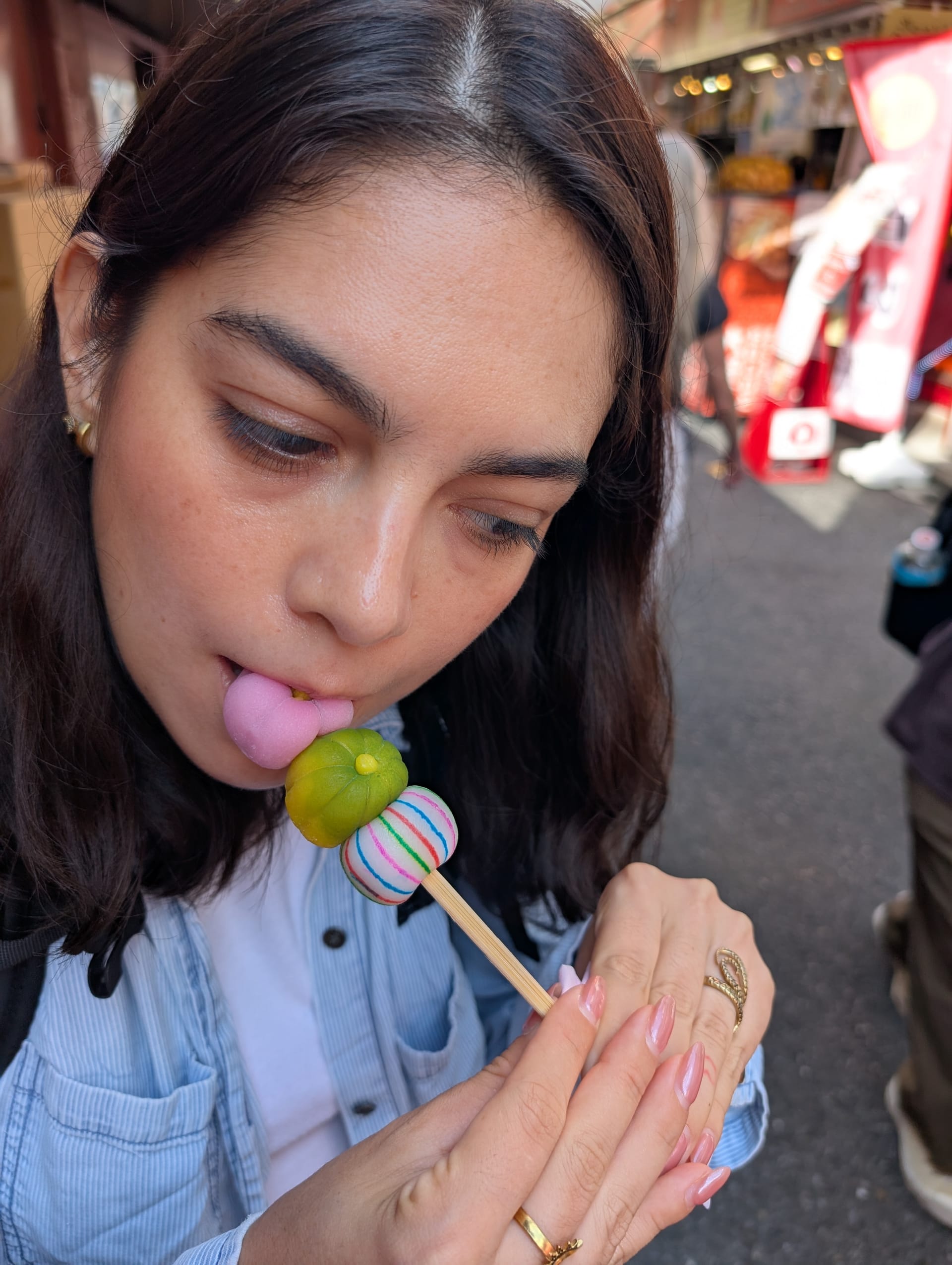
Along the shopping street, Lia discovered dango — mochi rice balls on skewers, pink and green and striped, sweet and chewy and impossible to eat with any dignity. She ate hers with the focused attention of someone conducting important research.
In the evening, we took the Ginza Line five minutes to Ueno and dived into Ameyoko Market — a narrow, chaotic, wonderful street that was nothing like the orderly Japan I had imagined. Vendors shouting prices. Fresh fish on ice. Dried squid hanging from hooks. Spices. Clothes. Electronics. Street food sizzling on griddles. It felt more like Southeast Asia than Tokyo, and the energy was infectious. We ended up at an izakaya near the market entrance, ordering yakitori by pointing at photographs. The skewers arrived on wooden plates — chicken thigh, cartilage, heart, skin — each one a different texture, each one extraordinary. I said oishii to the cook, who smiled and immediately brought us a bonus plate of tsukune meatballs. We stayed for two hours and spent less than we would on a mediocre sandwich in Paris.
After dinner, we walked to Ueno Park and the lantern-lit Shinobazu Pond. The reflection of the temple on the water, the lotus leaves catching the light, the quiet after the chaos of the market — it was the first of many moments on this trip where Tokyo shifted registers so fast I had to recalibrate my entire understanding of the city.
Akihabara — The Sensory Assault
Akihabara is the electronics-and-anime district, and even if you do not care about manga or retro gaming, the sheer density of it is worth experiencing. Six floors of anime figurines, retro video games, maid cafes, flashing pachinko parlours, and a concentration of neon that makes Times Square feel like a provincial theatre. I lost an hour in Super Potato, a retro gaming store where every console I had ever owned as a child was displayed under glass like a museum artefact — the original Game Boy, the Super Nintendo, a Sega Saturn in its box. The nostalgia was physical. Lia disappeared into Mandarake and emerged with a bag of things she refused to show me.
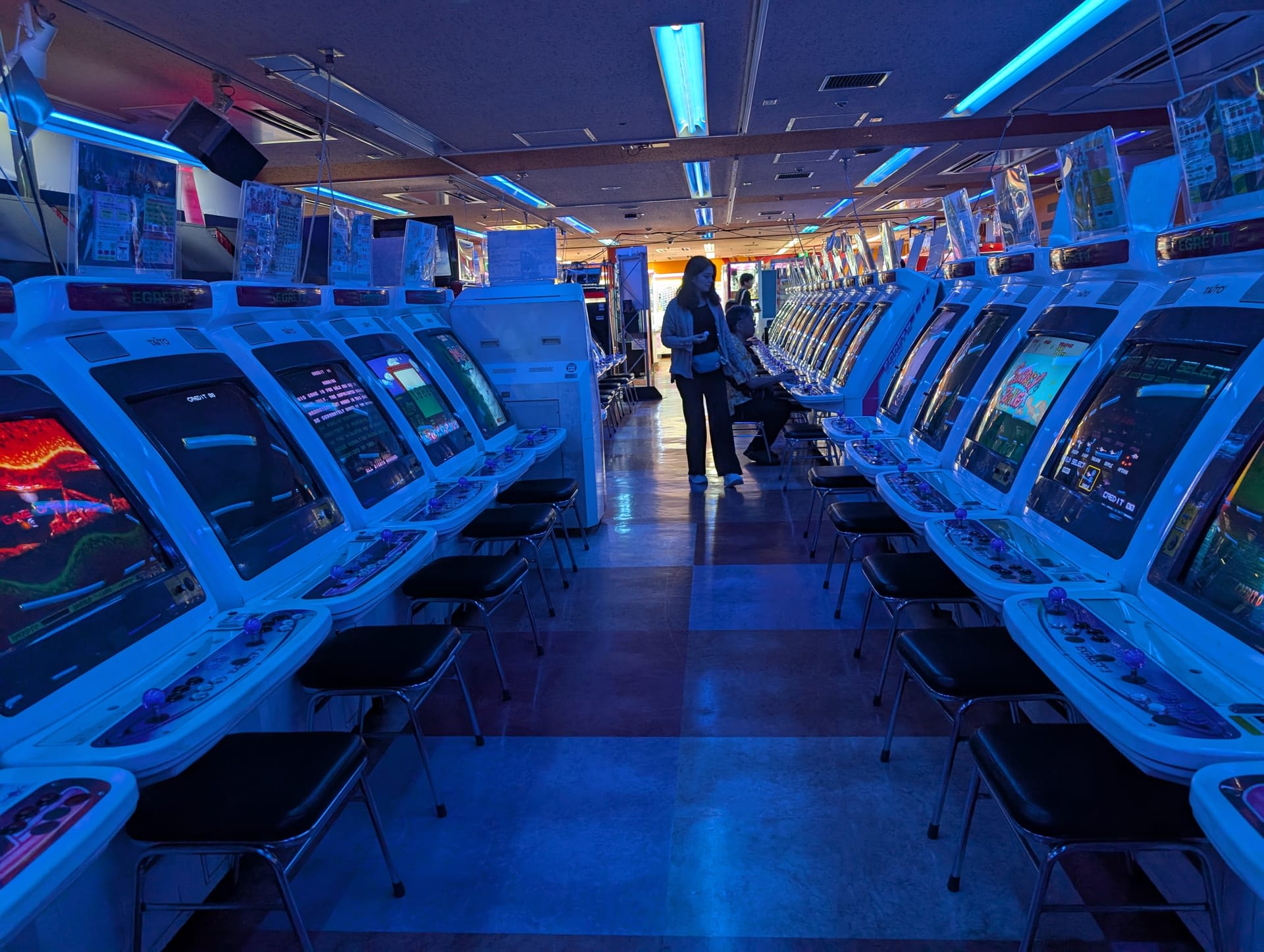
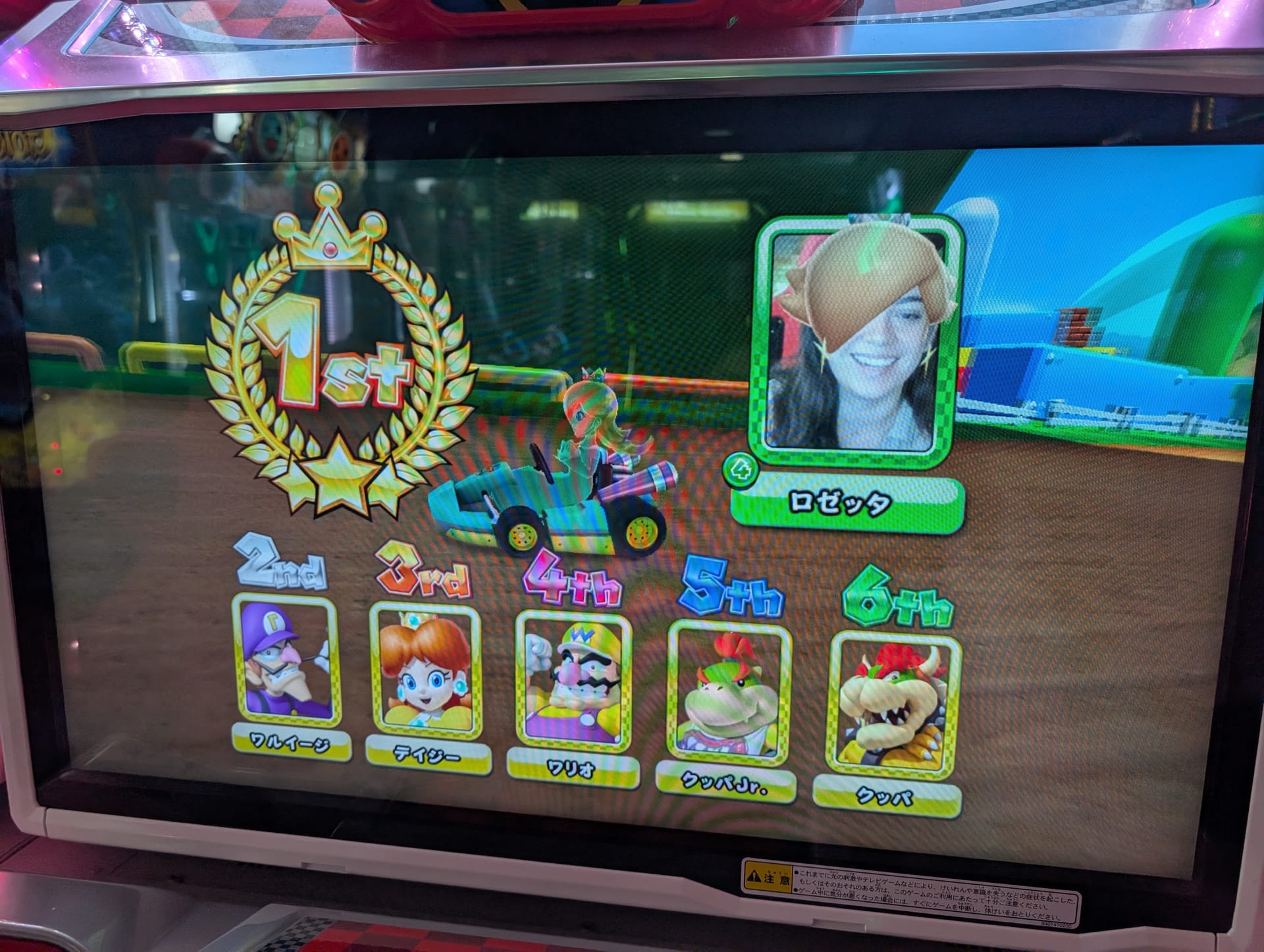
The arcades, though — the arcades are where Akihabara becomes something else. We found a game centre with rows of glowing cabinets stretching into the blue-lit distance, the air humming with electronic sound, and not a single person looking up from their screen. The concentration was monastic. Lia sat down at a Mario Kart cabinet and proceeded to win first place on her first attempt, which she documented with a screenshot and has mentioned approximately forty times since.
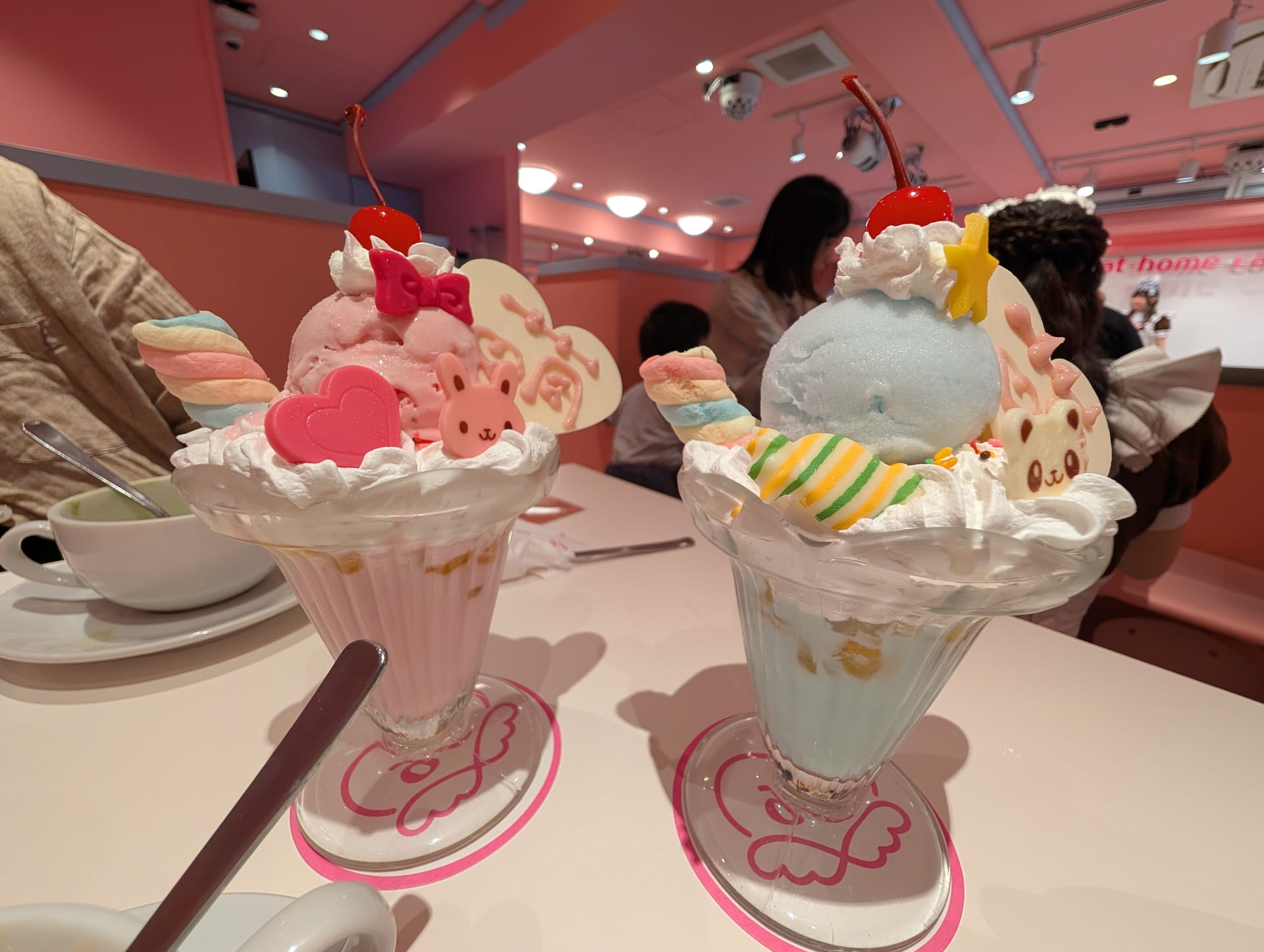
And then we went to a maid cafe. I need to explain this. A maid cafe is a cafe where the waitresses dress in French maid costumes, address you as “master” or “princess,” draw hearts on your omelette rice with ketchup, and perform a spell over your food to make it taste better. The spell involves hand gestures. You are expected to participate. This is not ironic. This is sincere. The parfaits arrived in pastel glasses topped with character-shaped cookies and whipped cream sculpted into shapes that defied physics. They tasted excellent. The entire experience was surreal and joyful and completely impossible to explain to anyone who has not sat in a pink room while a woman in a maid outfit asks you to say “moe moe kyun” before you are allowed to eat your dessert.
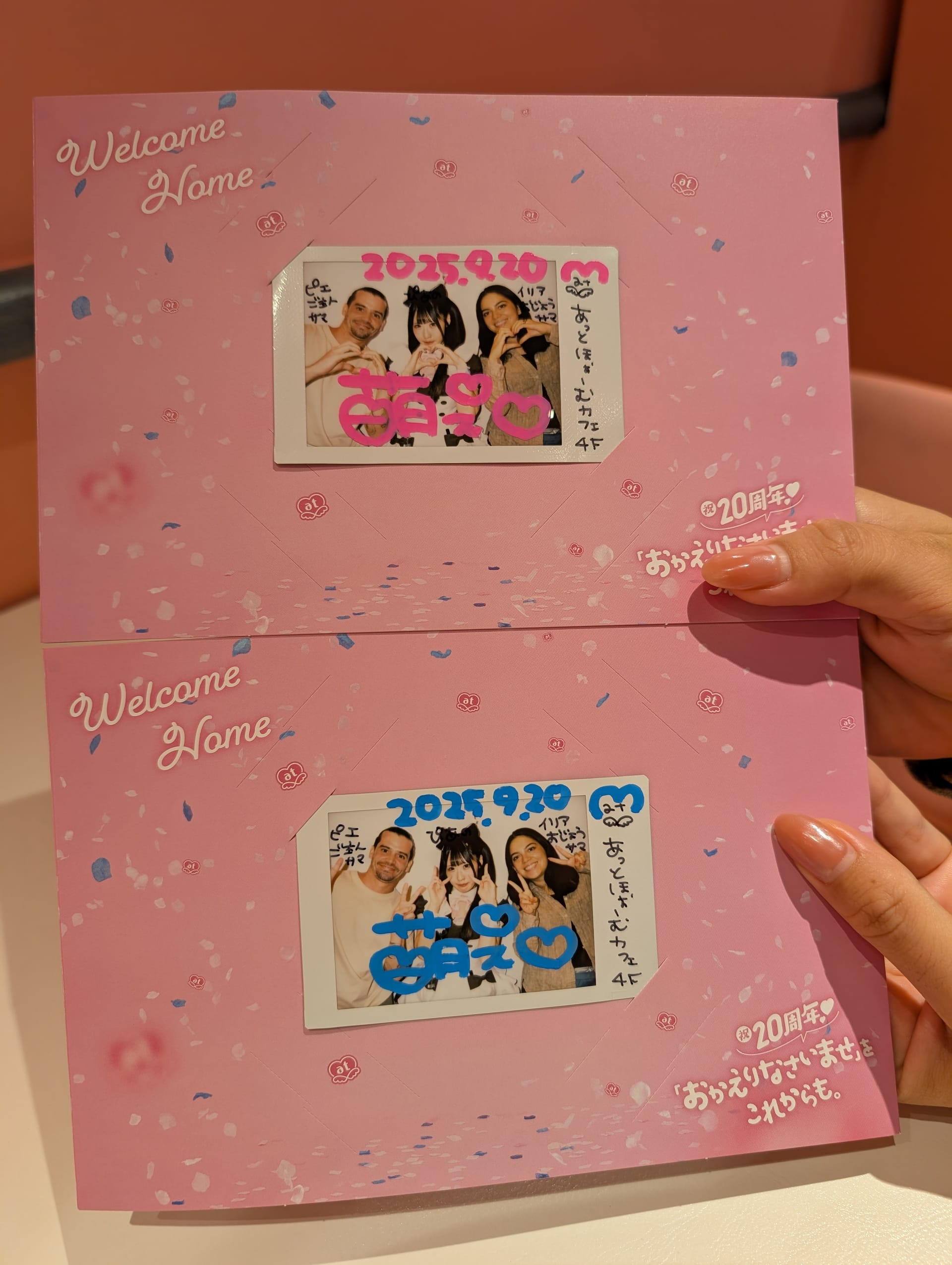
We left with “Welcome Home” polaroid cards — the maids had written the date (2025.9.20) and drawn hearts and stars around our group photo. Lia keeps hers in her wallet. I keep mine in the drawer of my desk in Puerto Escondido, next to my omikuji fortune from Arakura Sengen Shrine, which tells you everything you need to know about what Japan does to a person.
Lunch was at Kanda Yabu Soba — not in Akihabara itself but a short walk away in Kanda, a legendary soba restaurant that has been serving the same zaru soba since 1880. The building is traditional: dark wood, paper screens, the sound of slurping as a form of compliment. The noodles arrived cold on a bamboo mat. The dipping sauce was concentrated, intense, designed to be used sparingly. The ritual — pick up a small bundle with chopsticks, dip the tips briefly, slurp — was meditative in a way I had not expected from a plate of noodles. Fifteen hundred yen. One of the best meals of the trip.
Shinjuku — Where Tokyo Reveals Its Night
We moved to a hotel in Shinjuku for the middle stretch of our Tokyo days, and this is where the city showed its other face. Shinjuku is organised chaos — the kind that fourteen million people produce when they decide that everything should be available at all times, forever.
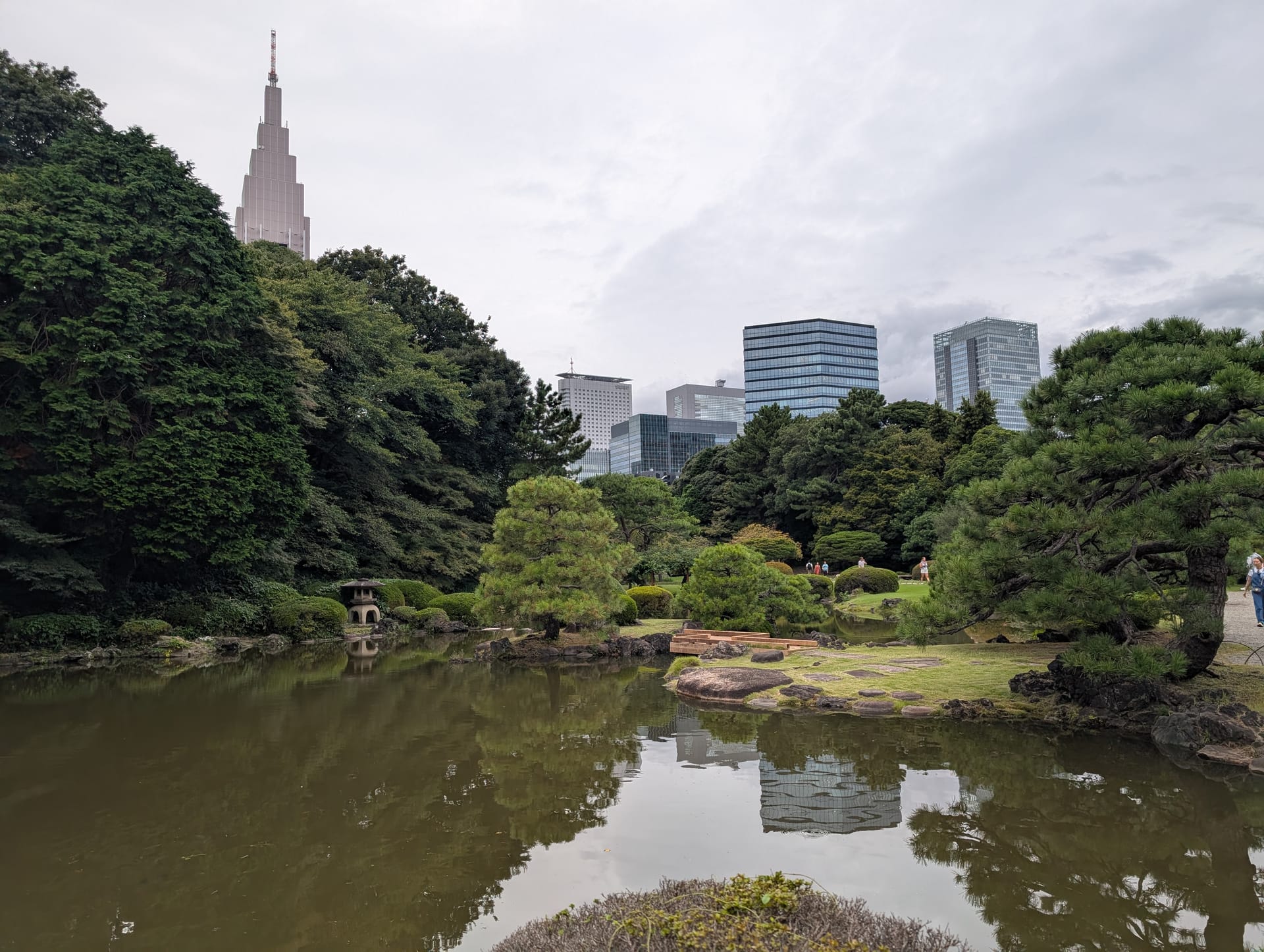
During the day, we went up to the free observation decks at the Tokyo Metropolitan Government Building — forty-five floors, a 360-degree view of the city stretching to the horizon, and no admission fee, which seemed impossible and turned out to be the Japanese government’s idea of public service. We spent a peaceful hour at Shinjuku Gyoen, the national garden that closes at 4:30 and contains Japanese, English, and French landscape gardens within its borders — the kind of calm, sculpted beauty that Tokyo hides behind its concrete with a discretion that borders on secrecy.
We browsed the depachika at Isetan — the basement food hall of the department store, which is less a food court than a cathedral of gastronomy. Then night fell and Shinjuku became a different city.
Golden Gai is my strongest memory from Tokyo. Six narrow alleys containing roughly two hundred bars, each the size of a large closet, each seating four to six people, each with its own rules, personality, and history. Some bars do not welcome foreigners. Some do not welcome first-timers. Some welcome everyone with a cover charge and the understanding that you are here to drink, talk, and contribute to an atmosphere that has been building since the 1950s.
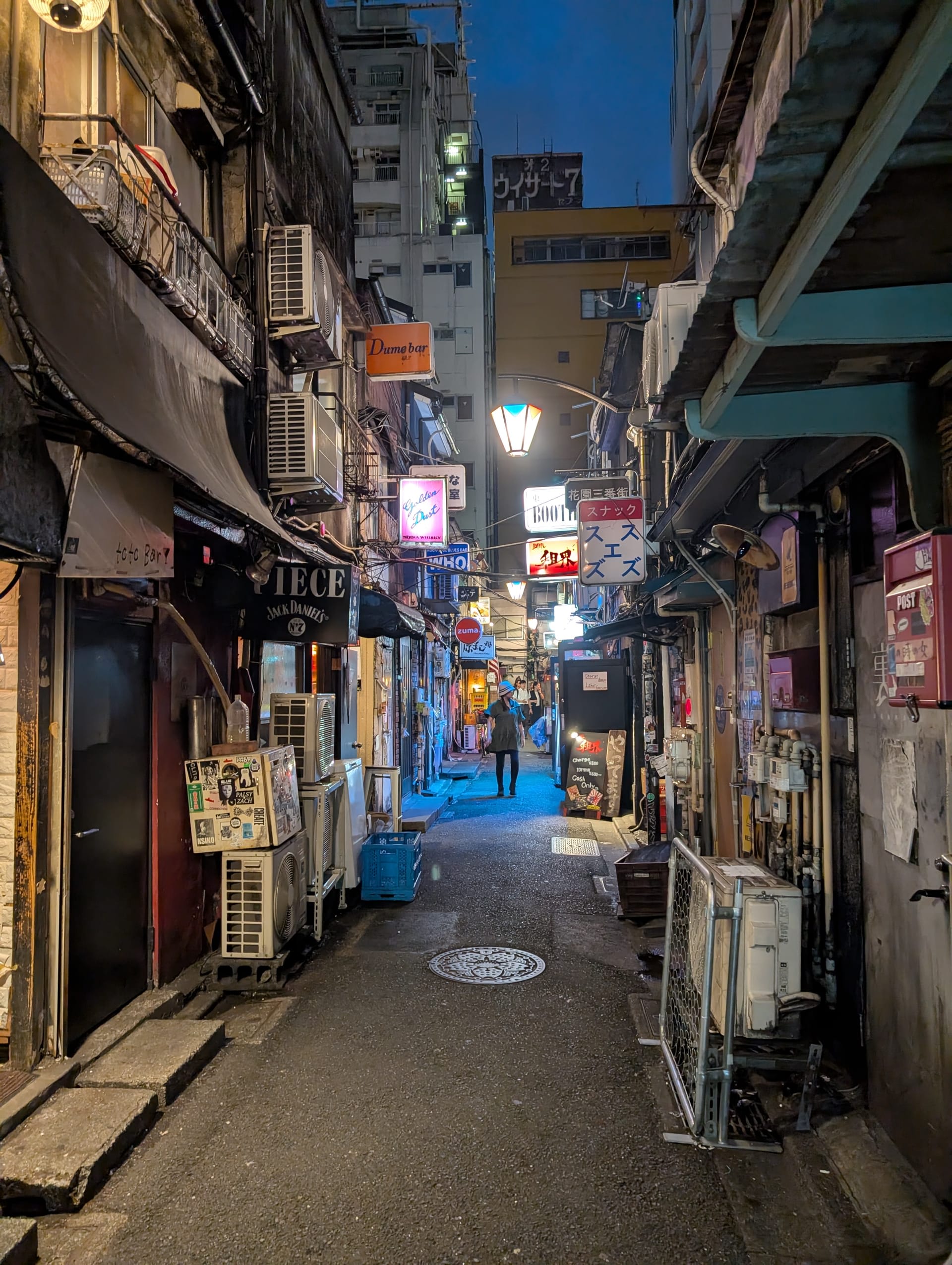
We went to Bar Albatross — cash-only, a couple thousand yen cover, tiny, warm, and presided over by a bartender who spoke no English and communicated through gestures, smiles, and the extraordinary quality of his whisky highballs. We stayed until the alleys were full of smoke and laughter and the specific kind of intimacy that comes from drinking in a space where your knees touch the person beside you and the ceiling is close enough to graze with your hand. Carry five thousand yen in cash. Do not be afraid of the small doors. The best things in Tokyo are almost always behind them.
Omoide Yokocho — Memory Lane, or “Piss Alley” if you prefer the honest version — is a row of yakitori stalls under a tangle of electric wires and paper lanterns, tucked beside Shinjuku Station’s west exit. The smoke from the grills rises between the buildings and catches the light in a way that looks like a film set from the 1950s, except it is real and functioning and the chicken is exceptional. We sat on plastic stools, ordered skewers and draft beer, and watched the cooks work with a precision and speed that made our own professional lives feel like we were moving underwater. An elderly couple next to us saw us struggling with the menu, ordered for us, and recommended the chicken hearts. They were right. We clinked glasses with them. They bowed. We bowed. Nobody spoke the same language. Everyone understood everything.
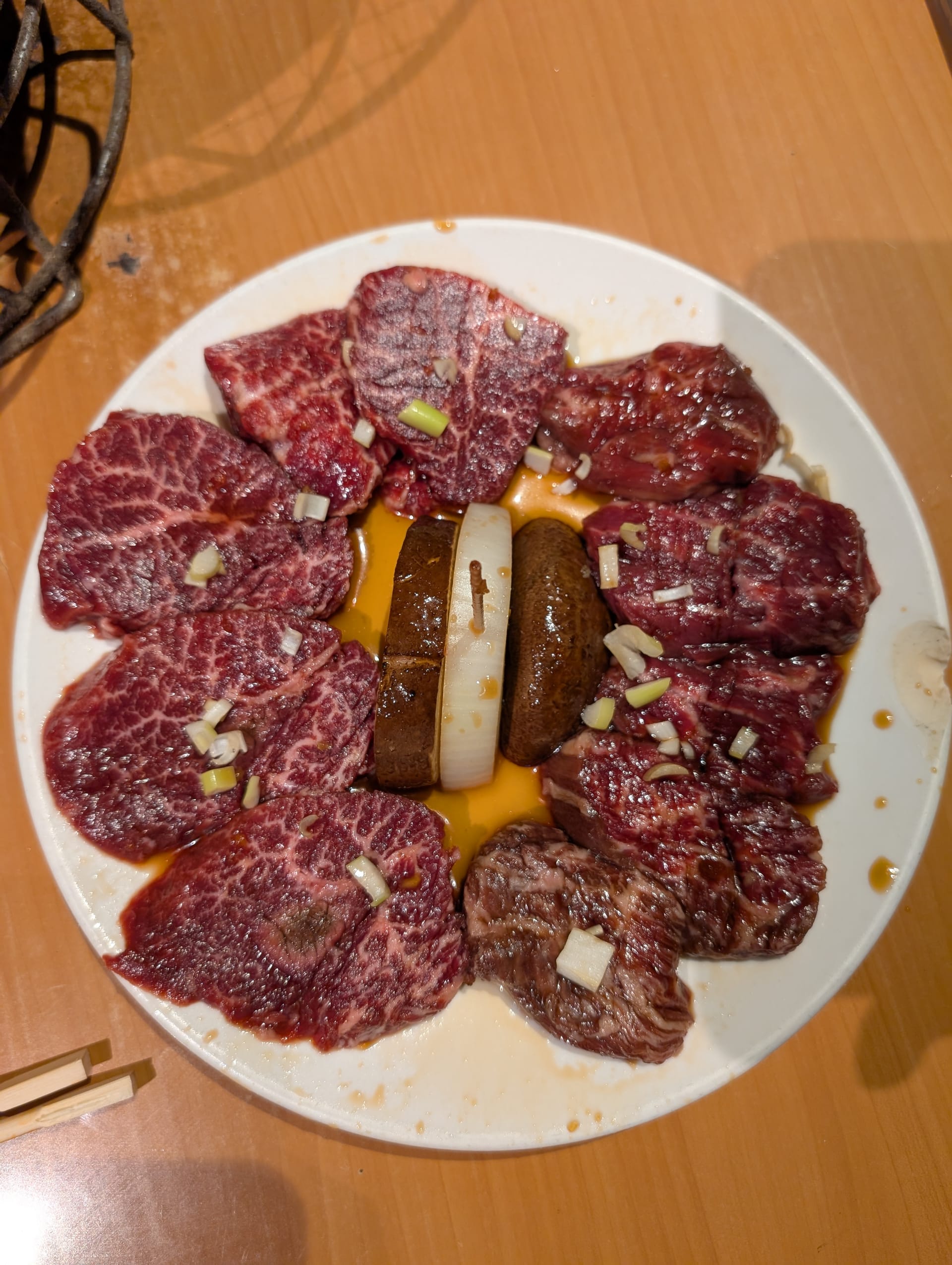
Later that night, we had yakiniku — Japanese barbecue — at a place near the hotel. The plate arrived and I stared at it. A circle of wagyu beef, each cut different — marbled slices, thick chunks, thin ribbons — arranged around a pool of egg yolk with grilled vegetables at the centre. The meat was so finely marbled it looked like fabric. You cook it yourself on a charcoal grill set into the table, a few seconds per side, and dip it in the yolk. The first bite is a recalibration of everything you thought you knew about beef.
Karaoke Kan in Shinjuku was Lia’s idea and it was a good one. Private rooms, rented by the hour, with a catalogue of thousands of songs in every language. We sang for an hour. I am not a good singer. Lia is worse. It did not matter. Karaoke in Japan is not about talent. It is about joy.
Tsukiji, Shibuya, Meiji Jingu
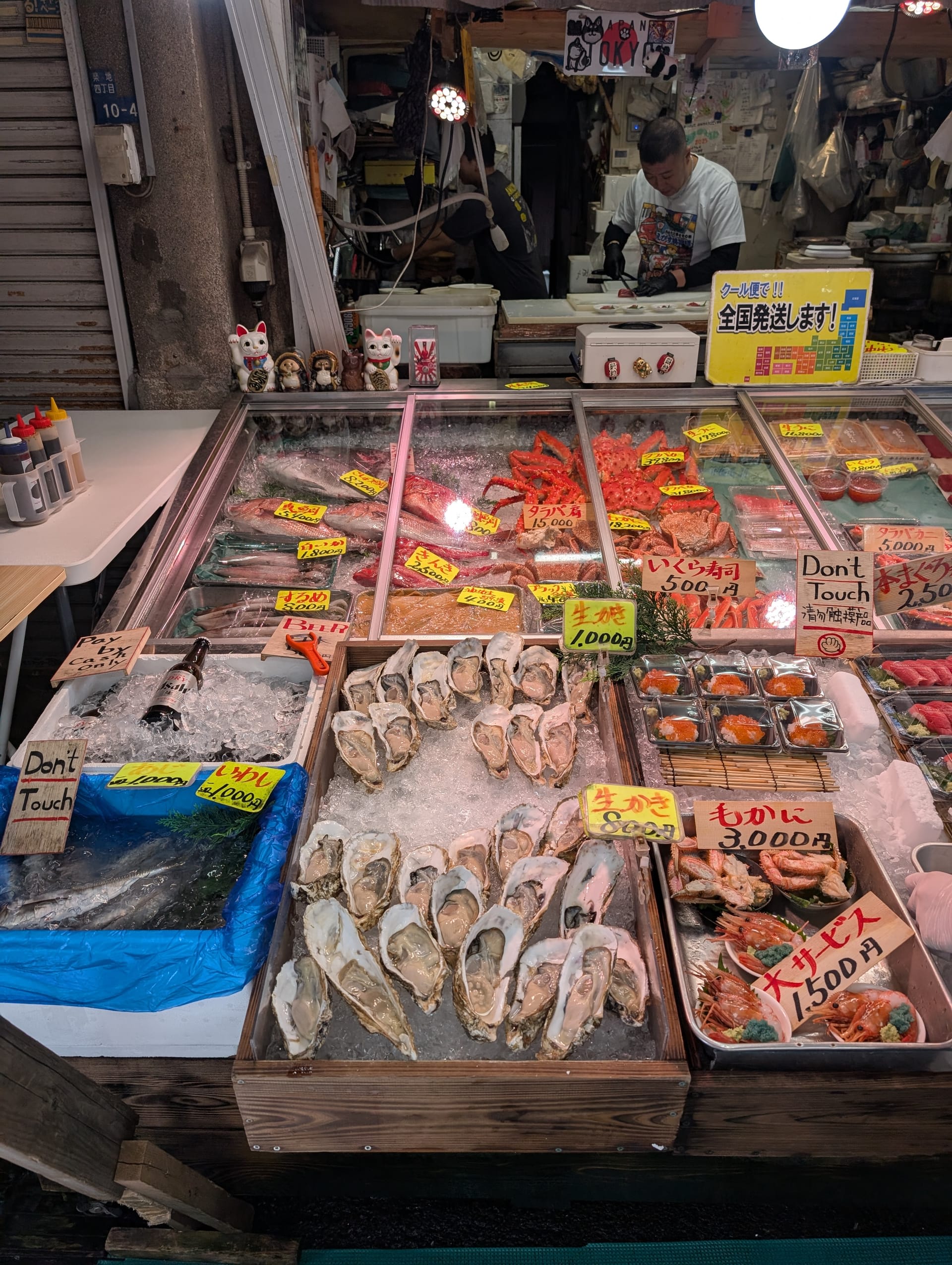
Tsukiji Outer Market on a weekday morning at nine is one of the great food experiences in the world. The wholesale market moved to Toyosu years ago, but the outer market remains — a dense grid of stalls selling the freshest seafood I have ever seen, grilled in front of you and handed over on paper plates with a casualness that belied the quality. The stalls display their offerings like jewellery — rows of wagyu skewers, uni on rice, scallops the size of your palm, octopus legs, eel, crab — all with handwritten price tags and a vendor who will cook it while you watch.
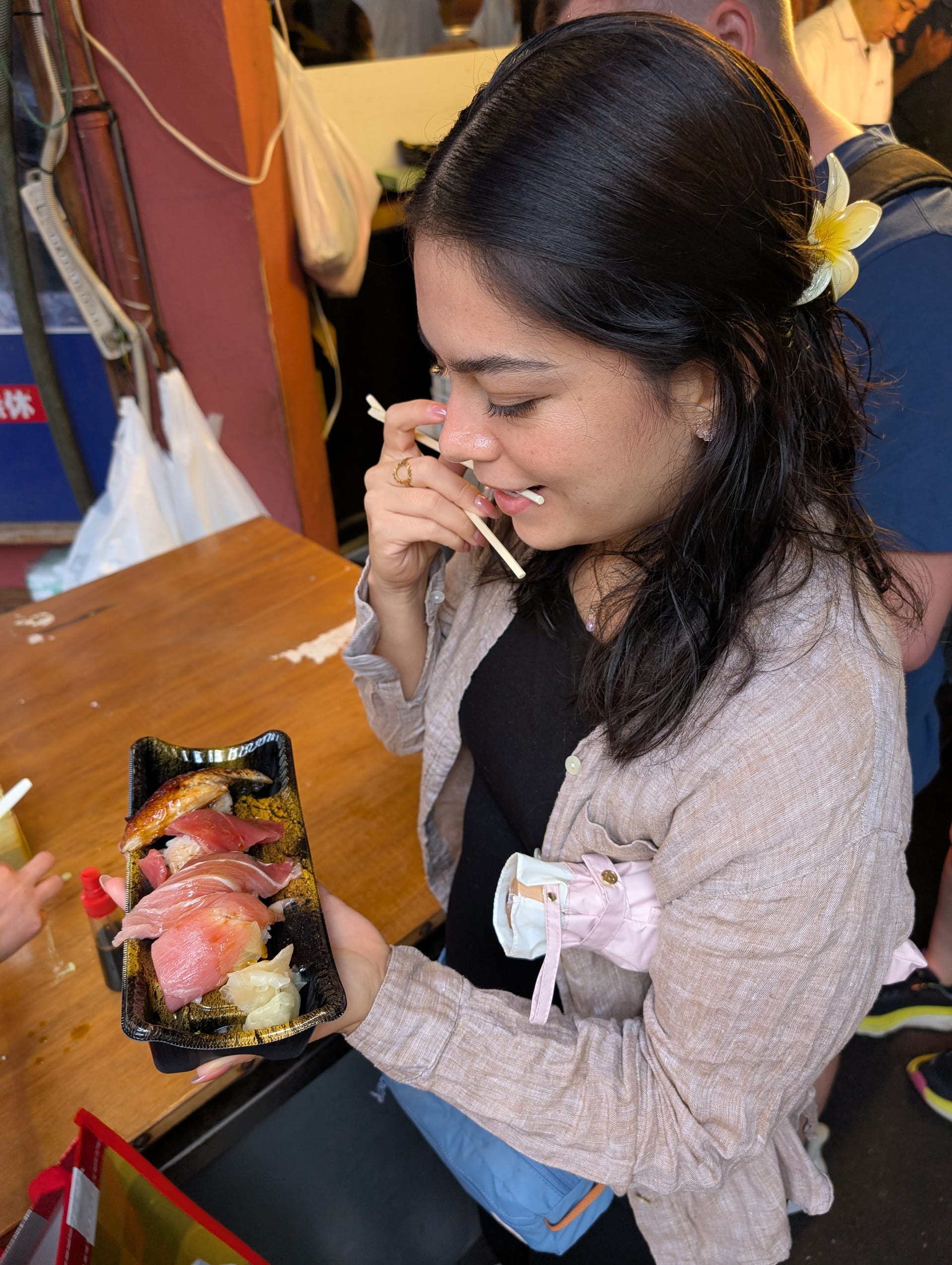
Lia found a sushi stand and ordered a nigiri set — toro, salmon, eel, tamago — that arrived in a black plastic tray and tasted like what sushi is supposed to taste like when the fish was swimming that morning. She had a frangipani flower in her hair, chopsticks in her hand, and the expression of someone who has just realised that everything she has eaten before this moment was a rough approximation of the real thing.
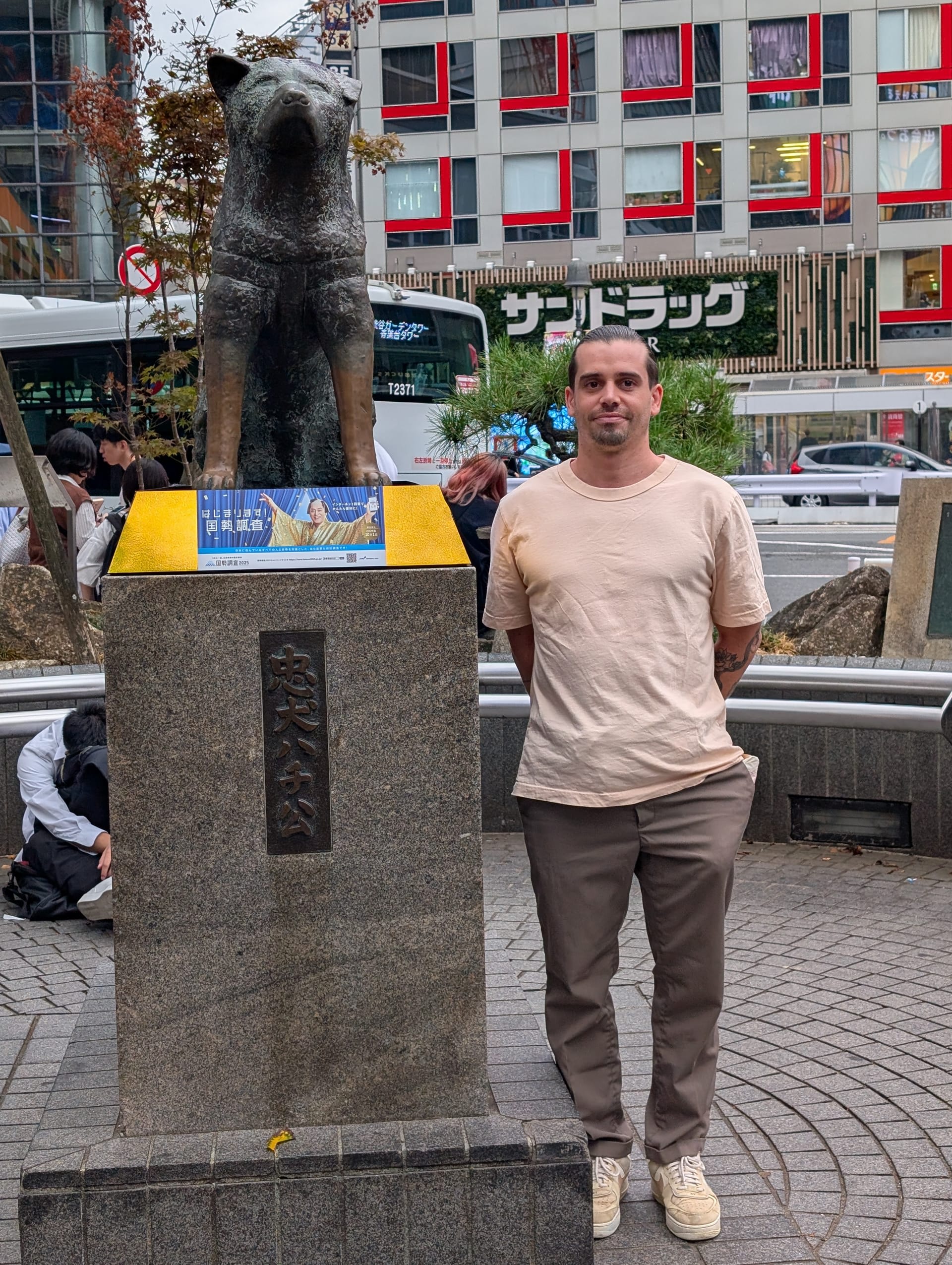
Shibuya in the afternoon is the crossing and the chaos, but the neighbourhood surrounding the intersection is more interesting than the intersection itself. We had tsukemen at Dogenzaka Manmosu — thick, chewy, extra-germ noodles dipped in a rich veggie pota broth — and I need to be honest: this was the best bowl of noodles I ate in Japan, possibly the best I have eaten anywhere, and I say this knowing full well that it was a twelve-dollar lunch in a basement restaurant with plastic menus. We took the obligatory photo at the Hachiko Statue — the loyal dog who waited for his dead owner at the station for nine years, a story that makes me emotional every time I think about it.
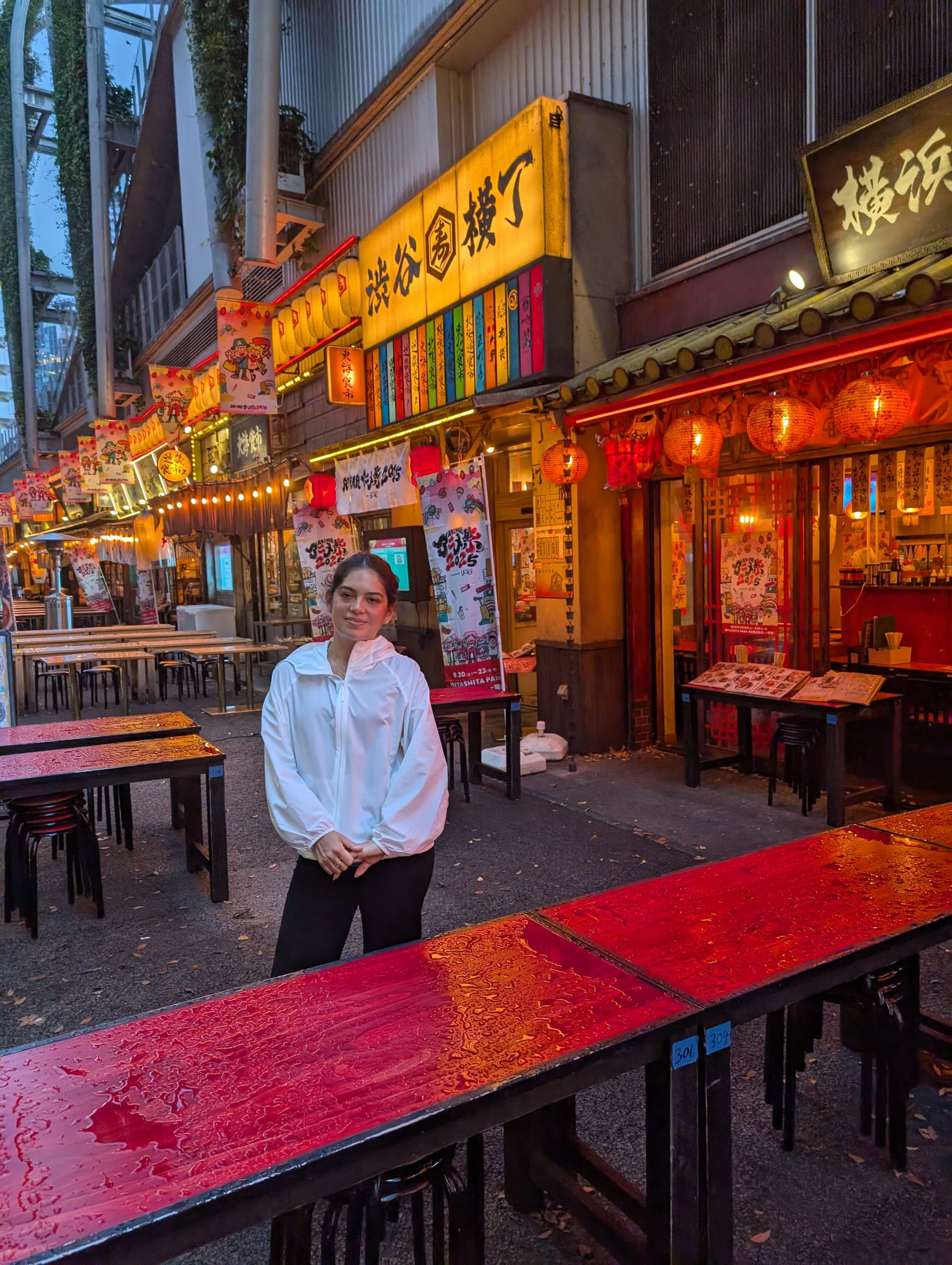
We found Shibuya Yokocho — a retro-styled food alley with red lanterns, wooden counters, and the kind of warm, rain-slicked atmosphere that makes you want to sit on a stool and order whatever the person next to you is having. Lia stood at the entrance and I took a photograph that captures something essential about Tokyo’s food culture: the inviting glow, the hand-painted signs, the sense that the best meal of your life might be three stools to the left.
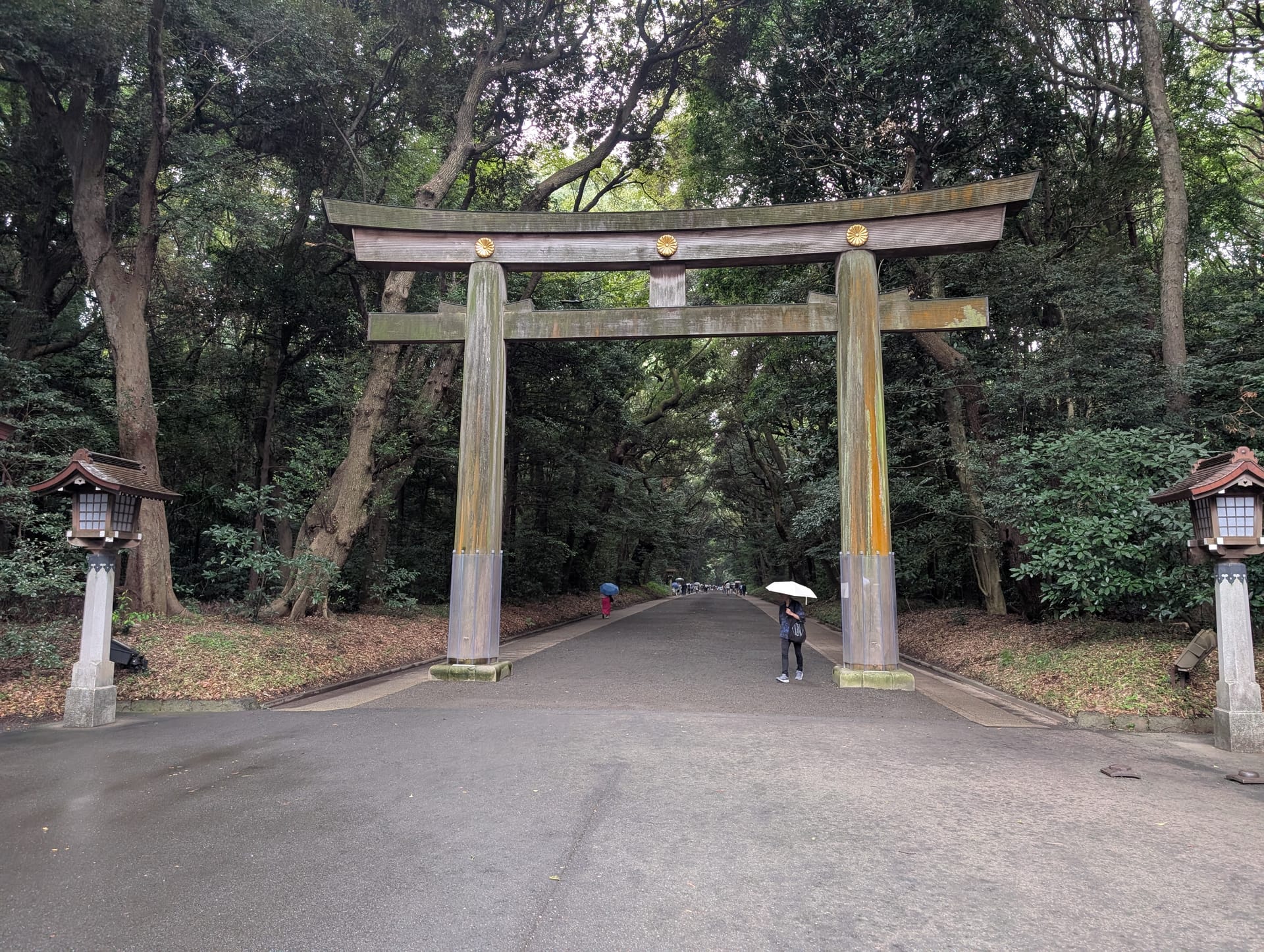
From Shibuya we walked to Meiji Jingu, and the city disappeared. The shrine is set in a forest that was planted a century ago as an offering to Emperor Meiji, and it has grown into something that feels primeval — massive torii gates, gravel paths, the sound of nothing except your own feet and the occasional crow.
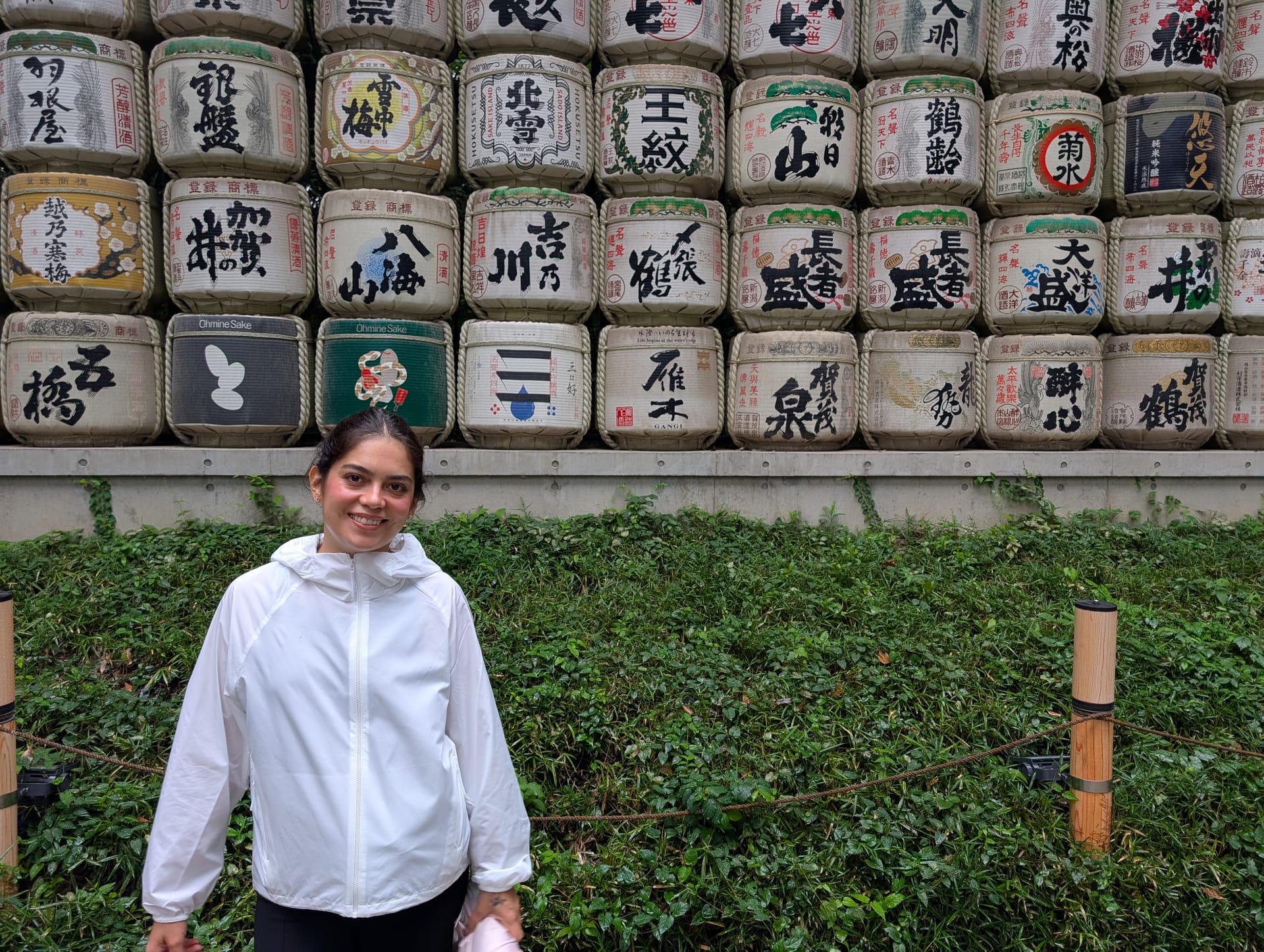
Lia posed in front of the sake barrel wall — dozens of barrels wrapped in straw, each one donated by a different brewery, the kanji on their labels like calligraphy on a scale that makes handwriting feel monumental. She was smiling in a way that suggested the shrine’s atmosphere had already worked its effect.
We wrote wishes on wooden ema tablets. Lia wished for something she would not tell me. I wished for more trips like this one. I meant it.
Yoyogi Park, adjacent to the shrine, was full of people doing the thing that Tokyo does better than any city I know: existing in public space with a combination of energy and courtesy that makes the concept of “personal space” feel like something only anxious cultures need. Picnics on blue tarps. Musicians practising under trees. A couple dancing what appeared to be a slow waltz to no music. We sat on the grass and did nothing for an hour, which in Tokyo felt like the most radical act of the day.
Go-Karting Through Shibuya
This requires context. There is a company in Tokyo that rents go-karts — actual go-karts, not bumper cars — and lets you drive them through the streets of the city, in traffic, at night. You wear costumes. You drive alongside taxis and buses on public roads. It should be illegal. It might be. It is absolutely one of the most exhilarating things I have done in any country.
Lia drove a red kart through the neon-lit canyons of Shibuya at ten o’clock at night, weaving between taxis, the buildings rising on either side like luminous cliffs, and the expression on her face was pure, undiluted joy of the kind that only comes from doing something slightly irresponsible in a city that is otherwise the most responsible place on earth.
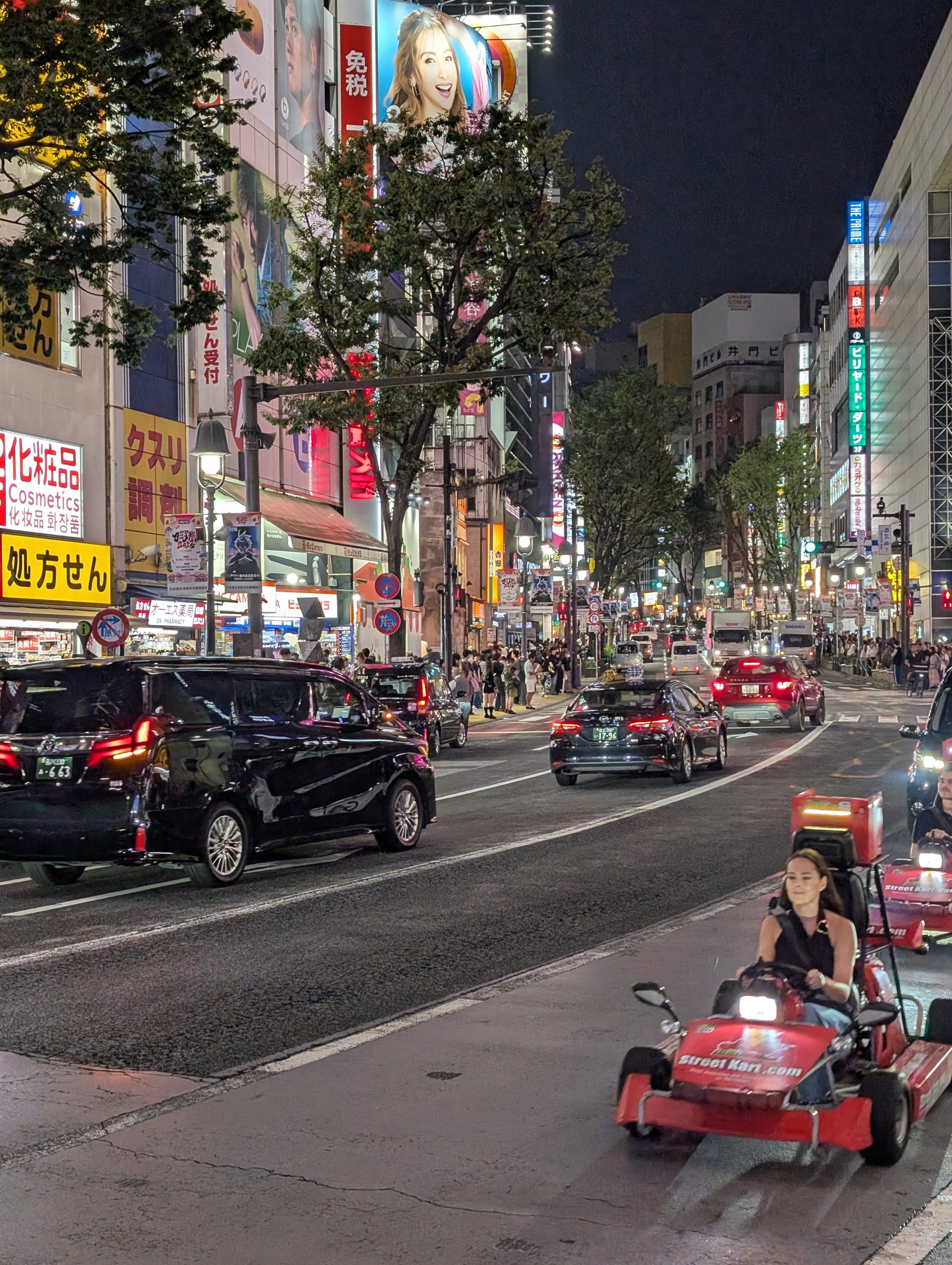
I have no idea how this is legal. I have no idea how nobody gets hurt. I do know that the pedestrians on the sidewalks waved at us, the taxi drivers treated us with the same courtesy they treat everyone, and the traffic lights were obeyed as scrupulously on a go-kart as they are in a sedan. Because this is Japan, and even absurdity follows the rules.
teamLab Planets — The Beautiful Gimmick That Is Not a Gimmick
teamLab Planets in Toyosu was one of the highlights of the entire trip. You enter barefoot — they insist, and they are right — and walk through a succession of rooms where light, water, and digital art converge in ways that make the word “immersive” feel inadequate. In one room, koi made of light swim around your ankles as you wade through knee-deep warm water. In another, the floor is a mirror and the ceiling is a galaxy and you lose all sense of where you end and the room begins. In another, you lie on your back on a floor that blooms with projected flowers and the person next to you becomes a silhouette surrounded by petals.
I went in skeptical. I came out converted. teamLab Planets is one of the most beautiful experiences I have had in any museum, any country, and I say this as someone who is constitutionally suspicious of anything that involves taking off his shoes and wading through water in public. Book tickets in advance. They sell out. Wear shorts or clothes you can roll up. They provide towels. Allow two hours.
Roppongi & Ginza — The Polished Side
We moved to the APA Hotel Roppongi Ekimae for the last stretch — a location that put us between Roppongi’s nightlife and Ginza’s elegance, which turned out to be the perfect base for two days of eating and drinking our way through the parts of Tokyo that feel less like a city and more like a civilization’s greatest hits.
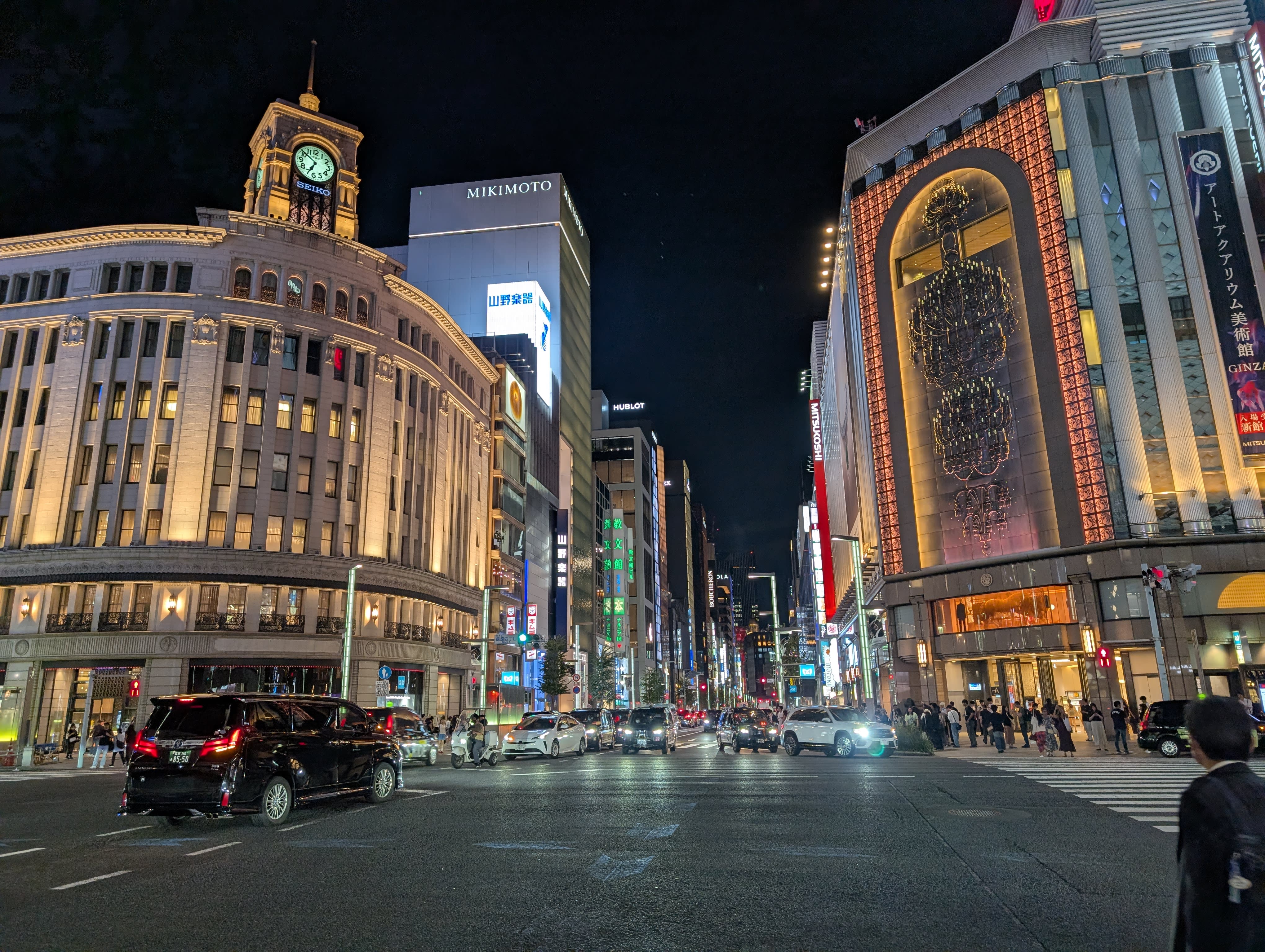
Ginza at night is something I was not prepared for. I have walked the Champs-Élysées at night. I have walked Fifth Avenue. Ginza is different. The Wako building with its clock tower glowing against the dark sky, the Mikimoto pearl tower, the wide avenues with their impossibly clean surfaces and the particular Japanese talent for making luxury feel restrained rather than garish — Ginza is Paris if Paris had better manners and a fraction of the ego.
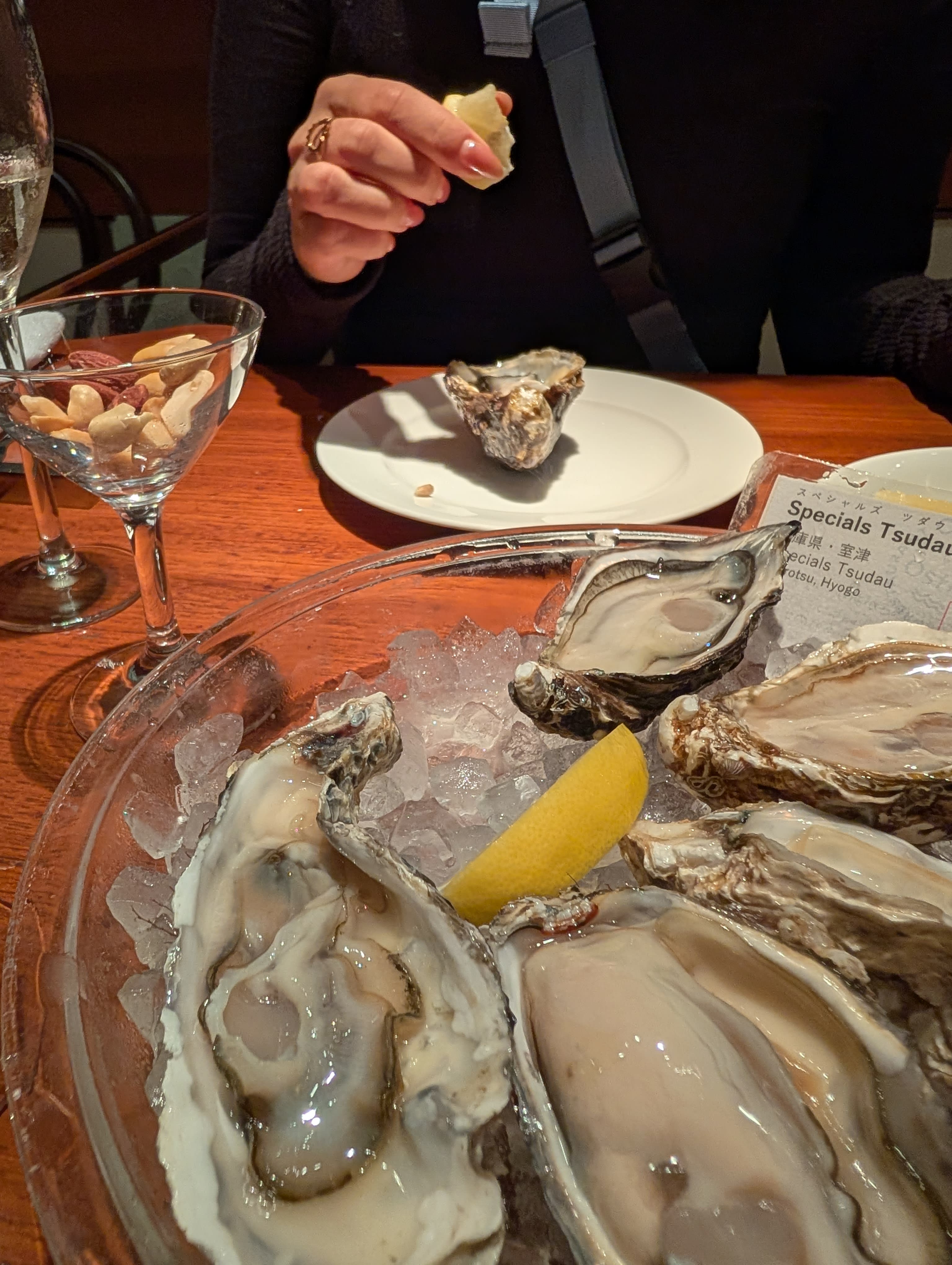
We had oysters and champagne at a place whose name I wrote on a napkin and lost but whose menu card read “Specials Tsudau.” The oysters were Japanese — Tsuda Bay, I think — briny and clean and served on a glass bowl of ice with lemon and a glass of something French and cold. Lia squeezed lemon with the precision of someone who has been eating oysters on the Pacific coast of Mexico for four years and has opinions about acidity.
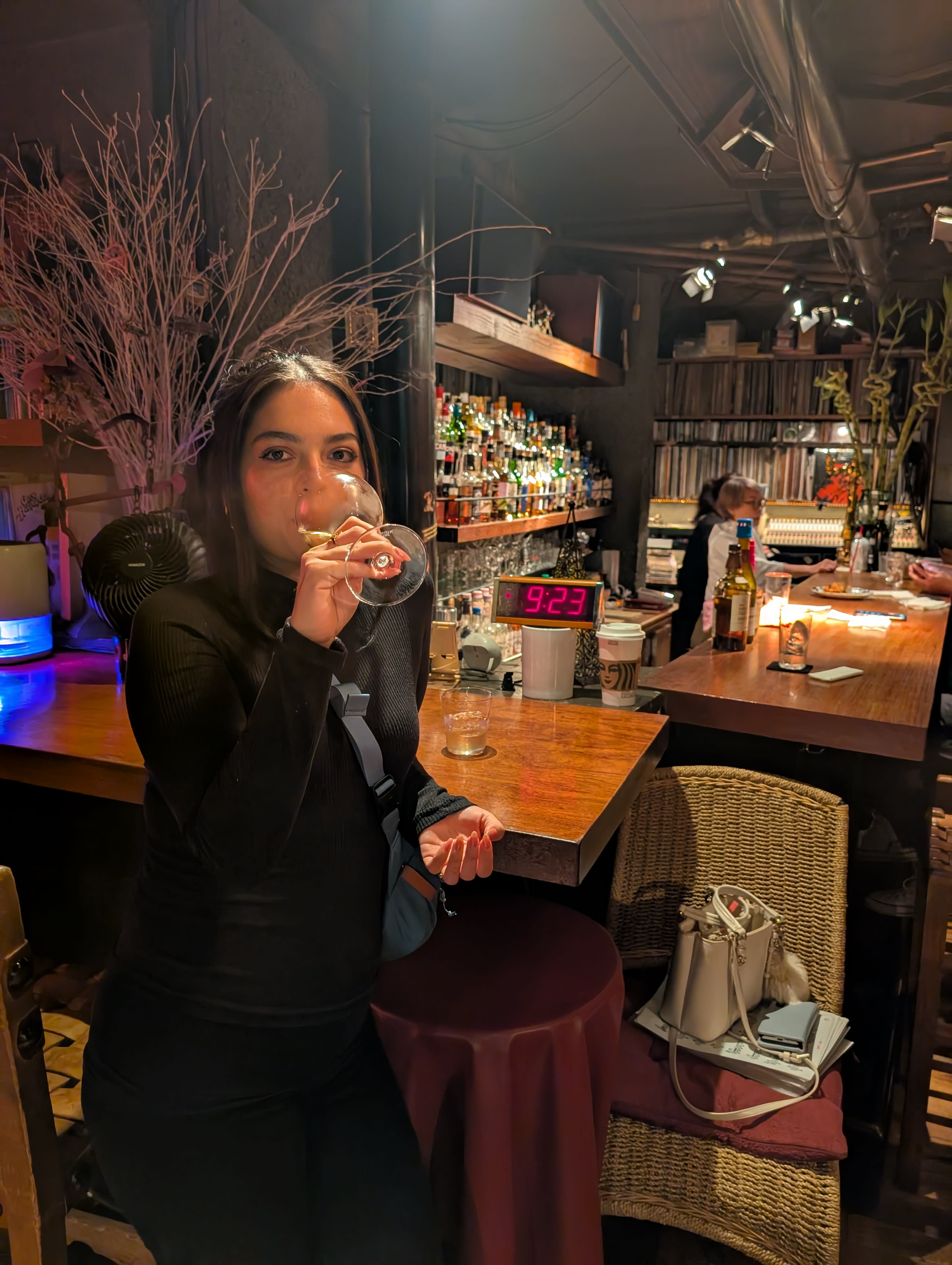
After the oysters, we found a wine bar in Roppongi — small, dark, warm, with a wall of vinyl records and a bartender who played jazz while we drank. The clock on the shelf behind the bottles read 9:29. Lia sipped her wine and looked content in a way that does not require conversation, and I sat beside her and thought about how the best evenings in any city are the ones where you stop trying to do things and simply exist in a well-chosen room.
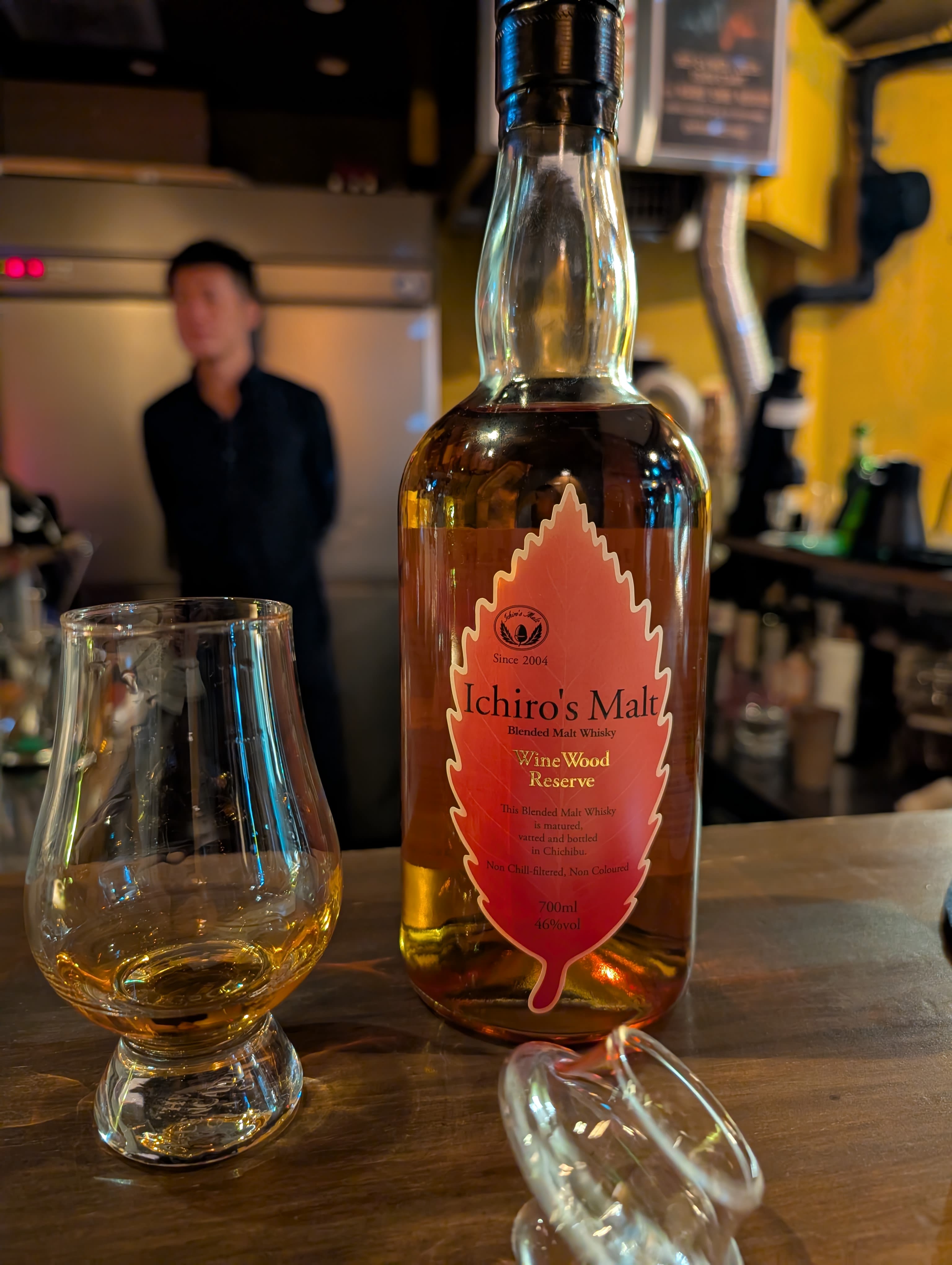
Later — because in Tokyo there is always a later — we went to a whisky bar where the bartender poured me an Ichiro’s Malt Wine Wood Reserve in a Glencairn glass and said nothing, which is the highest form of recommendation. Ichiro’s Malt is a Japanese whisky that has achieved cult status for good reason. The Wine Wood Reserve finishes in wine barrels, giving it a sweetness that sits behind the smoke like a secret. It was the best whisky I drank in Japan, and I drank a lot of whisky in Japan.
Tokyo Tower, the Imperial Palace & Omikuji at the Temple
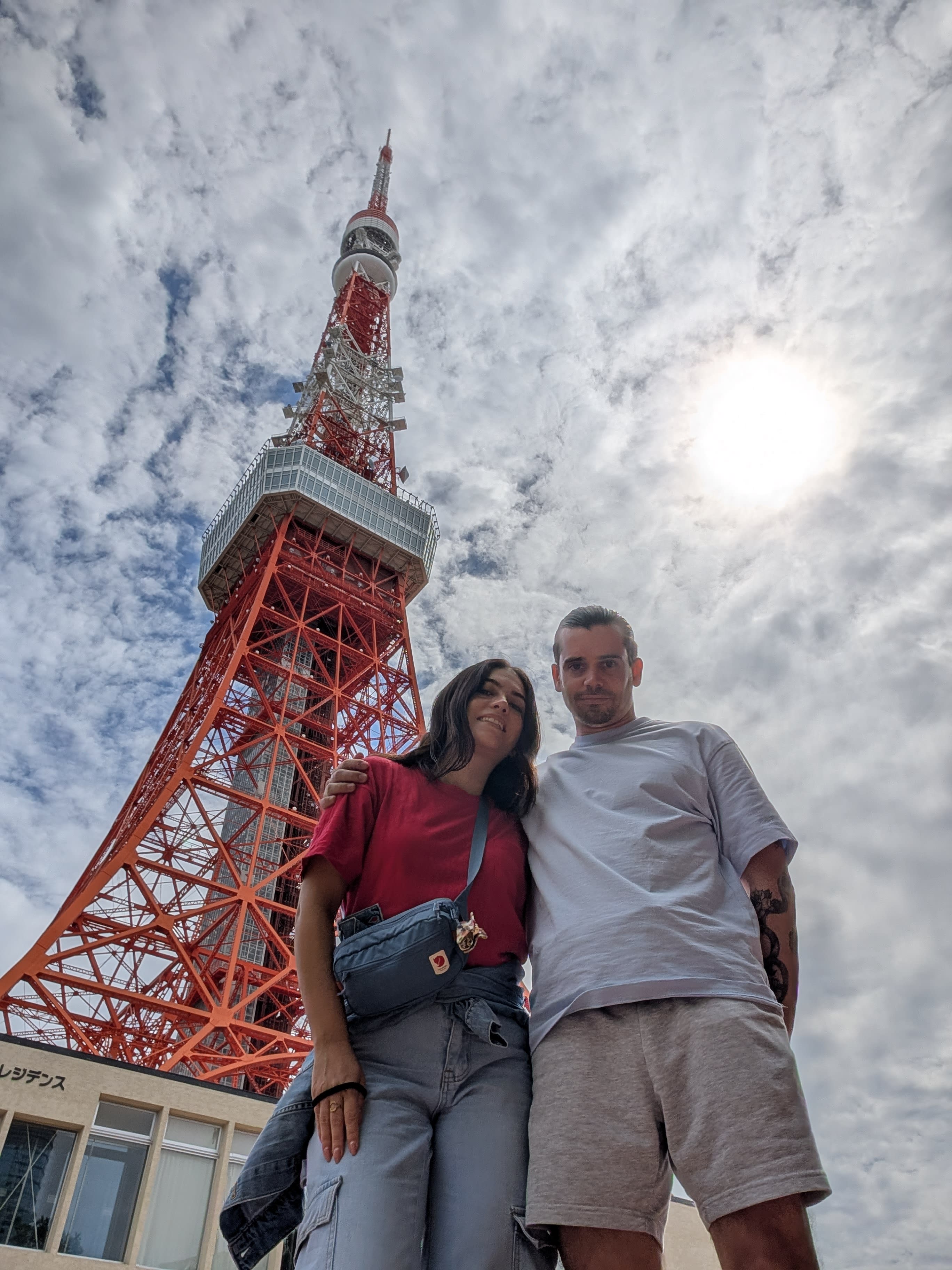
The next morning — overcast, cooler, the kind of grey Tokyo day that makes the temples look more dramatic and the coffee taste more necessary — we walked to Tokyo Tower. It is an Eiffel Tower replica painted in red and white, which as a Frenchman I should find offensive but instead found charming. The tower rises above the Roppongi neighbourhood like an exclamation mark, visible from unexpected angles, and standing at its base looking up through the latticed steel with the clouds moving behind it produced a vertigo that was half physical and half emotional.
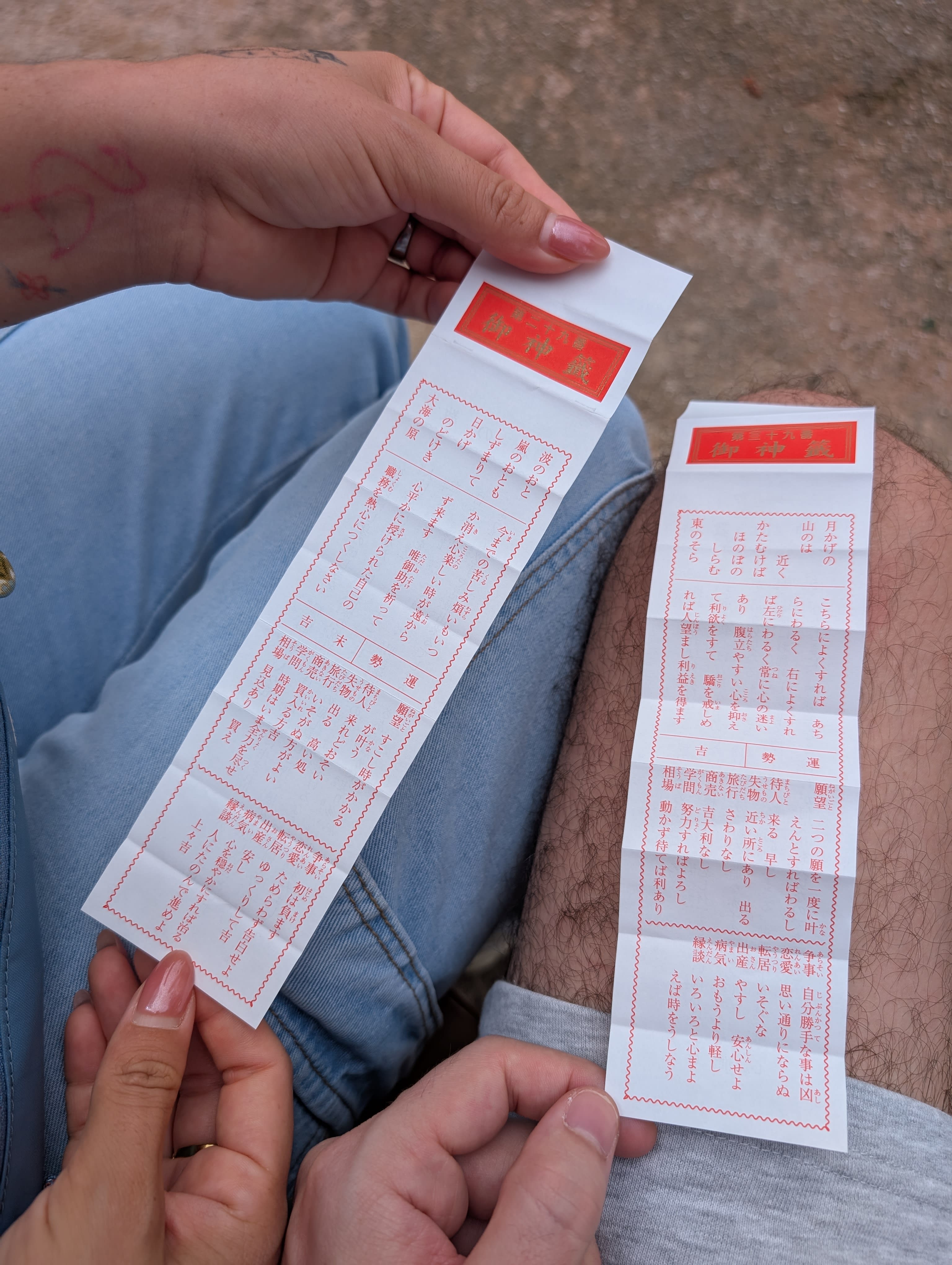
Near the tower, we stumbled onto a temple — small, wooden, traditional — sitting in the shadow of the Roppongi Hills skyscrapers. The juxtaposition was so perfectly Tokyo that I stopped to stare. A Shinto shrine, five hundred years old, with Mori Tower rising behind it like a glass cliff. We drew omikuji fortune papers and sat on a bench to compare. Lia’s was in Japanese and she could not read it. Mine was in Japanese and I could not read it. We sat in the temple courtyard, each holding a paper fortune we could not understand, and agreed that this was probably the most honest way to receive a prediction about the future.
The Imperial Palace was a twenty-minute walk through the business district — past the old Ministry of Justice building, a stunning red-brick Western-style structure that looks like it was airlifted from London, past the moat and the stone walls, to the Nijubashi bridge, the double-arched stone bridge that leads to the palace gates and is one of the most photographed spots in Tokyo.
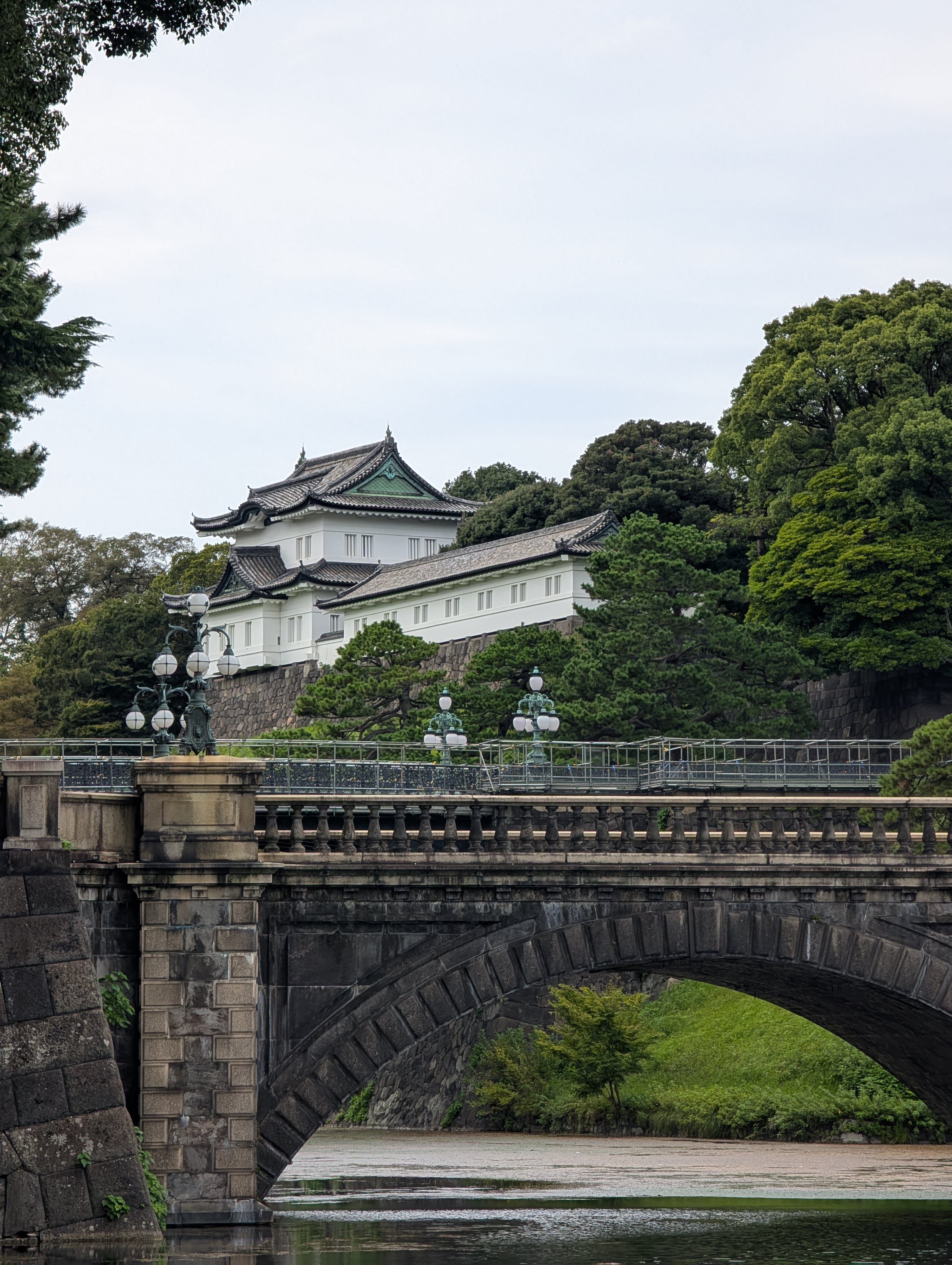
You cannot enter the inner palace without a reservation, but the east gardens are open and free, and the moat itself — still water reflecting stone walls and pine trees — has a quietness that belongs to another century. We sat on a bench and watched runners circle the palace perimeter, which is apparently what Tokyo’s office workers do at lunch. Five kilometres of running past a moat that has been there since the seventeenth century. Even the exercise here has elegance.
Odaiba — The View That Ended the Trip
We spent our last two Tokyo nights at the Grand Nikko Tokyo Daiba in Odaiba — a hotel that gave us a view of the Rainbow Bridge and Tokyo Bay that I stared at every night like it was a painting that someone had forgotten to hang.
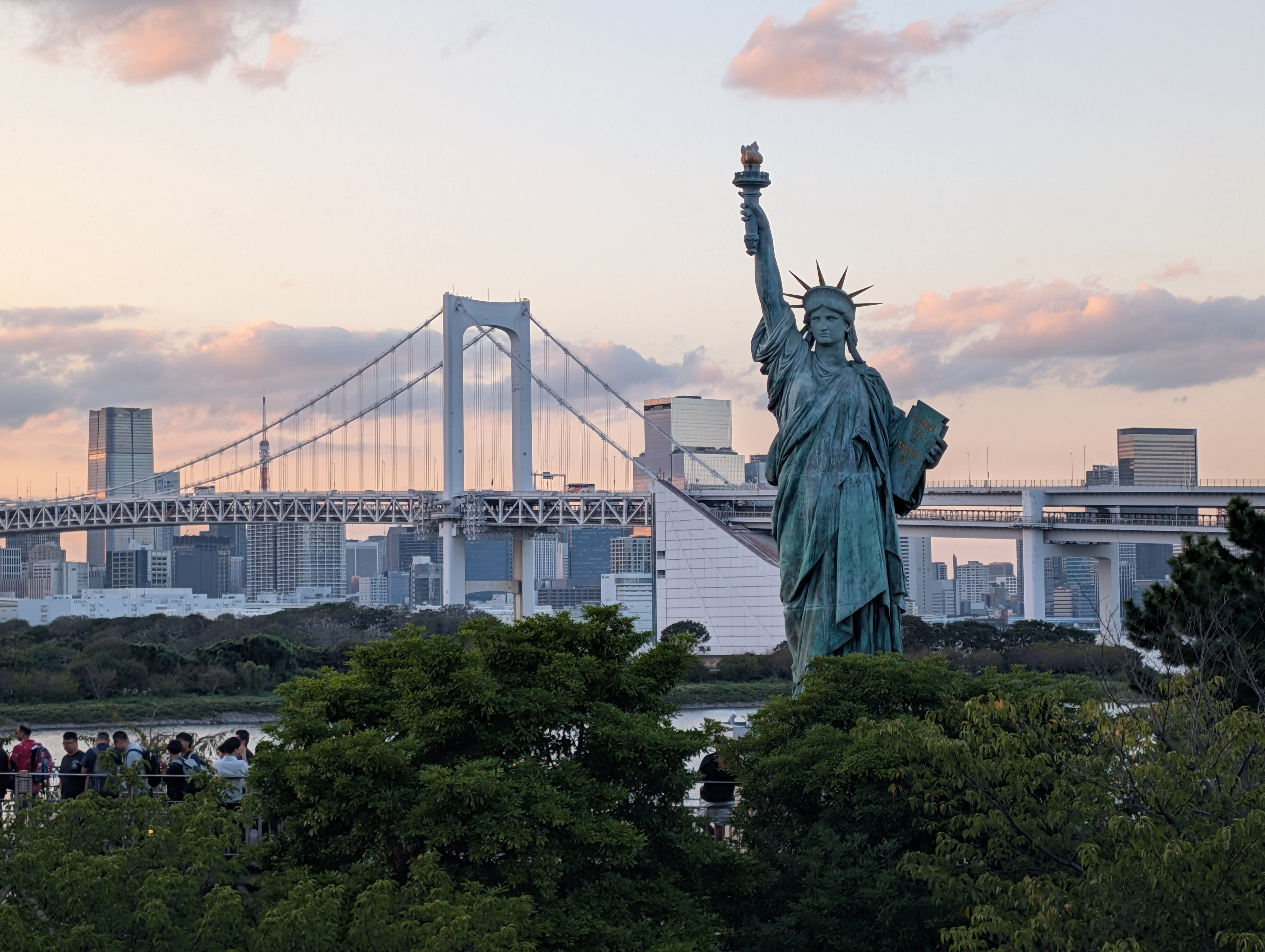
Odaiba is an artificial island in Tokyo Bay, and it has a Statue of Liberty replica that I found ridiculous until I saw it at sunset with the Rainbow Bridge behind it and the Tokyo skyline stretching across the horizon, and then I found it beautiful in the way that only absurd things placed in perfect settings can be beautiful.
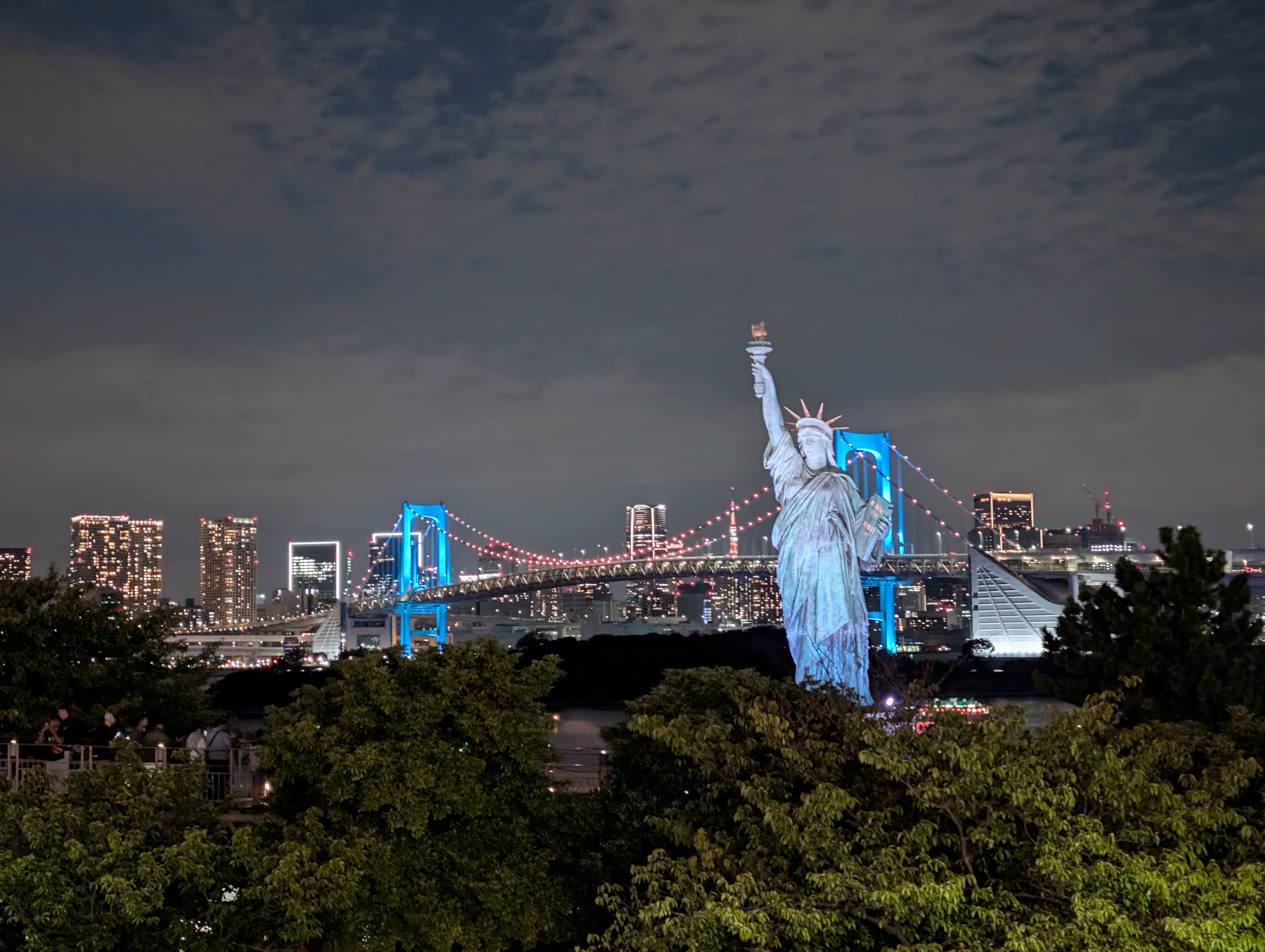
At night, the same view transformed. The bridge lit up in blue, the statue a pale ghost against the dark sky, the city a constellation of light reflected in the black water of the bay. We stood on the hotel terrace and watched. Lia was quiet. I was quiet. Sometimes the best thing a view can do is stop you from talking.
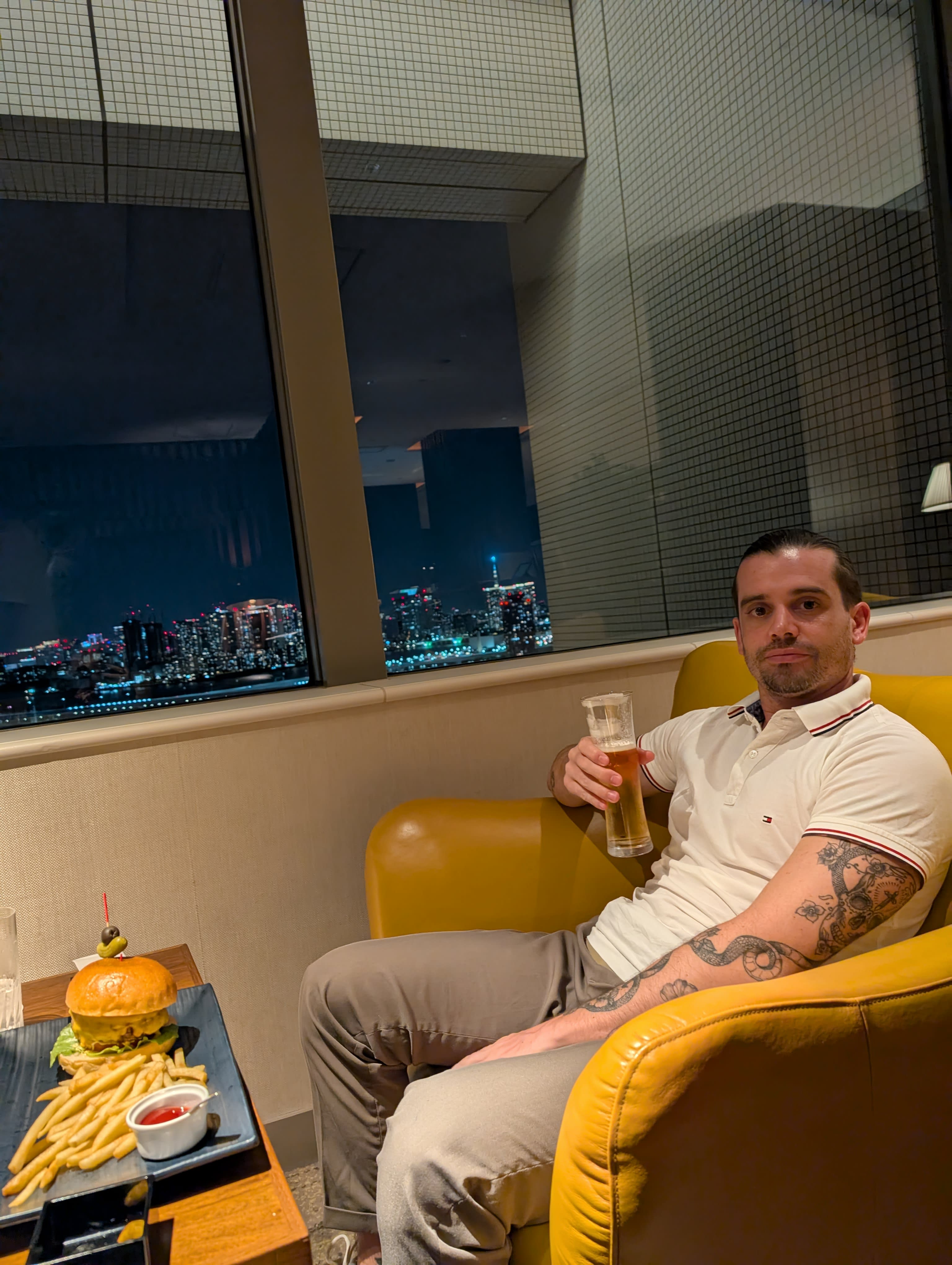
The hotel itself became part of the story. One evening I sat in the lounge — a yellow armchair, a cold beer, a burger that had no right being that good in a hotel lounge — and looked out at the Tokyo Bay skyline through the window. The lights of the city pulsed in the distance. My legs were tired from walking thirty thousand steps. My phone was full of photographs. My stomach was full of things I could not have imagined eating a week earlier. And I thought: this is what travel is supposed to feel like. Not the monuments. Not the checkboxes. The moment at the end of the day when you sit in a comfortable chair in a foreign city and realise that you are happy and that the happiness came from paying attention.
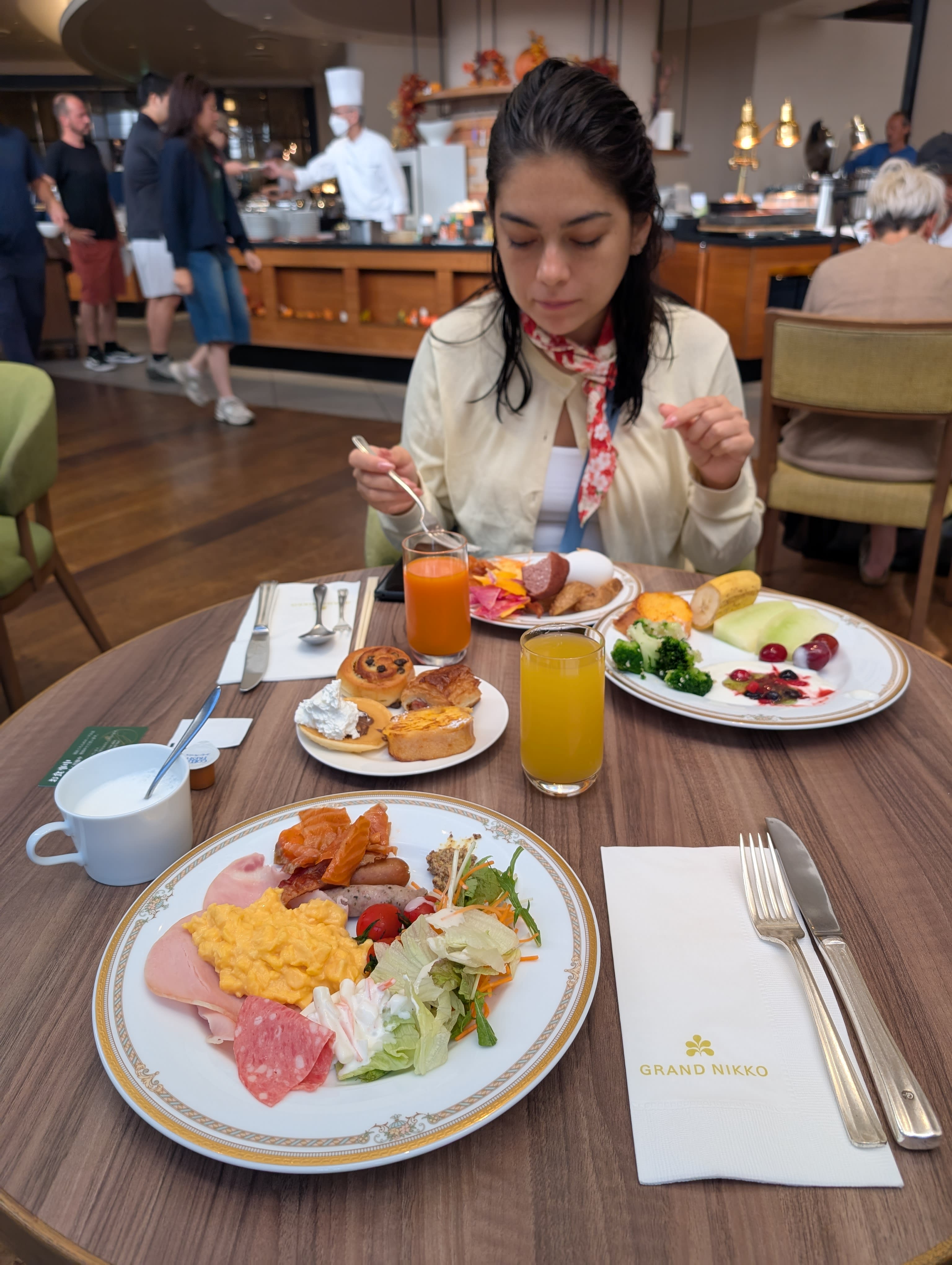
The last morning was breakfast at the Grand Nikko. A buffet that was, like everything in Japan, more thoughtful than it needed to be. Scrambled eggs, croissants, cold cuts — the European stations. Then the Japanese side: miso soup, grilled fish, pickled vegetables, rice. Lia moved between both sides with the concentration of someone who understood that this was our last Tokyo breakfast before we headed further into Japan, and that every choice mattered.
Disney — Yes, I Am Writing About Disney
We took the hotel shuttle to Disney and I need to address this directly: I am a thirty-four-year-old French man who writes about travel and culture, and I am about to tell you that Tokyo Disneyland and DisneySea were two of the best days of this trip. Judge me if you want. I have made my peace with it.
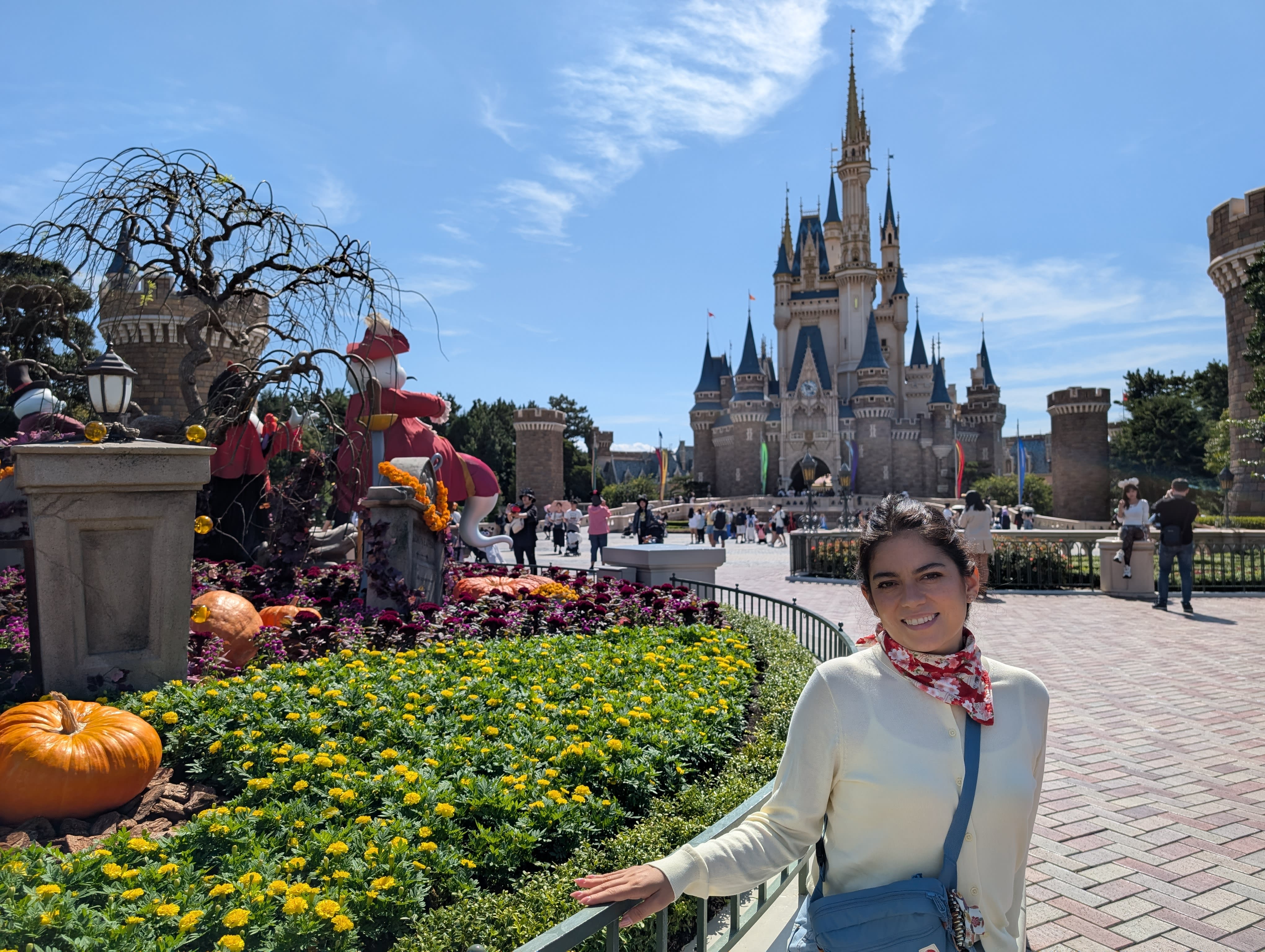
Tokyo Disneyland is Disney done with Japanese precision, which means the queues are orderly, the food is inventive (gyoza dogs, matcha churros, popcorn in flavours that have no right to exist and yet do), and the park is maintained with a level of care that suggests they sand the benches weekly. We went during the Halloween season and the park was dressed for it — pumpkins lining the flowerbeds, autumn garlands on the lampposts, and Cinderella Castle rising behind it all in that impossible way it has of looking simultaneously fake and magnificent. Lia stood in front of the castle with the flowers and the pumpkins and the blue sky and smiled in a way that made me think: this is why people come here. Not for the rides. For the permission to be completely, unselfconsciously happy.
The parades are spectacular. The Enchanted Tale of Beauty and the Beast ride is genuinely beautiful. The fireworks made Lia cry. I pretended they did not make me cry.
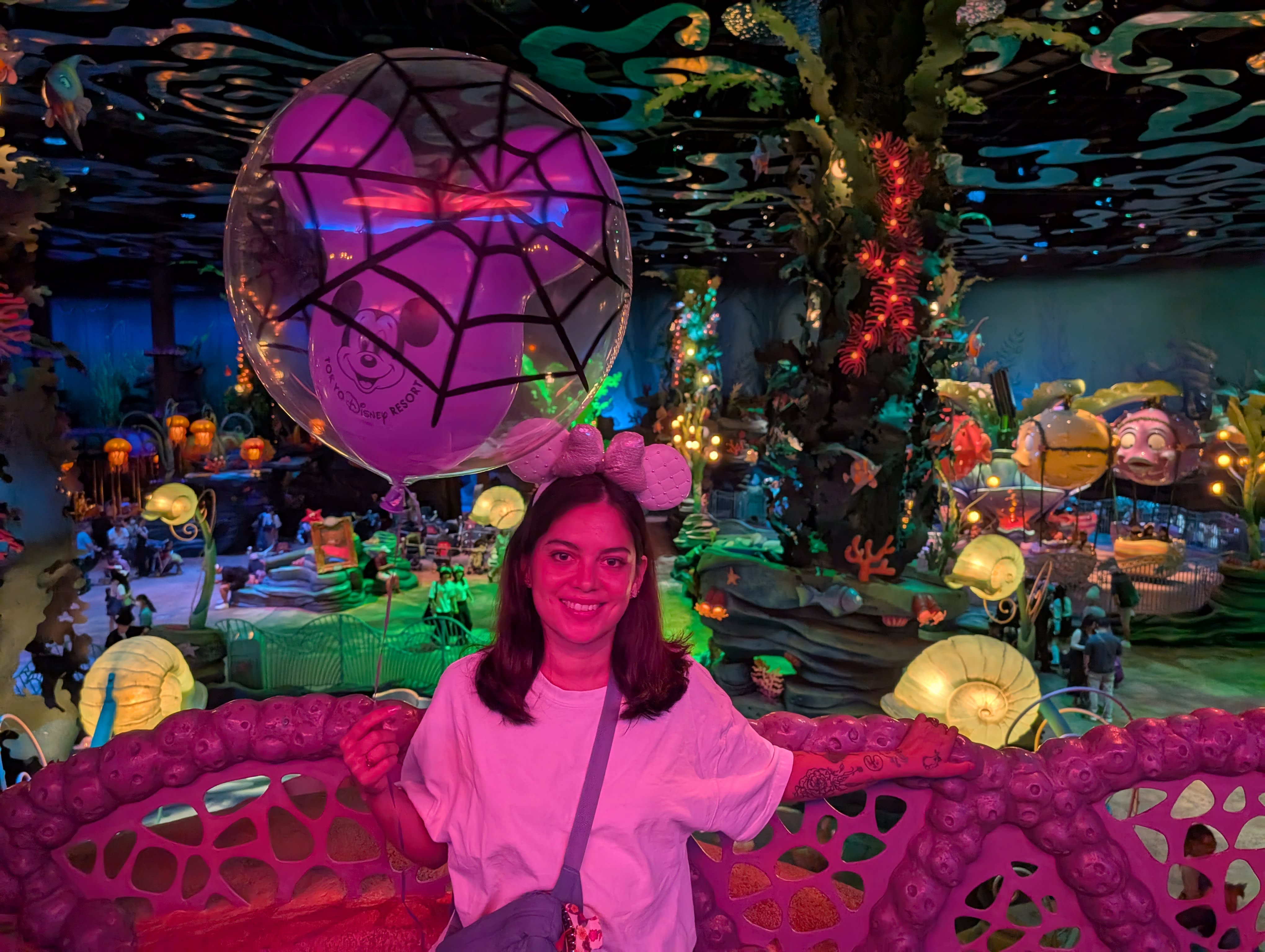
Tokyo DisneySea is something else entirely. It is not a theme park in any sense I had previously understood. It is an immersive, obsessively detailed world — Venetian canals with real gondolas, an Art Deco New York waterfront, a volcanic island fortress, a Mediterranean harbour — that could only exist in Japan, where the cultural commitment to perfection extends to the way an amusement park pours a drink. The Mermaid Lagoon — an entirely indoor area themed as an underwater kingdom — was where Lia spent the most time. She stood on a bridge above the glowing seabed, a Halloween balloon in one hand, Minnie ears on her head, bathed in purple and green light from the bioluminescent set design, and looked like she had been transported into a Studio Ghibli film. The level of detail in that single room — the coral, the shells, the moving light on the ceiling simulating water — was more impressive than most museums I have visited.
Soaring: Fantastic Flight was the ride that broke my resistance. The evening harbour show, “Believe! Sea of Dreams,” watched from a spot we claimed forty-five minutes early with a blanket and two beers, was one of the most visually spectacular things I have seen on this trip. If you are going to Japan with someone you love, give DisneySea a day. I know it sounds absurd. Go anyway.
What Tokyo Taught Us
Eight days. Fourteen million people. A city that runs on a logic I am still trying to understand — where temples sit beneath skyscrapers and both feel equally necessary, where a convenience store egg sandwich is a work of engineering, where strangers bow to you and the bow means something, where the trains run on time not because someone enforces it but because the culture has decided that punctuality is a form of respect.
I came to Tokyo expecting efficiency. I found tenderness. The cook who gave us extra skewers because we said oishii. The woman at the shrine who helped Lia tie her omikuji. The bartender in Golden Gai who poured us whisky and said nothing and meant everything. Tokyo is not a cold city wearing a warm mask. It is a warm city that has learned to organise its warmth with a precision that other cultures mistake for coldness.
Lia and I left Tokyo from the Grand Nikko on a morning that smelled like miso soup and fresh laundry, and we did not say much on the train to the next city because there was too much to process and not enough words in any of the languages we share. Tokyo does that. It fills you up and then it lets you sit with it, quietly, on a train that arrives at the exact second it is supposed to, carrying you toward the next part of a country that has already changed how you see everything else.
When to go: Late September to November. Cherry blossom season (late March to mid-April) is iconic but crowded. September gave us warm days, manageable crowds, and the sense that the city was exhaling after summer. Avoid Golden Week (late April to early May) and Obon (mid-August) unless you are the kind of person who finds spiritual peace in a crowd.