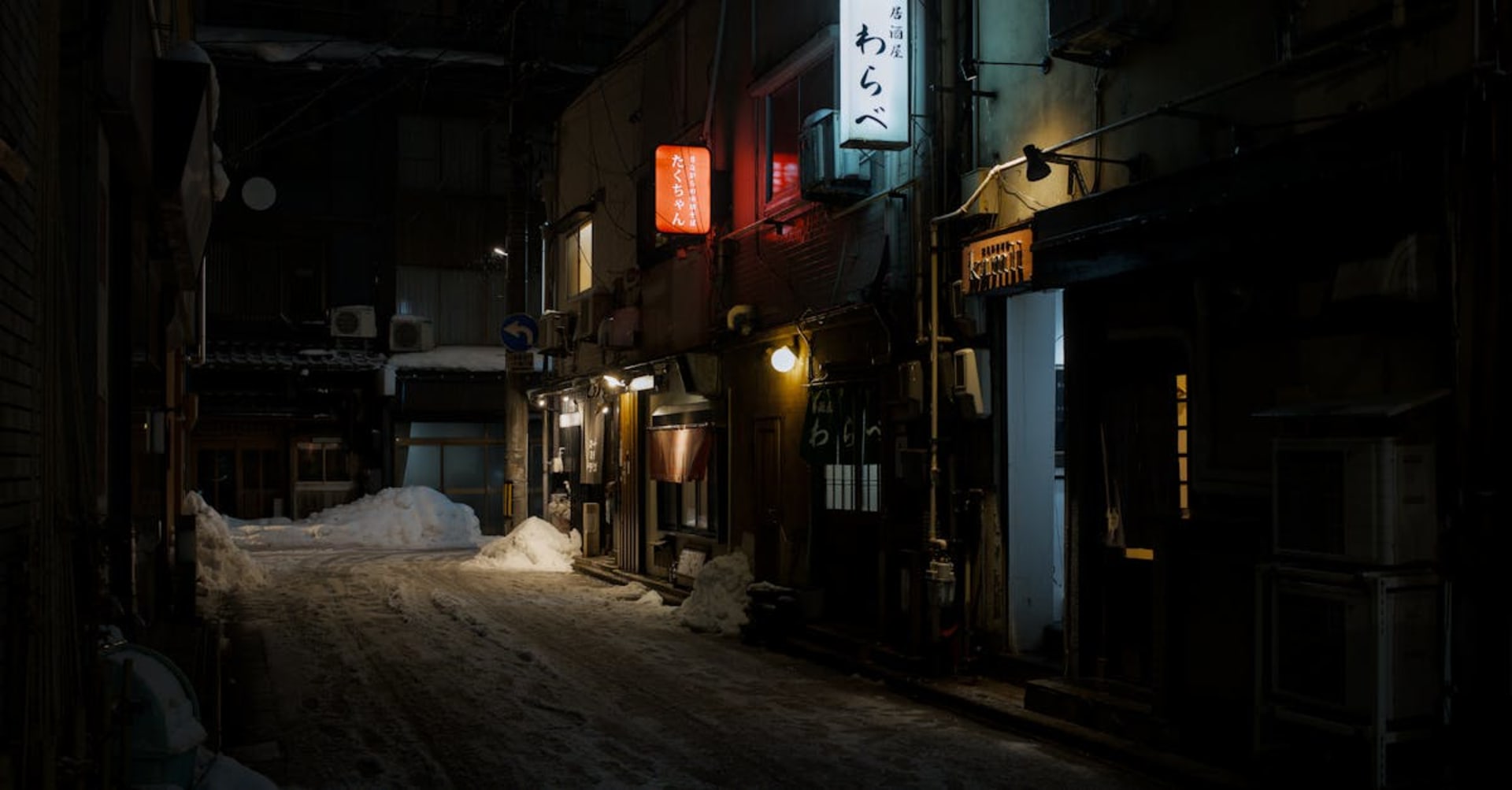
Lia and I did not originally plan to visit Kanazawa. It was a last-minute addition — a friend in Tokyo had said, very casually over a beer, “If you want Kyoto without the crowds, take the shinkansen to Kanazawa.” So we did. The Hokuriku Shinkansen from Tokyo took under three hours, and we stepped off into a city that felt like a secret that most tourists had not yet been told. Kanazawa was spared bombing in World War II, which means its samurai and geisha districts survive intact — not as reconstructions but as the real thing, wooden buildings and narrow lanes that have been continuously inhabited for centuries. The city sits on the Sea of Japan coast, and it manages the unusual trick of being both a major cultural destination and a place where you can walk into a temple garden at 9am and be entirely alone.
Kenroku-en — The Garden That Changes With the Light
Kenroku-en is one of Japan’s three great landscape gardens, and the only one that delivers in every season. We arrived early in the morning, entering from the Kodatsuno gate to avoid the main crowd flow, and the garden was nearly empty. Cherry blossoms in spring, irises in summer, maples in autumn, snow-laden pine branches in winter — the garden was designed to be experienced year-round, and it is. But what struck me most was the silence. After the density of Tokyo and Osaka, standing beside the Kasumigaike Pond with its stone lantern reflected in the still water and the pines sculpted into shapes that looked more like art than nature — the stillness felt earned, as though the garden had been waiting for us to arrive and slow down.
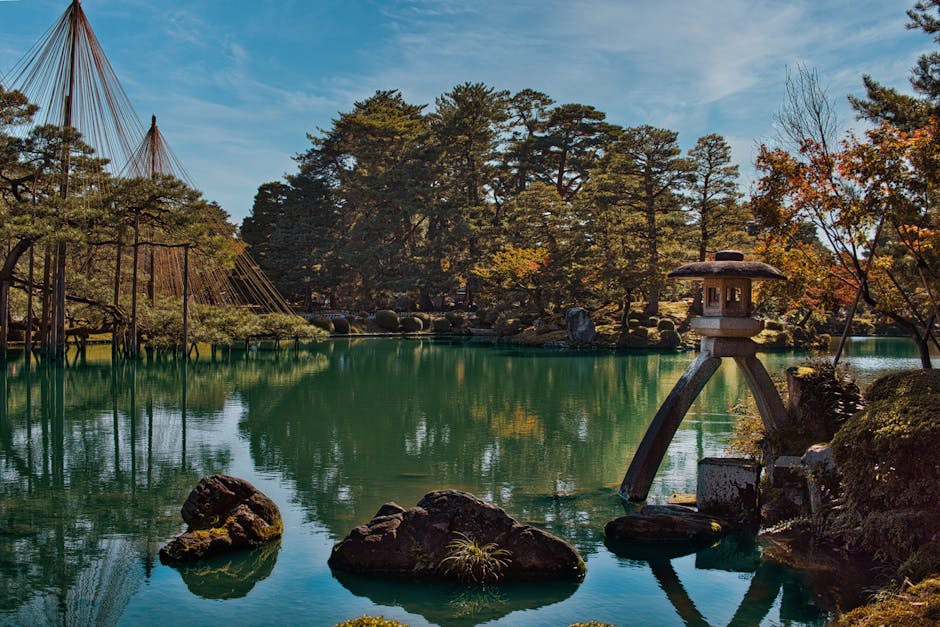
Lia sat on a bench near the plum grove and sketched the view in her notebook — something she does when a place moves her beyond the reach of a photograph. I walked the paths and found myself counting the different shades of green. I gave up at fourteen. The gardeners here treat their work the way musicians treat a score: every branch, every stone, every angle of water has been considered and reconsidered over centuries. It is not a garden you visit. It is a garden that teaches you how to look.
The 21st Century Museum — Art That Plays
The 21st Century Museum of Contemporary Art is the other anchor of Kanazawa, and it is unlike any museum I have visited. The circular glass building by SANAA has no front or back — you enter from any direction, which is a statement about accessibility that the museum follows through on at every level. The permanent collection includes Leandro Erlich’s swimming pool installation: a room that appears to be the bottom of a filled pool, viewed from above and below simultaneously. Standing beneath the water, looking up at the people above who were looking down at me, I had the disorienting sensation of being inside an optical illusion that was also, somehow, a meditation on perception. The museum is free to enter; the exhibitions are reasonably priced and consistently excellent. We spent three hours. I could have spent the day.
Higashi Chaya — The Quiet Glamour
Higashi Chaya — the eastern geisha district — was Lia’s favourite part of Kanazawa, and I understand why. The street is lined with dark wooden ochaya — teahouses — that date back to the early 1800s, their latticed facades hiding rooms where geisha still entertain behind closed doors. We visited Shima, one of the preserved teahouses open to the public, and drank matcha in an upstairs room that had hosted the same ritual for two hundred years. The tatami was worn smooth. The garden below was the size of a handkerchief and immaculate. The woman who served us moved with a deliberateness that made every gesture feel like a sentence in a language I was only beginning to learn.
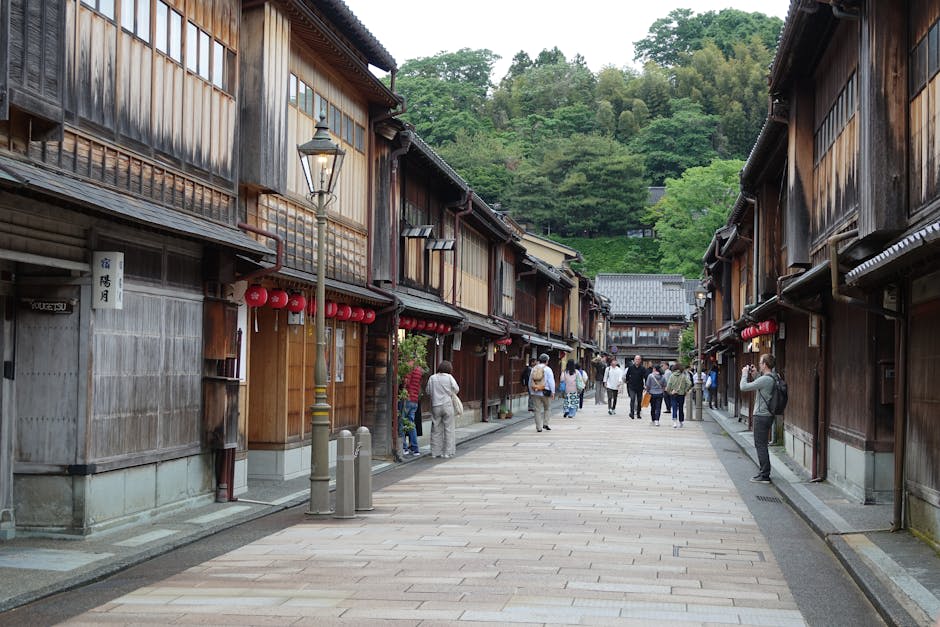
In the evening, the lanterns came on along the street and the district transformed. Fewer tourists, more atmosphere. A geisha — or was it a maiko? — appeared at a doorway and was gone before I could be sure. The wooden buildings glowed warm in the lamplight. Lia said it reminded her of Gion in Kyoto, but smaller, more intimate, more like being admitted to a private world rather than observing a public one.
Ōmichō Market & the Seafood
Kanazawa’s proximity to the Sea of Japan means seafood of extraordinary quality, and Ōmichō Market is where the city comes to eat it. We went at nine in the morning on our second day and grazed for two hours. Chirashi bowls at Iki Iki Tei — eaten standing at the counter, the rice warm, the fish so fresh it seemed to resist the idea of being called “raw” and insisted on being called “alive.” Yellowtail. Sweet shrimp. Sea bream. Each one a different ocean, a different texture, a different argument for never eating sushi anywhere else.
For dinner, we went to Tamazushi — an omakase sushi counter that competes with Tokyo at a third of the price. The chef placed each piece on the counter in front of us without explanation, and no explanation was necessary. The nodoguro — a deep-sea fish from the Sea of Japan, seared with a blowtorch until the skin blistered and the fat beneath turned translucent — was the single best piece of sushi I ate in Japan. I told the chef this. He nodded once, briefly, and continued working. In Kanazawa, excellence is not performed. It is simply present.
The Nagamachi Samurai District
We spent our last morning in the Nagamachi samurai district — a network of narrow lanes bordered by earthen walls and flowing canals that once housed the samurai retainers of the Maeda clan. The Nomura-ke samurai residence is open to the public, and its garden — tiny, immaculate, with a miniature waterfall feeding a koi pond — was voted one of the top three Japanese gardens by an American garden journal, a fact that would mean nothing if the garden did not instantly explain the vote. The room overlooking it had a stillness that made me want to sit there for a long time, doing nothing, which is perhaps what the samurai did between battles.
When to go: Any season. Each transforms the city. November for autumn colour in the gardens, February for snow on Kenroku-en’s pine branches — the yukitsuri rope supports they install in winter to protect the trees from heavy snow are beautiful in themselves, turning the garden into something between a landscape and a work of engineering. April for cherry blossoms along the canals. We went in late September and the light was golden and the crowds were thin and the city felt like it belonged entirely to us.