Disney Tokyo
"I came to judge. I left converted. DisneySea is not a theme park — it is a civilization."
I need to say this upfront: I am a thirty-four-year-old French man who writes about temples and street food and the literary cafes of Buenos Aires. I have no business writing about Disney with the seriousness I am about to apply to this subject. And yet here I am, two thousand words in, because Tokyo Disney Resort did something to me that I did not expect and cannot fully explain. It made me believe in the project. Not the brand. The project — the idea that a constructed world, built with enough care and sincerity, can produce genuine emotion in adults who should know better.
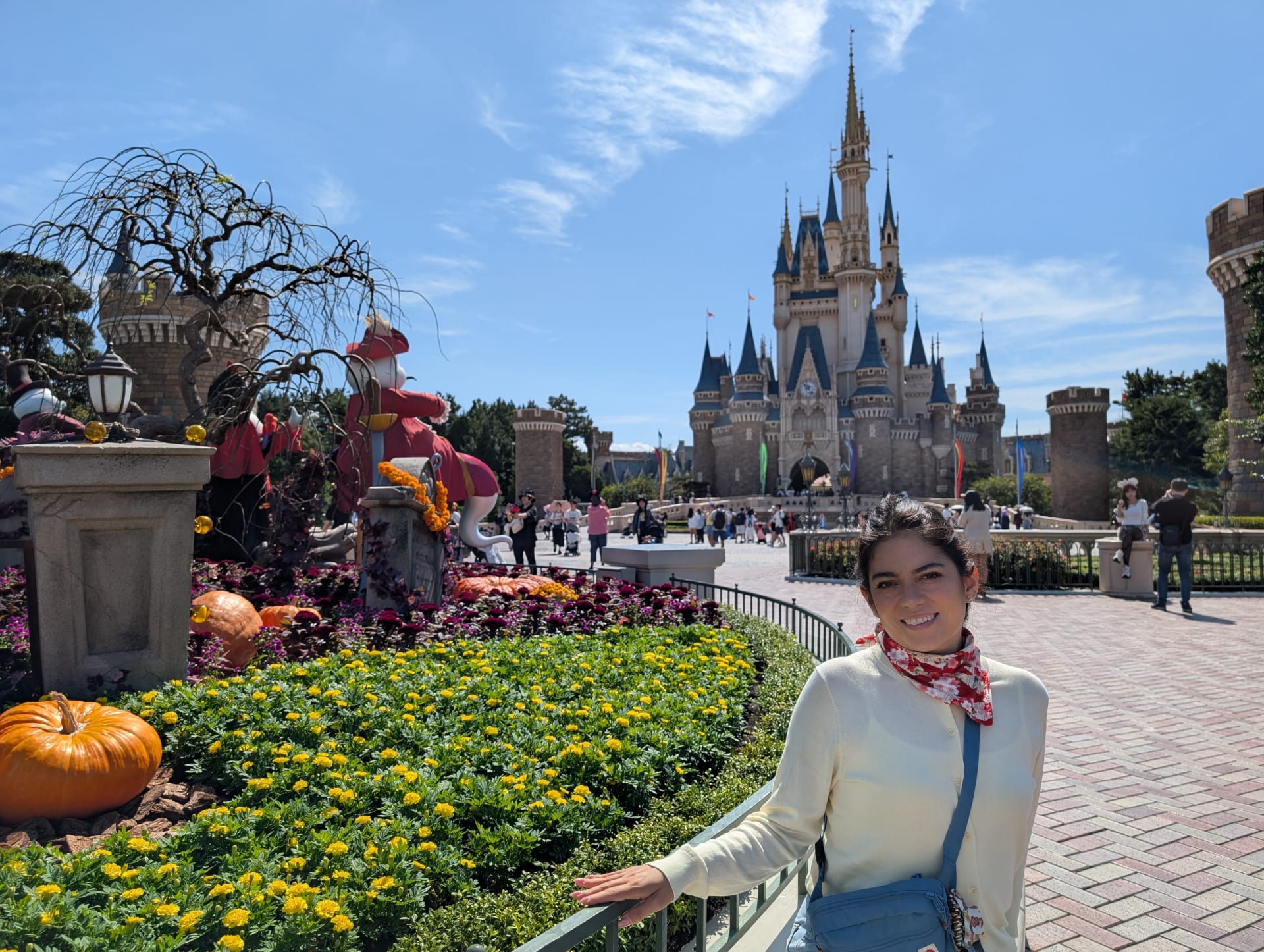
We gave it two full days. One for Disneyland. One for DisneySea. Both times we left the Grand Nikko Tokyo Daiba in Odaiba after breakfast — Lia loading her plate with the methodical ambition of someone who knows she will be walking thirty thousand steps and needs the fuel.
Tokyo Disneyland — Day One
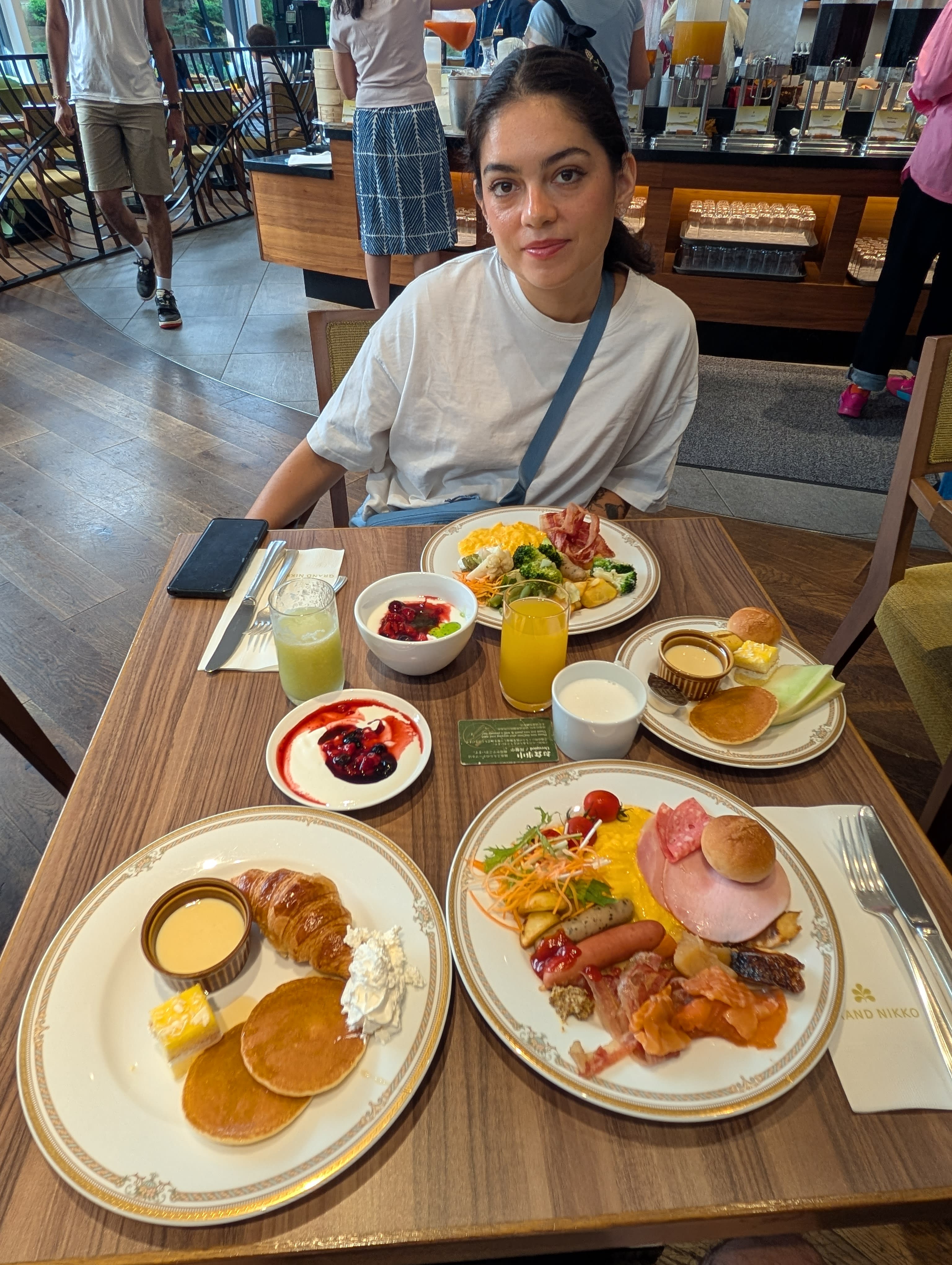
The shuttle from the Grand Nikko drops you at Maihama Station, and from there you walk across a bridge toward the park entrance. We arrived in the late morning, and the first thing I noticed was the orderliness. No pushing. No shoving. No one cutting the line. Japanese families in matching outfits — fathers in Mickey t-shirts, mothers with Minnie ears, children clutching balloons — queued with the patience of people who have agreed, collectively, that the experience begins the moment you arrive and not the moment the gates open.
The second thing I noticed was the commitment to costume. Two teenage girls in front of us wore matching plaid skirts, matching Stitch ear headbands, and matching Stitch plush backpacks. They were coordinated down to the socks. This is not unusual at Tokyo Disneyland — it is the norm. The Japanese treat a Disney visit as a costume event, and the effort they put into matching outfits, character accessories, and themed hairstyles is a form of devotion that makes the park feel less like a commercial enterprise and more like a shared ritual.
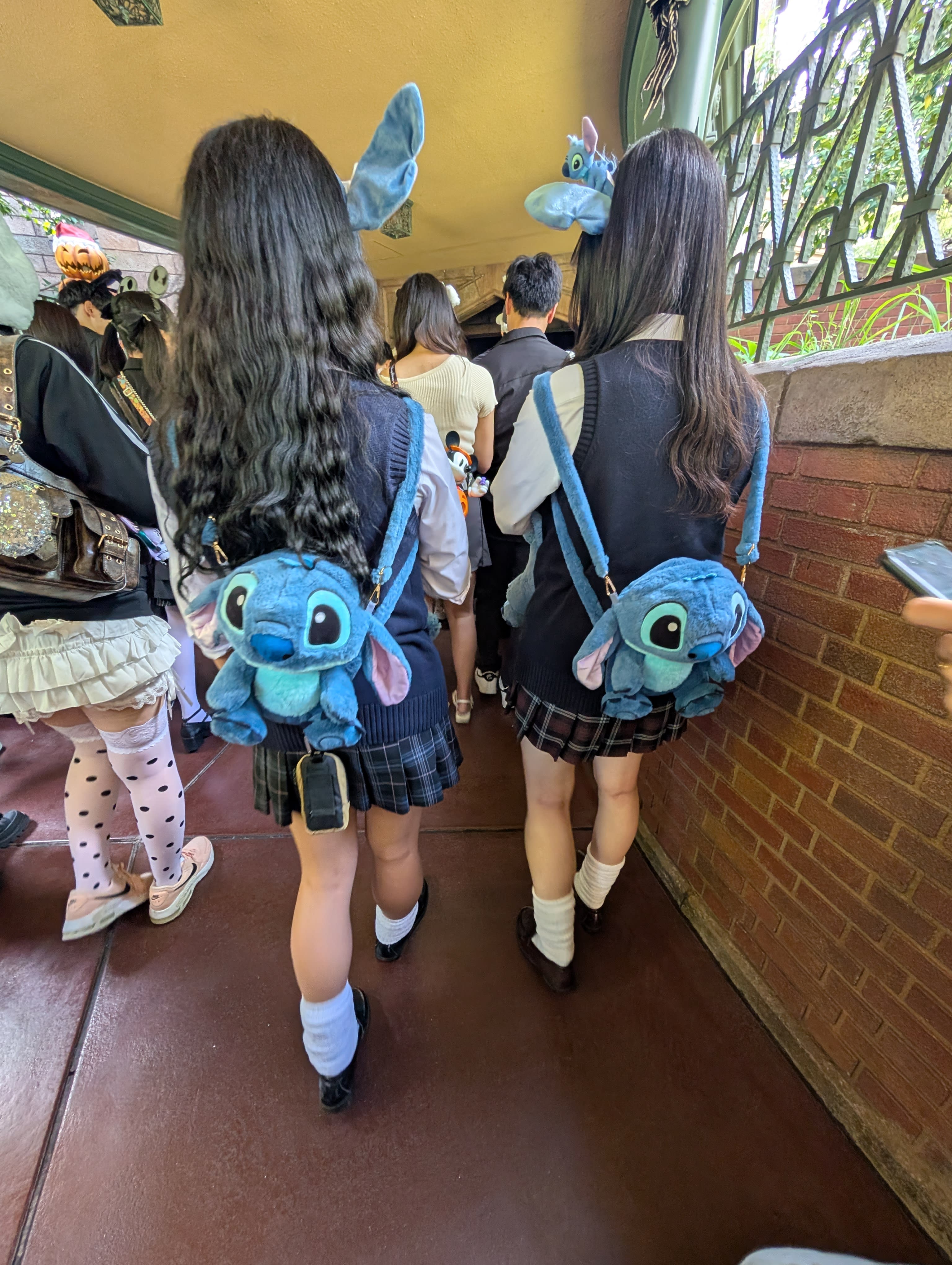
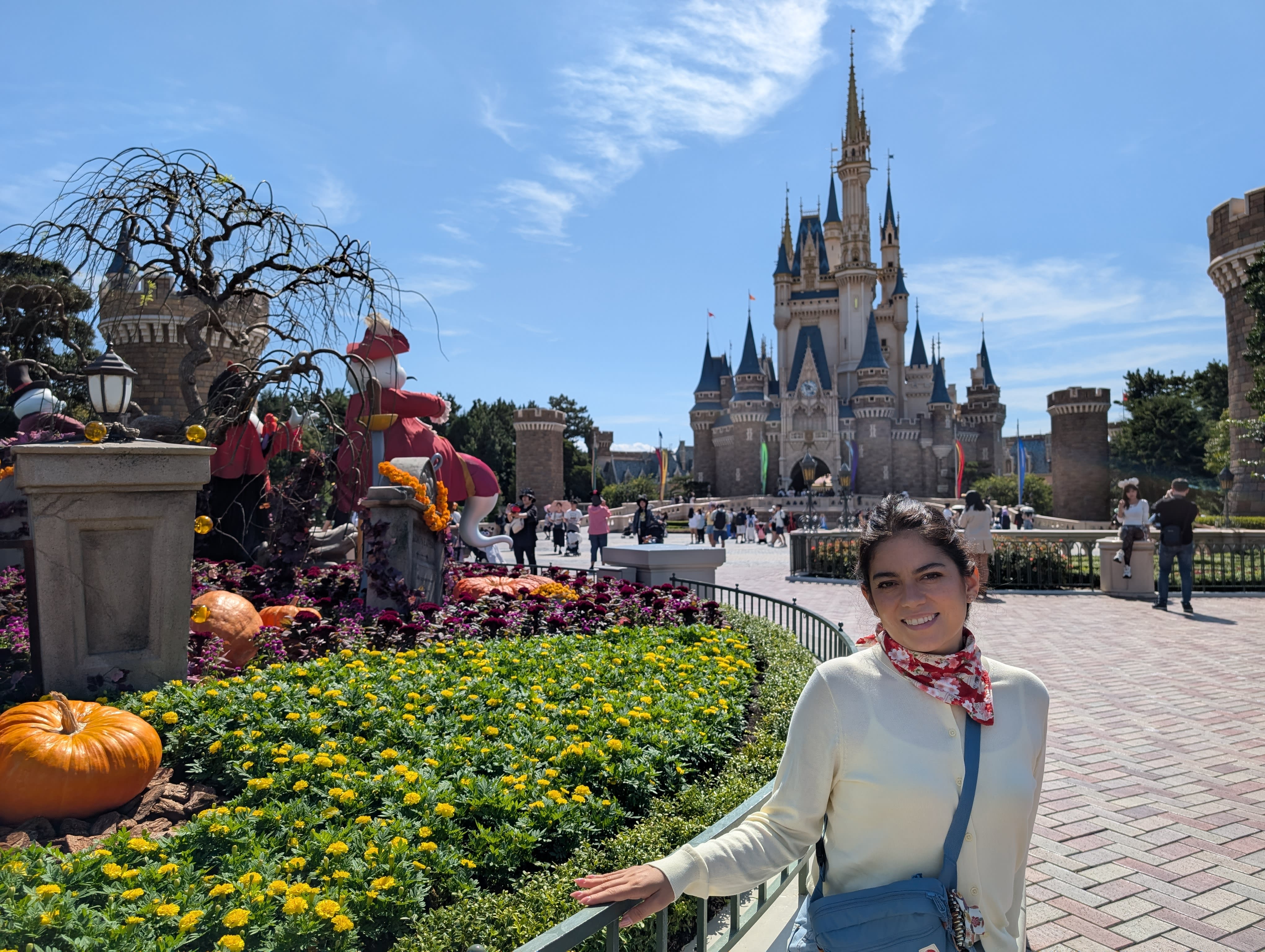
Cinderella Castle is the anchor of the park, and it is bigger and more convincing than I had expected. We went during the Halloween season — pumpkins lining the flowerbeds, autumn garlands draped from the lampposts, character statues in seasonal costumes — and the whole scene had the quality of a stage set designed by someone who understood that beauty is a function of detail multiplied by commitment.
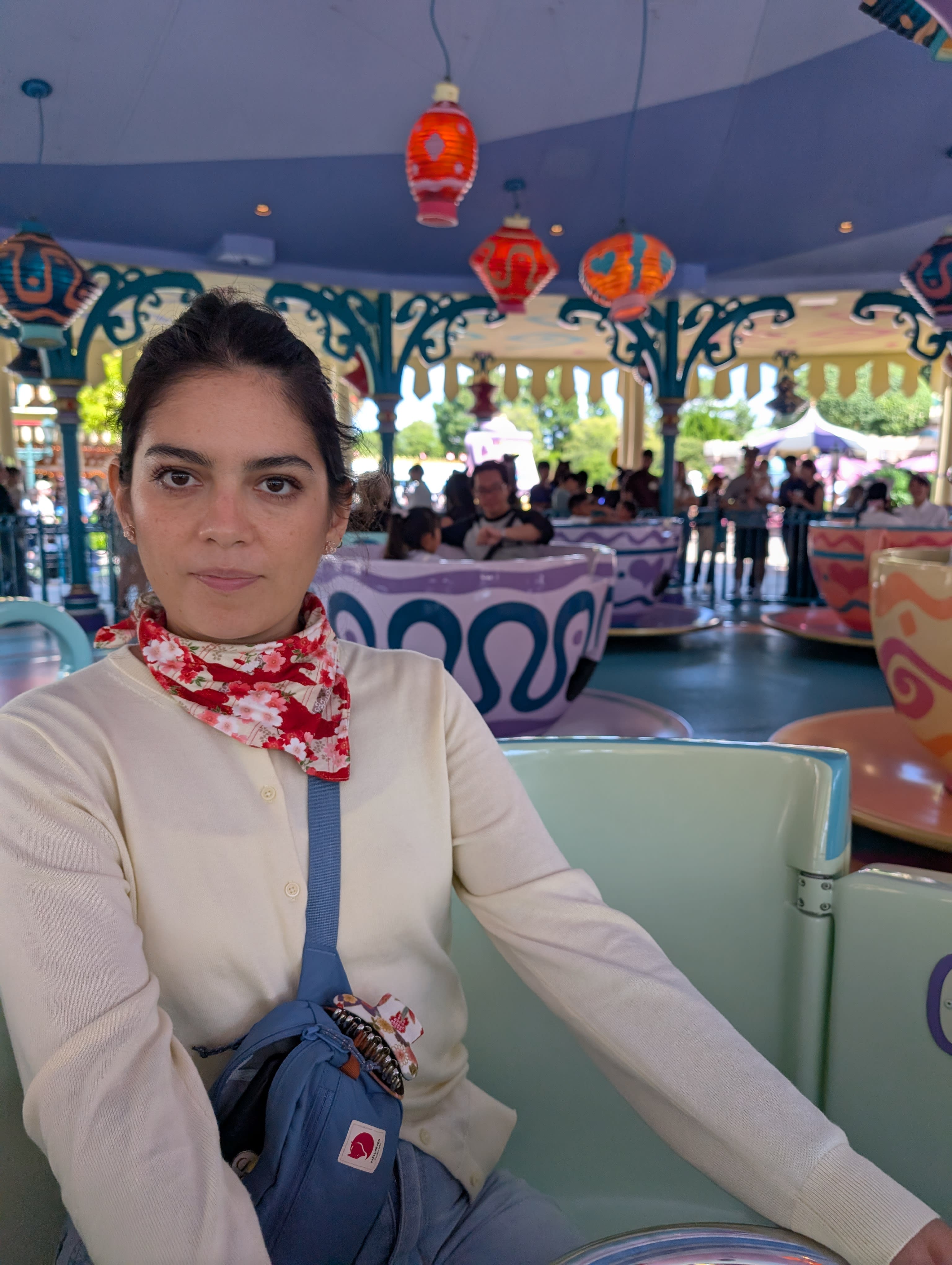
Lia sat in the teacups — the Mad Tea Party ride — and I photographed her spinning in a pastel cup with Chinese lanterns above and the carousel visible through the gap in the canopy. She had the expression of someone who is too dignified to scream on a children’s ride but too happy to hide it. The teacups are not thrilling. They are joyful, which is a harder thing to engineer and a more valuable thing to experience.
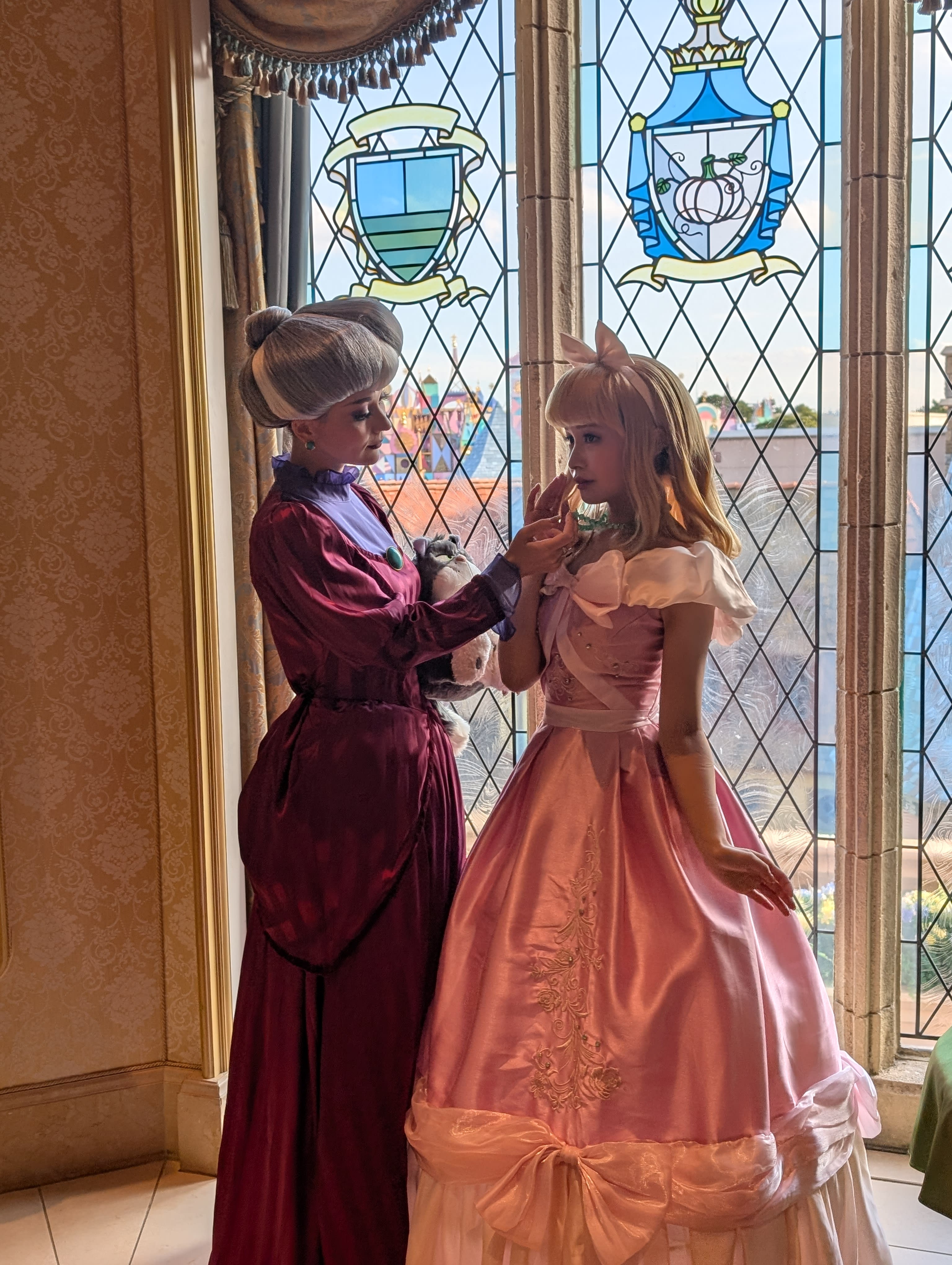
Inside the castle, we climbed to a gallery where Disney characters in full period costume performed scenes from Cinderella in front of stained-glass windows. The Fairy Godmother and Cinderella stood by a window in costumes that were not costumes — they were garments, sewn with the care and quality you would find in a haute couture atelier. The actress playing Cinderella stayed in character for the entire interaction with a naturalness that suggested she had simply become Cinderella for the duration of her shift, and the distinction between performance and reality had been quietly dissolved.
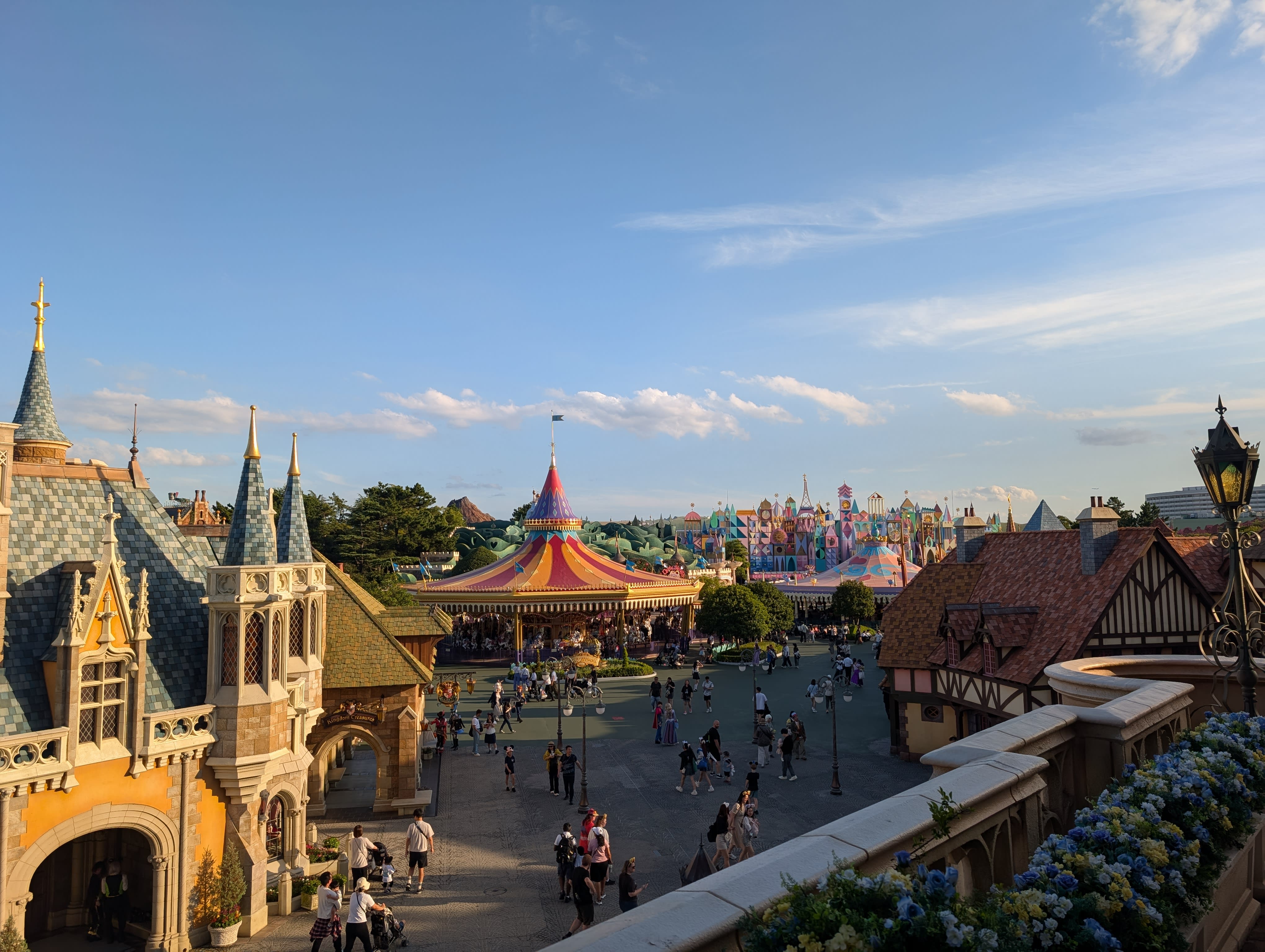
From the castle balcony, the view stretched across Fantasyland — the carousel, the colourful rooftops of It’s a Small World, the striped tent of the circus area — and the effect was vertiginous. Not because of the height, but because of the completeness. Every surface was painted. Every detail was maintained. Every sightline had been composed. This is what I mean when I say the project: someone sat in a room and decided that the view from the third-floor balcony of a fake castle in Chiba Prefecture would be beautiful, and then they made it beautiful, and they have kept it beautiful every day since, and that decision — repeated ten thousand times across ten thousand details — is what separates Tokyo Disneyland from every other theme park I have visited.
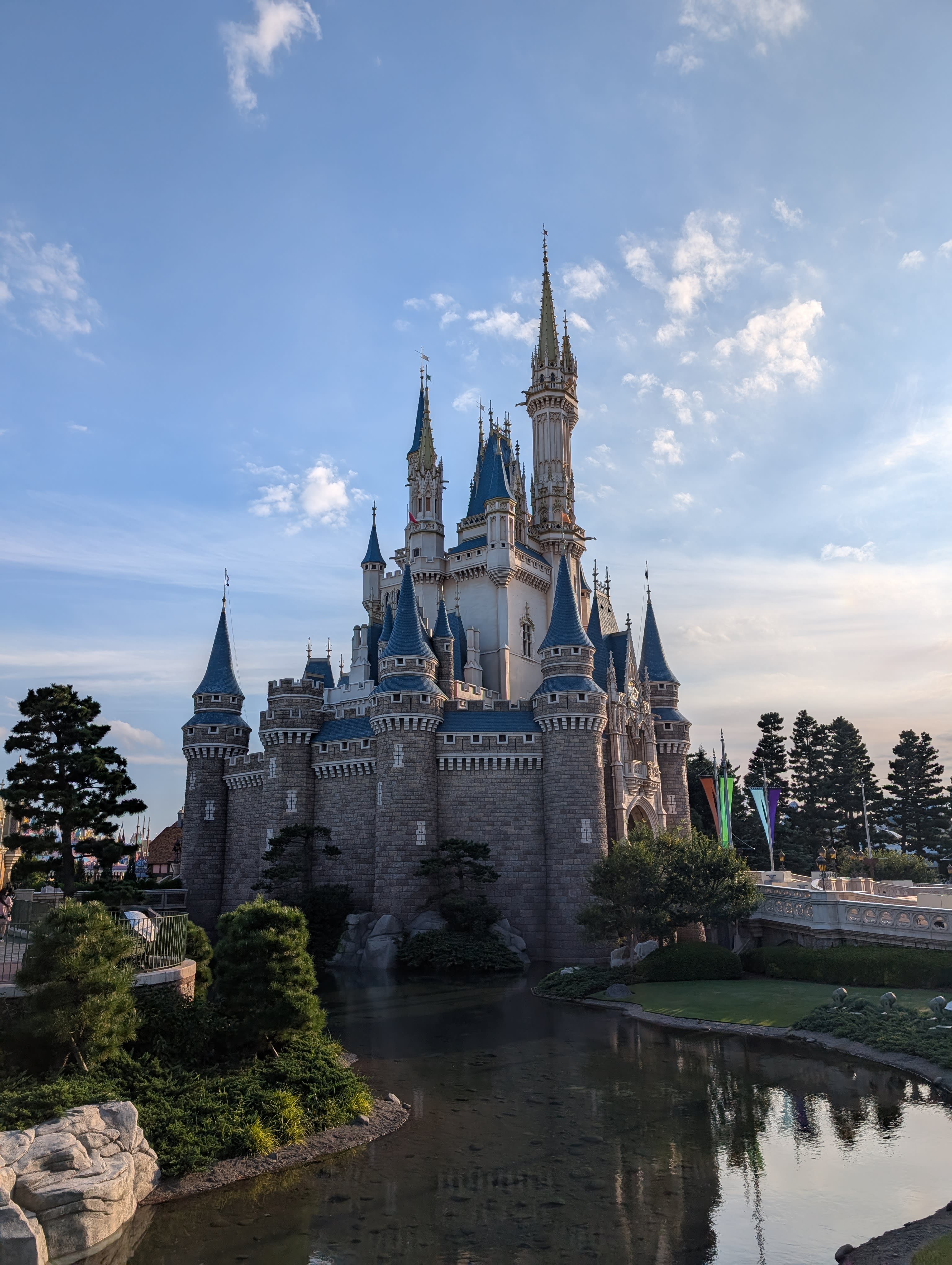
As the sun dropped, the castle turned gold. Seen from behind, across the moat, with sculpted Japanese pines in the foreground and the spires catching the last light, it looked less like a theme park structure and more like something that had been there for centuries and had simply decided to stay.
The Halloween parade arrived at dusk. Floats shaped like Ursula’s tentacles, like Maleficent’s thorns, like the Headless Horseman’s lantern. The crowd pressed forward. A child sat on his father’s shoulders, pointing at the Ursula float with the particular intensity of someone who has met a villain and is not afraid. Cinderella Castle rose behind the parade in the fading light, and for a moment the entire scene — the castle, the crowd, the float, the child — composed itself into something that felt like a painting by someone who believed in fairy tales and wanted you to believe in them too.
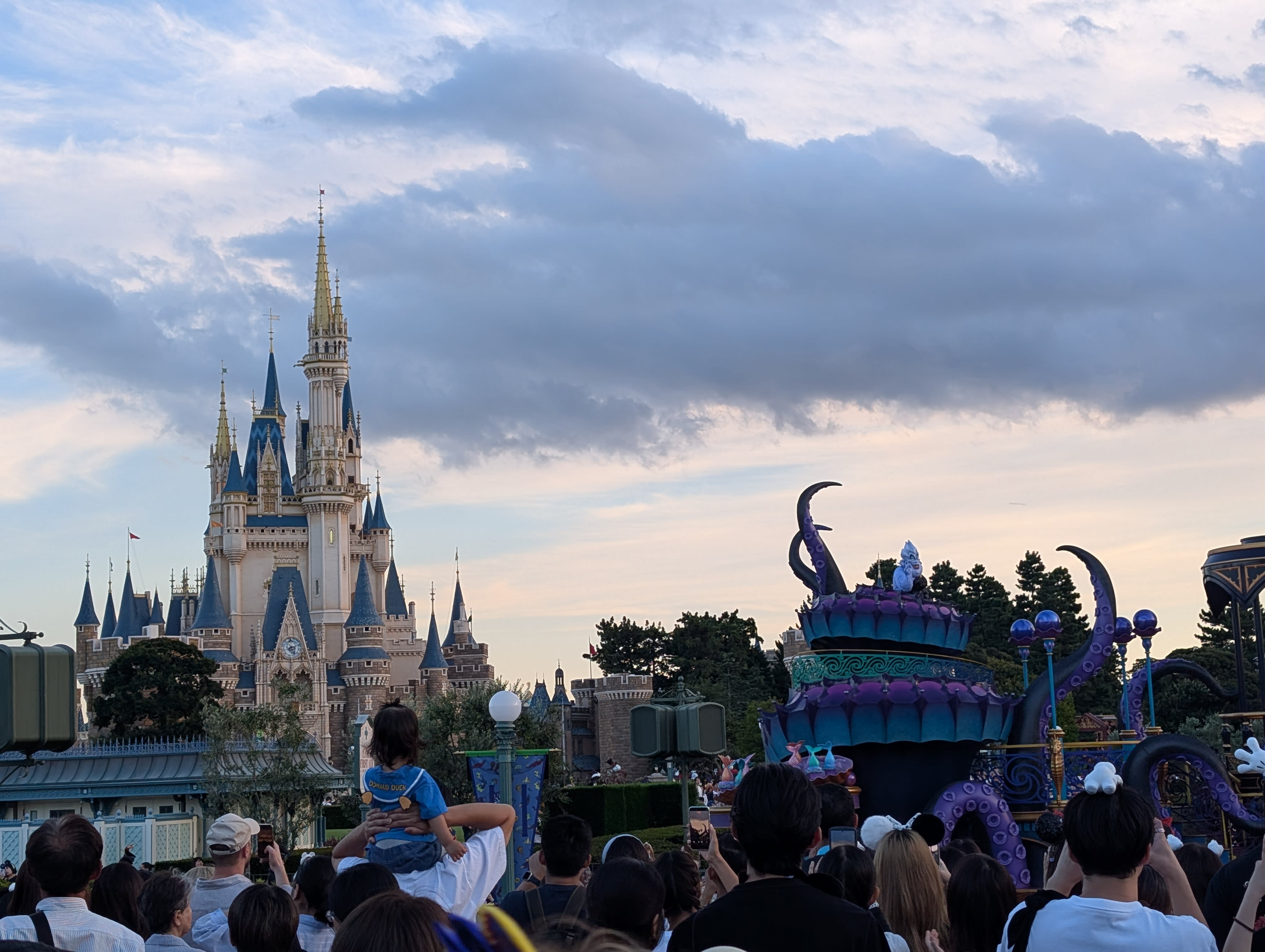
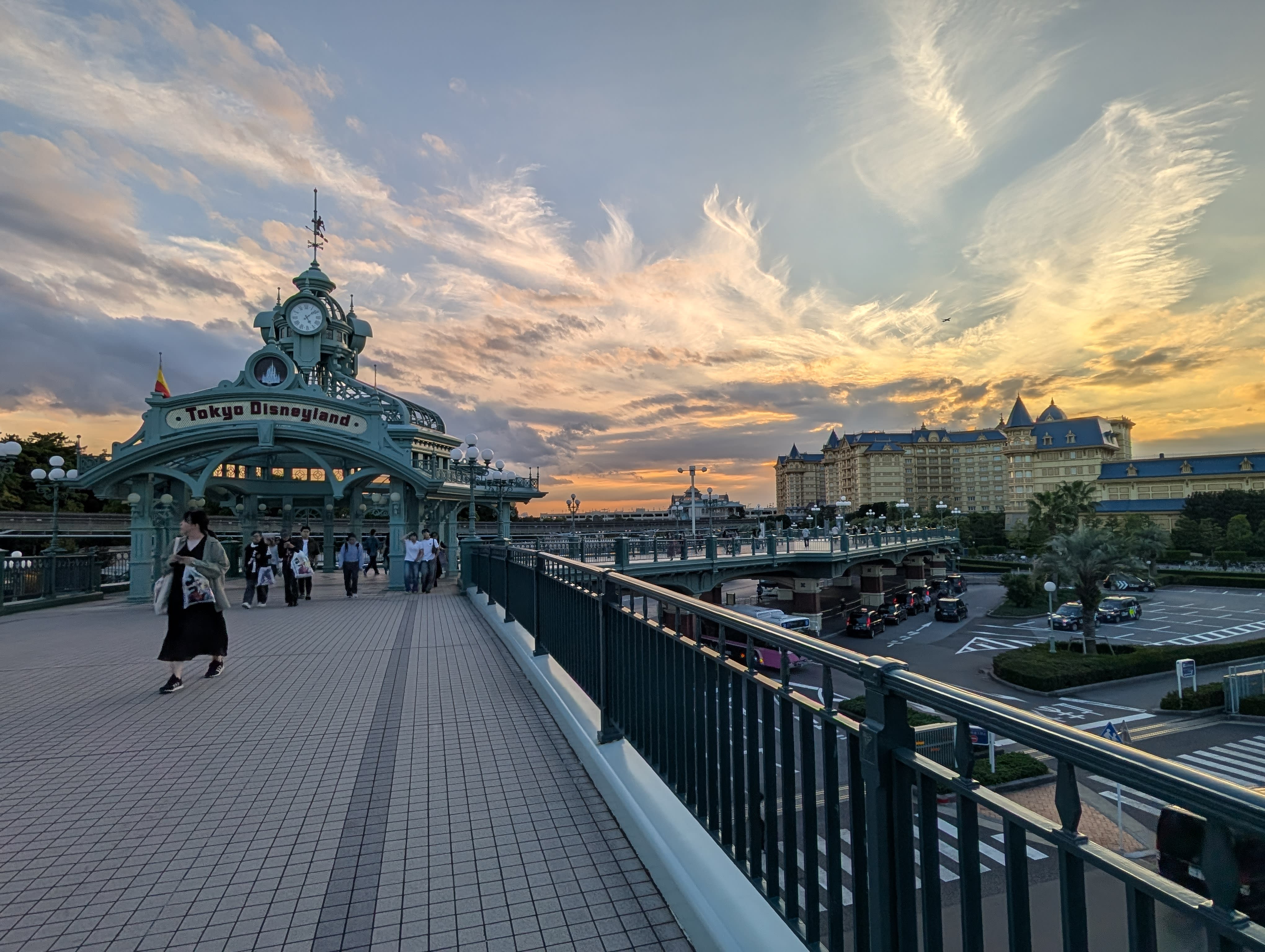
We left the park at closing, walking back across the bridge as the sky turned amber behind the Disneyland entrance arch. The clock on the arch read seven-something. My feet hurt. My phone was full of photographs. I had not thought about work, about emails, about anything outside the park walls for an entire day. That is not escapism. That is what happens when someone builds a world well enough that you stop needing the other one for a while.
Tokyo DisneySea — Day Two
If Disneyland is Disney done well, DisneySea is Disney done differently. It is not a theme park in any sense I had previously understood. It is a collection of worlds — a Mediterranean harbour, a Venetian waterfront, an Arabian palace, a volcanic island, a New York waterfront from 1912, a mermaid kingdom, a fantasy forest — connected by waterways and bridges and transitions so carefully designed that you move between them without ever feeling a seam. DisneySea does not exist anywhere else in the world. It exists only in Japan, because only Japan would build something this ambitious and maintain it with this level of obsessive care.
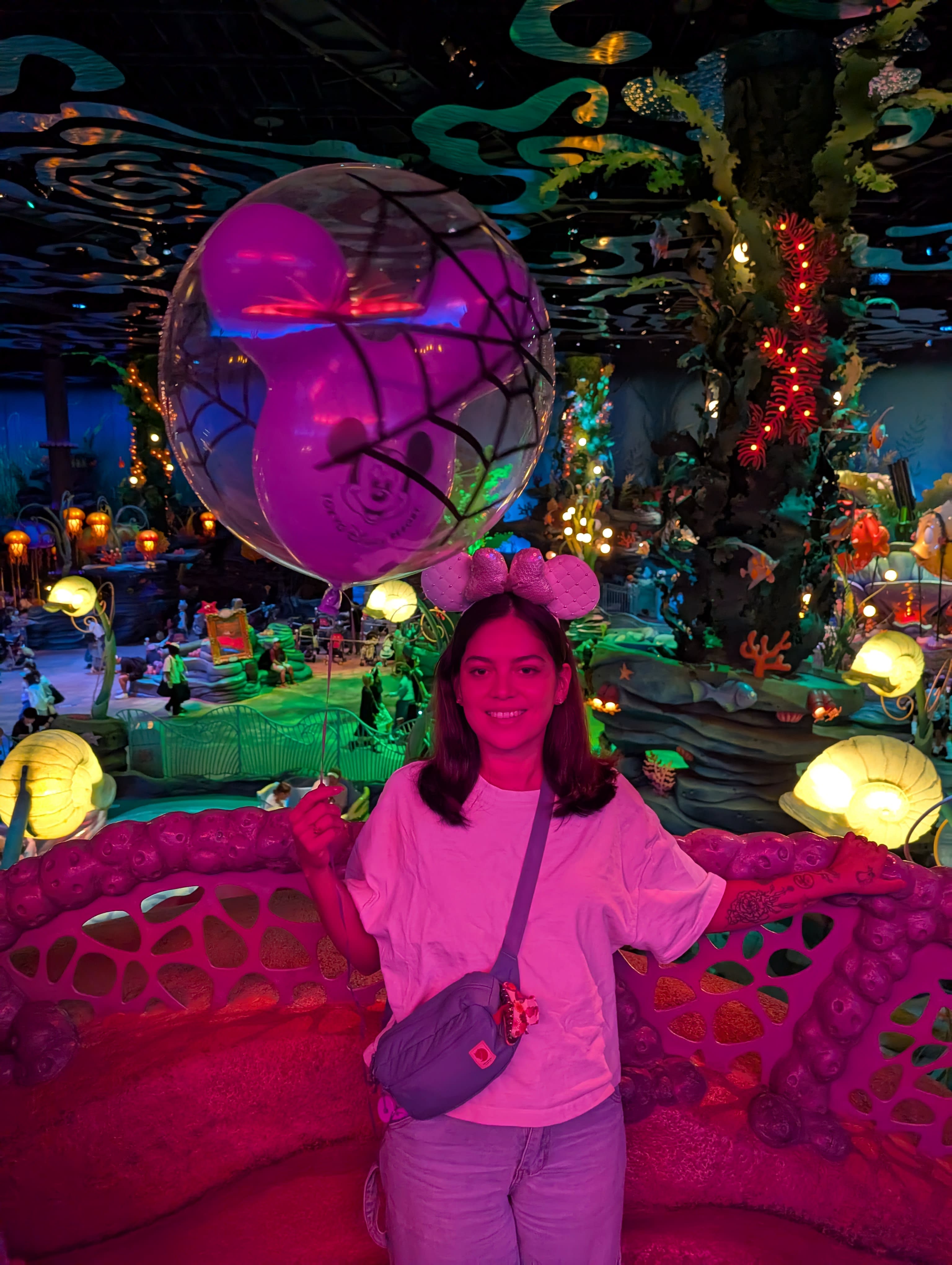
Lia arrived with Minnie ears and a Halloween balloon — a transparent sphere with a spider-web pattern and a purple Mickey inside. She wore this combination for the entire day without a trace of irony, and I loved her for it. DisneySea requires sincerity. If you bring cynicism, you will have a mediocre day. If you bring openness, you will have one of the best days of your life.
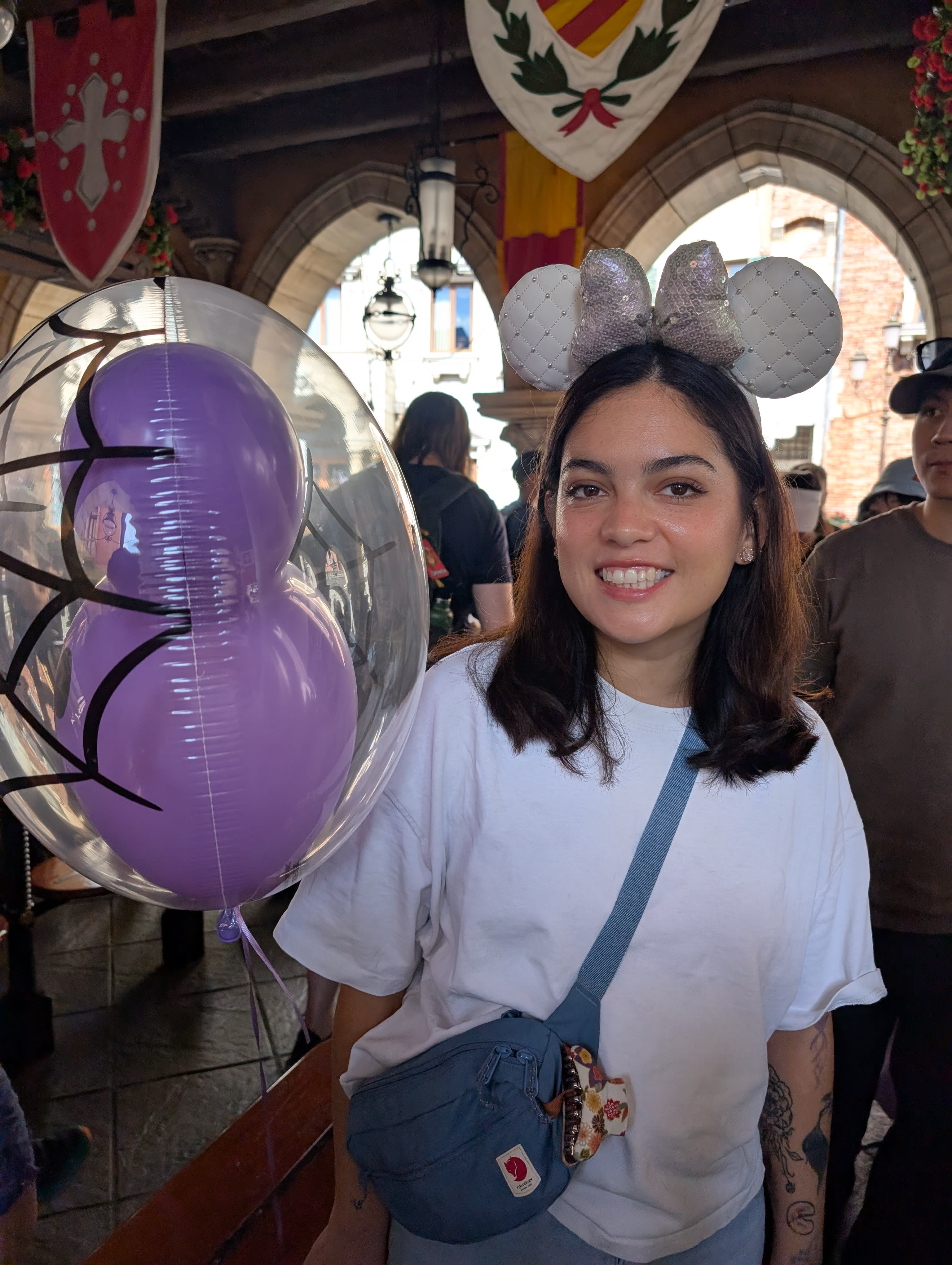
Mermaid Lagoon
The Mermaid Lagoon is entirely indoors — a vast, domed space themed as the ocean floor, lit in purples and greens and blues, with King Triton’s palace at its centre and rides and restaurants and shops built into the coral walls. The King Triton sculpture — trident raised, dolphins at his side — is a piece of engineering that doubles as sculpture. The scale of it, the detail of the coral and the starfish and the sea plants, the way the light moves on the ceiling to simulate water — it produces an atmosphere that is less “theme park attraction” and more “cathedral built by people who worship the ocean.”
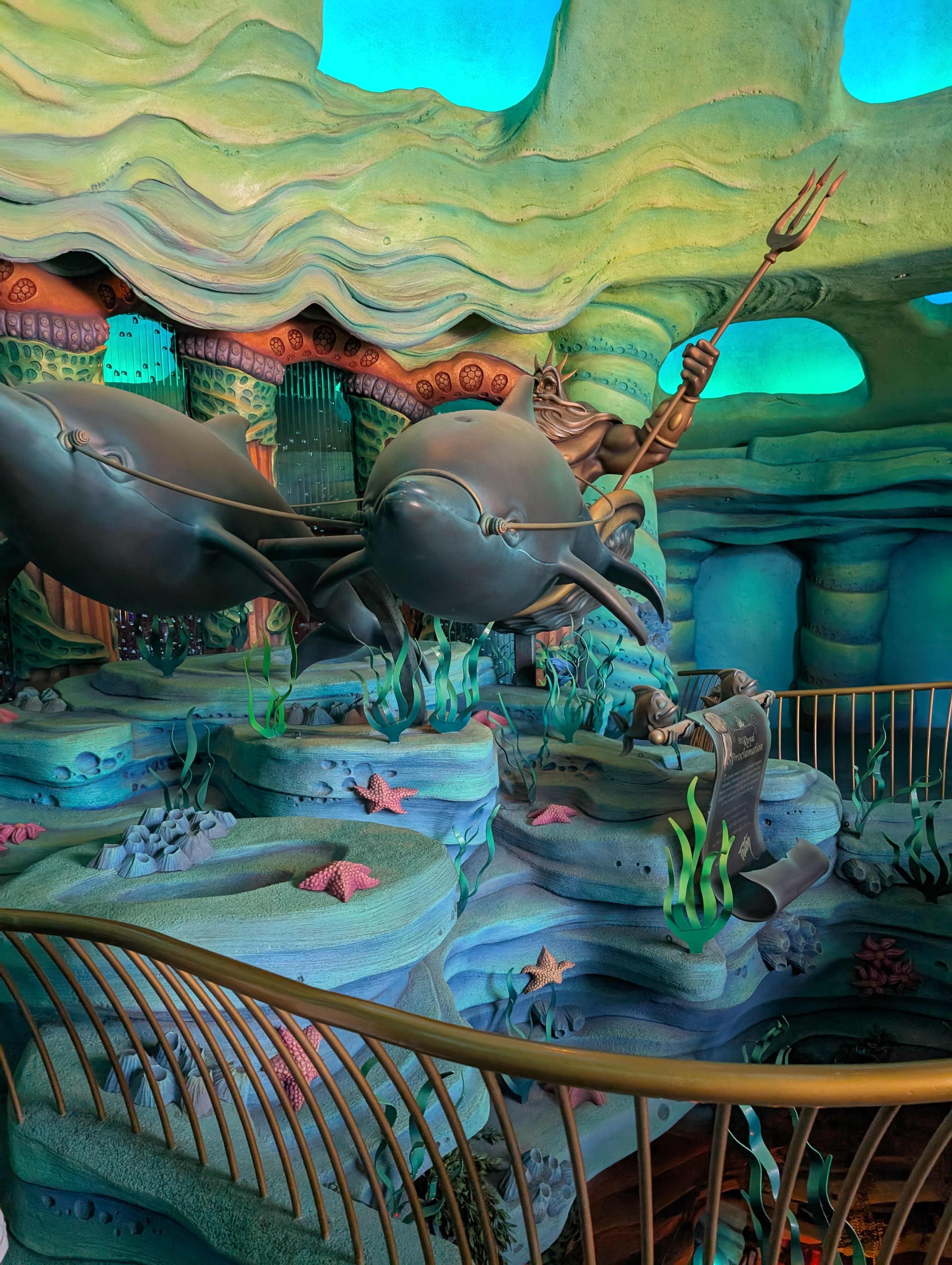
Lia stood on a bridge above the glowing seabed, bathed in purple light, her balloon floating above her, and looked like she had been transported into a world that should not exist but does. The level of detail in this single room — the bioluminescent coral, the shell-shaped lamps, the rippled ceiling — was more impressive than most museums I have visited. She spent forty minutes here. I could have spent longer.
Fantasy Springs
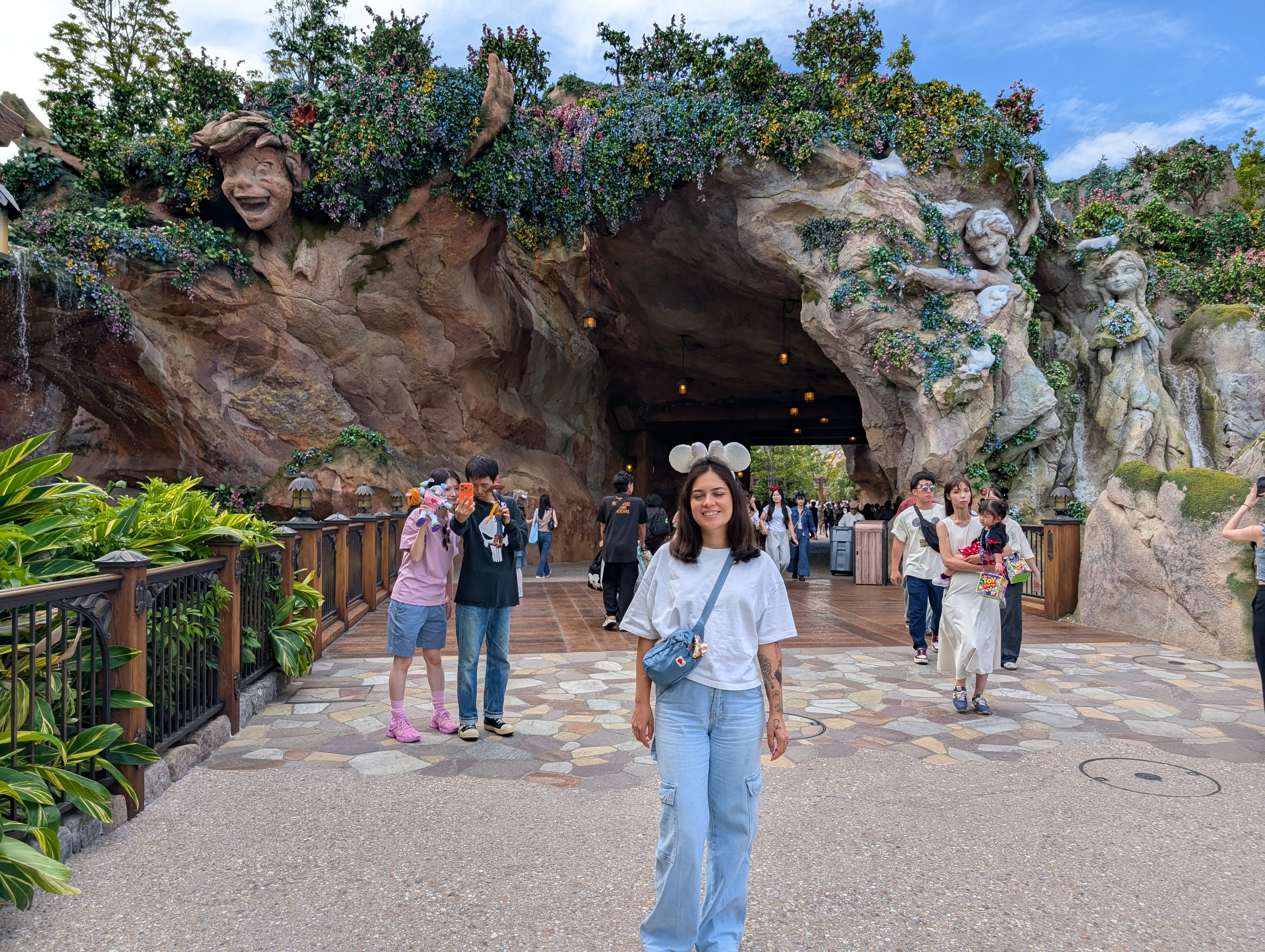
Fantasy Springs is the newest area of DisneySea, and it is extraordinary. You enter through a rock archway carved with faces and figures — Peter Pan’s Lost Boys, tangled vines, sculpted stone that looks ancient and weathered despite having been built in 2024. Lia stood at the entrance and the scale of the rockwork behind her — three storeys of carved stone, waterfalls, greenery — made her look like a character who had wandered into her own story.
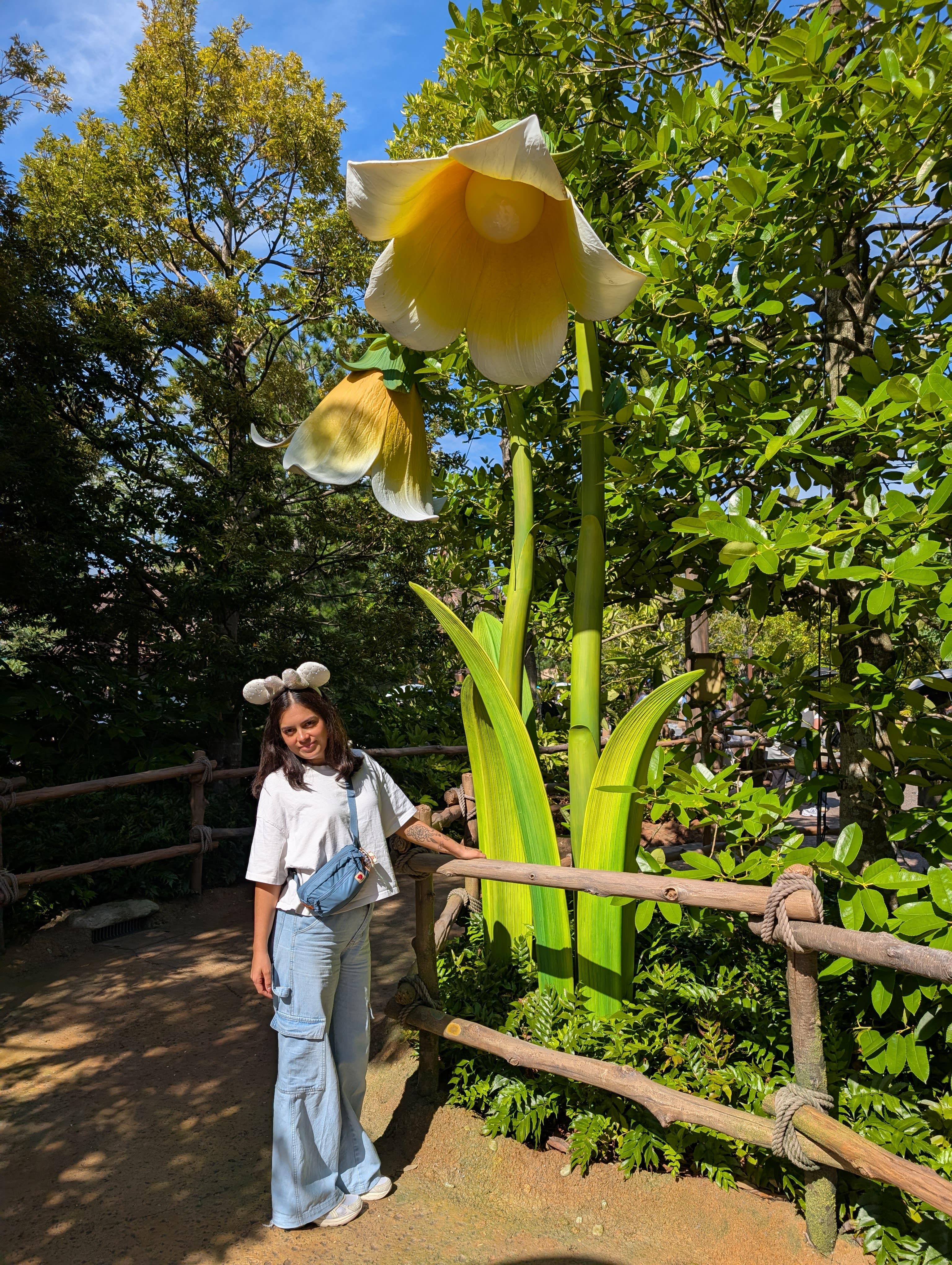
Inside, the Tangled area recreates the floating lantern kingdom with a forest of giant flowers — daffodils and bluebells taller than a person, their petals translucent in the sunlight. Japanese girls in matching outfits walked through the flower forest and the scene was so perfectly composed — the light, the flowers, the visitors who had dressed to match the world they were visiting — that the line between the park and its guests dissolved completely.
Lia stood next to a giant daffodil that was twice her height and touched its petal with the gentle curiosity of someone who has accepted that the flower is not real but has decided to treat it as if it is, which is the correct approach to everything at DisneySea.
Arabian Coast & The Characters
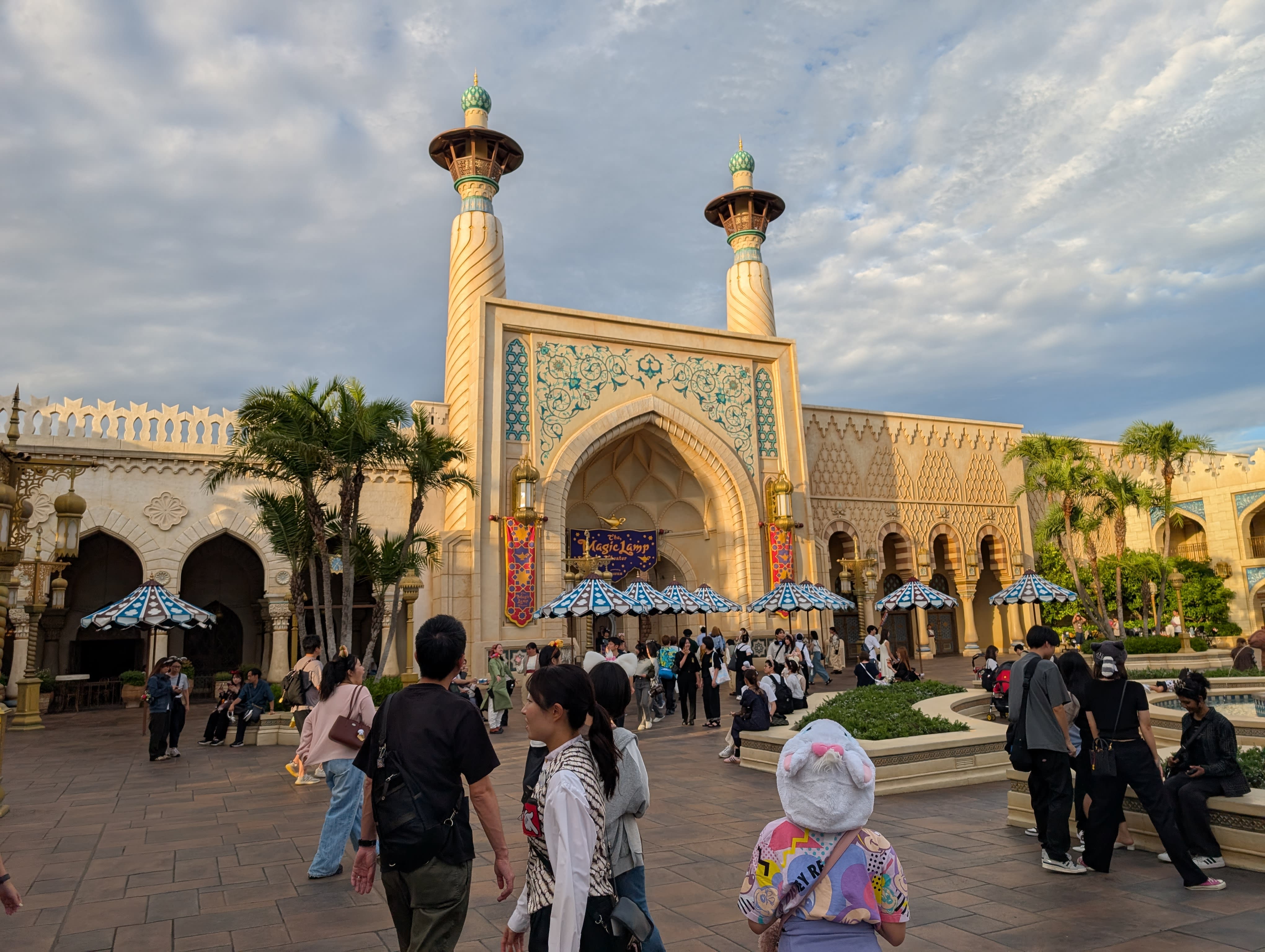
The Arabian Coast reproduces an Arabian palace with a fidelity that made me — a Frenchman who has actually been to Morocco — do a double take. The minarets, the tilework, the arched doorways, the fountains — it is not a cartoon version of the Middle East. It is a beautifully stylised interpretation that treats its source material with respect and renders it in a scale that is simultaneously intimate and monumental.
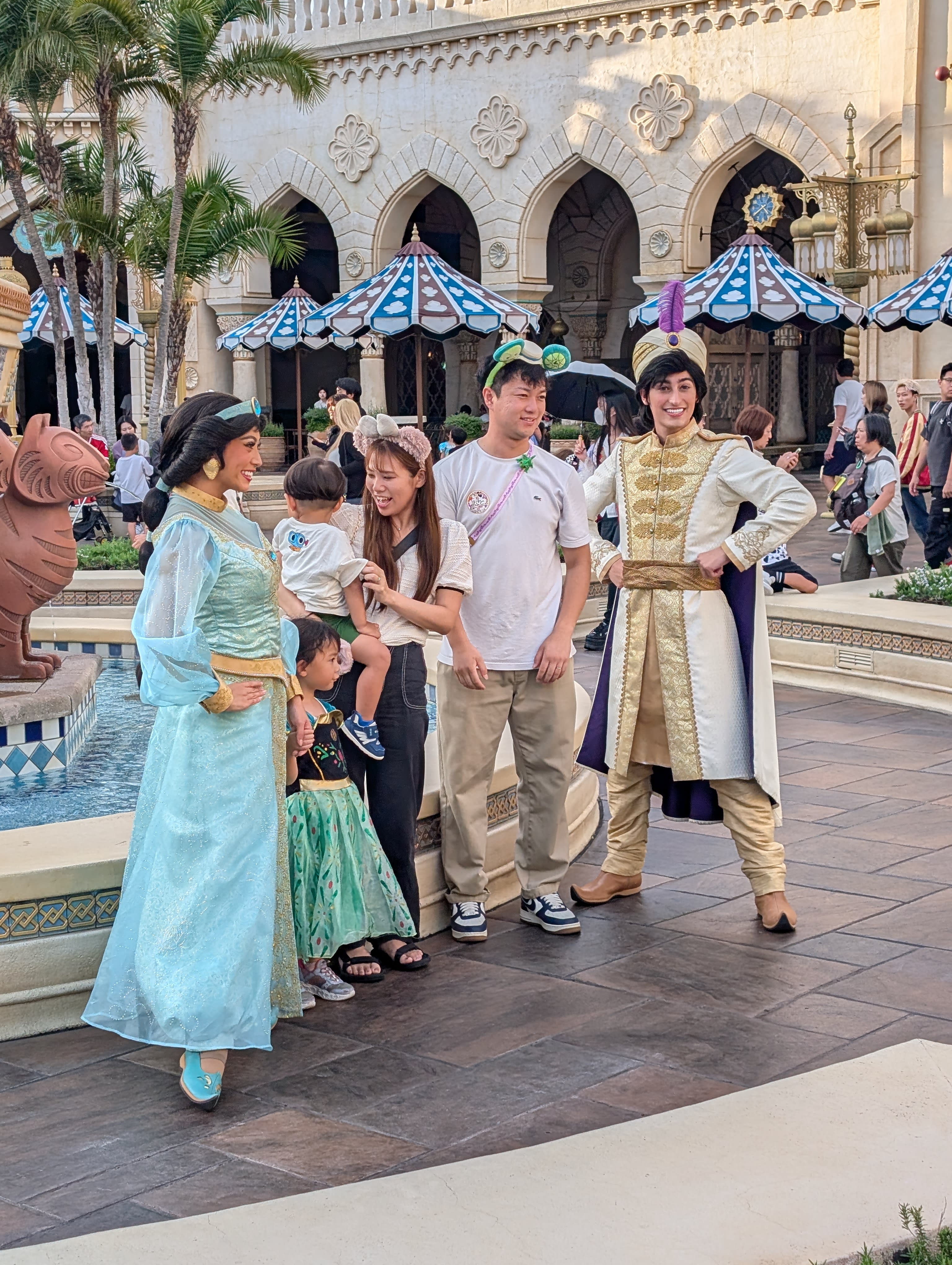
Outside the palace, Jasmine and Aladdin greeted visitors. A Japanese family — father, mother, two children, the youngest dressed as Jasmine — posed with the characters, and the interaction was not a photo opportunity. It was a meeting. Aladdin knelt to speak to the little girl at her height. Jasmine adjusted the child’s costume. The parents watched with an expression that was not performing gratitude but actually feeling it. The characters stayed for five minutes. Nobody rushed. This is what Japanese Disney does differently from every other Disney: it treats the fantasy as something that deserves time.
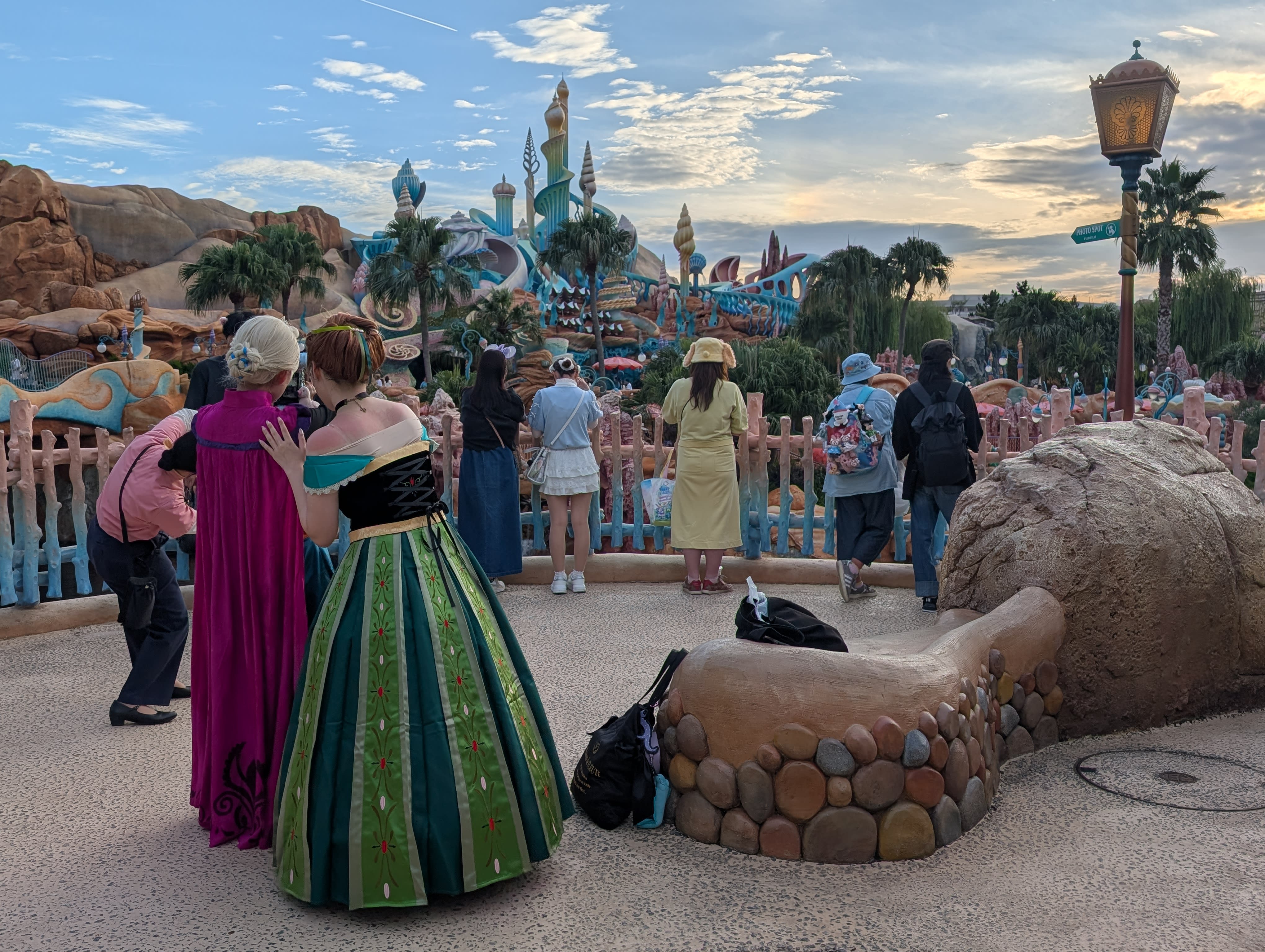
Near the Frozen area, a visitor in a full Anna coronation gown — hand-sewn, floor-length, green silk with rosemaling embroidery — stood watching the Fantasy Springs castle with the unselfconscious dignity of someone who had decided to be Anna for the day and was committed to the role. At Tokyo DisneySea, the visitors are part of the scenery. The park does not just allow cosplay. It depends on it.
The Pirate Ship & American Waterfront
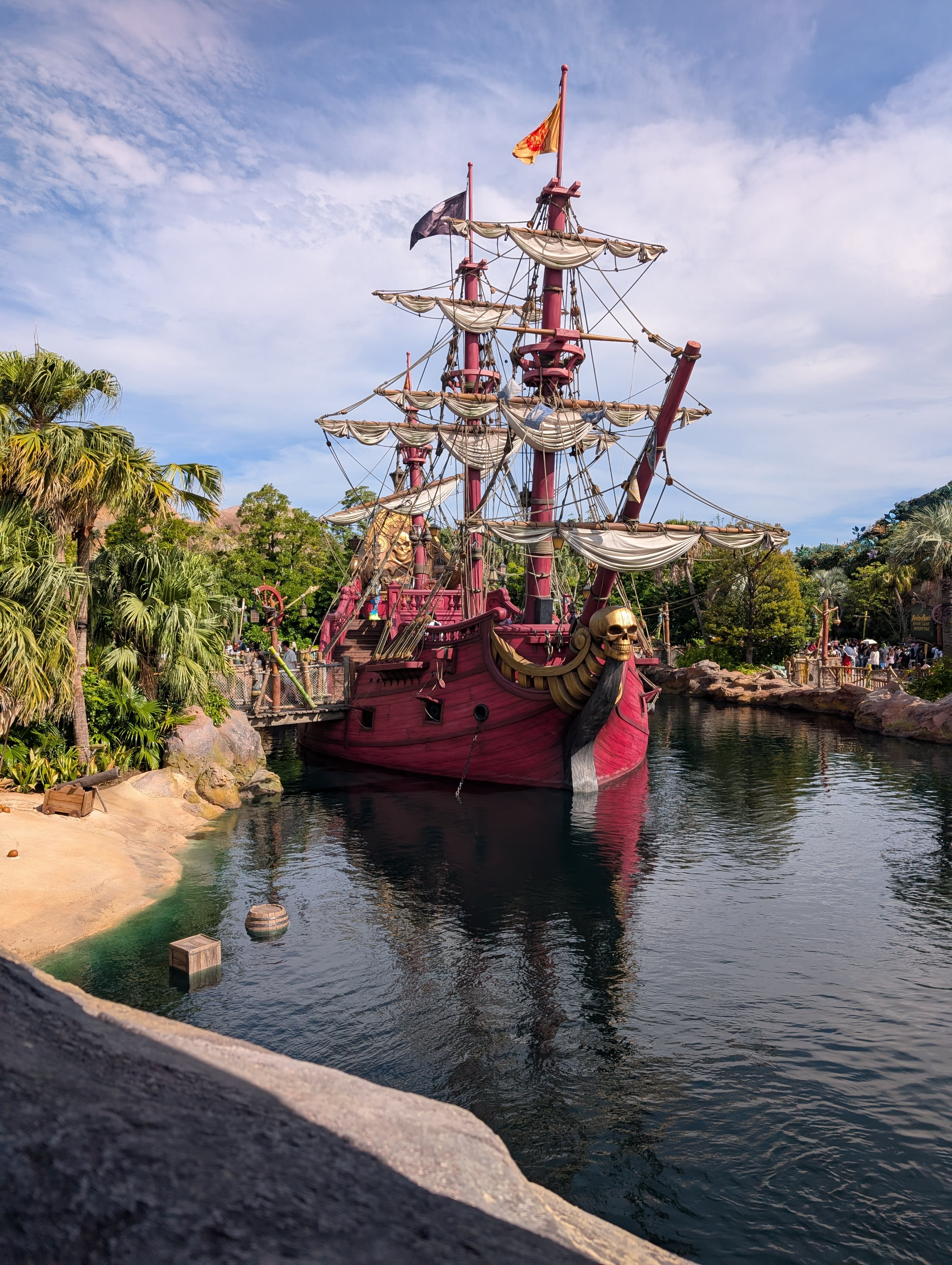
Captain Hook’s galleon sits in a harbour in the Adventure area — a full-scale pirate ship with rigging, cannons, and a skull figurehead, moored in water that reflects the palm trees and the sky. It is a prop. It looks like a ship that has sailed actual seas and been parked here by a pirate who went ashore for lunch and never came back.
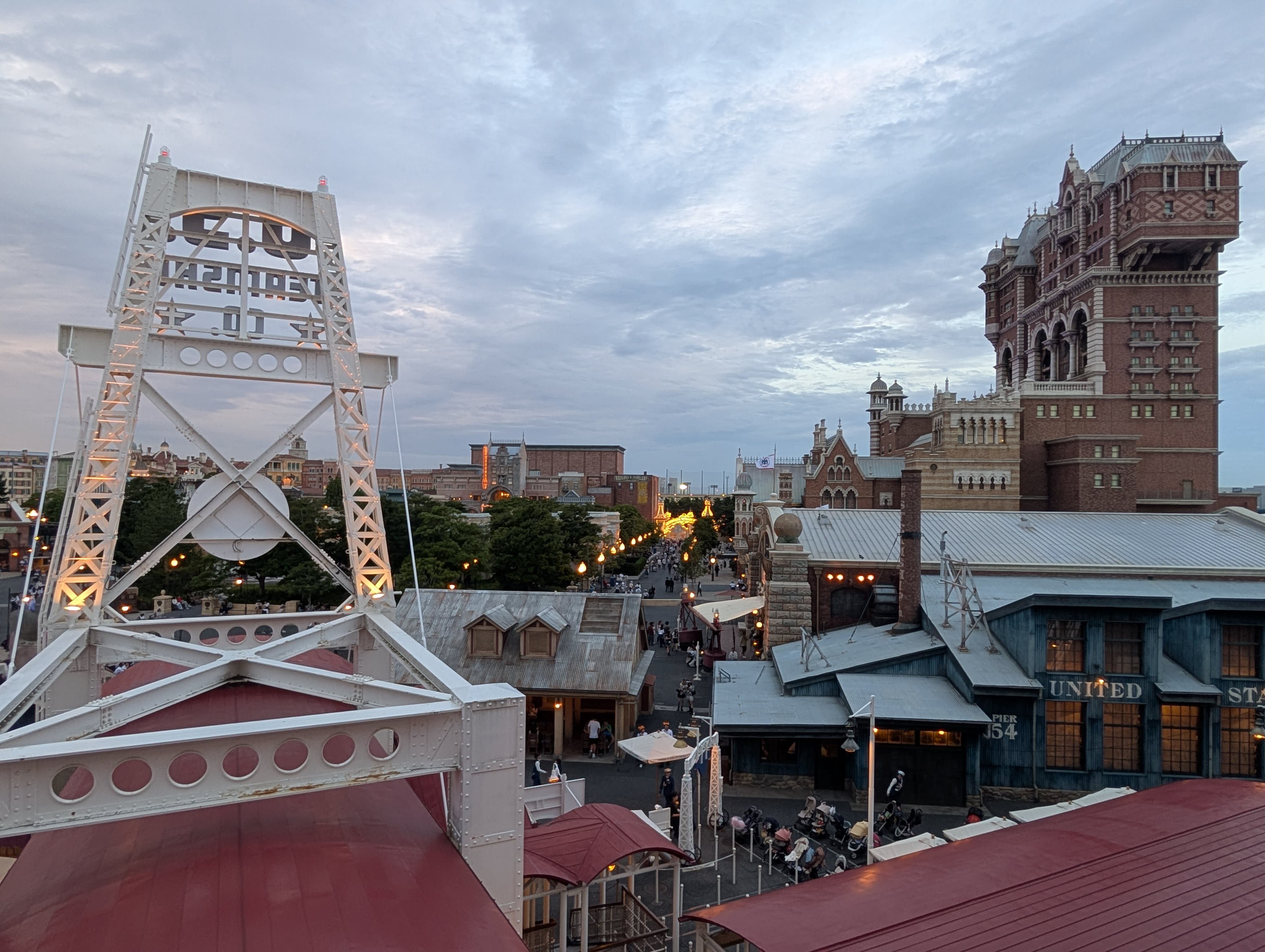
The American Waterfront reproduces early-twentieth-century New York with a precision that borders on archaeology. The Tower of Terror rises above the rooftops like a haunted hotel from the Gilded Age. A steel bridge — rusted, riveted, the letters reversed because you are seeing them from behind — frames the skyline at dusk. Red awnings, brick warehouses, fire escapes. Every surface tells a story. Every rust stain is deliberate.
DisneySea at Night
As the sun set, DisneySea revealed its final trick: it is more beautiful at night than during the day.
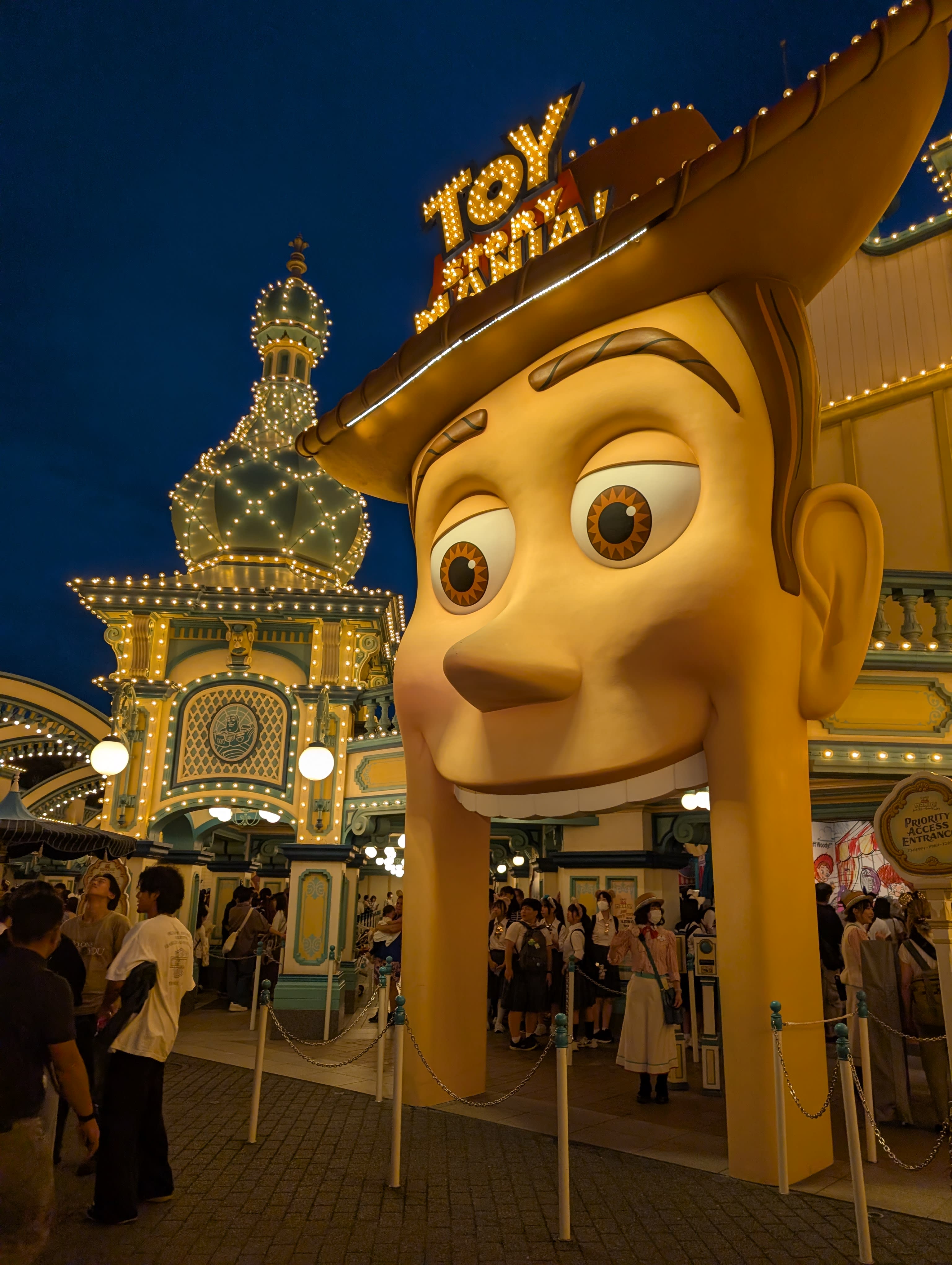
The Toy Story area lit up with carnival bulbs — a giant Woody head grinning above the entrance to Toy Story Mania, the queue stretching past visitors in costumes, the air smelling of popcorn in flavours I did not know popcorn could have (honey, soy sauce, curry, strawberry).
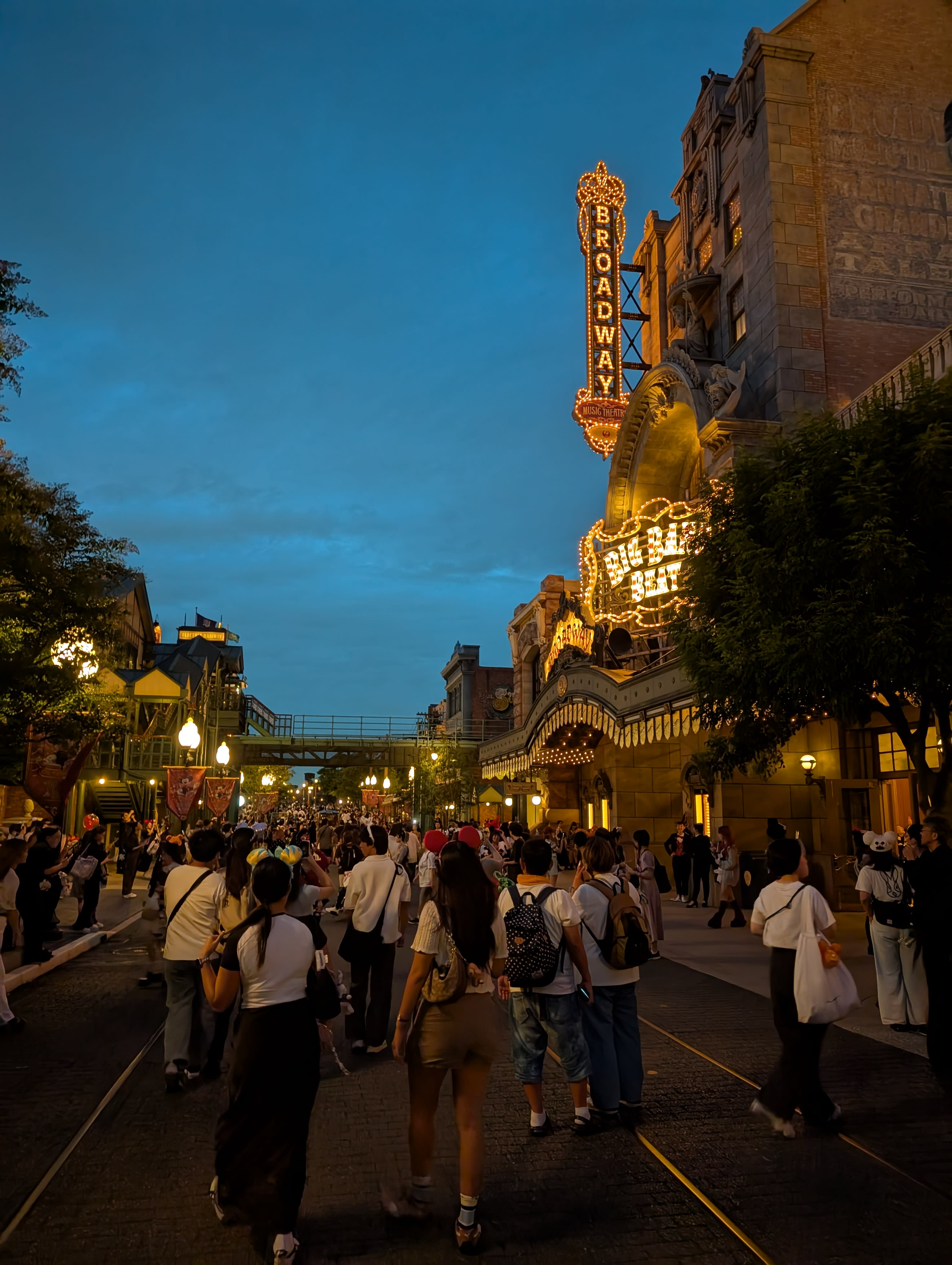
The Broadway area of the American Waterfront became a canyon of golden light — theatre marquees, neon signs, the silhouettes of visitors walking down a street that felt more like 1920s Manhattan than 1920s Manhattan probably felt like.
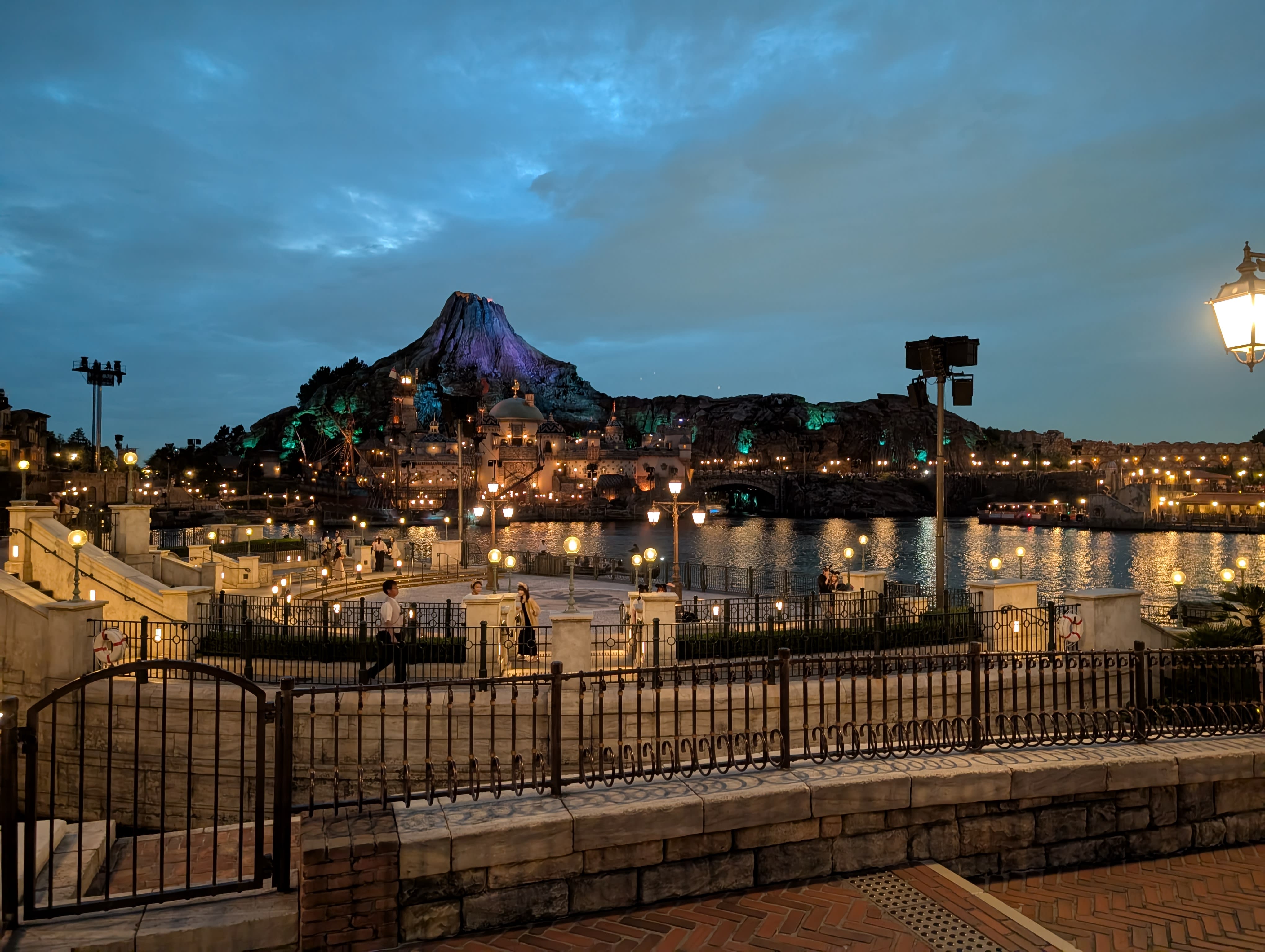
And then the Mediterranean Harbor — the central lagoon around which DisneySea is built — came alive. Mount Prometheus, the volcano at the park’s centre, glowed purple and green against the dark sky. The harbour’s stone bridges and lampposts reflected in the still water. The Venetian waterfront — terracotta buildings, wrought-iron balconies, the kind of Italian piazza that makes you forget you are on a landfill in Chiba — filled with visitors sitting on stone steps, eating churros, waiting for the show.
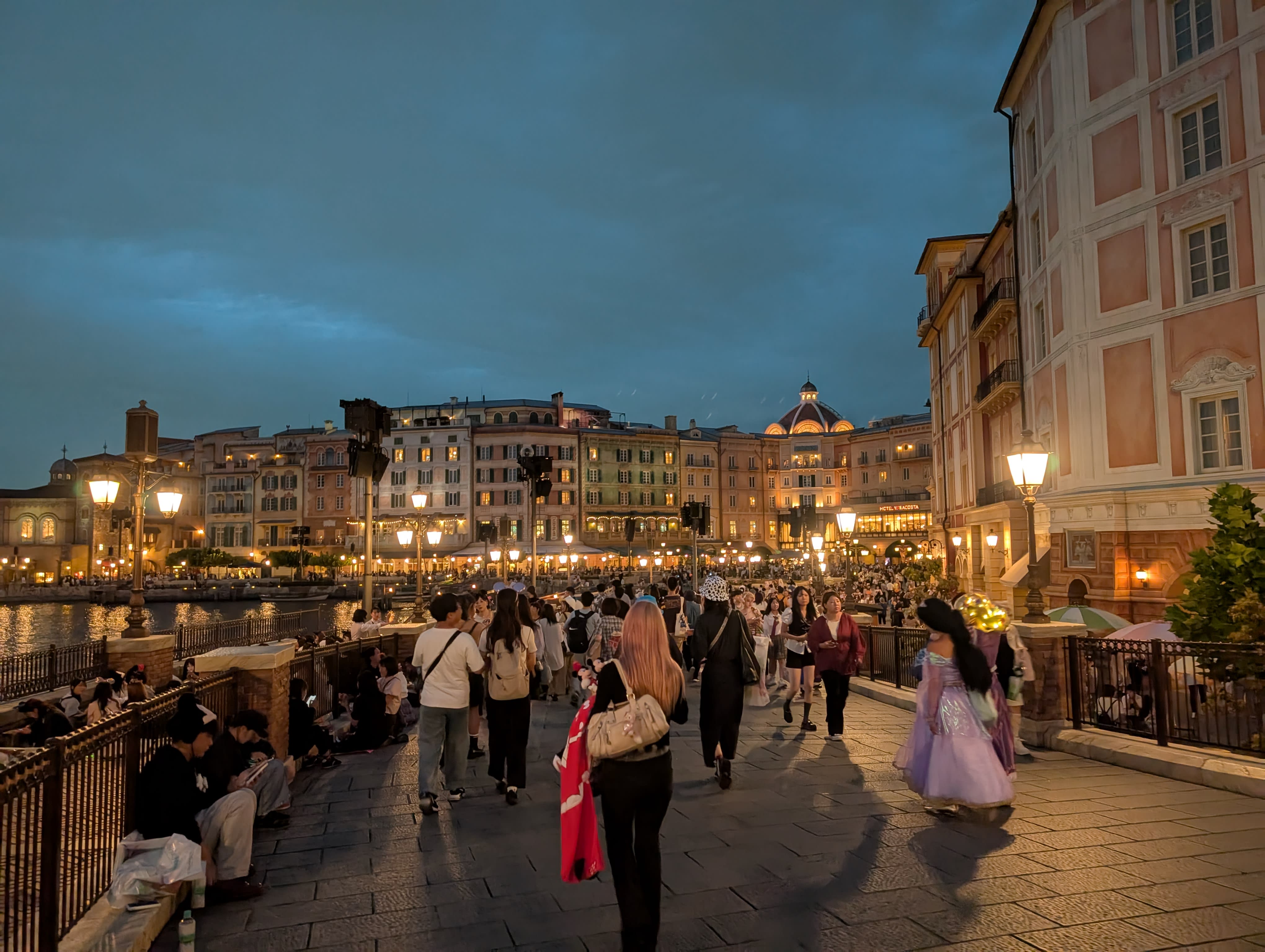
The waterfront promenade was crowded with people walking slowly, taking photographs, existing in a space that was beautiful enough to justify simply being there. A woman in a princess gown walked past. Children with glow sticks. Couples on benches. The buildings — peach, cream, terracotta — glowed under the lamplights with the warmth of a real Italian town at the end of a long summer day.
What Disney Taught Me
I went to Tokyo Disney Resort expecting to enjoy it the way you enjoy a well-made product — with appreciation and a comfortable distance. I did not expect to be moved. I was wrong.
What Tokyo Disney does — what Disney in general attempts but only Tokyo achieves at this level — is create a space where sincerity is not embarrassing. Where adults can wear Minnie ears without irony. Where a father can carry his daughter on his shoulders to see a parade and feel no need to perform detachment. Where a thirty-four-year-old French travel writer can stand in a fake Italian piazza at ten o’clock at night, watching a volcano glow purple behind a Venetian bridge, and feel something that he can only describe as wonder.
The Japanese are the right custodians for this project. Their cultural commitment to craft, to maintenance, to the idea that care is a form of respect — these are the values that turn a theme park into something that functions like art. Every bench is clean. Every flower is tended. Every cast member treats their role with the seriousness of someone who understands that the illusion only works if everyone agrees to maintain it, and that maintaining it is not childish but civilised.
Lia cried during the fireworks at Disneyland. I cried during the harbour show at DisneySea. Neither of us mentioned it until the train ride home, when she said, very quietly, “That was one of the best days of my life.” She was not talking about the rides. She was talking about the permission — the permission to feel joy without qualification, wonder without irony, and happiness without the exhausting modern need to be above it all.
Give it two days. One for each park. Bring someone you love. Leave your cynicism at the hotel. You will not need it.
When to go: September and October for Halloween season — the parks are decorated, the merchandise is themed, and the parades are spectacular. The weather is warm but not oppressive. Weekdays are less crowded than weekends. Buy tickets in advance — they sell out. The resort is accessible from central Tokyo via the JR Keiyo Line to Maihama Station (about thirty minutes from Tokyo Station). Stay at the Grand Nikko in Odaiba for the shuttle and the Tokyo Bay views, or at the Disney Resort hotels for proximity. Budget a full day for each park. Do not try to do both in one day. You will regret it.