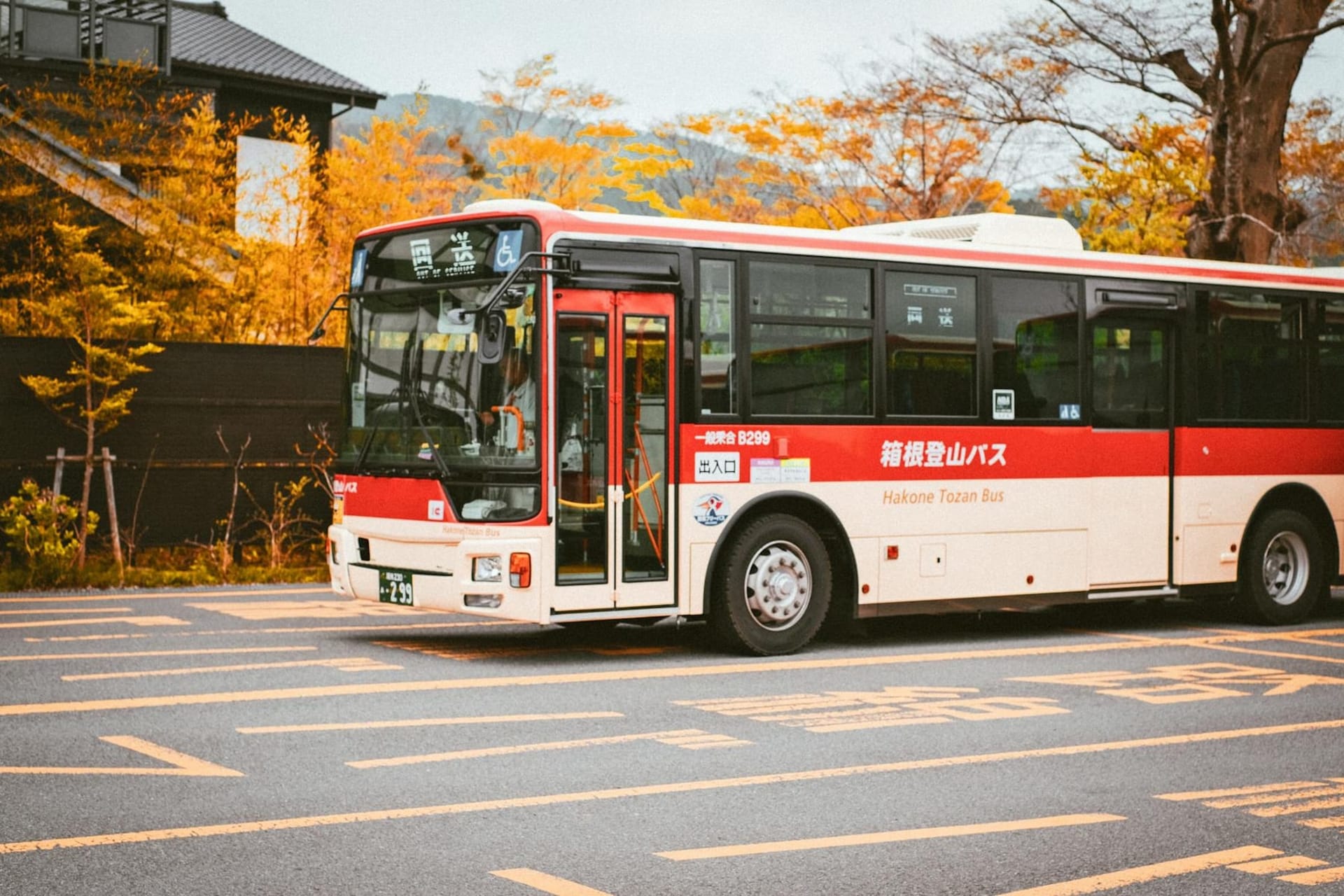
Hakone
"From a steaming outdoor bath in Hakone, Fuji appears at dawn like a rumor finally confirmed."
We arrived in Hakone on a late afternoon train from Odawara, the Romancecar cutting through forested hills as the light turned amber and the temperature dropped enough to remind me that we were climbing. The town does not announce itself. It accumulates — a ryokan here, a cedar-scented path there, the first hint of sulfur in the air that tells you something geological is happening underfoot. By the time we reached our inn on the eastern shore of Lake Ashi, I had already understood that this place operates on a different logic than Tokyo. Slower. Older. Organized entirely around the idea that hot water and a view of a volcano are sufficient reasons to exist.
The Bath Before Breakfast
The inn had an outdoor bath — a rotenburo — perched above the lake, screened by bamboo on three sides and open to the south. I woke before dawn on the second morning, wrapped a cotton yukata around myself, and walked out into air so cold it stung my ears. The water in the stone basin was the temperature of a held breath — that suspended moment when you lower yourself in and decide, irreversibly, to commit.
Fuji was there.
Not the cloud-teased, partially-veiled Fuji I had seen from Kawaguchiko. This was the mountain in full declaration — the snow-capped cone rising above the far shore of the lake, perfectly symmetrical, the first light catching its upper flanks while the valley below was still in darkness. I sat in the water for forty minutes, not moving, watching the sky turn from dark blue to rose to white. Fuji did not change. It was simply there, the way facts are simply true, whether or not you have acknowledged them. The steam from the bath rose around me and merged with the mist above the lake. The sound of water dripping from the bamboo. The smell of sulfur and cedar.
I am not a person who uses the word transcendent. But I will say that I understood, sitting in that bath at five in the morning, why people have been making pilgrimages to this mountain for a thousand years.
The Hakone Open-Air Museum and a Picasso I Didn’t Expect
Lia wanted to spend an afternoon at the Hakone Open-Air Museum on the Hakone Tozan Railway line, and I will confess I agreed mostly to be agreeable. Outdoor sculpture parks are not, as a category, places where I expect to be surprised. I was wrong about this.
The museum is extraordinary — not because the sculpture is uniformly excellent, but because the curators have placed works in dialogue with the landscape in a way that respects both. A Henry Moore bronze sitting in a field of pampas grass with the Hakone hills behind it. A Niki de Saint Phalle mosaic tunnel that children run through screaming with joy. A Louise Bourgeois spider on a hilltop that looks, against the overcast sky, like something dreamed.
But the genuine surprise was the Picasso Pavilion — an entire building dedicated to ceramics, glass works, and tapestries, none of which I knew Picasso had made in such volume. The ceramics especially: plates painted with faces that looked like they had been made by someone who had just discovered that clay could be funny. I stood in front of a set of pitcher-vases shaped like women — wide-hipped, painted in the flat primary colors of his late period — and felt the particular pleasure of having a fixed idea about an artist pleasantly dismantled.
We ate lunch at the museum cafe: kare raisu from a tray, the curry mild and sweet the way Japanese curry always is, the kind of food that tastes like somewhere specific and would taste wrong anywhere else. Lia ate all of her rice and half of mine.

Lake Ashi by Pirate Ship
The Hakone Ropeway and the Lake Ashi cruise are both on every itinerary, and both are genuinely worth doing despite this. The ropeway runs from Sounzan to Togendai, passing directly over the Owakudani volcanic crater — a landscape of grey-white sulfur vents and naked rock that looks like someone turned off the planet’s decorating instinct and left only geology. The ropes gondola sways slightly in the wind and the sulfur smell intensifies until you are inside the cloud of it, and it is equal parts unsettling and magnificent.
At Owakudani, we ate kuro-tamago — black eggs hard-boiled in the sulfurous hot springs, their shells stained permanently dark by the minerals. The eggs taste, for the record, like eggs. But eating an egg that has been cooked by volcanic activity, standing on the edge of an active crater, is its own kind of experience. A sign informed us that each egg adds seven years to one’s life. I ate two. Lia pointed out that this was probably not how statistics work.
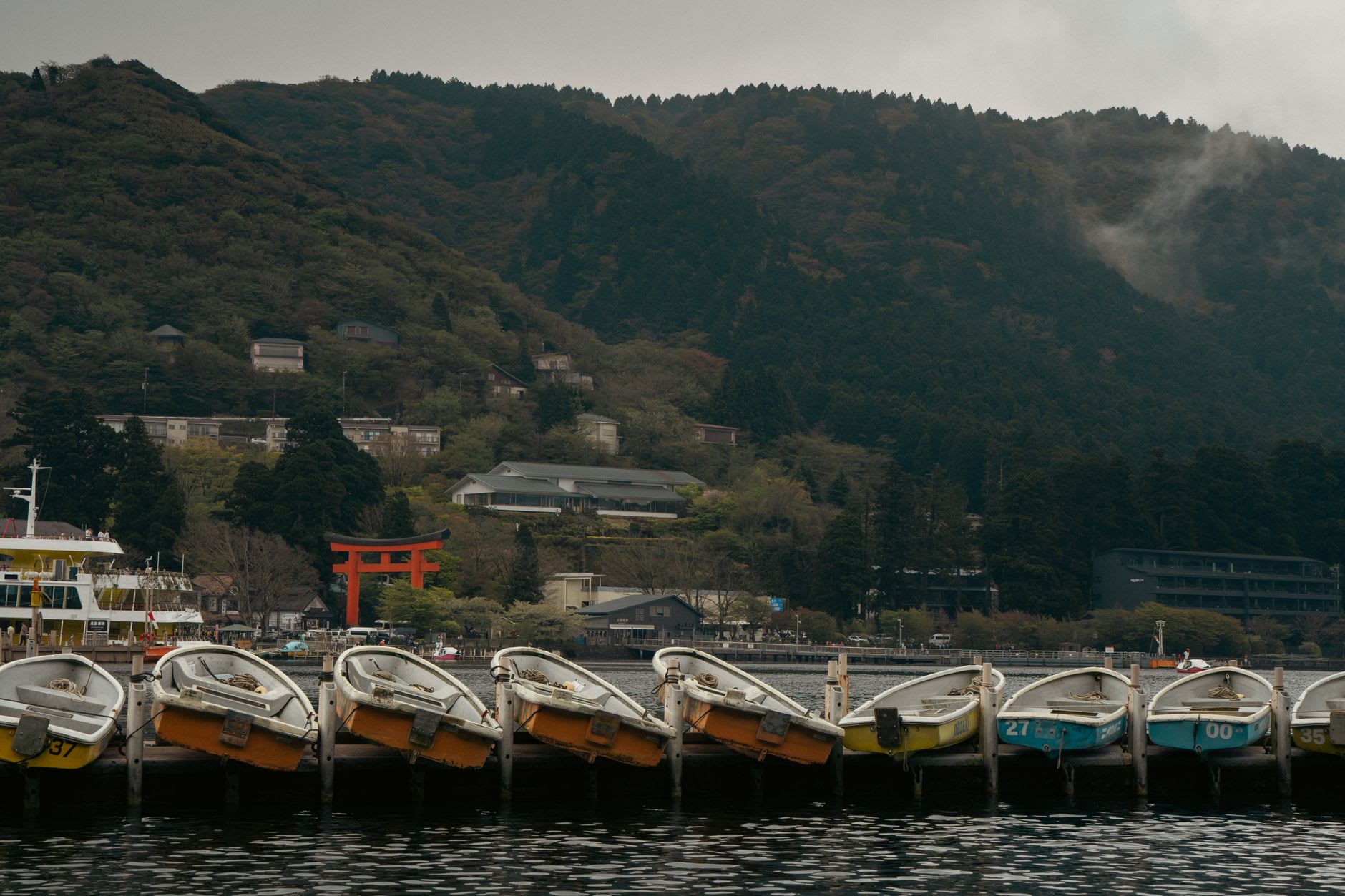
The Lake Ashi cruise runs on large boats styled, inexplicably but cheerfully, as pirate ships. We stood on the deck as the boat crossed the lake toward Moto-Hakone, the cedars of the Hakone Cedar Avenue visible on the far shore — a two-kilometre corridor of ancient Japanese cedar trees lining the old Tokaido highway, their trunks massive and their canopy so dense that even in autumn the light beneath them is greenish and cathedral. The lake was flat and grey and the mountains were veiled in low cloud and the whole scene had the quality of a woodblock print that had been left in the rain.

The Town at Night
Hakone after dark is quieter than any town its size should be. The tourist traffic of the day dissolves and what remains is the sound of water — the streams that run through every neighbourhood, channeled under stone and through bamboo pipes, constantly moving, a background frequency that makes silence feel full rather than empty. We walked the main street of Hakone-Yumoto — the oldest part of the hot-spring settlement — after dinner, past the souvenir shops selling kamaboko fish cakes and cedar woodwork and onsen salts in beautiful paper bags, past the small izakaya where a lone salaryman was eating yakitori at the counter, past the public foot bath where three elderly women had their shoes off and their ankles in the water and were talking the way people talk when they have known each other for decades.
The soba we ate that night at a small restaurant on a side street near the Hakone-Yumoto Station — hand-cut, buckwheat-dark, served cold with a dipping broth that was deeply savory and slightly sweet — was the best bowl of noodles I had in Japan, which is saying something. The cook was also the server and also, I think, the owner. He watched us eat with a focused attention that in France would have been rude and in Japan felt like care.
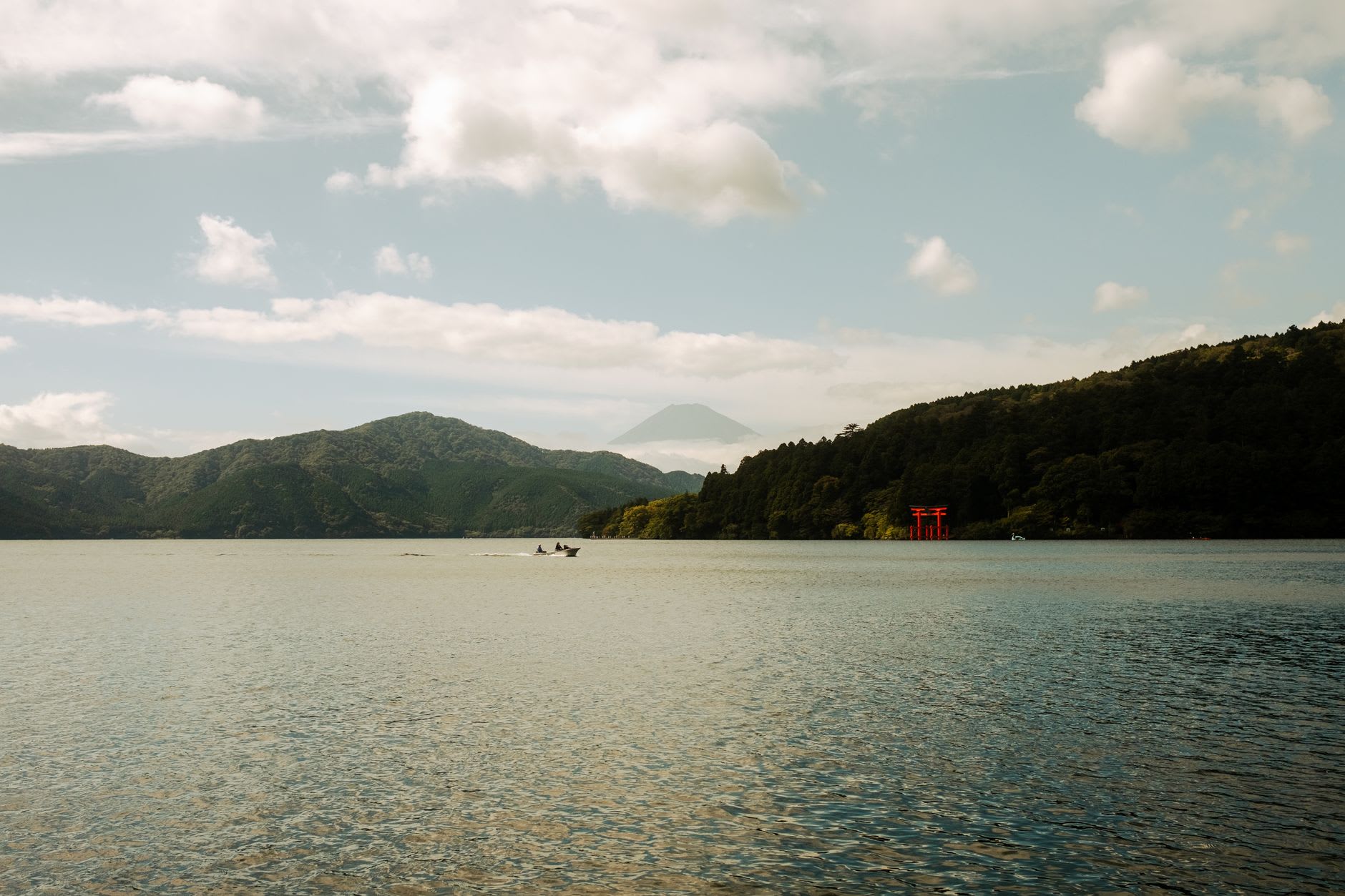
When to go: November offers the best combination of clear Fuji views and autumn colour on the surrounding hills, when the maple groves around Lake Ashi turn red and the mountain stands bone-white against the sky. Avoid the August peak and the Golden Week holidays in late April and early May, when the ryokans fill months in advance and the ropeway queues stretch long. We went in late October and found the balance just right — cool enough for the baths to feel necessary, clear enough for the mountain to show itself.