Tojinbo
"The wind pushed back when we leaned into it, and the sea below sounded like it was chewing the rocks."
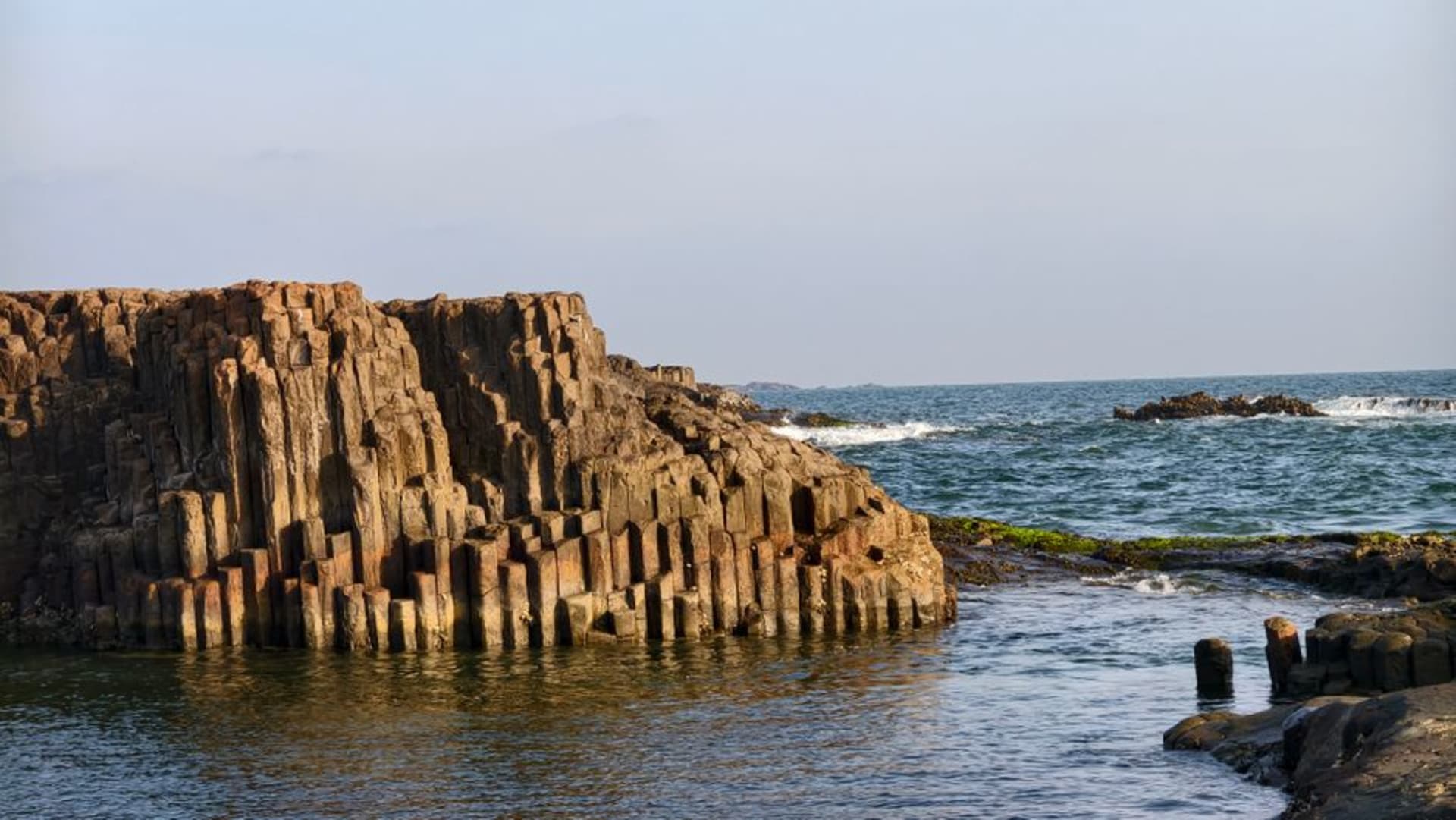
A mile of columnar basalt cliffs where the Sea of Japan hurls itself against pillars of stone so geometrically strange they look carved. The wind never really stops here, the surf booms in the hollows below, and the whole place carries a beauty that is not entirely comfortable.
The bus dropped us at a strip of squid-grilling stalls and cheerful souvenir shops, and for a moment I thought we’d been sold a tourist trap. Then we walked past the last shop and the land simply ended. Tojinbo doesn’t ease you in. One second you’re on ordinary scrubby grass, the next you’re standing on the lip of a fifty-metre drop of fractured stone columns, and far below the Sea of Japan is working away at the base of the cliff with the patient violence of something that has all the time in the world. Lia grabbed my sleeve without meaning to. The wind took our first attempts at conversation and threw them out to sea.
Stone that looks man-made
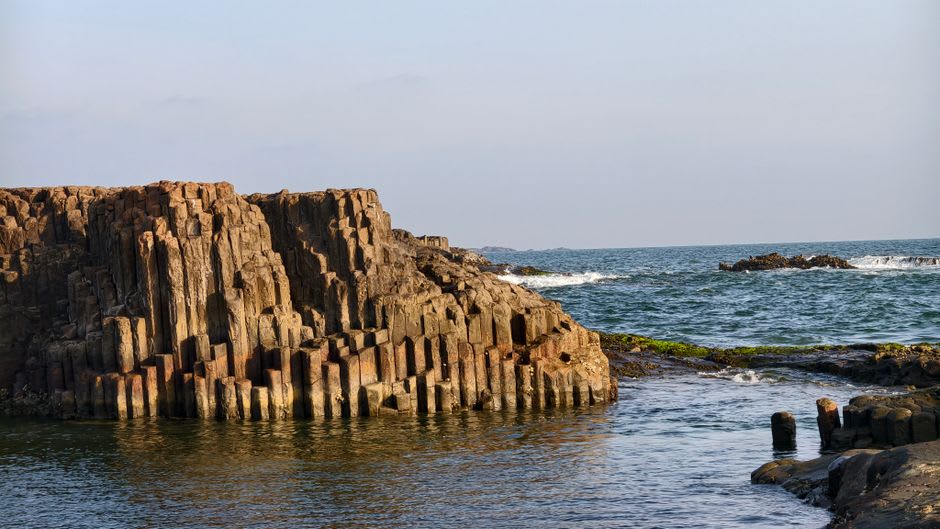
What makes Tojinbo uncanny is the geometry. The basalt has cooled into columns, some five-sided, some six, packed together like a giant’s abandoned building blocks, and it’s so regular that your brain keeps insisting a person must have cut it. A geologist would tell you this kind of columnar jointing is rare enough on this scale to be one of only a handful of sites in the world. I just kept running my palm over the flat faces of the rock, cold and slightly damp, trying to talk myself out of the feeling that they’d been chiselled. Lia found a hexagonal column snapped off clean as a pencil and photographed it from every angle, muttering that nature had no business being this tidy.
Out to the edge
There are no railings at Tojinbo, which is either refreshing or terrifying depending on your relationship with heights. We inched out onto the flat tops of the columns, where other visitors sat with their legs dangling over the void as though it were a park bench, and I could not for the life of me join them. Lia got closer than I did and reported back that from the very edge you could watch the swells build far out, roll in, and detonate white against the pillars, sending spray up that the wind caught and flung over the cliff top like cold rain. We stayed until my knees ached from bracing. The sea never once looked calm.
The tower, the boat, and the grilled squid
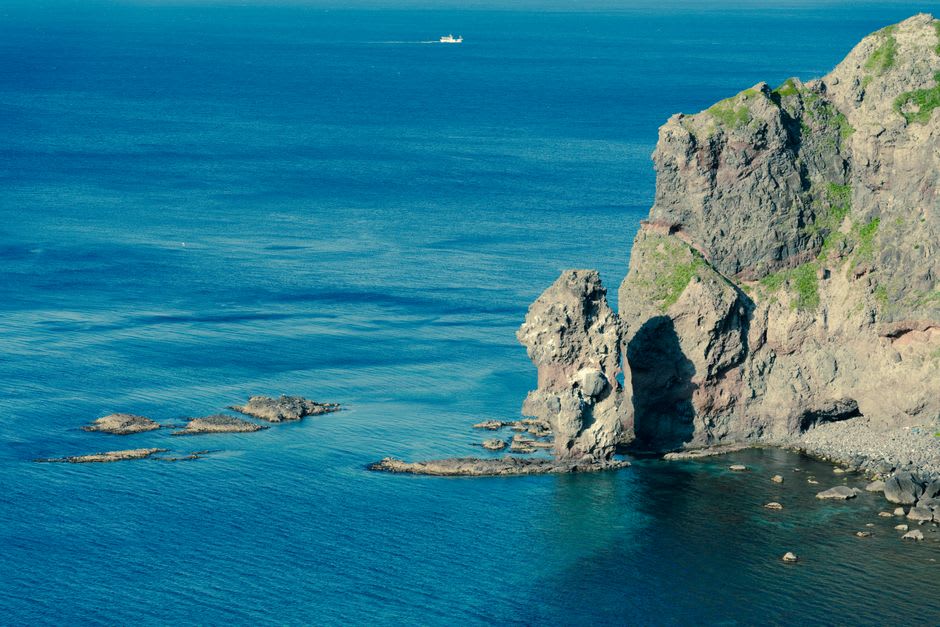
To soften the mood we did the tourist things without shame. We climbed the little Tojinbo Tower for a wide grey view of the coast, then took the small sightseeing boat that noses in among the cliffs and sea caves, pitching enough that Lia went quiet in a way that had nothing to do with awe. Back on land we split a skewer of grilled squid and a paper cup of hot sweet amazake, both of which tasted a hundred times better for having been earned in the wind. The stalls that had seemed so tacky on arrival now felt like exactly the right kind of shelter. We ate facing the sea, wind-burned and happy.
Getting There
Tojinbo is on the coast of Fukui Prefecture, north of Kanazawa. The usual route is the train to Awara-Onsen Station or Mikuni Station on the Echizen Railway, then a local bus to the Tojinbo stop, from which it’s a short walk down through the shops to the cliffs. From Kanazawa the whole trip takes around ninety minutes; from Fukui city, a little less. Dress for wind whatever the forecast says, wear shoes with grip for the uneven rock, and if you can time it, come in the last hour before sunset when the columns turn amber and the crowds thin out.
Keep exploring
More of Chūbu