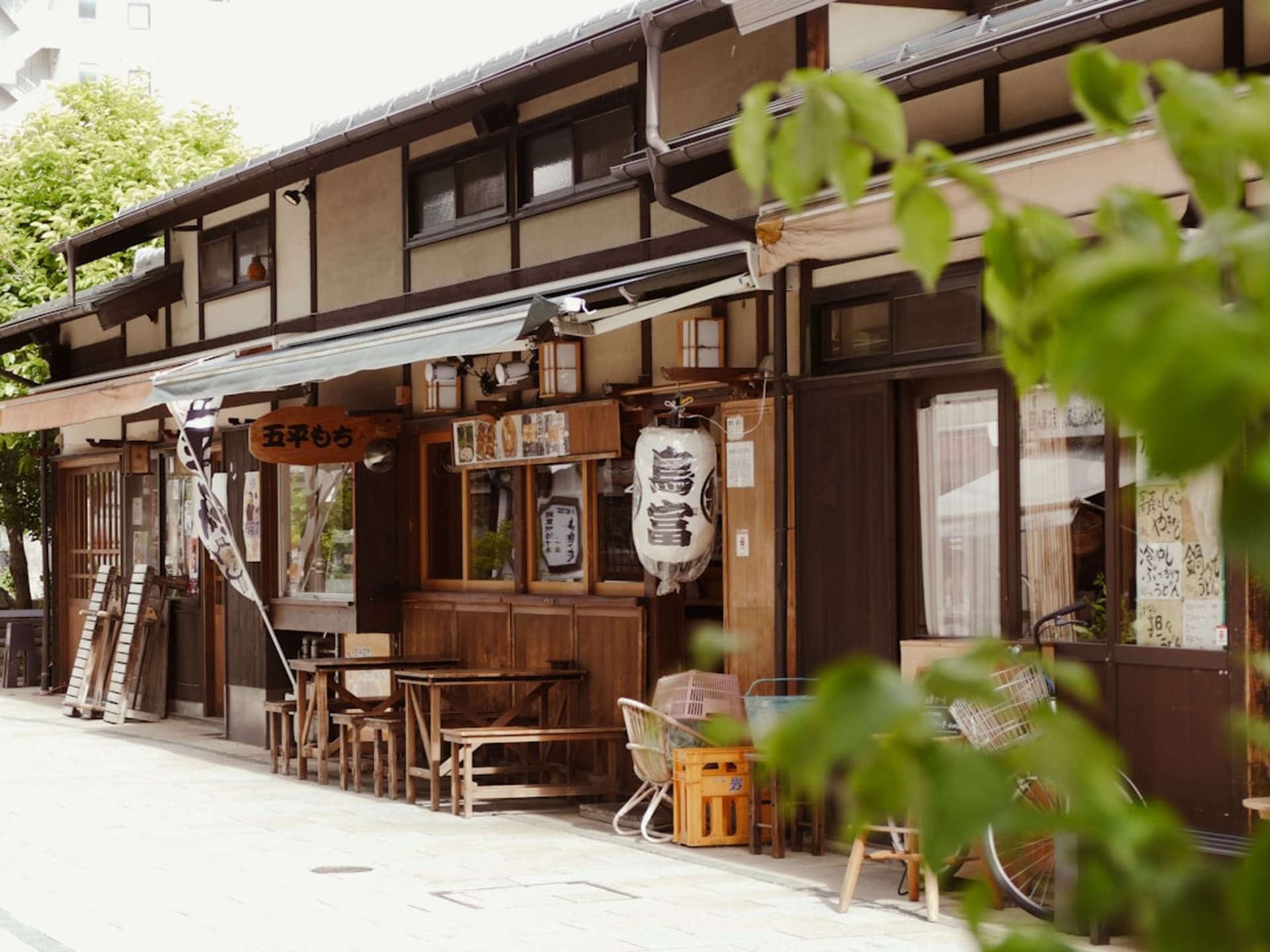
An old castle-town folded into the Hida mountains, where Edo-era merchant streets still smell of cedar and sake. Morning markets by the river, black-lacquered façades, and beef so tender it barely needs teeth. A slower counterpoint to the neon of the cities.
Lia and I arrived in Takayama after a train that spent two hours winding through gorges, the Hida River flashing green below us and the temperature dropping with every tunnel. By the time we stepped onto the platform the air had gone thin and cool and clean in a way that the lowland cities never manage. We had come for a rest — a pause between Kyoto and the coast — and Takayama gave us exactly that. It is a mountain town that never quite let go of its Edo past, tucked so far into the folds of Gifu that the merchants who built it grew rich and unbothered, and the streets they laid down are still here, still dark-timbered, still smelling faintly of the breweries that made them.
The Sanmachi Streets at First Light
We got up early — Lia’s idea — and walked the Sanmachi merchant quarter before the day-trippers arrived. The streets are narrow and lined with black wooden houses, their lattices low and their eaves deep, and a stone channel of running water threads the middle of each lane. In the grey half-light before the shops opened, it felt less like a preserved district and more like a town that had simply forgotten to modernise. The sake breweries hang balls of cedar needles — sugidama — above their doors, brown and brittle by the end of the season, and their colour tells you how the year’s brew is coming along.
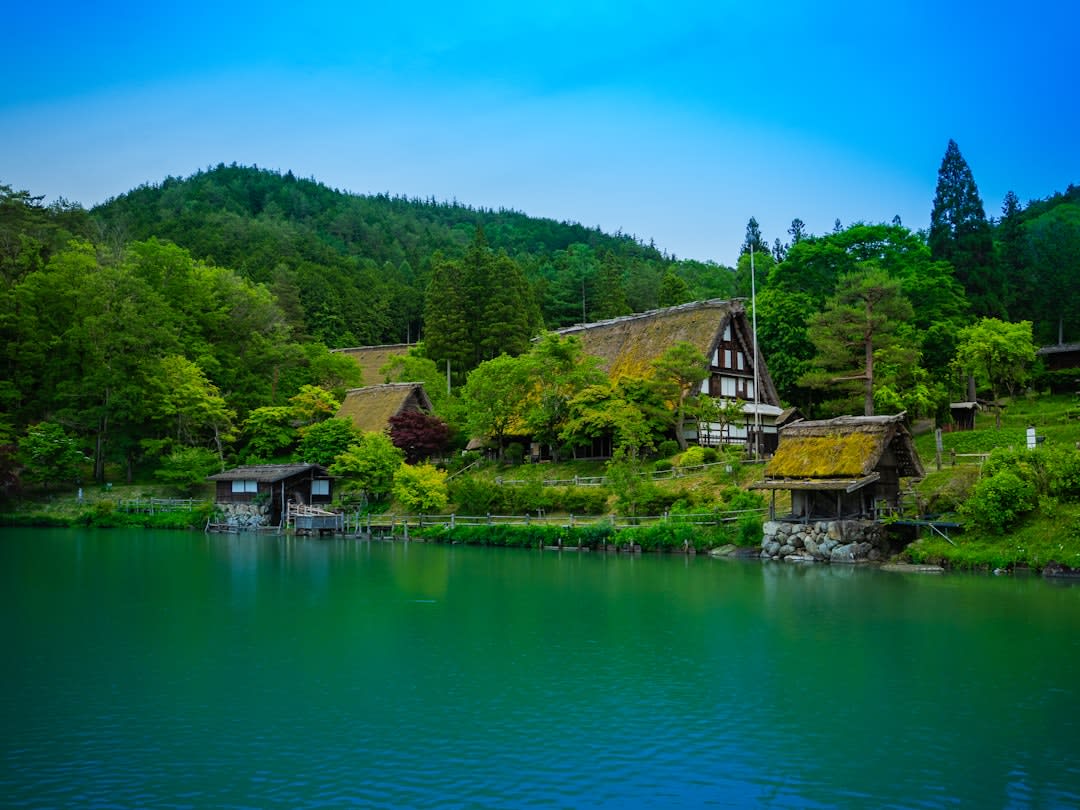
We ducked into one brewery where a man in an apron was happy to let us taste three sakes at eight in the morning, which felt gloriously wrong. The oldest was cloudy and cold and tasted of rice and rain. Lia bought a small bottle we never got around to opening; it is still, I think, in a box somewhere in Mexico.
The Riverside Morning Market
Along the Miyagawa River the morning market sets up under white canopies, tables of pickles and dried persimmons and apples from the surrounding orchards, tended almost entirely by older women from the farms up the valley. This is not a market staged for tourists — or if it is, nobody has told the vendors, who sold us a bag of tiny mountain pears with a briskness that suggested they had somewhere better to be.
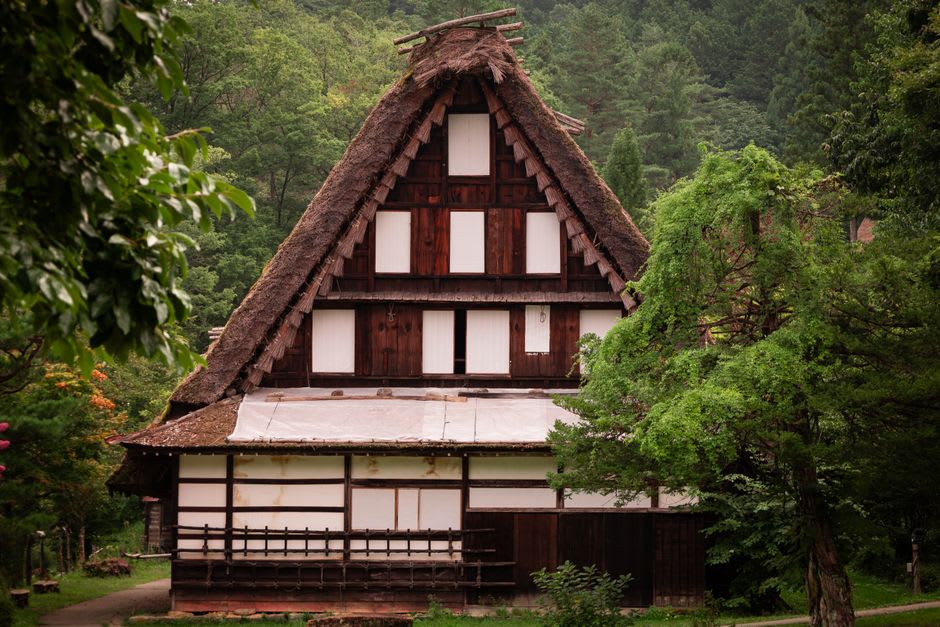
One woman was roasting chestnuts over a coal brazier and pressed two hot ones into Lia’s hands before we had decided to buy anything. We ate them walking along the river, burning our fingers, the water loud beside us and the mountains standing pale blue at the end of every street.
Hida Beef and the Long Lunch
I had heard about Hida beef for weeks before we reached its home valley, and I braced myself for disappointment — food that famous rarely survives its own reputation. It survived. We ate it at a small counter place off the main street, grilled over a hoba magnolia leaf with a smear of miso, and the fat rendered so completely that the meat seemed to dissolve rather than chew. Lia, who is more restrained than I am, went quiet, which is how I know when something has genuinely moved her.
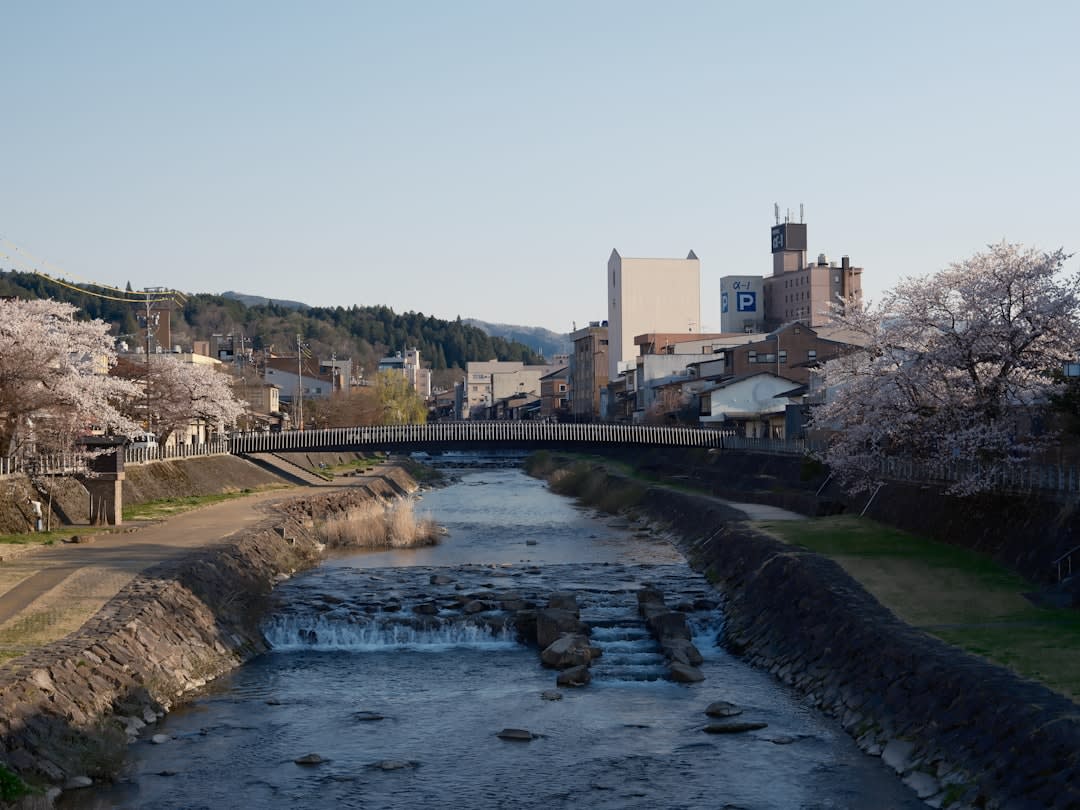
We lingered far too long. Outside, the light had softened and the town had gone quiet, and we walked it off slowly along the river, full and unhurried, in no rush to be anywhere — which is the only correct way to be in Takayama.
Getting There
Takayama sits deep in the Hida mountains of Gifu, reached by the JR Takayama Line. From Nagoya the Hida limited express takes about two and a half hours and is one of the more beautiful train rides in central Japan — sit on the right leaving Nagoya for the river gorges. From the Kanazawa or Toyama side you can approach by bus over the mountains. The old town is entirely walkable from the station in ten minutes, so leave the taxis alone. Stay at least one night: the day-trippers thin out by late afternoon, and the streets after dark, lantern-lit and empty, are the real reason to come.
Keep exploring
More of Chūbu