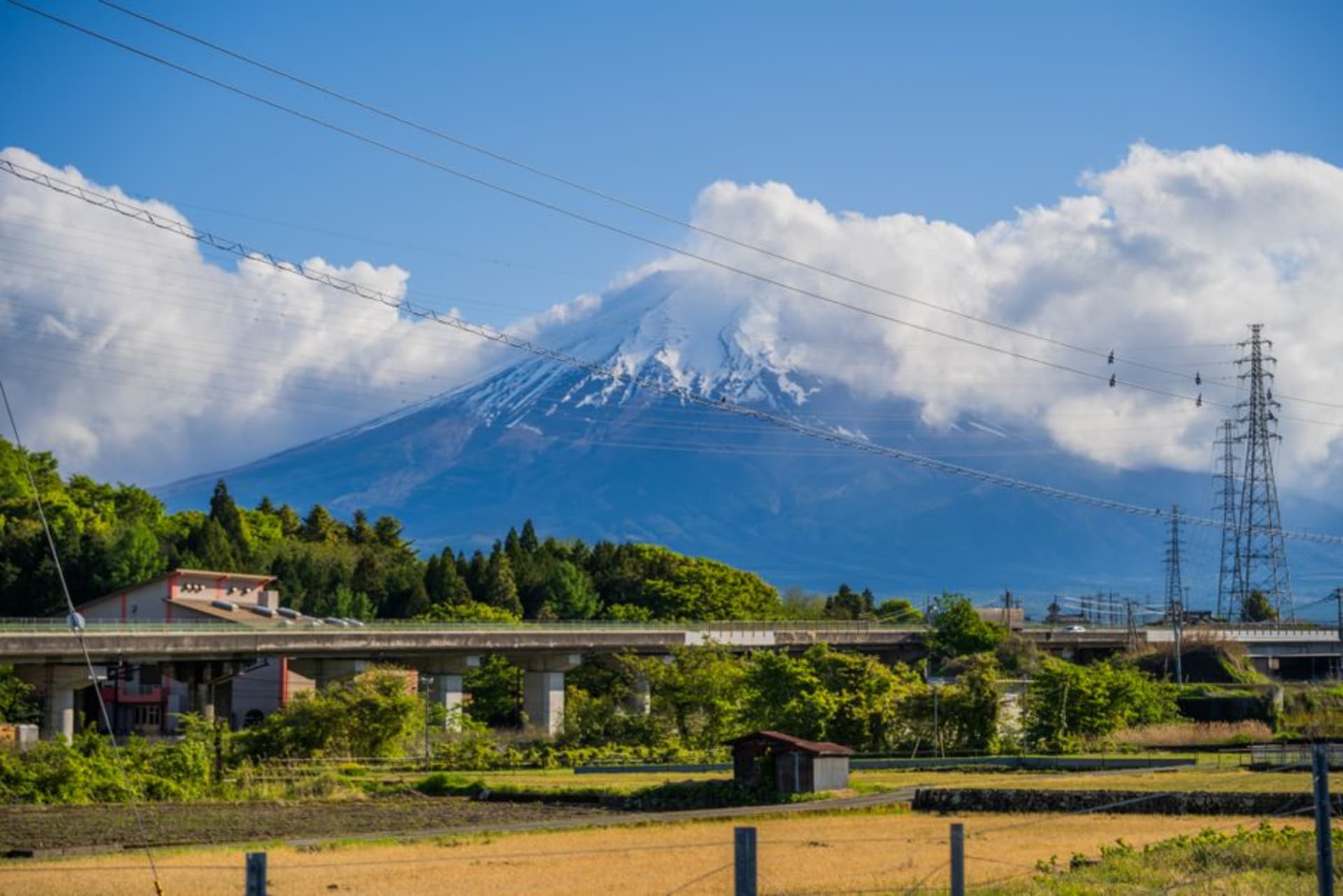
A mild, easygoing coastal city cradled between the sea and hills combed with green tea. Mount Fuji floats over the bay, an ancient pine grove fringes the shore where a legend came down from heaven, and every teahouse pours the finest green tea in Japan.
Shizuoka is one of those cities people pass through at two hundred miles an hour without ever stopping, the bullet train slicing across it on the way from Tokyo to Kyoto. Lia and I got off, and I’m not sure why more people don’t. It has a mildness to it — the climate, the pace, the light off the bay — that made us drop our shoulders the moment we arrived. The hills behind the city are terraced with tea as far as you can see, the sea is right there, and on a clear day Mount Fuji hangs over the whole scene like a painting someone forgot to take down. The whole city tastes faintly of green tea, and after three days so did we.
Miho-no-Matsubara and the Fuji View
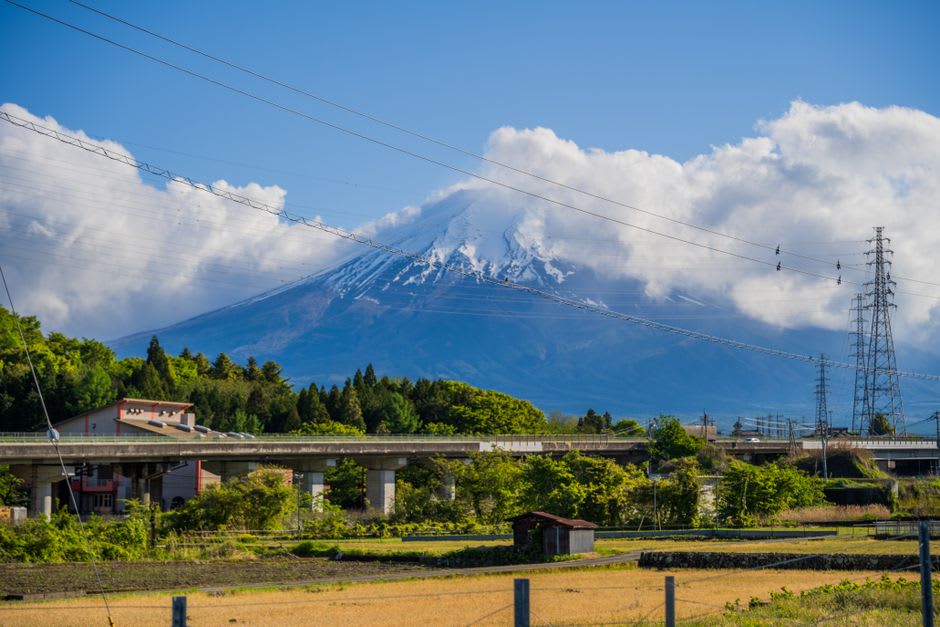
We spent our first afternoon at Miho-no-Matsubara, a long spit of black-sand beach fringed by thousands of ancient pines, curving out into Suruga Bay. It is old and famous — a pilgrimage spot for centuries, the setting of a legend in which a celestial maiden left her feathered robe hanging on one of these very pines — and it forms part of the Mount Fuji World Heritage listing, because from here, across the water, Fuji stands at its most perfect. We were lucky: the haze lifted in the late afternoon and the mountain simply appeared, snow-capped and impossibly clean, floating above the bay beyond the twisted dark pines. Lia found the legendary pine, hung with a rope, and we sat on the black sand a long while watching the light change on the water. The wind smelled of salt and resin. It is one of the most quietly perfect places I saw in all of Japan.
Sumpu Castle Park
Back in the city center we walked the grounds of Sumpu Castle, the fortress where Tokugawa Ieyasu — the shogun who unified Japan — chose to spend his final retirement, ruling quietly from Shizuoka in his old age. The main keep is long gone, but the moats, stone walls, and reconstructed gates and turrets remain, set in a broad park that the whole city seems to use. We watched office workers eating lunch on the grass, an old man practicing tai chi under a pine, children feeding carp in the moat. A restored turret let us climb up and look out over the water and walls, and there was a small tea garden inside the grounds where we drank a cup of the local matcha, whisked bright green and slightly bitter, looking out at a raked garden. History here is low-key and lived-in, not roped off — exactly the register the whole city seems to prefer.

The Green Tea Country
Shizuoka grows more green tea than anywhere in Japan, and you cannot understand the place without spending a morning up in the tea hills. We took a bus up into the terraced slopes above the city, where the bushes run in glossy green combed rows across every contour of the land, and visited a small farm-teahouse where the family walked us through the whole ritual. They showed us how water just off the boil scorches good sencha, how it should be cooled first, how the second steeping tastes utterly different from the first, how the finest shincha of the new season is treated almost like wine. We drank cup after cup, ate tea-leaf tempura and green-tea sweets, and looked out over the rows to the distant sea. Lia bought more tea than we could reasonably carry home. It changed how I drink the stuff to this day — I finally understood that green tea, done properly, is as serious and various as any wine.
Getting There
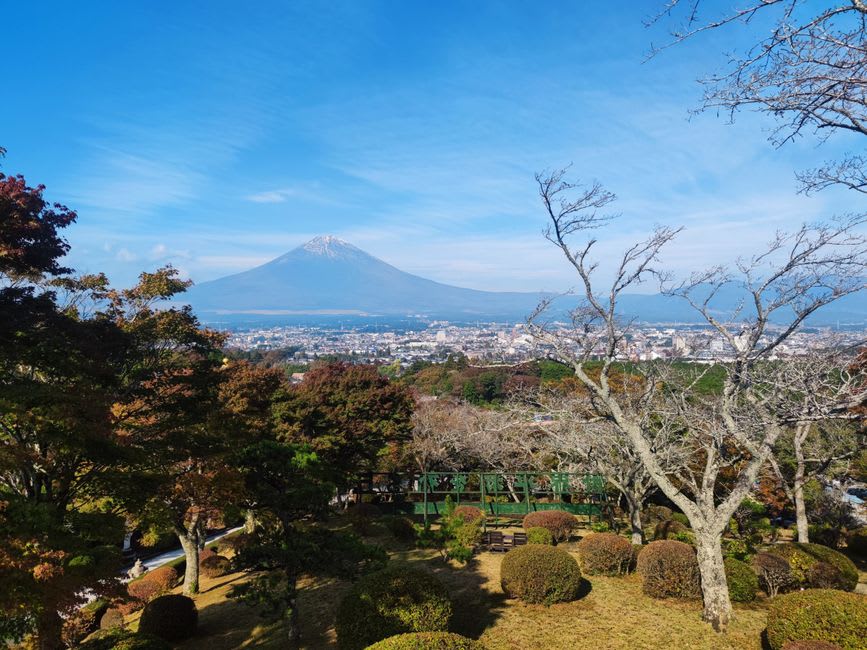
Shizuoka sits directly on the Tokaido Shinkansen, roughly an hour from Tokyo and about the same from Nagoya — most Kodama and some Hikari trains stop here. From the station, Miho-no-Matsubara is reached by a bus toward the coast plus a short walk out to the pine grove; go on a clear day, ideally in the cooler months when Fuji shows itself most reliably. Sumpu Castle Park is a short walk from the station in the other direction. For the tea country, take a local bus up into the hills or join one of the small farm tours — spring, when the new season’s shincha is harvested, is the loveliest time to go, but the terraces are green and the tea is superb year-round.
Keep exploring
More of Chūbu