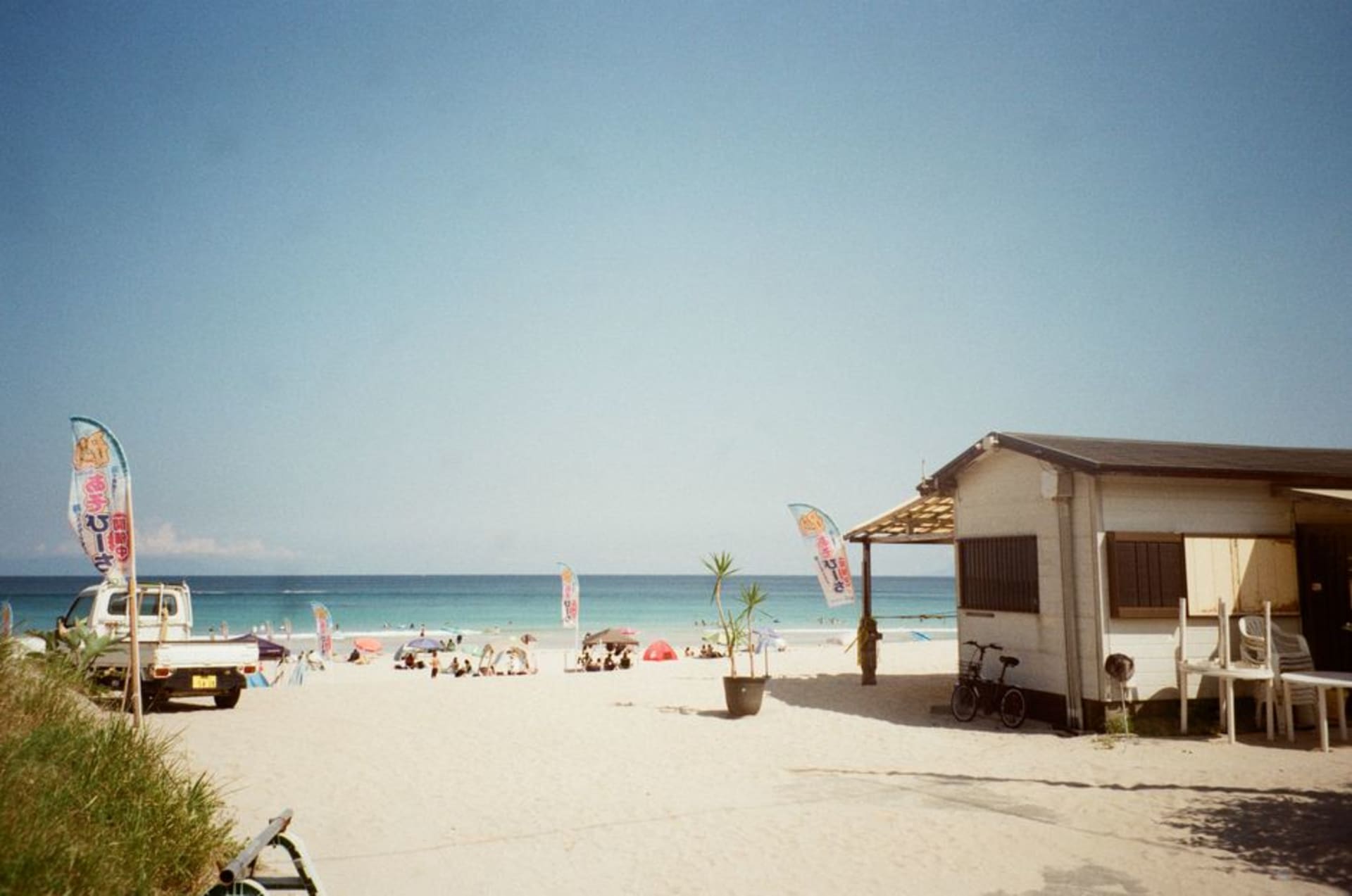
The Izu port where Commodore Perry's black ships pried Japan open to the world, now a town of white-sand beaches and salt light. Lia and I came for the beaches and stayed for the ghosts of 1854. History here smells of sea and camellia.
There’s a particular quality to the light at the bottom of the Izu Peninsula — hard, bright, salt-scoured, the light of a place that faces open ocean and nothing else. We rode the train down the peninsula’s spine, tunnelling through green hills that kept parting to show flashes of impossible blue, and stepped out at Shimoda into that light and a wind that carried the specific weight of the sea. This small port is where, in 1854, the black ships anchored and Japan’s two centuries of self-chosen isolation ended. “This is where the world got in,” I said, looking out at the harbour. Lia squinted at the water and said, “Lucky world.” She wasn’t entirely joking.
Perry Road and the Weight of 1854
We spent our first morning walking Perry Road, a narrow lane along a willow-hung canal where old wooden merchant houses and stone-walled storehouses have been softened into cafes and antique shops. It’s named for the Commodore, who marched up it to sign the treaty at Ryosen-ji temple, and the temple is still there at the top, plain and grave, its garden thick with the specific melancholy of hinge-points in history. Lia read the plaques slowly. What got us both was Ryosen-ji’s small side story: this is also where Tojin Okichi, a local woman, was pressed into service to the first American consul and spent the rest of her ruined life paying for the town’s opening. History books say “Japan opened.” Standing there you understand it cost individual people everything, and the town has not forgotten her — there’s a shrine, and fresh flowers.
Shirahama, and Water You Can’t Believe
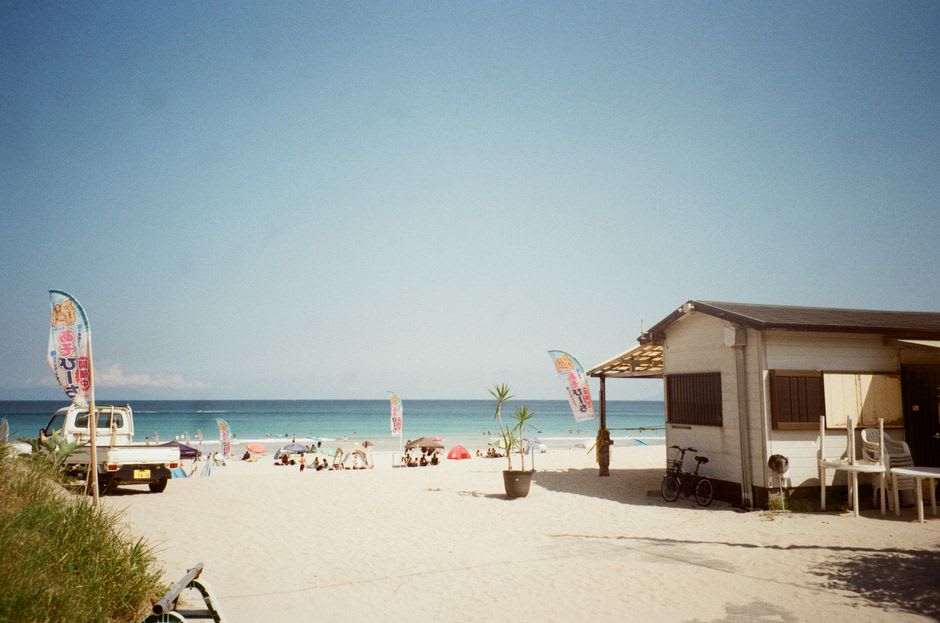
Then, the beaches — and Shimoda’s beaches are the reason half of Tokyo comes here in August. Shirahama is a long, dazzling crescent of white sand with a small vermilion torii standing on a rock at one end, waves breaking around it, and water that shades from clear to jade to a deep tropical blue that we genuinely did not expect this far north. We came in early summer, before the crowds, and had long stretches of it nearly to ourselves. Lia went straight in despite the cold and shrieked and then refused to admit it was cold. I sat on the warm sand and watched surfers work the point break, the little torii glowing against the blue, and thought that a town could do a lot worse than to guard something this beautiful.
The View from Nesugatayama
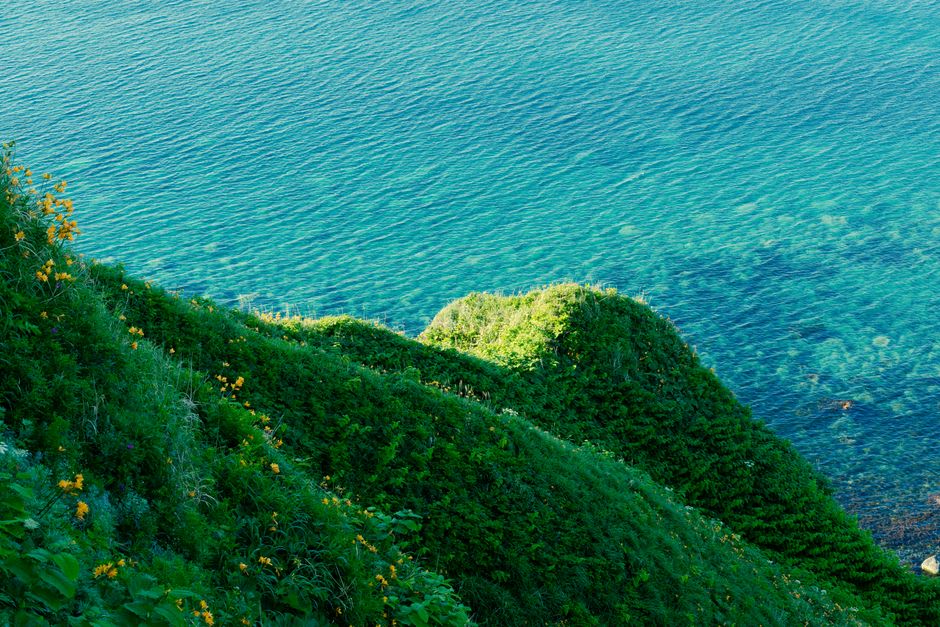
On our last afternoon we took the ropeway up Nesugatayama, the hill above the harbour, its name meaning something like “sleeping figure” for the mountain’s reclining silhouette. From the top the whole story lays itself out: the deep natural harbour where the ships anchored, the town tucked into its curve, the peninsula’s green arms reaching around the bay, and beyond them the open Pacific stretching to nothing. There’s a little shrine and a hydrangea garden that, in season, floods the hillside blue and violet. Lia and I found a bench and split a can of local mikan juice and stayed until the harbour lights came on below, tracing the path the black ships must have taken in, imagining the town watching them come.
Getting There
Shimoda sits at the southern tip of the Izu Peninsula. The easiest route from Tokyo is the direct limited express — the Odoriko, or the plusher Saphir Odoriko — from Tokyo Station straight to Izukyu-Shimoda, about two and a half to three hours of steadily improving coastline. From Shimoda Station, local buses reach Shirahama and the other beaches in ten to twenty minutes, and Perry Road and Ryosen-ji are an easy walk from the centre. We’d say give it two nights: one is not enough to do both the history and the water justice, and the town is at its best in the emptied-out evenings.
Keep exploring
More of Chūbu