Nozawa Onsen
"Thirteen bathhouses, all free, all run by the neighbors — and the water hot enough to make a grown Frenchman yelp."
A steep, snow-buried village in northern Nagano where thirteen free public bathhouses steam at the ends of the lanes and skiers and grandmothers share the same scalding water. In winter it's one of Japan's great ski towns; in every season it smells of sulfur and woodsmoke. We came to ski and left converted to the baths.
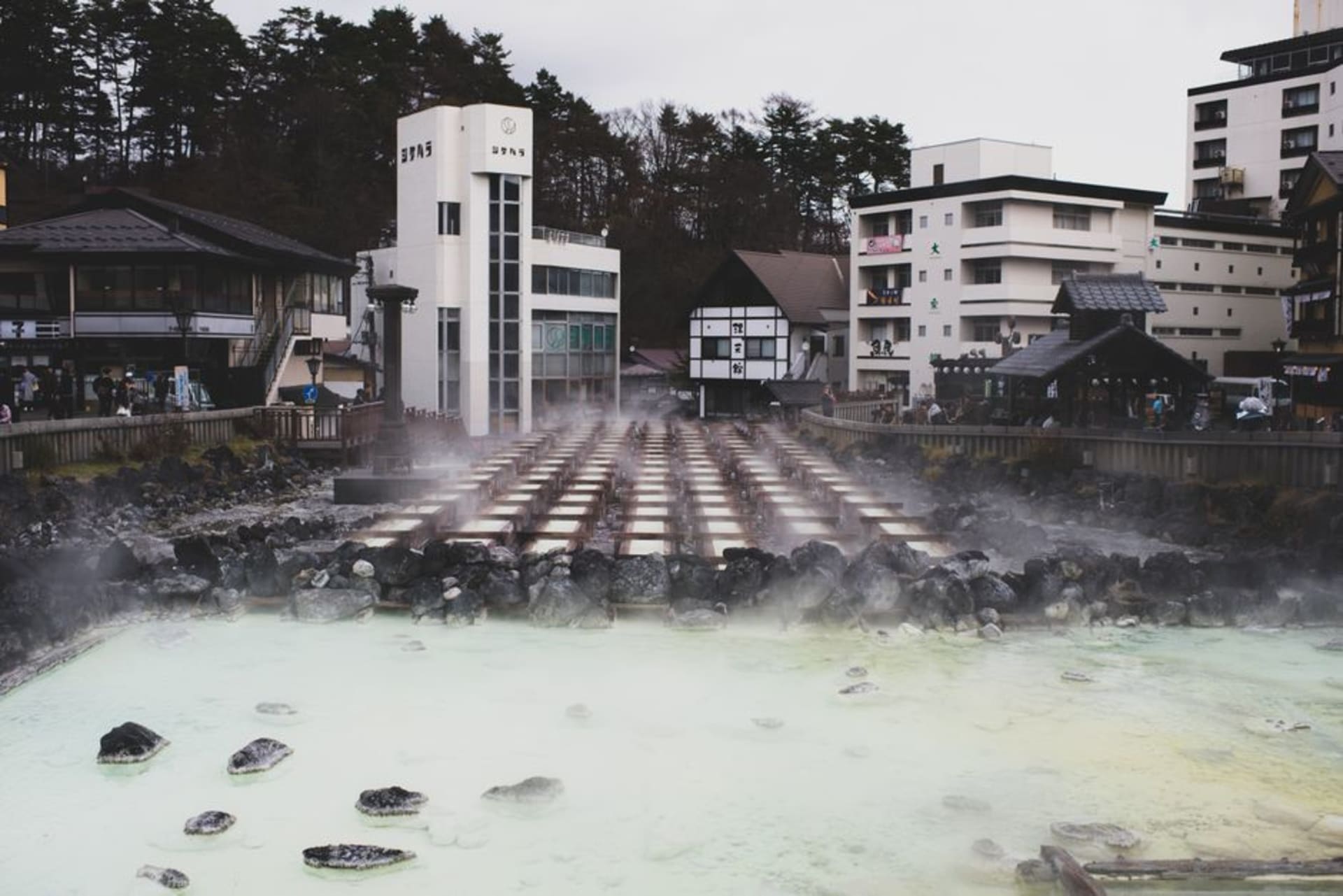
We came to Nozawa Onsen for the skiing and I will admit that within a day the mountain had become secondary to the baths. The village clings to a slope so steep the lanes are practically staircases, and everything is buried — cars, hedges, entire ground floors — under snow walls taller than Lia. What makes the place unlike any ski town I know is the soto-yu: thirteen public bathhouses scattered through the village, all fed by the natural hot springs, all free, all maintained by the residents themselves through a centuries-old cooperative. You drop a coin in an honesty box if you like. You bathe where the woman who runs the vegetable shop bathes. The mountain gives you the day; the baths give you the evening.
The thirteen bathhouses
The most famous is Oyu, a handsome dark-wood bathhouse in the middle of the village that looks like a small temple and functions as the town’s living room. We learned the etiquette the hard way — the water is scalding, genuinely, and the trick the locals use is to ladle it over the tiles and add cold slowly while old men watch your technique with amused patience. I yelped the first time. Lia, annoyingly, adapted instantly. Each of the thirteen has its own character and its own mineral tint, and there’s a quiet local sport in trying to visit all of them; we managed six over three evenings, wandering steaming lanes between them in borrowed sandals, hair freezing into little icicles.
The mountain above the village
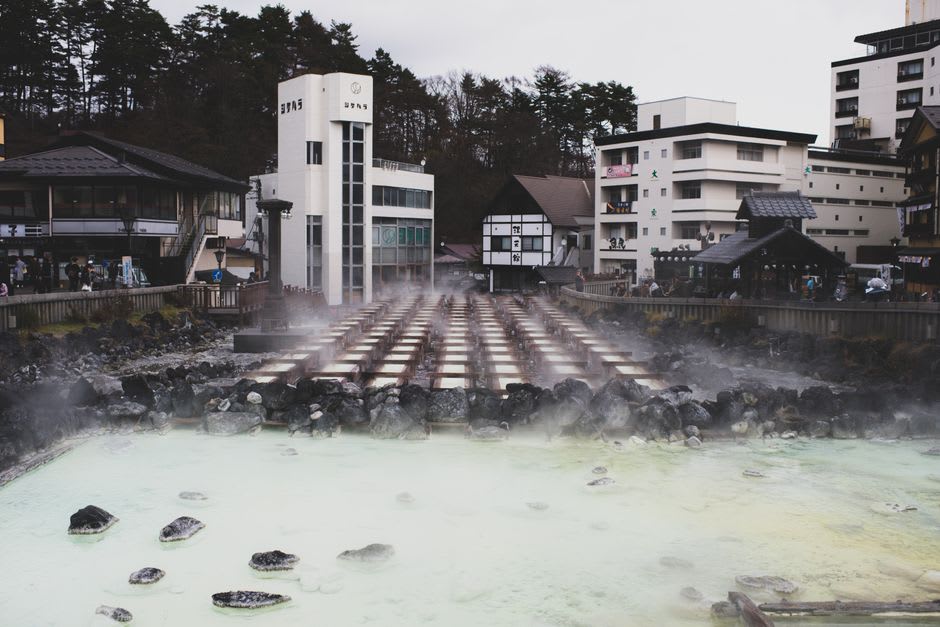
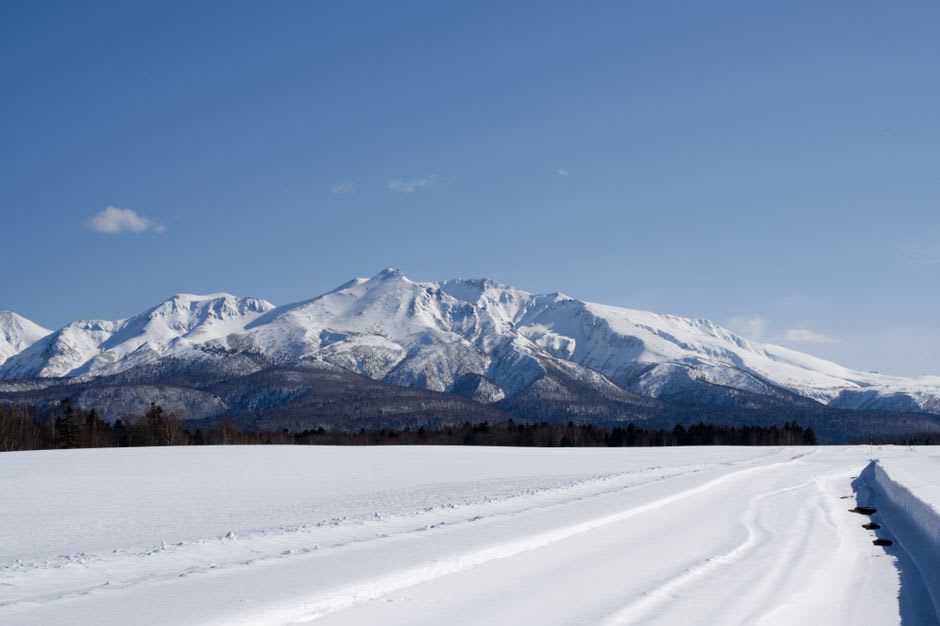
The ski area rises straight out of the top of the village — a proper mountain, over 1,000 meters of vertical, with the long gentle Skyline run near the top where we stopped to look out over the Chikuma valley with the whole world white and hushed below. The snow here is the famous northern-Nagano powder, light and dry, and on our second morning it fell so thickly that the pistes and the sky became one soft grey nothing and we skied half-blind and laughing. At the village foot, by the base of the gondola, a giant open cauldron of onsen water called Ogama boils away — the communal cooking spring, where locals still blanch vegetables and boil eggs in the mineral water. Tourists aren’t allowed in; it’s the villagers’ kitchen, and rightly guarded.
Fire, and the smell of woodsmoke
Nozawa’s soul, we were told, is fully visible only once a year — at the Dosojin Fire Festival in January, one of Japan’s three great fire festivals, when the village men build an enormous wooden shrine and then the 25-year-olds defend it, drunk and roaring, against the 42-year-olds trying to burn it down with flaming torches. We didn’t catch the festival, but the whole village hums with the memory of it; you see the photos in every inn and cafe, and you understand this is not a resort that was invented for skiers but a real place that has been living on this slope for a very long time. We ate oyaki — grilled dumplings stuffed with mountain vegetables — from a stall run by two sisters, and walked back to our ryokan through lanes where every chimney was going and the whole cold night smelled of pine smoke and sulfur.
Getting There
Nozawa Onsen is in the far north of Nagano Prefecture, and the fastest route from Tokyo is the Hokuriku Shinkansen to Iiyama Station — about 100 minutes — from where a direct Nozawa Onsen Liner bus climbs to the village in roughly 25 minutes. In peak ski season the bus runs frequently and is timed to the trains. By car it’s a scenic drive up from Nagano city, but note that the village lanes are extremely steep, narrow, and snowbound in winter, so most people leave the car at their accommodation and walk. The bathhouses are free and open to everyone staying in the village — bring your own towel, go gently on the temperature, and follow whatever the locals are doing.
Keep exploring
More of Chūbu