Nagaoka
"Lia reached for my hand in the dark before I understood these fireworks were an act of remembrance."
A working Niigata city on the wide Shinano river that saves its full heart for two nights each August, when the sky over the water fills with some of the largest fireworks in Japan. They are not a show. They are a memorial, and once you know that you never watch them the same way.
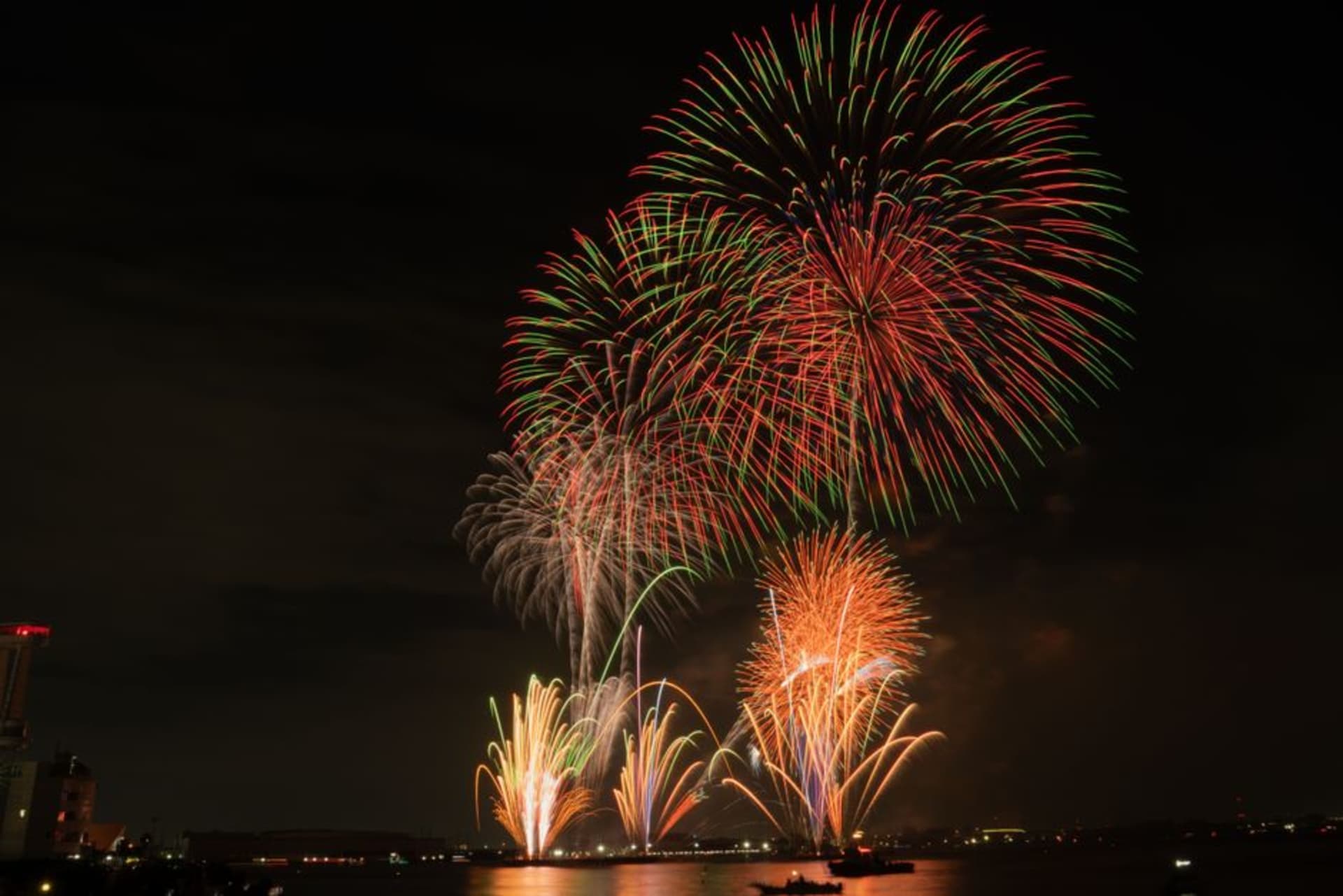
We had planned Nagaoka badly, on purpose. Friends in Niigata had told us the fireworks were worth building a trip around, so we arrived on the second of August with cheap folding mats, too little water, and no real idea of what we’d signed up for. The riverbank was already a sea of people hours before dusk, families laying out territory, kids in yukata chasing each other between the mats. I bought two beers and a paper tray of yakisoba from a stall, and Lia and I sat on the grass of the Shinano’s flood plain and waited with a hundred thousand strangers for the dark to come. When the first shells climbed, the whole crowd made the same low sound at once.
The Fireworks That Remember
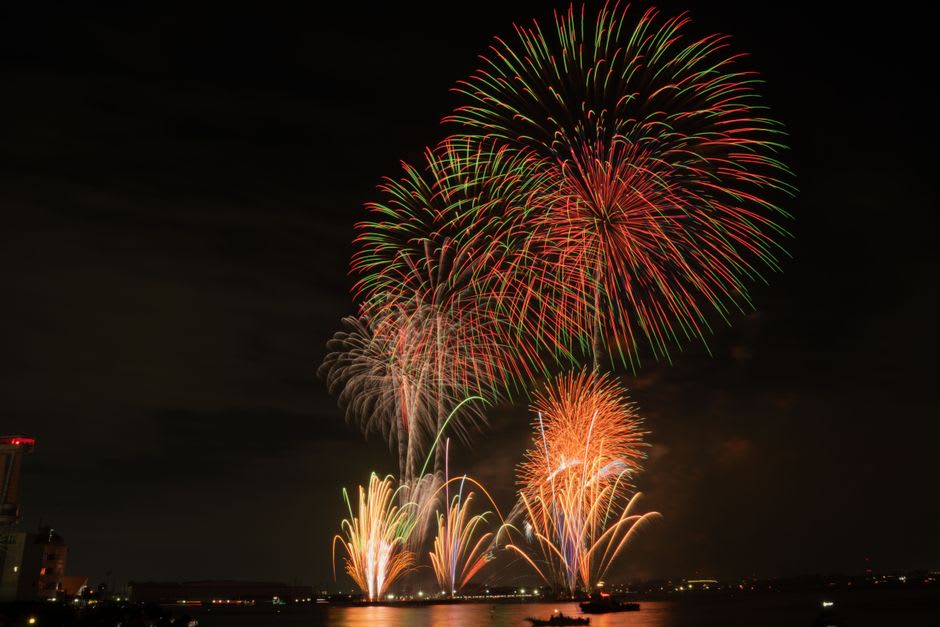
The Nagaoka Matsuri fireworks are enormous — the Shosanpo shells open across a width you cannot take in with a single glance, and the famous Phoenix sequence rolls along the river for minutes, set to music, a wall of light and falling gold. But what changed the evening for me was learning why they exist. Nagaoka was firebombed in the war, on the first of August 1945, and the festival is held in those days as a prayer for the dead and for peace. The Phoenix rose, specifically, after the flood and earthquake years later. Knowing that, I felt the concussion of each blast differently in my chest. Lia reached for my hand in the dark. We did not talk much. It is the only fireworks display I have ever watched that felt like grief and gratitude braided together.
Rice Paddies and Sake in the Off-Season
We came back to Nagaoka months later, in a quiet spring, curious what the city was when it wasn’t hosting the whole prefecture. The answer is: calm, green, and generous. Beyond the compact centre the land opens into rice paddies mirroring the sky, the young plants a startling electric green in the flooded fields. This is Koshihikari country, the rice half of France’s food writers would kill to understand, and the same water and rice feed a serious sake culture. We toured a small local brewery on the city’s edge, the air thick with the smell of steaming rice and koji, and the brewer poured us a cold, clean cup at ten in the morning with the unhurried pride of someone who has never once doubted his craft.
Snow, Rebuilt Streets, and Ordinary Life
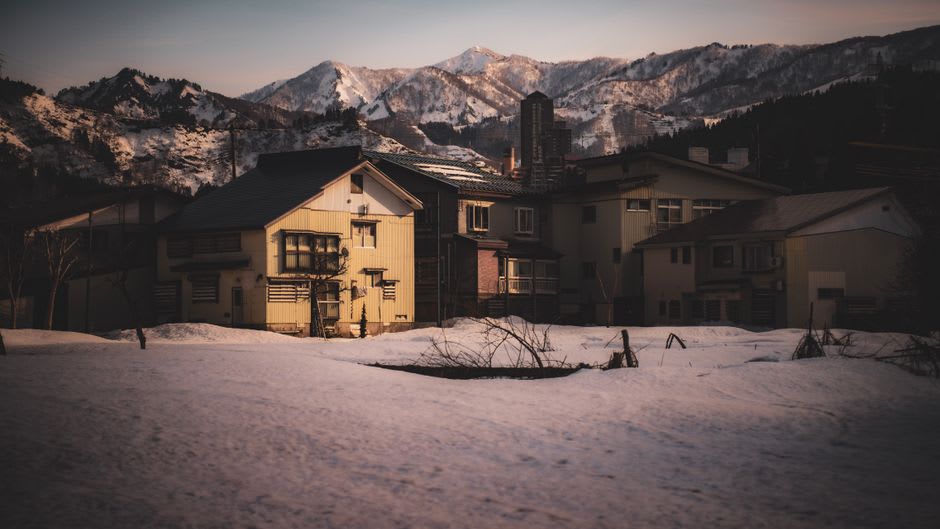
Nagaoka is snow country too, and the citizens will tell you about winters that bury the ground floors. The modern downtown around the station is unglamorous — this is a city rebuilt more than once, and it wears its practicality plainly — but I came to like it for exactly that. We ate a bowl of shoga-joyu ramen, the local ginger-soy style, in a steamy little shop while sleet slid down the window, and wandered the covered arcades where nothing was for tourists. At the Nagaoka War Damage Exhibit Hall we spent a sober hour with the city’s memory of that August night. It is not a place that performs charm for you. It simply lets you in.
Getting There
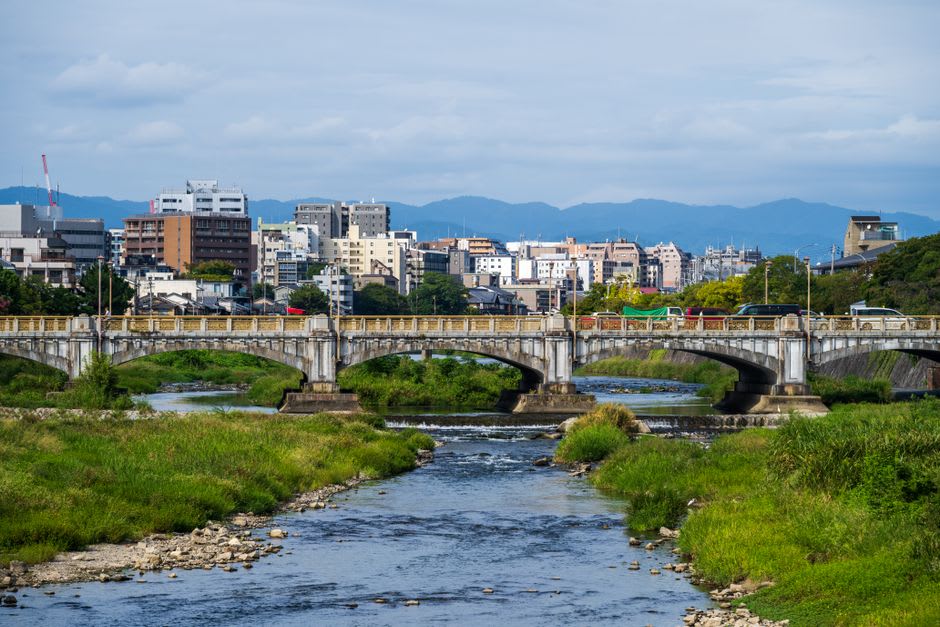
The Joetsu Shinkansen reaches Nagaoka from Tokyo in around one hour and forty minutes, and the city is a major junction — trains continue north to Niigata city in about twenty minutes, and local lines branch toward the coast and the mountains. For the festival, plan far ahead: hotels across the whole region sell out months in advance, and many people simply ride in from Niigata or Echigo-Yuzawa for the evening. Bring something to sit on, come early for a riverbank spot, and stay for the walk back through the crowd — half the memory is in that slow, quiet river of people going home.
Keep exploring
More of Chūbu