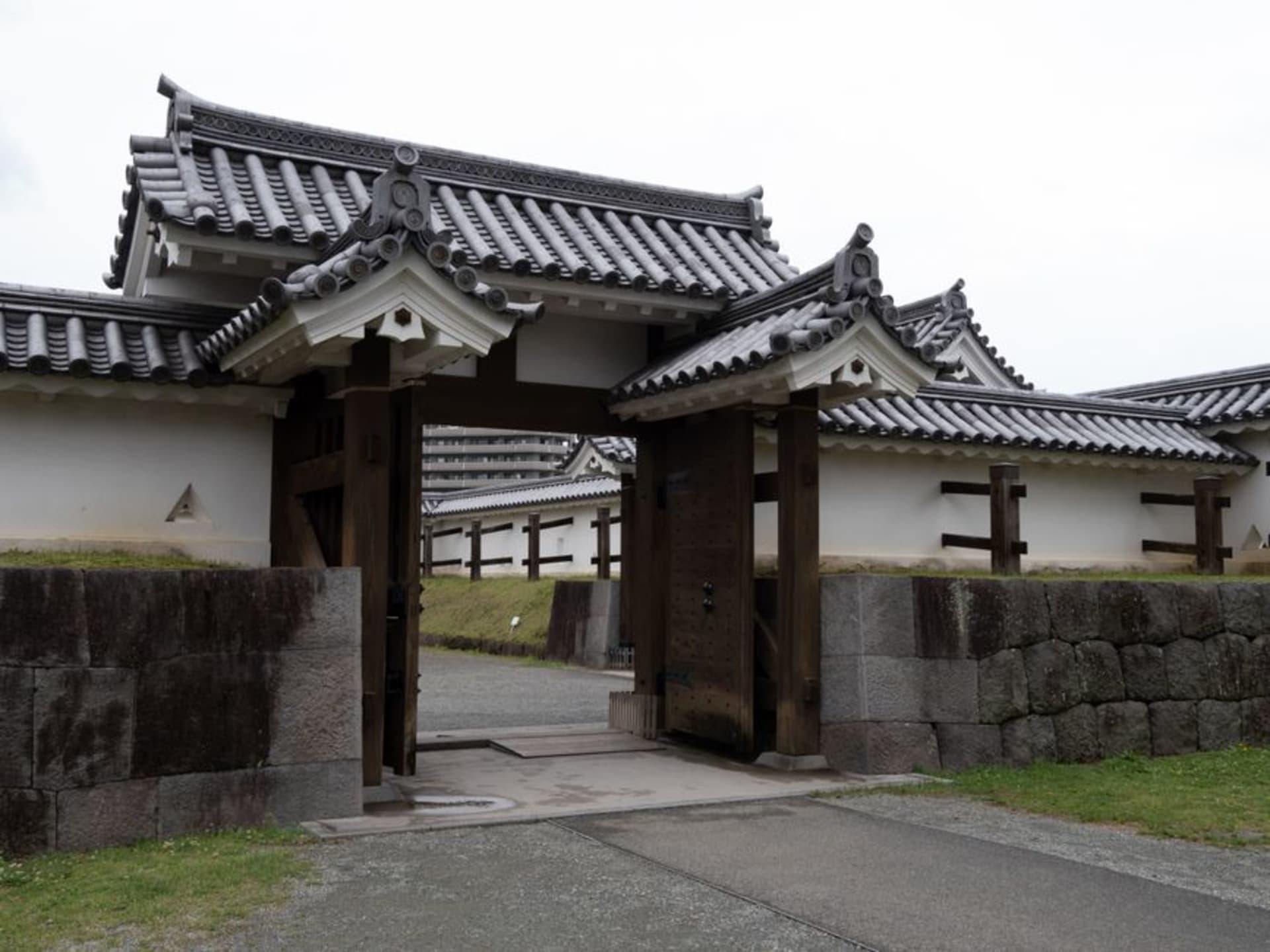
A Niigata castle town so devoted to salmon that whole rooms hang thick with fish curing in the winter air. Behind the black-latticed fronts of its old merchant houses live tea shops, sake brewers, and a way of using every last part of the salmon that borders on reverence.
I have never seen anywhere love a fish the way Murakami loves salmon. We turned off the main street into an old merchant house, expecting a shop, and instead walked into a dim wooden room where hundreds of whole salmon hung head-down from the rafters, split and salted, curing slowly in the cold air that pours down from the mountains. It stopped us both in the doorway. The smell was clean and briny, not unpleasant, and the sheer devotion of it, this small northern town having decided centuries ago that the salmon returning up its river deserved to be honoured this thoroughly, made Lia laugh with delight. We stayed an hour. We hadn’t planned to stay ten minutes.
The salmon town
Murakami sits where the Miomote River meets the sea, and salmon have run up it for as long as anyone can say. The town’s genius was conservation: as early as the Edo period the locals worked out how to protect the spawning fish so the runs would never fail, an idea startlingly ahead of its time. Today they claim over a hundred ways to prepare it, and the hanging, salt-cured shiobiki is the emblem. We were shown the whole ritual by the shopkeeper, who spoke about tail-fibres and belly-fat with the seriousness of a sommelier. Nothing is wasted, she said, not the skin, not the bones, not the heart. I believed her completely.
Behind the lattice fronts
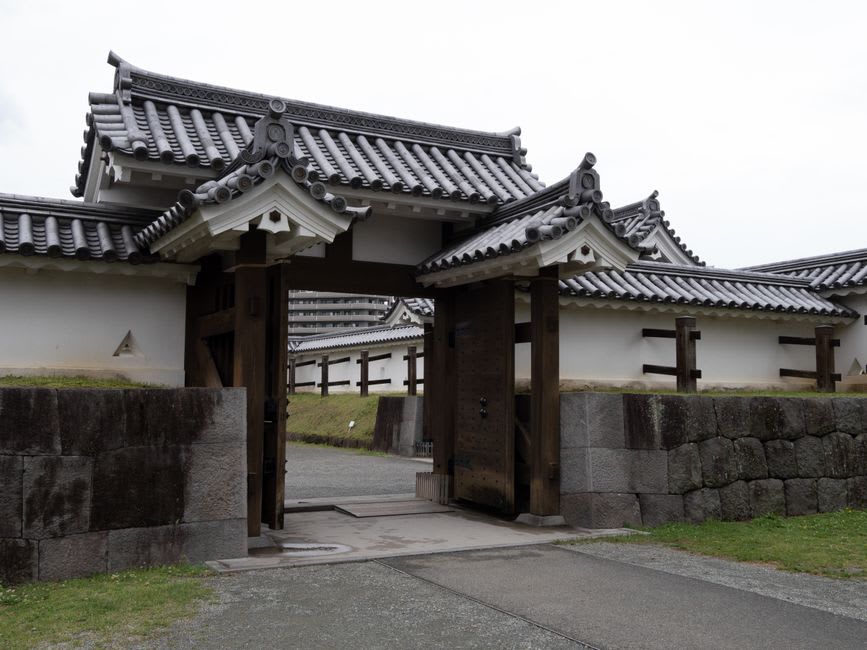
The old town rewards slow walking. Behind the black wooden lattices of the merchant houses we found tea shops selling the local Murakami tea, one of the northernmost grown in Japan, and a sake brewery where the smell of steaming rice drifted out into the lane. Many of the houses open their inner rooms and gardens to visitors during a spring festival when families set out their heirloom hina dolls, generations deep, in the front rooms. We were there off-season, but a shopkeeper waved us into her back garden anyway, a small mossy square with a stone lantern and a plum tree, and gave us tea we hadn’t asked for. Lia has a gift for being invited into people’s gardens. I just trail along and benefit.
Eating the whole fish
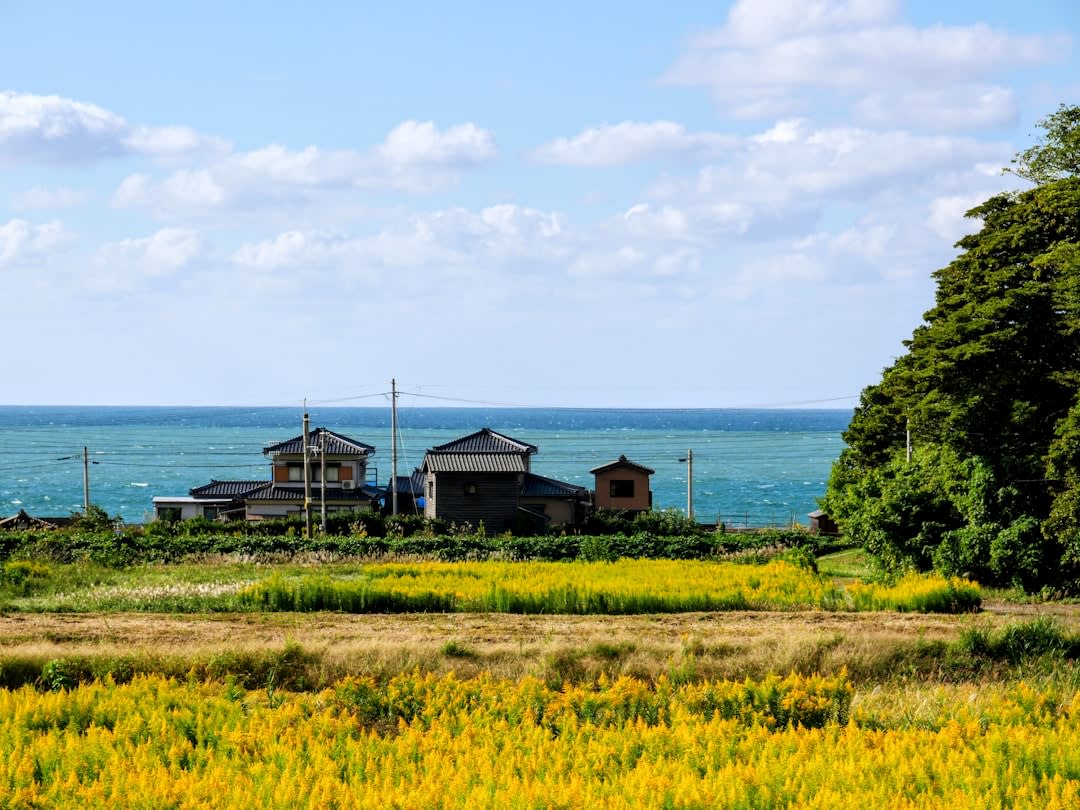
We ate salmon three ways in one sitting, at a counter a local had scribbled onto our map. The salt-cured shiobiki, sliced thin and intense. Fresh salmon over rice. And, most memorably, a dish of the cured belly served with warm sake poured over it until the fat went silky, which the owner told us was how the fishermen ate it in deep winter. It was the kind of food that makes you go quiet. Outside, snow was threatening off the sea, the light going grey and close, and inside the little shop was warm and smelled of salt and rice and woodsmoke. Lia said she finally understood a town organizing itself around a fish. So did I.
Getting There
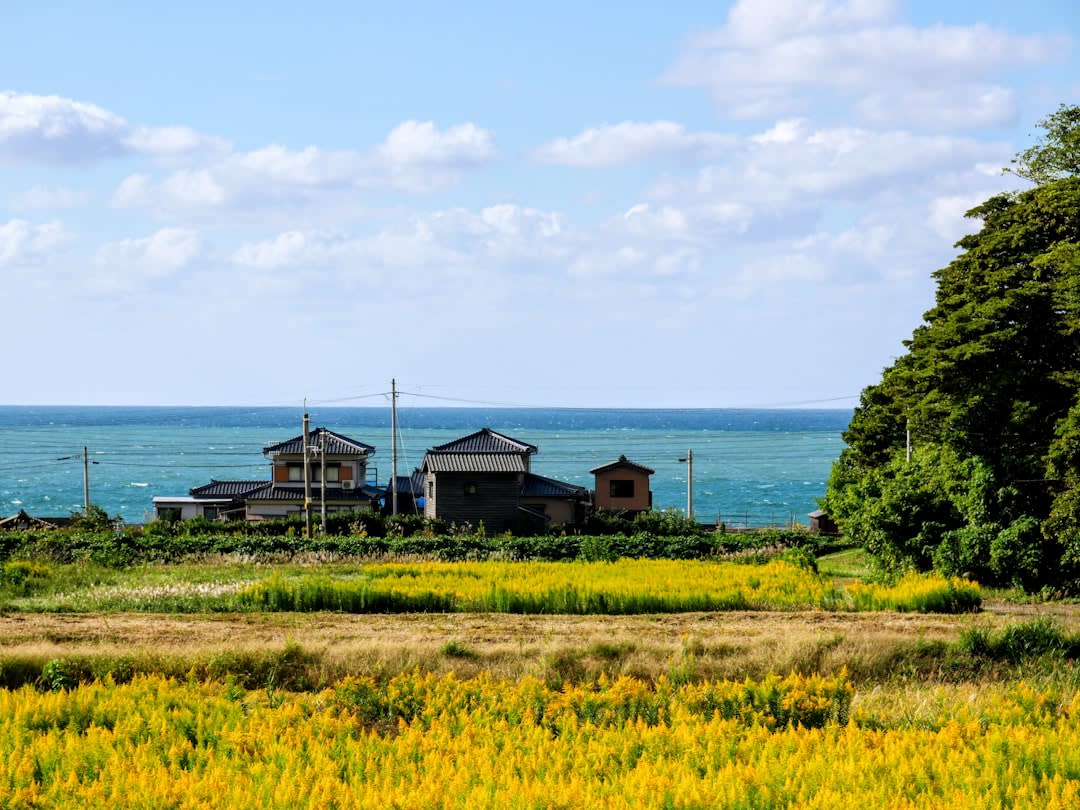
Murakami is in the far north of Niigata Prefecture, near the Yamagata border, on the JR Uetsu Line that runs up the Sea of Japan coast. From Niigata city it’s about an hour by limited express to Murakami Station, and from there the old town and its merchant houses are a flat fifteen-minute walk or a short bus ride inland. The salmon curing is at its most atmospheric in the cold months from late autumn through winter, which is also when the town’s salmon dishes are richest. Come hungry, and don’t skip the houses that open their back rooms.
Keep exploring
More of Chūbu