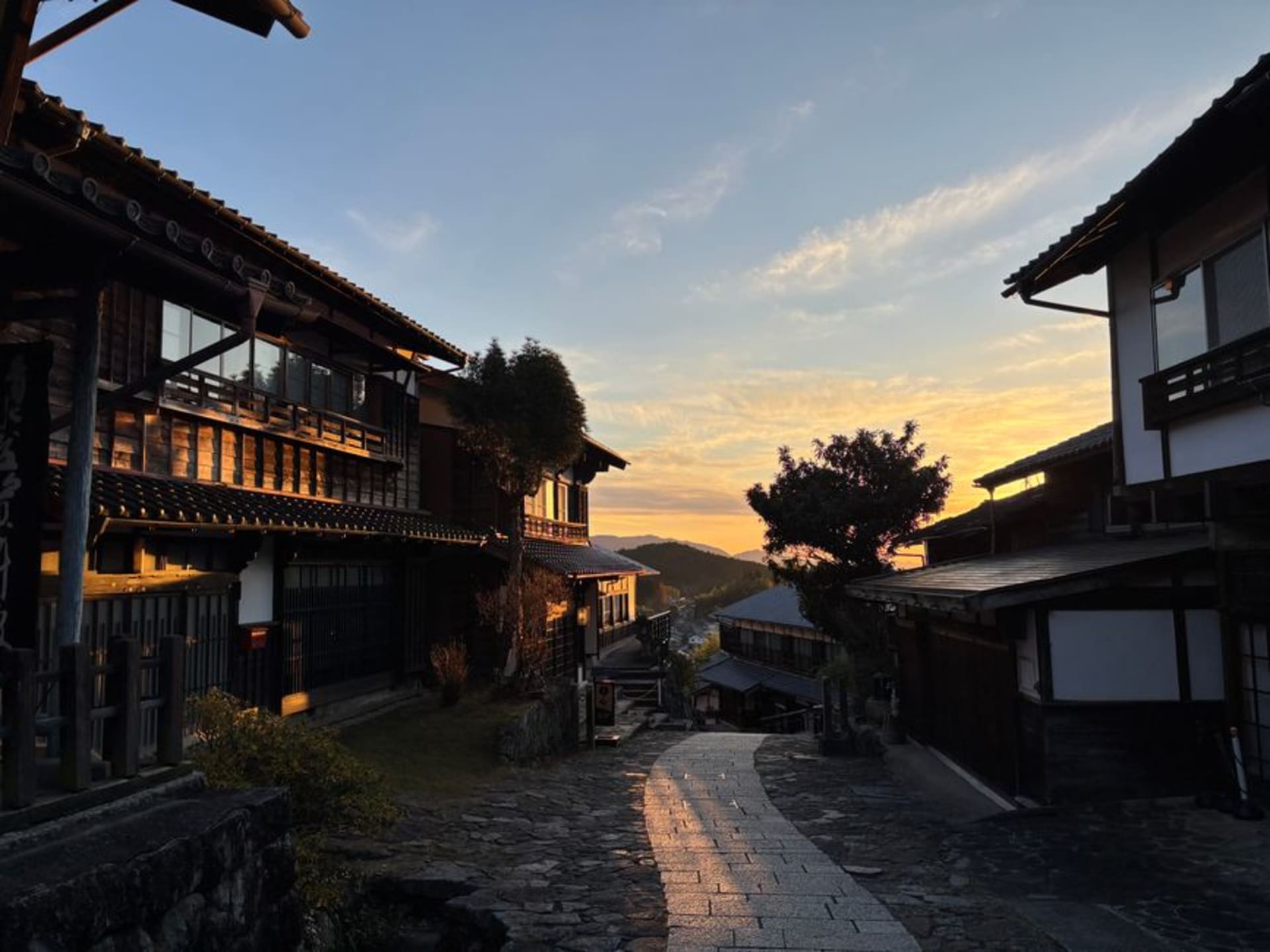
A restored Edo-era post town climbing a steep hillside in the Kiso Valley, all wooden inns and turning water wheels, and the trailhead for the beautiful forest walk over the pass to Tsumago.
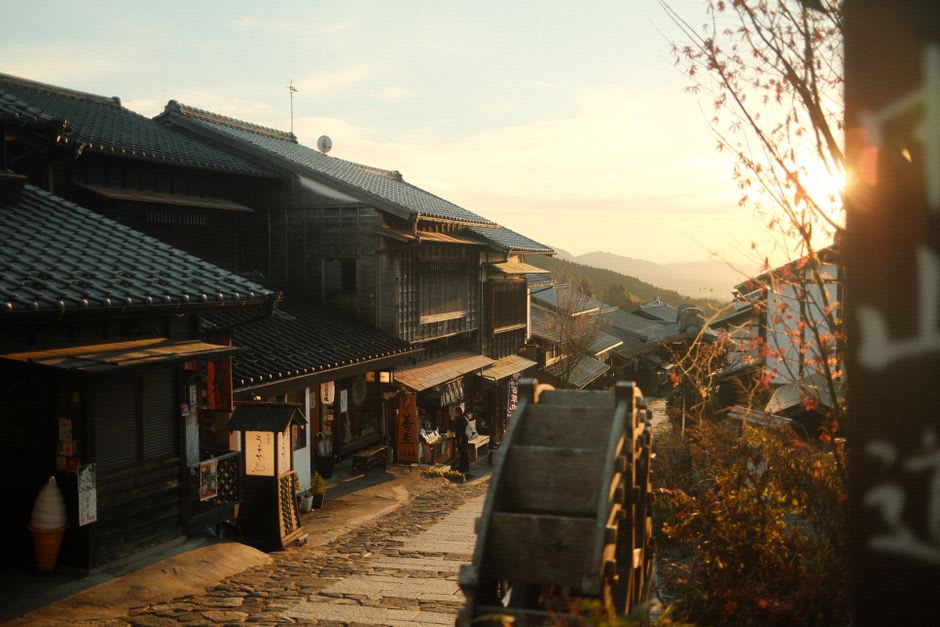
Magome tilts. That is the first thing Lia and I noticed — where most of the old post towns lie flat along their valley, Magome climbs, its single stone-paved main street rising steeply up a spur of hillside so that the whole village seems to lean into the mountains behind it. We arrived in the morning with day packs, planning to walk over the pass to Tsumago, and I remember stopping halfway up the street just to look back down it: the dark wooden eaves stepping down the slope, a water wheel turning below, and beyond the rooftops the green ridges of the Kiso range folding away into haze. It is a town built for the legs, and it puts you in the mood to walk.
Climbing the Main Street
The main street of Magome is the old Nakasendo highway itself — the inland route that once linked Edo to Kyoto — and this was the forty-third of its sixty-nine post stations, a place where travelers rested before or after the hard climb over the Magome Pass. It burned more than once and was carefully rebuilt, so it feels a touch more polished than its quiet neighbor Tsumago, with more shops and more visitors. But the bones are honest: dark-timbered inns, stone gutters running with mountain water, a wooden water wheel, and clusters of hozuki lanterns.
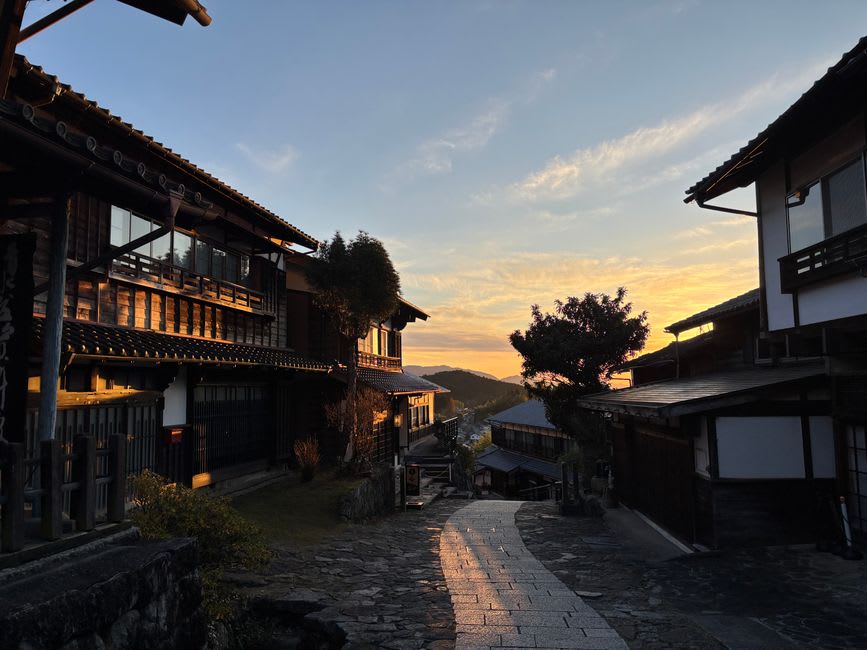
We stopped at a tea house near the top where an old man was grilling gohei-mochi over charcoal — flattened rice cakes on skewers, glazed with a sweet walnut-and-miso sauce — and ate them on a bench looking out at Mount Ena floating on the horizon. This, we would learn, is the trail snack of the Kiso Valley, and we ate an unreasonable number of them over the following hours.
The Poet’s Town
Magome carries a literary weight that surprised me. It is the birthplace of Shimazaki Toson, one of Japan’s important modern novelists, whose sprawling novel Before the Dawn is set right here and follows the town’s fortunes as the old highway lost its purpose in the Meiji era. There is a small museum in his family’s former home, and knowing the story changed how I saw the place — not just a pretty relic but a town that watched its own reason for existing quietly disappear, and survived by remembering.
Lia sat in the museum garden while I read the placards, and afterward we agreed that Magome’s slight self-consciousness made more sense once you knew a novelist had made the town legendary. It has been famous for a long time. It wears the attention lightly enough.
Over the Pass to Tsumago
The real reason to come is the walk. The Magome-to-Tsumago trail is about eight kilometers of restored Nakasendo, climbing gently out of town to the Magome Pass and then descending through some of the loveliest forest walking in Japan — cedar and cypress, moss-slick stone paving, bamboo groves, waterfalls, and small clearings of rice terrace. Bear bells hang at intervals along the path, and you ring them as you go, the sound carrying into the trees.
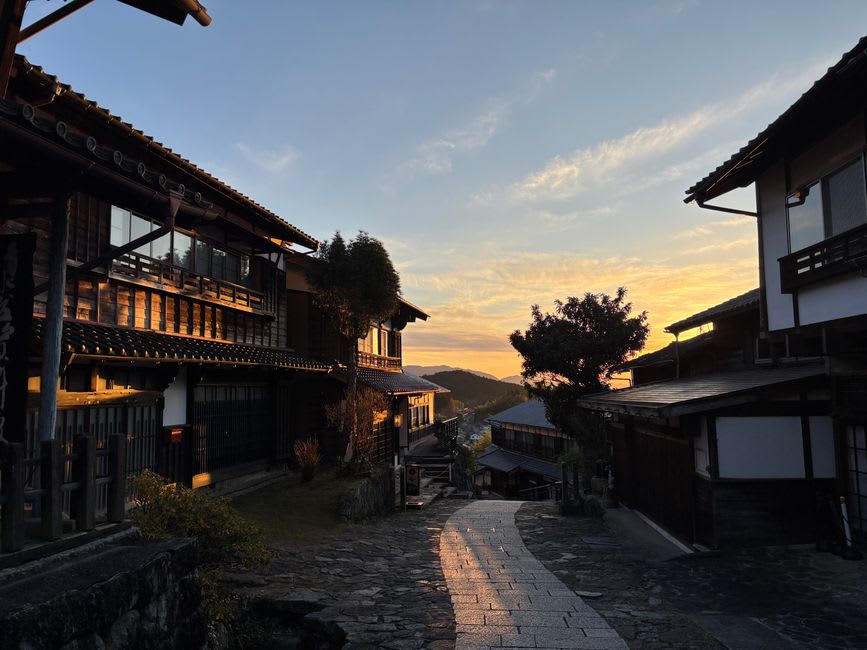
We took our time, three unhurried hours with long stops, passing a thatched rest hut where an old volunteer served free hot tea to walkers and told us, through gestures, about the bears. By the time we descended into Tsumago the light had gone golden and our legs were pleasantly done. Walking Magome-to-Tsumago, downhill overall, is the kinder direction, and arriving in the quieter town at dusk is a small perfect ending.
Getting There
Magome sits in the Kiso Valley on the border of Gifu and Nagano. The usual approach is by train to Nakatsugawa Station on the JR Chuo line — around 50 minutes from Nagoya — and then a local bus up to the town, about half an hour. If you plan to walk to Tsumago, a wonderful luggage-forwarding service runs between the two towns’ tourist offices in season, so you can hike with a light pack and collect your bags at the far end. From Tsumago, buses connect to Nagiso Station to rejoin the rail line. Come on a weekday if you can; the trail and the street are both quieter, and the forest deserves your full attention.
Keep exploring
More of Chūbu