Kiso-Fukushima
"This was the post town people actually lived in — you could tell, and I liked it more for it."
A mountain post town deep in the Kiso valley of Nagano, once a major checkpoint on the old Nakasendo highway. Steep riverside lanes, cypress-scented forests, and a working, unpolished feel far from the tour buses. A gateway to the old road and to sacred Mount Ontake.
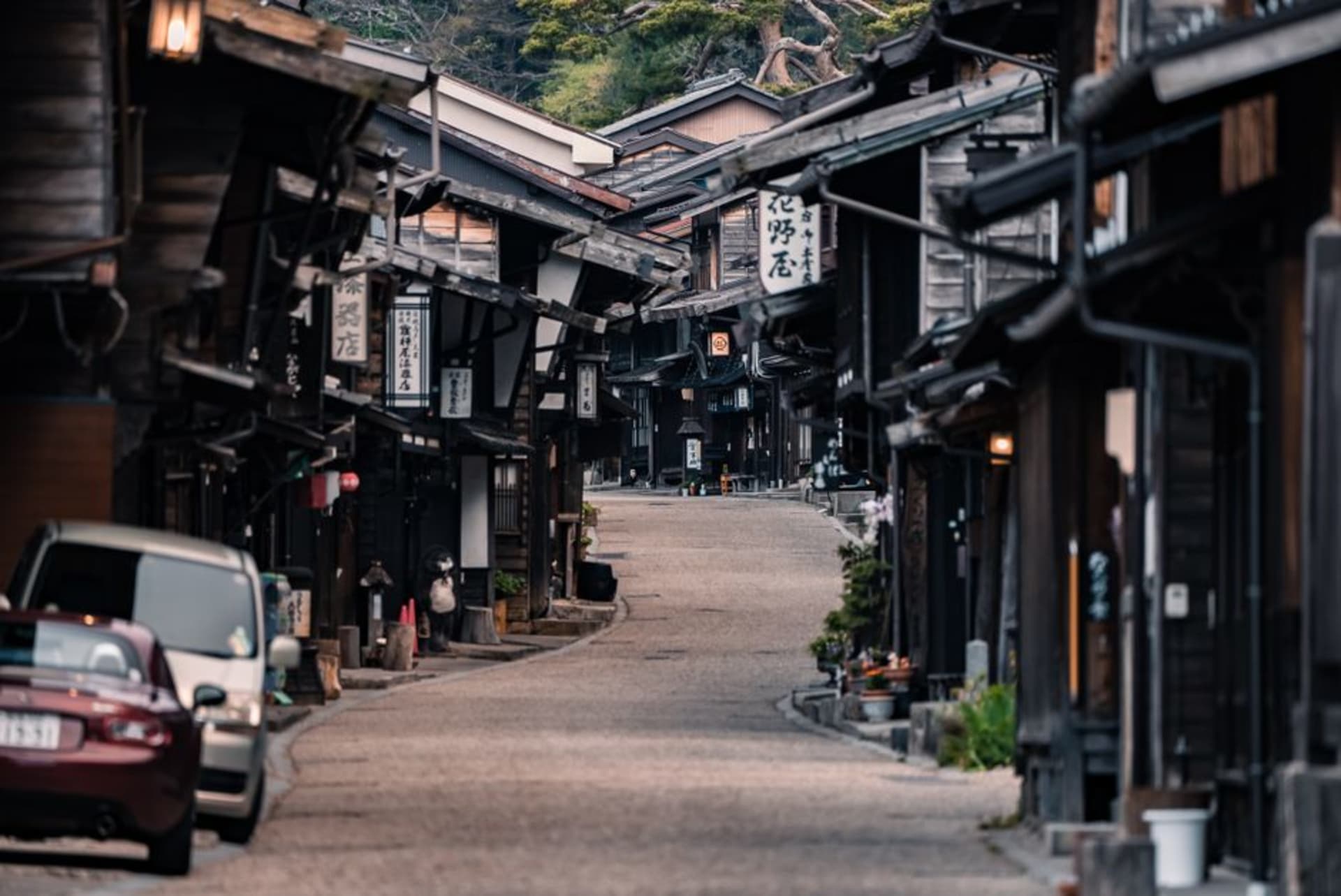
By the time we reached Kiso-Fukushima we had already walked the pretty post towns — Tsumago, Magome, all lanterns and swept stone and coach parties — and we came here half expecting more of the same. It is not the same. Kiso-Fukushima is bigger, steeper, and unmistakably a real town: houses stacked at improbable angles above the roaring Kiso river, laundry out, a hardware shop next to a two-hundred-year-old sake brewery, the mountains crowding in so close the sun arrives late and leaves early. It was one of the four great checkpoints on the Nakasendo, the old inland highway between Kyoto and Edo, and it still feels like a place that controls a mountain pass rather than one that poses for photographs. We warmed to it immediately.
The Barrier and the Old Streets
Kiso-Fukushima’s importance came from its sekisho, the barrier gate where the Tokugawa shogunate inspected everyone passing along the Nakasendo — famously watching for “outgoing women and incoming guns,” the two things a nervous government feared most. The reconstructed checkpoint sits above the town, and from it you look down the throat of the valley the guards once controlled. Below, in the Kami-no-dan district, a row of genuinely old merchant and post houses clings to the hillside, and here — unlike the showpiece towns downriver — people simply live, in wooden houses their families have held for generations.

We got happily lost in the steep back lanes, where a stone-paved path called the Nanamagari, the “seven bends,” zigzags up between old walls. An old man trimming a hedge nodded at us and said something about the weather. It felt like being somewhere, not visiting somewhere.
The River and the Cypress
The Kiso valley is cypress country. The hinoki cypress of these forests was so prized for building shrines and castles that under the shogunate felling one could cost a commoner his life — “one tree, one head,” the grim saying went. That heritage is everywhere still: in the woodwork shops selling magemono, the bent-cypress boxes and lacquerware the region is famous for, and in the clean resinous smell that hangs about the town. We bought a small cypress cup from a workshop where the maker was bending a warm strip of wood as we watched, and I still have it.
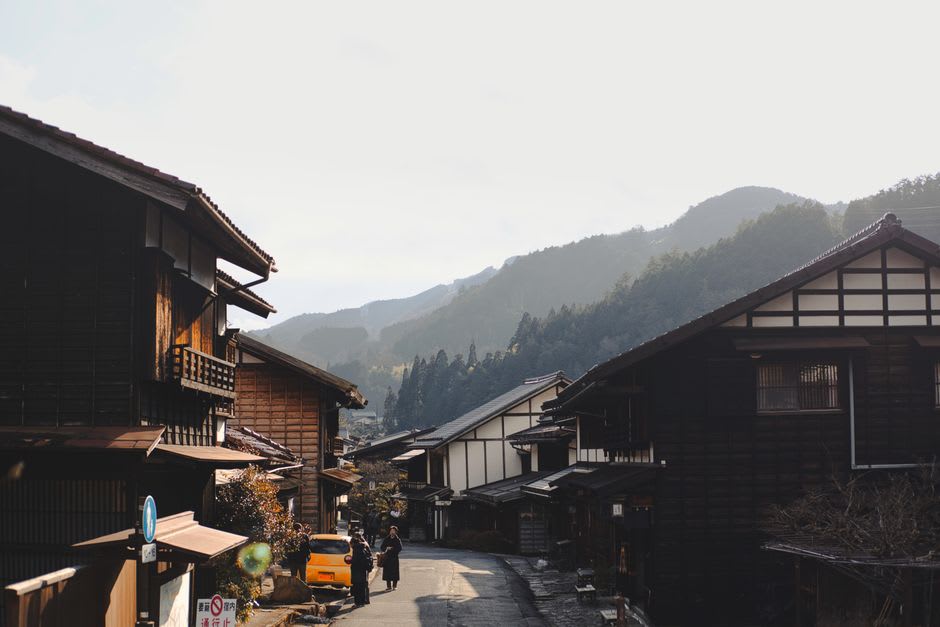
Down at the river the water is glacial and furious, jade-green over pale rocks, and we stood a long while on a bridge just watching it drive through the town. The Kiso does not stroll. It hurtles.
Gateway to Mount Ontake
Kiso-Fukushima is also the jumping-off point for Mount Ontake, the great sacred volcano that dominates this part of Nagano, second only to Fuji in height among Japan’s holy mountains and long a centre of the Ontake-kyo mountain-worship faith. We had neither the time nor the legs to climb it, but we took the bus partway up to Kiso-Ontake and walked among the pilgrim monuments — hundreds of small stone markers to the faithful who have climbed here for centuries, clad in white. The mountain has a heavy, watchful presence; it erupted, tragically, within recent memory, and the shrines feel less like decoration than like an ongoing conversation with something powerful.

Coming back down into the town at dusk, lights coming on in the stacked houses along the river, we agreed this had been our favourite stop in the Kiso — precisely because it asked nothing of us and simply let us be there.
Getting There
Kiso-Fukushima sits midway down the Kiso valley and is reached via Kiso-Fukushima Station on the JR Chuo Line, with limited-express trains running directly from Nagoya in about an hour and a quarter and from Matsumoto in under an hour — far more convenient than the smaller post towns, which have no rail of their own. The old districts and the checkpoint are a walkable if steep spread from the station; local buses run up toward Mount Ontake for those heading to the mountain. It also makes an excellent base for walking sections of the Nakasendo between the smaller post towns. Come in autumn for the cypress slopes at their best, or summer to escape the lowland heat.
Keep exploring
More of Chūbu