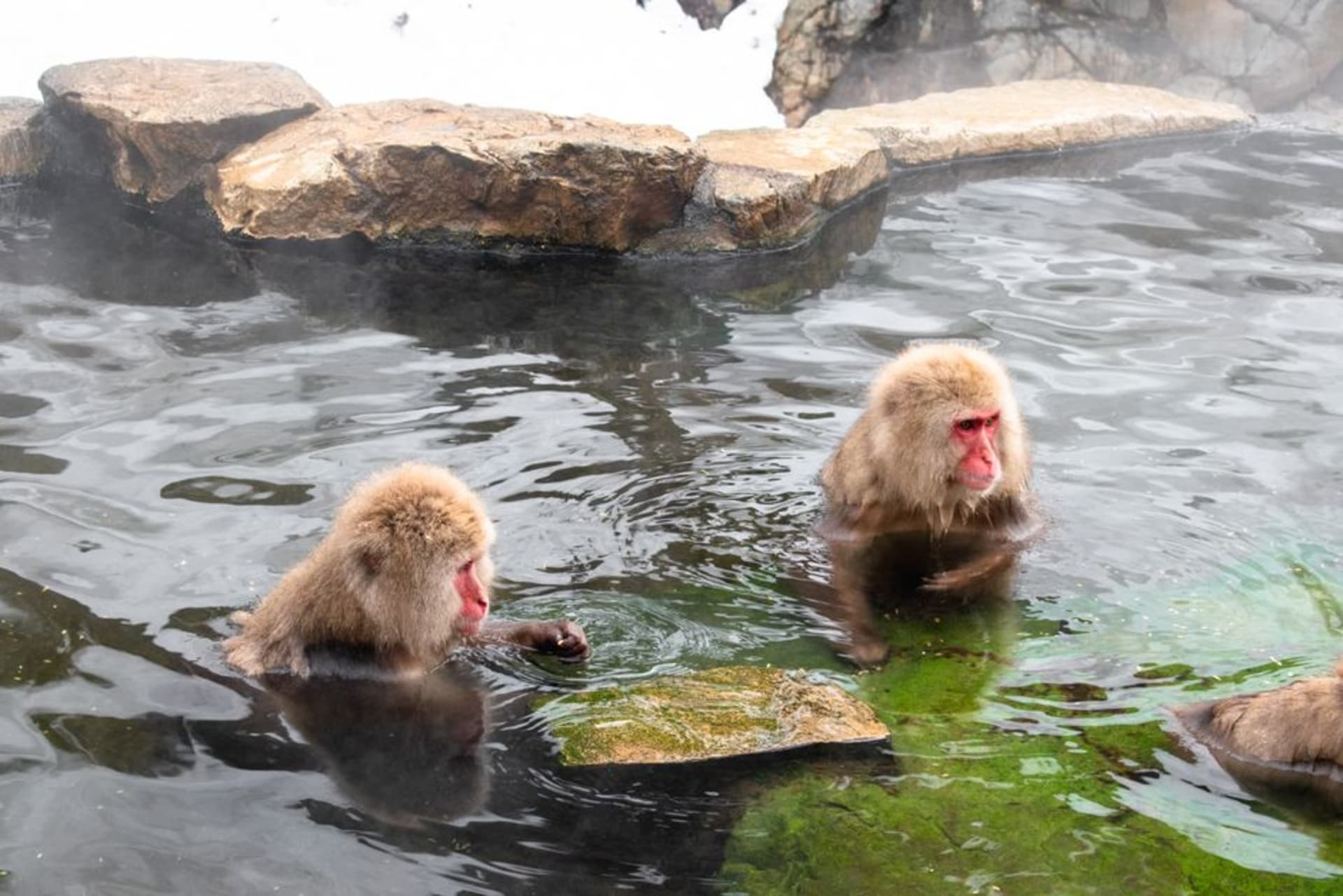
Jigokudani (Snow Monkey Park)
"A monkey lowered itself into the steaming water, closed its eyes, and I forgot entirely that I was cold."
The 'Hell Valley' in the Nagano mountains, where wild Japanese macaques climb down through the snow to bathe in a steaming hot spring. A forest walk through the cold to reach them, and then the strange, unforgettable sight of monkeys soaking with their eyes closed. Wild and humbling.
The walk in is what nobody tells you about. Everyone shows you the photograph — the monkey in the hot spring, snow on its head, eyes shut in bliss — but to get there Lia and I first had to walk a good couple of kilometres along a snowbound forest trail, single file, the cedars heavy with snow and the valley below breathing steam through the trees. It was properly cold. My camera fought me. And then the trail opened onto the pool, and there they were, dozens of wild macaques picking through the snow and sliding into the hot water, entirely indifferent to us, and every complaint I had died in my throat.
The Bathing Monkeys
The Japanese macaque is the northernmost monkey in the world, which is a fact you feel in your bones standing there in the snow. At Jigokudani they have learned, over generations, to come down from the frozen ridges and soak in a hot-spring pool built for them beside the river. So you stand at the edge of the water among wild animals — no glass, no fences to speak of — as they groom each other, squabble over the warmest spots, and sink up to their shoulders with an expression of undisguised contentment. A mother held an infant against her chest in the steam. Lia gripped my arm and did not let go.
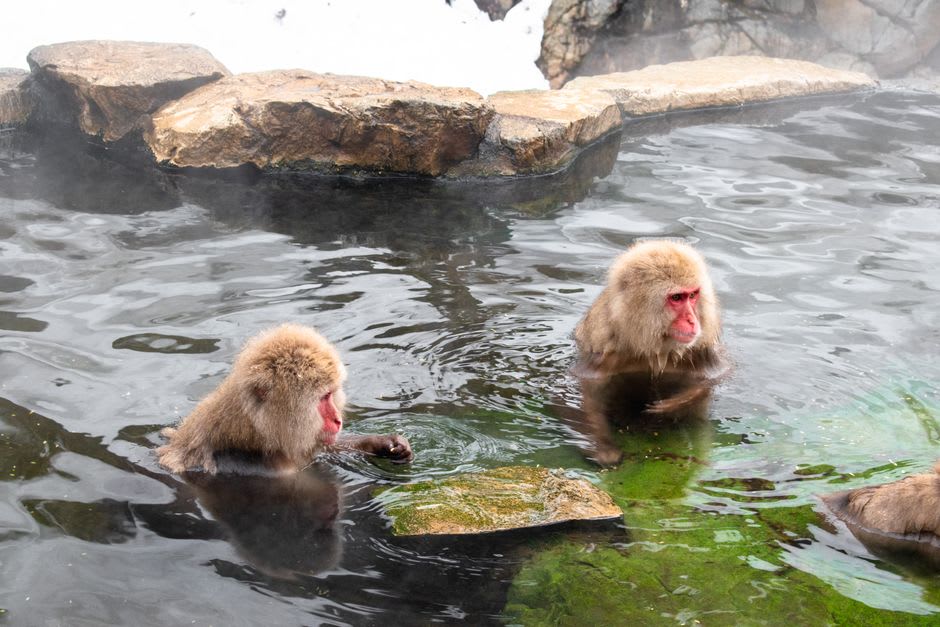
They ignore you utterly, which is the gift of it. You are not the point. You are a cold visitor watching wild animals do a wild, oddly human thing, and the honest thing is to stand still and be amazed.
”Hell Valley”
The name — Jigokudani, Hell Valley — comes from the geology, not the monkeys. This is a steep, cramped gorge where boiling water and steam force their way out of the ground, hissing from vents and clouding the frozen air, and to the people who named it the sulphurous, roaring valley must indeed have seemed a mouth of the underworld. In the depth of winter it is starkly beautiful: the black river, the white snow, the columns of steam, the dark cedars climbing the walls. We stood a while just watching the valley smoke.
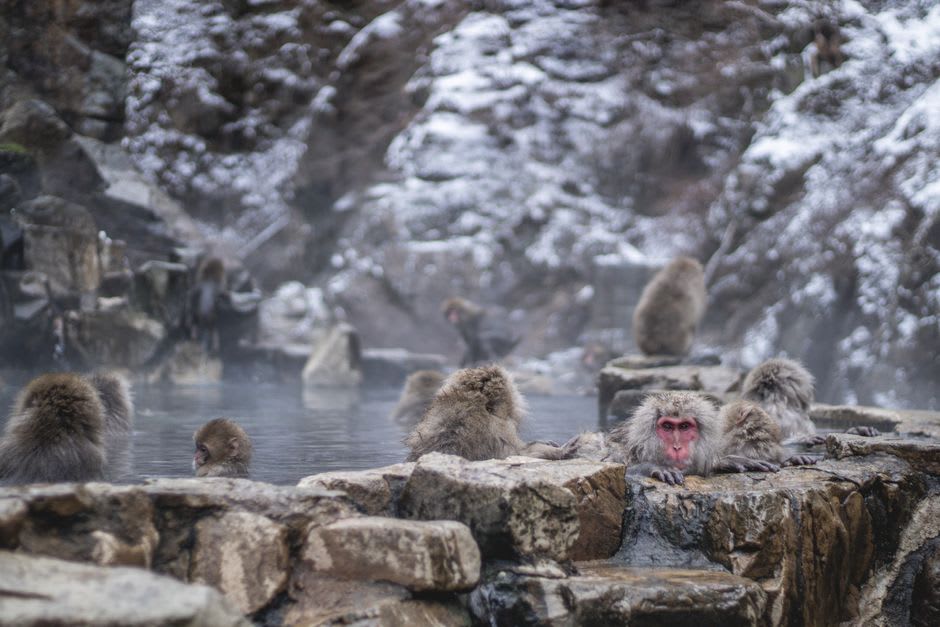
There is a small onsen inn deep in the valley, one of the oldest in the region, and something about a single wooden building sending up its own thread of smoke in all that wilderness made the whole scene feel like a woodblock print come to life.
Winter, and the Cold
Come in winter or do not come. The monkeys visit the pool year-round, but they only truly bathe — the postcard image, snow on fur, steam curling up — when it is cold enough to make the hot water worth it, which means roughly December through March, ideally with fresh snow on the ground. We came in February and got exactly the weather we hoped for: a hard clean cold, the forest silent, the monkeys packed into the warm water. Dress for it seriously. The walk in is real, the trail can be icy, and you will be standing still in the snow for a long time once you arrive.
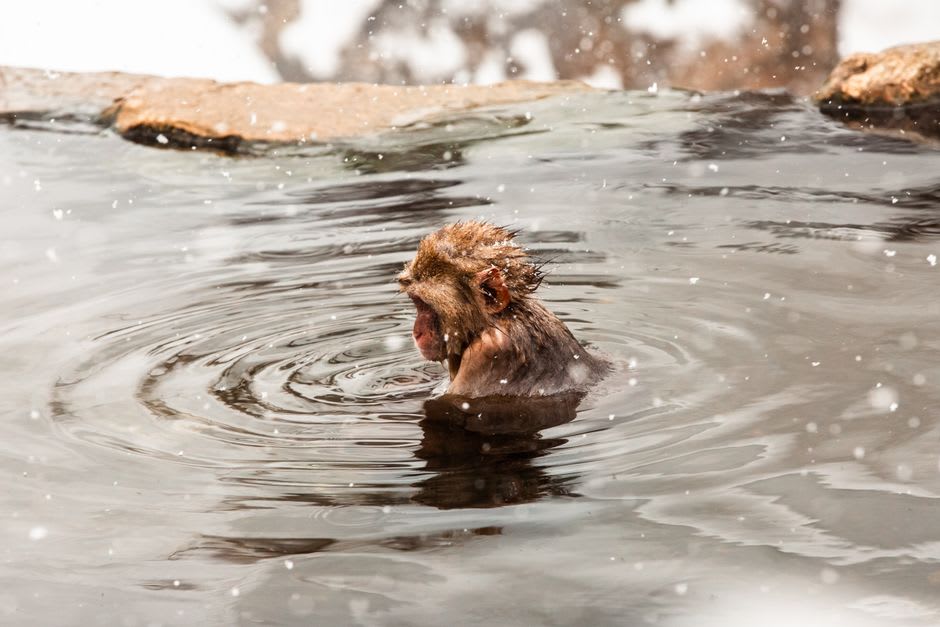
We lingered until our feet went numb and the light began to flatten, and even then left reluctantly. Some things are worth being cold for.
Getting There
Jigokudani lies in the mountains of northern Nagano, above the town of Yudanaka. The usual approach is by train to Nagano city, then the local Nagano Dentetsu line or a direct bus toward Yudanaka and the Snow Monkey Park; from the trailhead car park it is a walk of roughly thirty minutes through the forest to the pool, so wear proper winter boots with grip. It pairs beautifully with a night in a Yudanaka or Shibu Onsen ryokan, letting you soak in your own hot spring after watching the monkeys enjoy theirs. Go in deep winter, and go early, before the day groups arrive.
Keep exploring
More of Chūbu