
Echigo-Yuzawa
"The train left the tunnel and the world had turned white while we weren't looking."
A snow-country hot-spring town where the express train bursts out of a nine-kilometre tunnel into a white silence. Kawabata set his most famous novel here, and you understand why the moment the doors open. We came for one night and stayed three.
Lia had been asleep against the window somewhere past Takasaki, and I nearly woke her when the train plunged into the Shimizu tunnel — that long, humming dark. When we came out the other side, the light had changed. Grey Kanto had become a valley packed with snow, walls of it taller than the platform, and the announcement said Echigo-Yuzawa in a voice that seemed to know it was delivering us somewhere else entirely. I remembered the opening line of Snow Country and felt slightly ridiculous for how much it moved me. We stepped off into cold that smelled of woodsmoke and sulphur.
The Onsen Along the Gorge
We were staying at a ryokan close to the Kiyotsu river, and the first thing I did — before unpacking, before anything — was lower myself into the outdoor bath while snow fell straight down into the steam. There is a particular arithmetic to a Japanese winter onsen that I have never managed to explain to friends back in France: your shoulders are freezing, your body is scalding, and somehow the sum of the two is perfect. Lia laughed at me from the women’s side of the wooden fence, both of us narrating the snow to each other like children. The water here runs slightly milky and it left our skin soft for days. We soaked twice more before dinner, which is to say we did almost nothing, which is exactly what the town asks of you.
Powder, Rice, and Sake
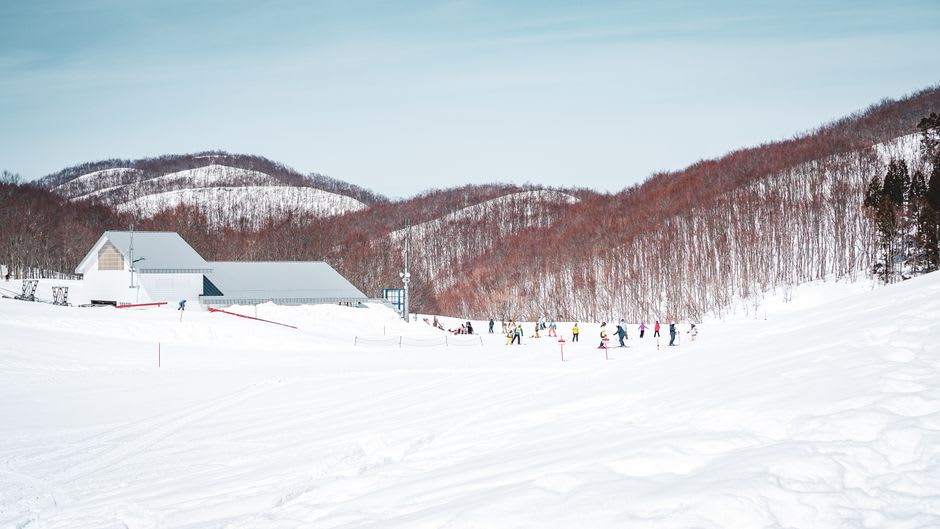
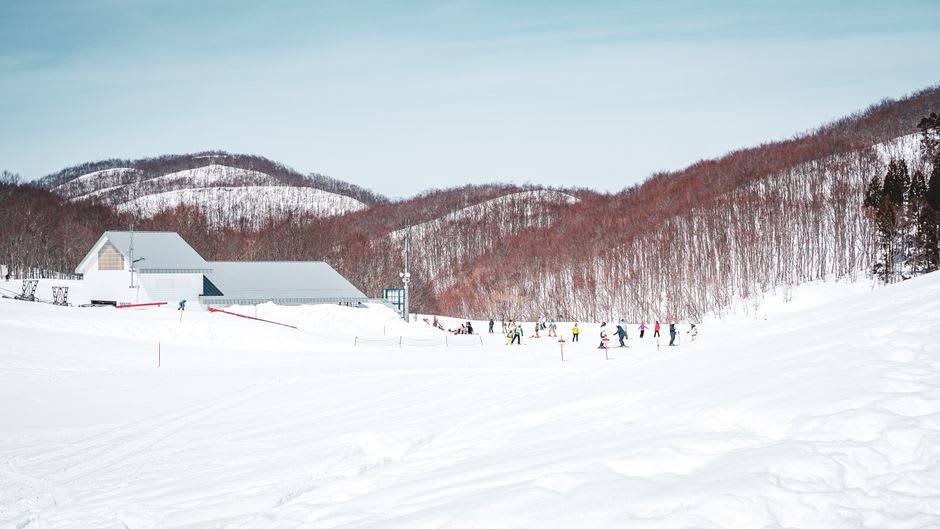
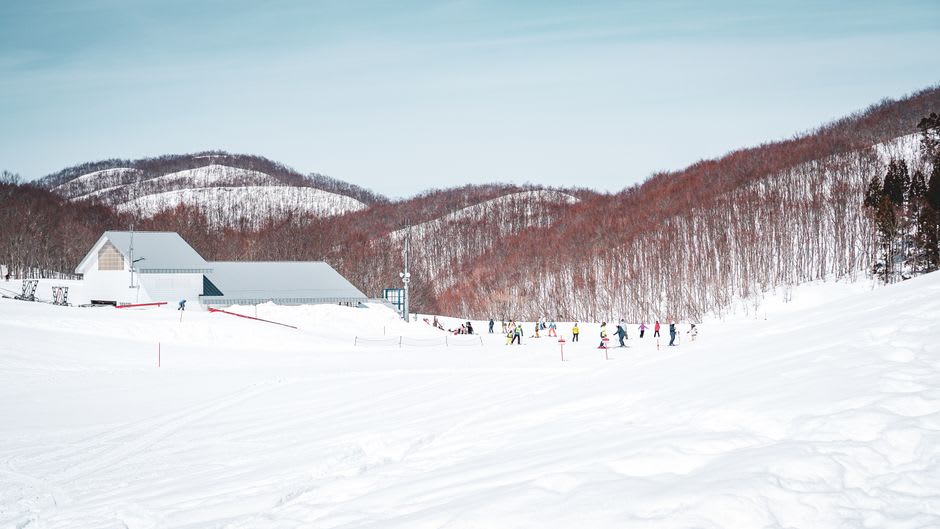
Niigata calls itself snow country without exaggeration, and the same clouds that bury Yuzawa in February are the reason its rice is famous. Gala Yuzawa’s gondola runs almost from the station itself, and though I am a mediocre skier and Lia is a fearless one, we spent a bright morning on the slopes with the whole valley spread white below us. But the thing I keep returning to in memory is the sake. At Ponshukan, inside the station, they have a wall of vending taps — a hundred-odd local breweries — and you buy a little cup and taste your way along, feeding coins into the machines. We had a snow-country lunch of rice so good it needed nothing, grilled fish, mountain vegetables pickled through the long winter, and by the end I understood the local pride as something earned against the weather.
Walking the Old Town
On our last full day the snow paused and we walked. Yuzawa’s older streets are narrow, the buildings hunched under white caps, gutters running with meltwater down the middle in the clever old channels that keep the roads passable. We found the small museum devoted to Kawabata and the town’s literary past, and I stood a while at a window that framed the mountains, feeling like an intruder in someone else’s melancholy. Then something entirely un-literary: a tiny shop selling sasa-dango, sweet mugwort rice cakes wrapped in bamboo leaf, and we ate them walking, fingers cold, arguing gently about whether we could extend our stay. We could. We did.
Getting There
This is the town’s quiet miracle: the Joetsu Shinkansen runs from Tokyo Station to Echigo-Yuzawa in around seventy to eighty minutes, so you can leave a Tokyo breakfast and be neck-deep in an onsen by lunch. The station is unusually well-stocked — the sake hall, food stalls, even a small standing bath — so linger before you head out. From here you can push on toward Niigata city or take local lines deeper into the mountains. If you come in winter, bring proper boots; the charm and the depth of the snow are, after all, the same thing.
Keep exploring
More of Chūbu