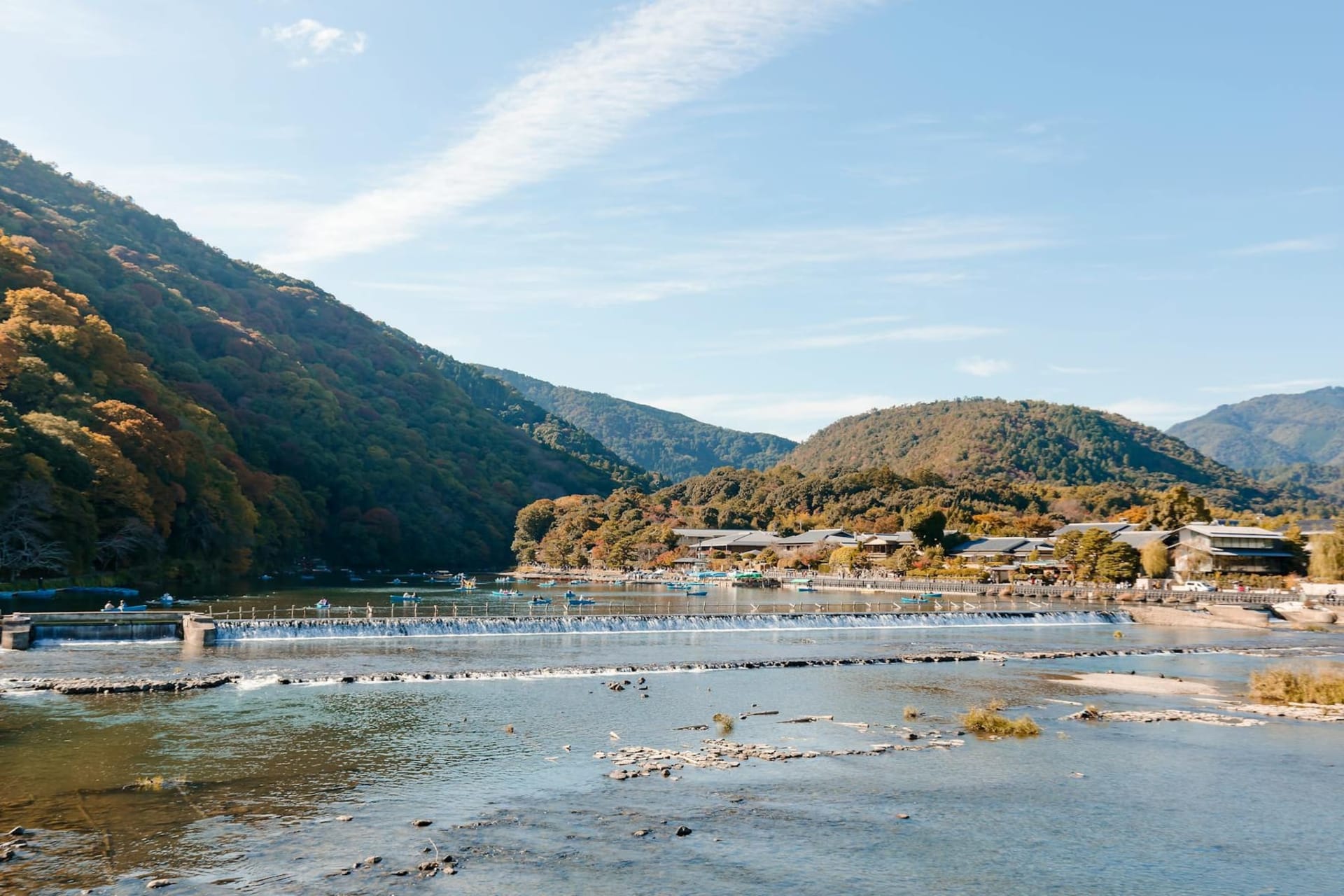
Kyoto Arashiyama
"Wind through Arashiyama's bamboo sounds like the forest breathing, and for a moment you stop breathing with it."
I arrived at Arashiyama before eight in the morning, which is the only hour that makes sense. The tour groups come later, and they come in numbers that turn the bamboo path into something closer to a subway platform. Before them, in that particular grey-gold light that Kyoto reserves for November mornings, the grove was just me and the sound of stalks swaying — a sound I had no word for until I heard it. A deep, resonant creak punctuated by hissing leaves. Not peaceful exactly. More like breathing. The forest drawing air.
The Bamboo Path and What Comes After
The famous path runs north from Tenryu-ji along Sagano, hemmed on both sides by culms that rise fifteen, twenty meters overhead. The light through them is green and dim and slightly underwater. I have walked through impressive things before and felt nothing much. This was not that. There was something genuinely strange about being small beneath them.
What nobody tells you is what waits at the northern end of the grove. The bamboo opens onto Nonomiya-jinja, a small shrine wrapped in dark hinoki cypress torii, and then the lane curves west toward the Oi River embankment. Lia was already down at the water when I found her, watching a cormorant fisherman in a low wooden boat drift under Togetsukyo Bridge. The bridge itself is entirely ordinary. The scene below it was not.
Iwatayama and the Unexpected Monkeys
The monkey park was, I will admit, her idea. I expected a zoo dressed up as a hill. Instead it was a forty-minute climb through forest to a ridge where Japanese macaques moved through the trees with indifference and, occasionally, outright contempt. The surprise was not the monkeys — it was the view. From the summit, all of Kyoto lay below the November haze, the rooftops grey-blue and flat to the river bends, the mountains behind and ahead. Nobody in any travel photograph prepares you for standing up there in the wind with a macaque sitting three feet away eating a sweet potato, and the whole ancient city spread beneath you like something you’ve been handed and told to be careful with.
We descended via the back path, stopping at a small stall near the river for warabi-mochi dusted in kinako powder — bracken starch that wobbles when you pick it up, sweet and faintly grassy, nothing like mochi, better than mochi.
Along the Hozu
The late afternoon walk along the river toward Kameyama-koen is where Arashiyama finally slows down. The tourist current reverses, heading back toward Saga-Arashiyama station, and the embankment becomes quiet again. The Hozu runs dark green over its stones. The cedars and maples hold the last of the light.
When to go: Mid-November through early December for autumn colour — the maples along the river and above Tenryu-ji turn a red that feels almost aggressive. March’s plum blossom is quieter and underrated. Avoid Golden Week entirely.