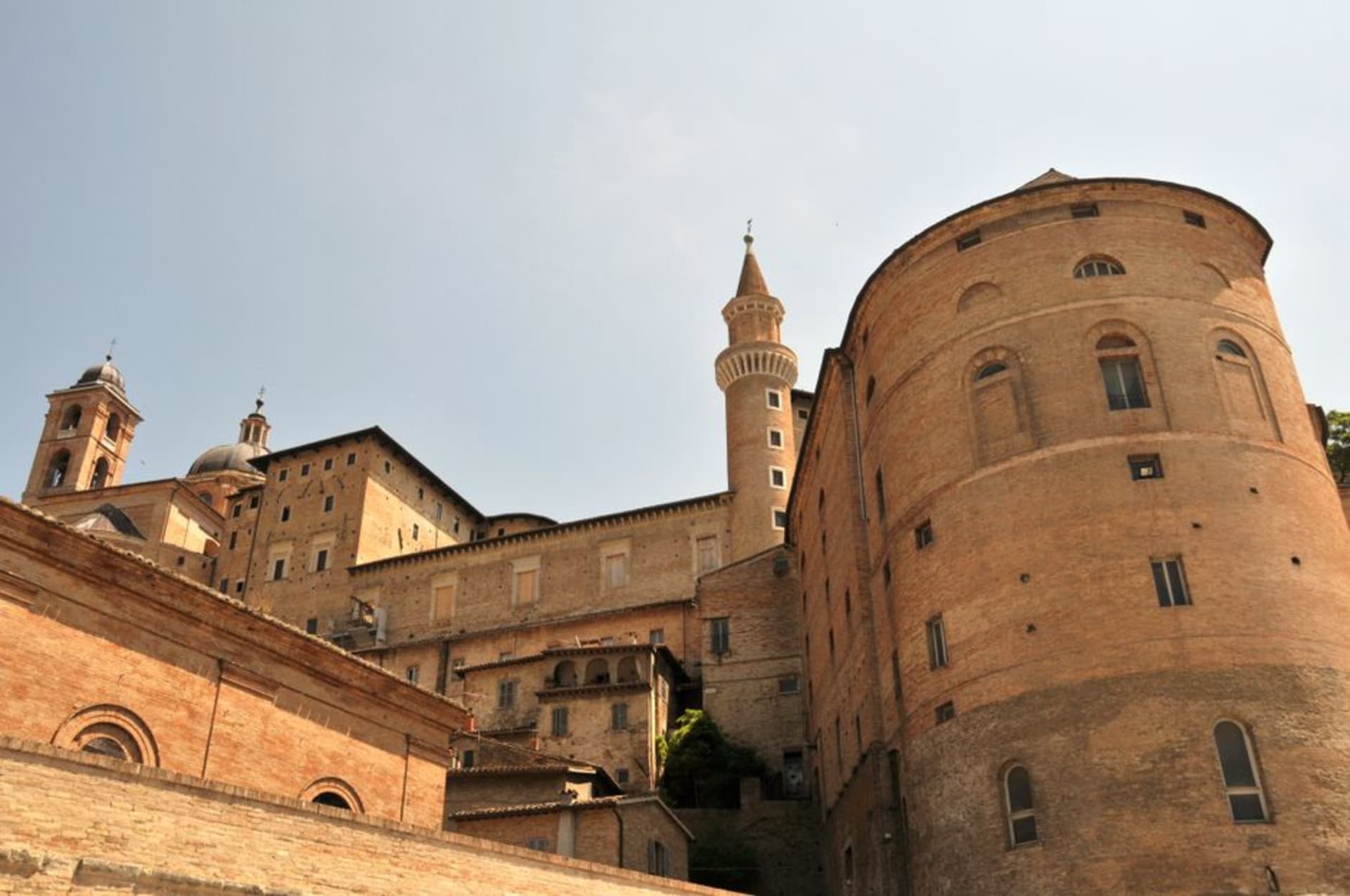
A brick-red hill town in the Marche that produced Raphael and one Renaissance duke's obsession with a perfectly designed palace — and somehow never grew large enough to spoil either legacy.
Urbino is disproportionately important for its size, and everyone who’s ever visited says some version of that sentence, but it’s true and I couldn’t find a better way to put it. This is a town of maybe fifteen thousand people tucked into the hills of the Marche, east of Umbria and Tuscany, off the itinerary most first-time visitors to Italy ever draw up. And yet it produced Raphael, gave the world one of the most complete Renaissance courts ever assembled, and its historic center is a UNESCO World Heritage Site specifically because it exported the Renaissance to the rest of Europe rather than merely receiving it. I climbed the steep street up from the bus stop with a small backpack and no real expectations, and left rearranging my mental map of where the Renaissance actually happened.
The Duke’s Palace
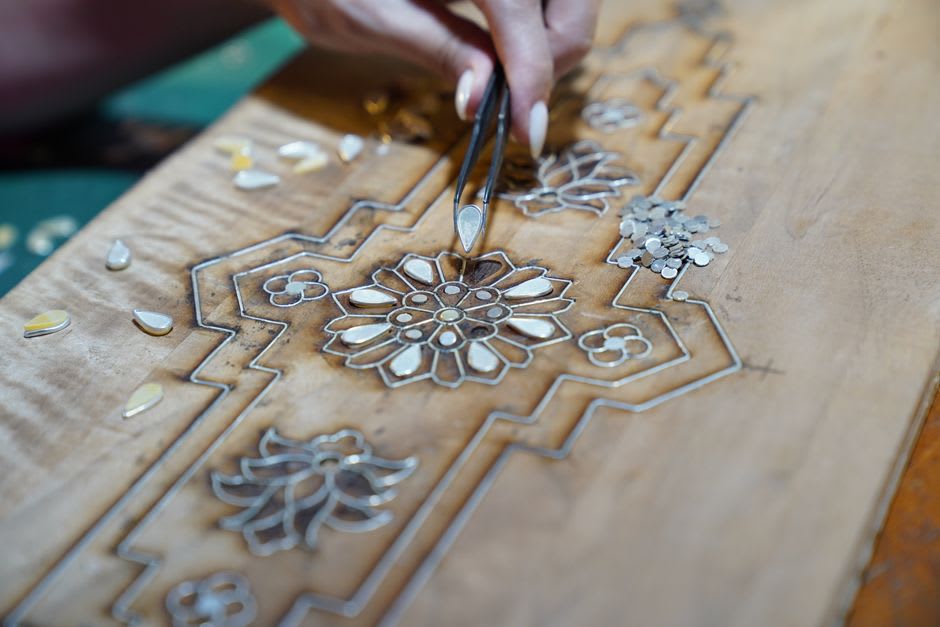
The Palazzo Ducale is the reason Urbino exists on any art historian’s map. Federico da Montefeltro, the town’s condottiero-duke, spent decades building it in the fifteenth century into what contemporaries called a “city in the shape of a palace” — a sprawling, asymmetrical complex with two famous slender towers on its facade that have become the visual shorthand for Urbino itself. Inside, his studiolo is one of the strangest, most intimate rooms I’ve seen in any palace in Italy: a small study lined floor to ceiling with intarsia — wood inlay so precise it fools your eye into seeing shelves, cabinets, half-open doors, and books, when the whole wall is flat. Federico, who lost an eye and part of his nose in a jousting accident and is always painted afterward in strict profile because of it, used this room to read and think, surrounded by a fake library more convincing than most real ones.
Raphael’s Hometown
A few streets down from the palace stands the modest house where Raphael was born in 1483, son of a court painter, before he left for Florence and Rome and became one of the three names — alongside Leonardo and Michelangelo — that define the High Renaissance. The house is unassuming, almost domestic, with a small fresco attributed to his father and the young Raphael’s own hand in the courtyard. It’s a strange thing to stand in the actual kitchen of a person whose paintings hang in the Vatican. Urbino as a whole still has this same modest, working feel despite its outsized legacy — it’s a university town today, students filling the same steep streets Raphael and Federico’s courtiers once walked, and that ordinary daily life keeps the place from feeling embalmed.
When to go: Spring or early autumn, when the university term keeps the town lived-in but the summer heat hasn’t set in. Late August brings the Festa dell’Aquilone, a kite festival on the surrounding hills, if you want a lighter reason to visit than Renaissance palaces.