A city where German precision and Italian warmth shook hands somewhere in the Council chambers and never quite let go.
I arrived in Trento expecting a way station — the place you pass through on the autostrada between Verona and the Brenner Pass — and left wondering why I’d waited so long to stop. This is a city that decided the fate of the Catholic Church for eighteen years and then went back to minding its vineyards. The Council of Trent, convened here between 1545 and 1563, reshaped Christianity in response to the Reformation, and the city still carries that gravity in its bones, even if most visitors now come for the mountains rather than the theology.
A City Built on a Council
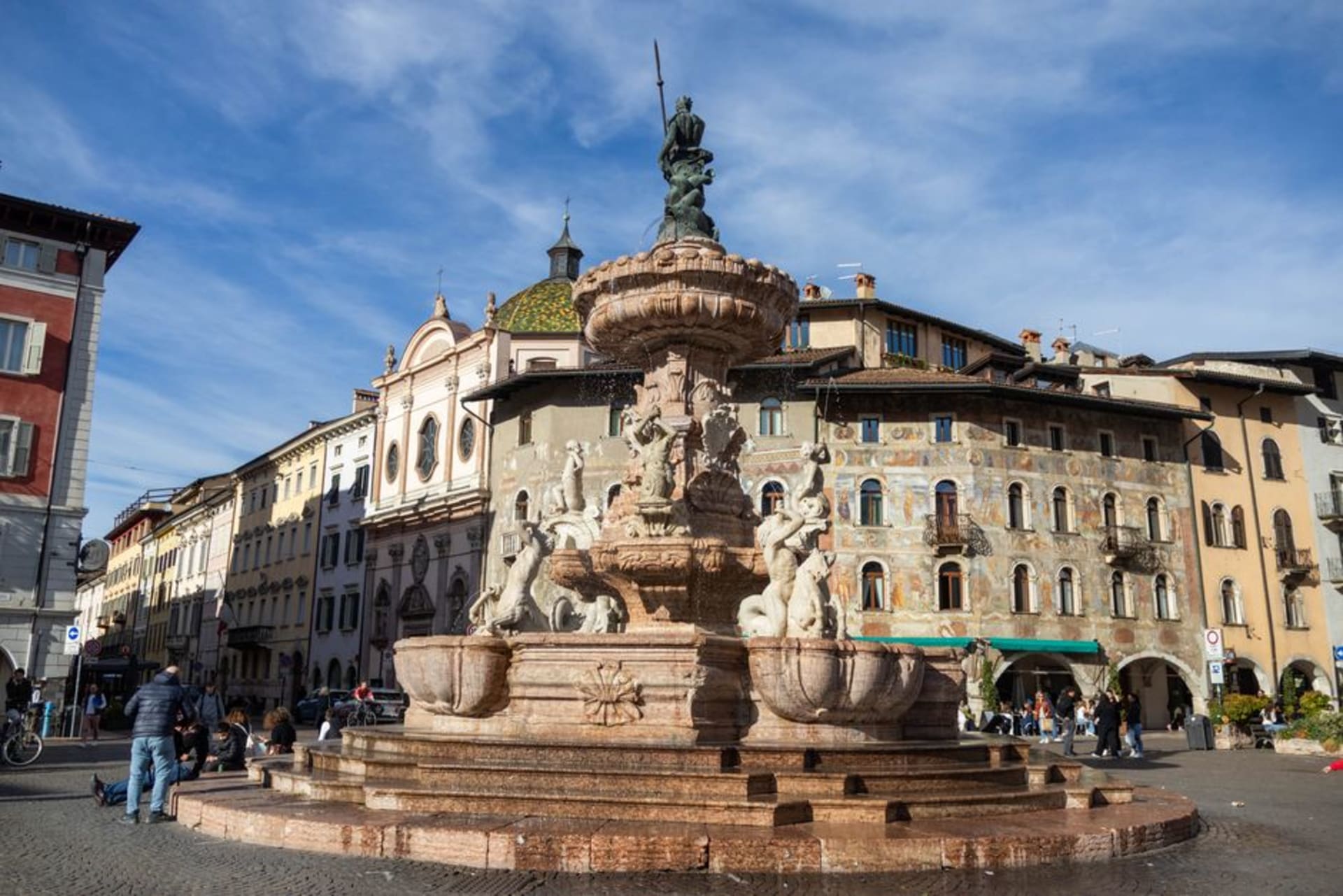
The Castello del Buonconsiglio is where I’d start, as I did — the seat of the prince-bishops who ruled Trentino for centuries, its Torre dell’Aquila holding a fresco cycle of the months, the Ciclo dei Mesi, that I found more moving than half the Renaissance masterpieces I’d queued for elsewhere in Italy. No crowds, no velvet ropes, just a quiet room and December’s hunters trudging through painted snow. Down in the Piazza Duomo, the cathedral where the Council actually met sits low and Romanesque, unshowy compared to the frescoed merchant houses ringing the square — facades painted with mythological scenes in the sixteenth century, still bright enough that you tilt your head back and forget to watch where you’re walking.
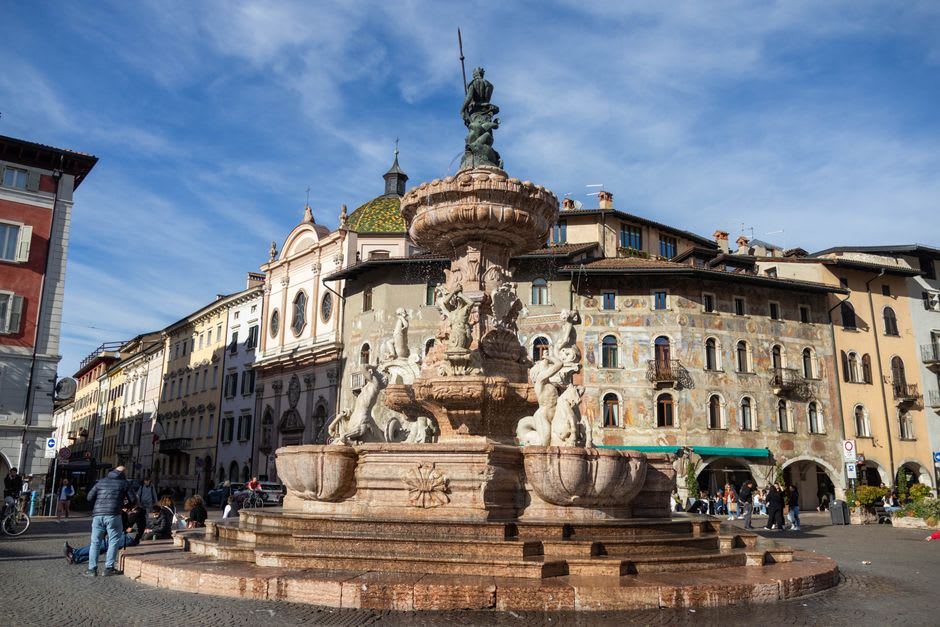
What struck me most was the language underfoot — street signs in Italian, but the architecture, the tidiness, the punctuality of the buses, all whispering Austria. Trentino-Alto Adige was part of the Austro-Hungarian Empire until 1918, and Trento sits at the exact hinge point: south of here, things get looser, warmer, more Mediterranean; north, toward Bolzano and the Dolomites, German reasserts itself as the first language. I ate canederli — bread dumplings, an unmistakably Tyrolean dish — with a glass of Teroldego, a red grape that exists almost nowhere outside this valley, and felt like I’d eaten a small, delicious summary of the region’s split identity.
The Vines and the Water
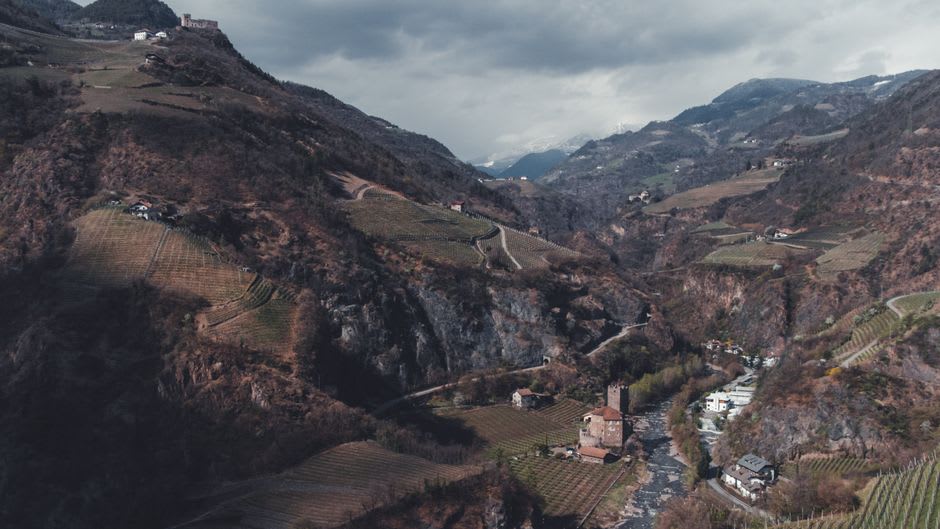
Trento gave its name to Trentodoc, the sparkling wine made in the metodo classico — the same bottle-fermentation process as Champagne — on the terraced slopes climbing away from the city. I spent an afternoon at a producer up toward Sorni, glass in hand, looking down at the Adige valley cut clean by glaciers, vineyards stacked like green shelving up both flanks. It’s a wine world that gets far less attention than it deserves, overshadowed by Prosecco to the east, but the altitude and the mineral soils here make something genuinely fine.
MUSE, the science museum designed by Renzo Piano, sits at the city’s southern edge, its jagged glass roofline echoing the Dolomite peaks visible from nearly everywhere in town. I went in skeptical of a science museum breaking up a trip full of frescoes and wine, and came out having spent two hours on the biodiversity of the Alps, which tells you something about how well it’s done. Trento rewards that kind of open itinerary — a morning with Renaissance ceilings, an afternoon with glaciology, dinner with a grape you’ve never heard of.
When to go: Late spring through early autumn for hiking access into the surrounding Dolomites and Brenta group; December for one of Italy’s most atmospheric Christmas markets, held right in Piazza Duomo since the fresco-painted houses seem built for it.