Sulmona
"The town that turns sugared almonds into sculpture, in a valley the poet Ovid called his own."
A candy-colored town in a valley of almond blossoms, where every wedding favor in Italy traces back to one narrow street of confetti workshops.
I went to Sulmona for the confetti and stayed for everything else, which is roughly the experience I’d recommend to anyone. Confetti, in Italian, doesn’t mean paper — it means sugar-coated almonds, and Sulmona has been the country’s undisputed capital of them since at least the fifteenth century, when Franciscan monks here began refining a technique for coating almonds in hardened sugar. Walk down Via Introdacqua or Corso Ovidio and the shopfronts turn into something closer to jewelry displays: confetti wired and glued into bouquets of flowers, tiny sculpted branches, entire baskets of blossoms that are, on closer inspection, several thousand calories of pastel-colored almond. Italians buy them for weddings, baptisms, graduations — the color coding is precise, white for weddings, pink or blue for births, red for graduations — and I left with a small bag I told myself was a gift for someone else.
Ovid’s Town
Sulmona’s other claim to fame predates the sugared almonds by about fifteen centuries: this is the birthplace of Publius Ovidius Naso, the poet Ovid, born here in 43 BC. The town has never let anyone forget it. A statue of Ovid stands in the central Piazza XX Settembre, and the initials “SMPE” — a reference to the poet’s line describing his hometown, “Sulmo mihi patria est,” Sulmona is my homeland — turn up on everything from manhole covers to the local football club crest. The medieval core is built almost entirely from the pale local stone, giving the whole town a soft, uniform gold that photographs beautifully in late afternoon. The Palazzo dell’Annunziata, with its mix of Gothic and Renaissance facades assembled over centuries, is one of the finest civic buildings in Abruzzo, and the covered medieval aqueduct that runs along the Corso still carries water into a fountain at its base, functioning much as it has since the thirteenth century.

The Valley and the Mountains
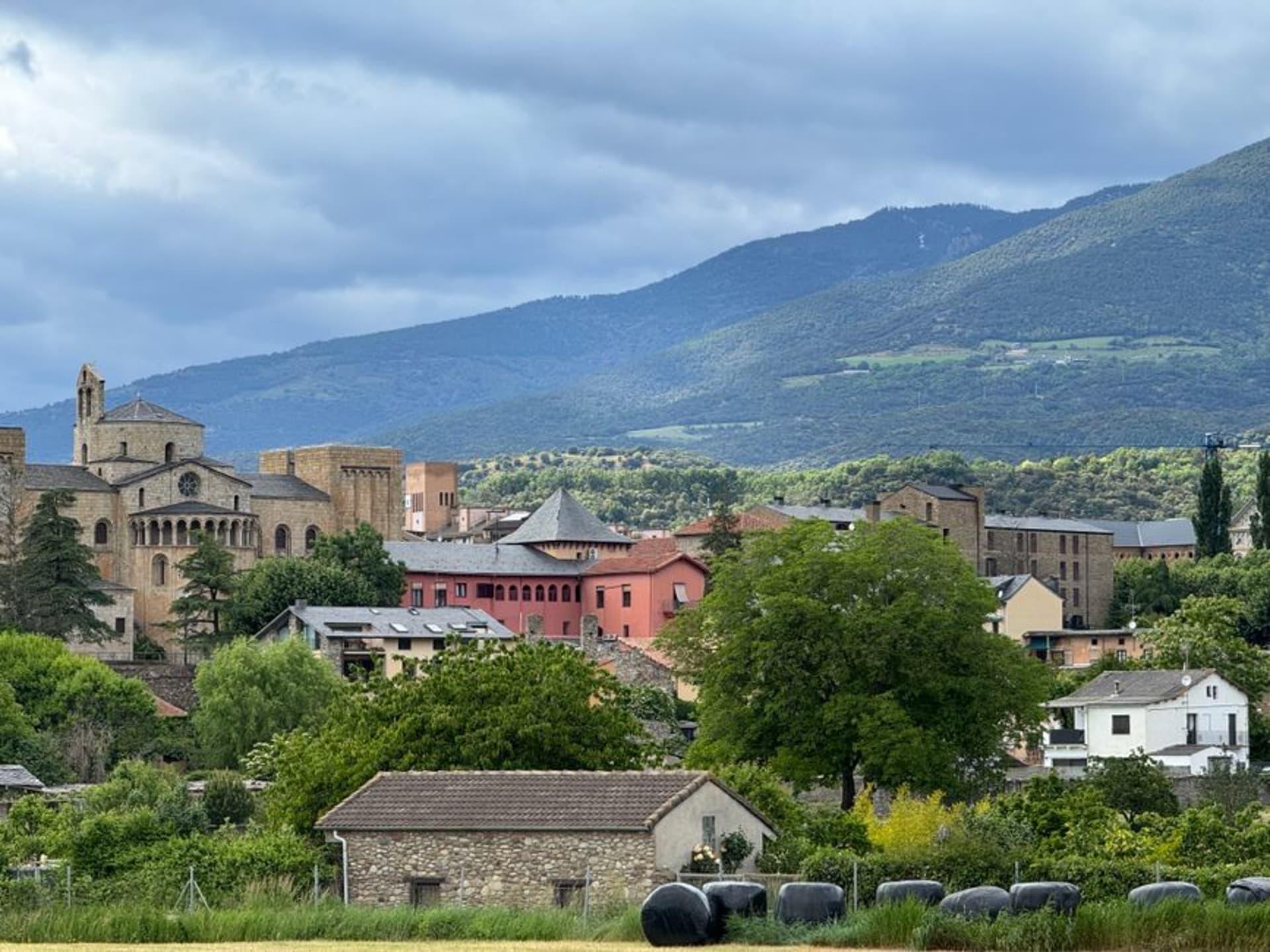
What makes Sulmona’s setting extraordinary is the valley itself — the Conca Peligna, a wide agricultural basin ringed almost completely by mountains, with the Morrone range rising directly behind the town and the Maiella massif visible across the plain. In late March and early April the valley fills with almond blossom, and locals will tell you, not without some competitive pride toward Sicily, that Sulmona’s confetti tradition exists precisely because this valley has grown exceptional almonds for centuries. Above the town, reachable by a short drive or a determined hike, sits the Eremo di Sant’Onofrio, a hermitage carved into the cliff face of Monte Morrone where Pietro da Morrone lived before becoming Pope Celestine V — the same reluctant pope entombed in L’Aquila’s basilica, and a reminder of how tightly this region’s medieval religious history is woven together. I hiked up on a cool October morning, and the view back down over Sulmona’s terracotta rooftops, framed by the Maiella’s ridgeline, was worth every switchback.

When to go: Late March through April for almond blossom season, or September for the Giostra Cavalleresca, Sulmona’s historic jousting tournament that fills the town with medieval costume and pageantry.