
A cliffside town smelling permanently of lemons, perched above the Bay of Naples with Vesuvius smoking quietly across the water.
Sorrento gets treated as a stepping stone — the place you pass through on the way to Capri, or the base you use before tackling the Amalfi Coast’s hairpin road. I understand the impulse, but staying a few extra days changed my mind about all of it. The town sits on a tufa-stone plateau that drops in sheer cliffs straight down to the sea, on the northern side of the Sorrentine Peninsula, looking directly across the Bay of Naples at Vesuvius, which sits there smoking faintly on the horizon like a reminder that this whole coast has always lived a little dangerously.
Lemons, Everywhere
The scent of Sorrento is lemon, full stop. The area’s famous variety, the Sorrento lemon or limone di Sorrento, has its own protected geographical status, and the groves — netted in black mesh to protect the fruit from wind and sun scorch, giving the hillsides a strange, tented look — are visible the moment you leave the town center. Limoncello, the sweet lemon liqueur now sold across every gift shop in southern Italy, is generally traced back to this exact coast, and I visited a small family producer where the owner explained, with the patience of someone who’s given the tour a thousand times, that the secret is entirely in the zest, never the pith. I bought a bottle I told myself was a gift and finished most of it myself within the week.
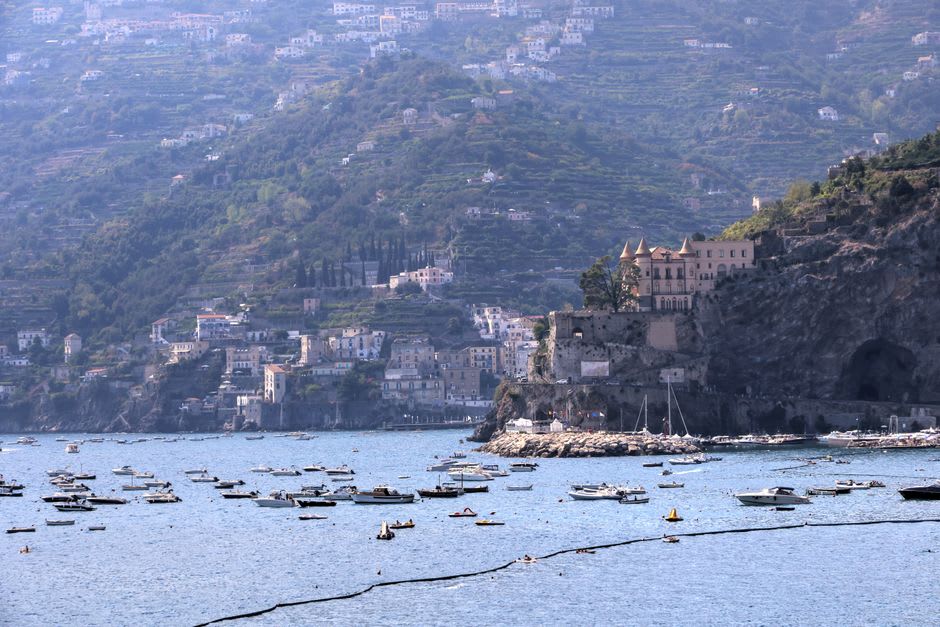
The Cliffs, the Marina, and What’s Underneath
Sorrento’s historic center keeps its original Roman-era street grid, easy to spot once you know to look — long straight roads crossing at right angles, a layout the Romans called Surrentum. Down at the water, Marina Grande is a small, still-working fishing village folded into the base of the cliffs, brightly painted boats pulled up on a narrow shingle beach, trattorias serving whatever came off those same boats that morning. The bigger cliffside terraces of the main town look out from dizzying height over the Bay of Naples, and at sunset the whole scene — Vesuvius, the water, the fishing boats below — turns a color I don’t think I can accurately describe, something between rust and rose. Sorrento was also the birthplace of the poet Torquato Tasso, and the town’s main square, Piazza Tasso, still carries his name and a statue in his honor.
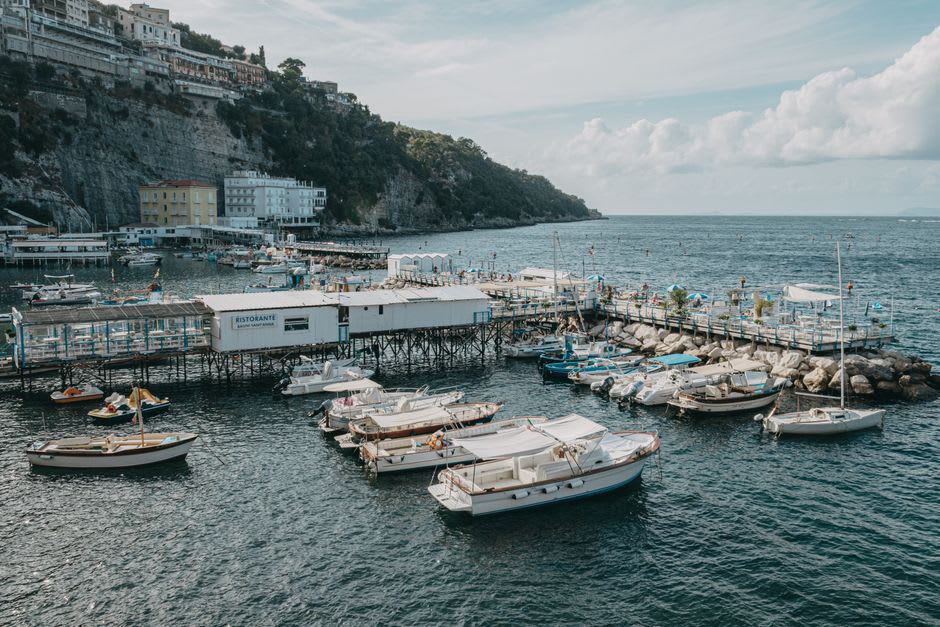
Use Sorrento the way locals actually use it: as a hub. The Circumvesuviana train line connects it to Pompeii and Naples in under an hour, ferries run to Capri in about twenty minutes, and the Amalfi Coast’s blue buses depart regularly for Positano and beyond, sparing you the anxiety of driving that road yourself. But don’t treat the town as just a transit point — the gnocchi alla sorrentina, baked in tomato and mozzarella, and the delizia al limone, a dome-shaped lemon cream cake invented here in the 1970s, are both worth staying an extra night for.
When to go: May, June, or September for warm weather, calmer ferry crossings, and a town that hasn’t been overrun by the full July-August crush of day-trippers heading to Capri.