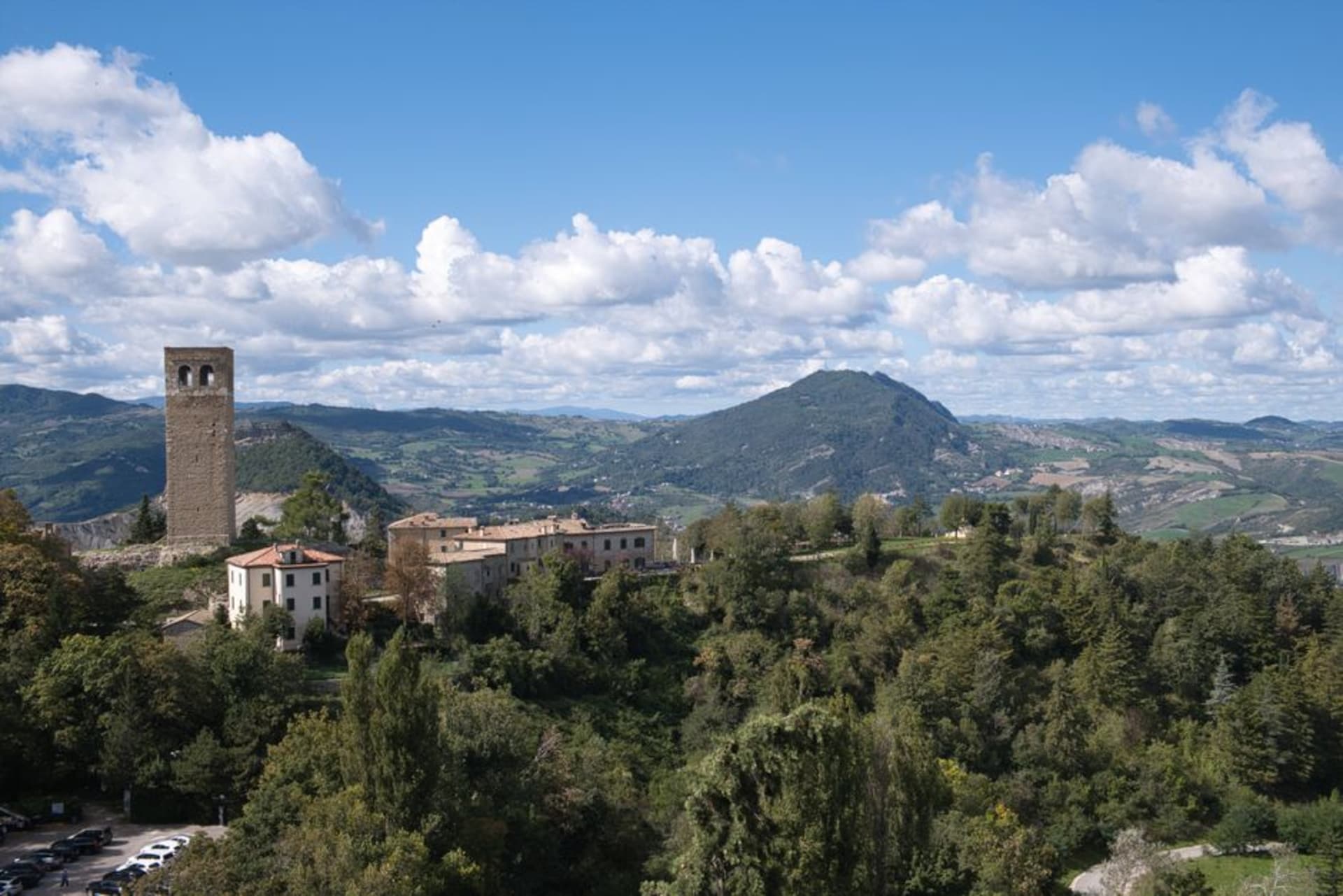
A fortress-town balanced on a sheer rock outcrop, guarding a prison cell that once held the world's most famous conman and a cathedral older than most nations.
I drove up to San Leo not entirely believing the photos, which is a mistake I keep making with Italy and keep being punished for pleasantly. The village sits on top of a nearly vertical limestone spur in the Montefeltro hills, visible from a startling distance, with the Forte di San Leo perched above it like something a fantasy illustrator would reject as too on-the-nose. Machiavelli called it the strongest fortress in Italy, and having climbed the switchback road up to it with my ears popping, I’m not inclined to argue.
The Prisoner in the Rock
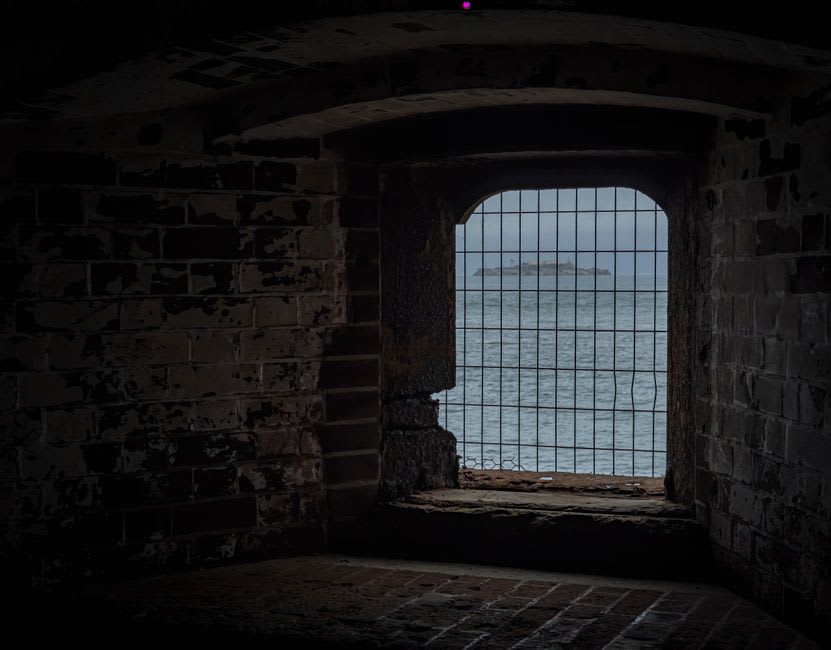
The fortress’s most famous resident wasn’t a soldier but a swindler: Giuseppe Balsamo, known across Europe as Count Cagliostro, the eighteenth-century alchemist, occultist, and grifter who talked his way through the courts of Paris and Saint Petersburg before the Inquisition finally caught up with him. He spent his last four years imprisoned here, in a cell cut into the rock with no door — you were lowered in through a trapdoor in the ceiling, and that was that. Standing in that windowless room, I felt the particular chill of a place built with total confidence that nobody would ever leave it. The fortress later became a prison for ordinary criminals well into the twentieth century, which somehow makes the whole hill feel less like a tourist attraction and more like a place that was, until recently, doing exactly what it looked like it was built to do.
Older Than the Fortress
Below the fortress, the village itself is small enough to walk end to end in twenty minutes, but it holds two extraordinary Romanesque buildings: the ninth-century Pieve di Santa Maria Assunta, built partly from recycled Roman stone, and the twelfth-century Duomo, dedicated to San Leone, the hermit-saint who gave the town its name and is said to have converted the local population in the fourth century. Dante is believed to have taken shelter here during his exile and possibly drew on the town’s vertiginous geography for a passage in Purgatorio — the kind of literary rumor that Italian towns tend to nurture, but standing on the belvedere with the Montefeltro countryside dropping away in every direction, I understood the appeal of the comparison. This is also, not coincidentally, the countryside that gave the world Federico da Montefeltro and, eventually, the Duchy of Urbino just over the ridge.

What I keep coming back to about San Leo is how little it asks of you and how much it gives back. There’s no grand museum circuit, no queue, just a fortress, two ancient churches, a handful of trattorias serving cappelletti in broth, and a view that makes the twenty-minute climb from the car park feel entirely reasonable. I ended up staying far longer than I’d planned, mostly sitting on a wall near the Duomo watching the light change over hills that have looked more or less the same since San Leone first arrived.
When to go: Spring and early autumn give the clearest views over the Montefeltro without summer haze; avoid winter weekdays, when much of the village effectively closes and you’ll be sharing the fortress with the wind.