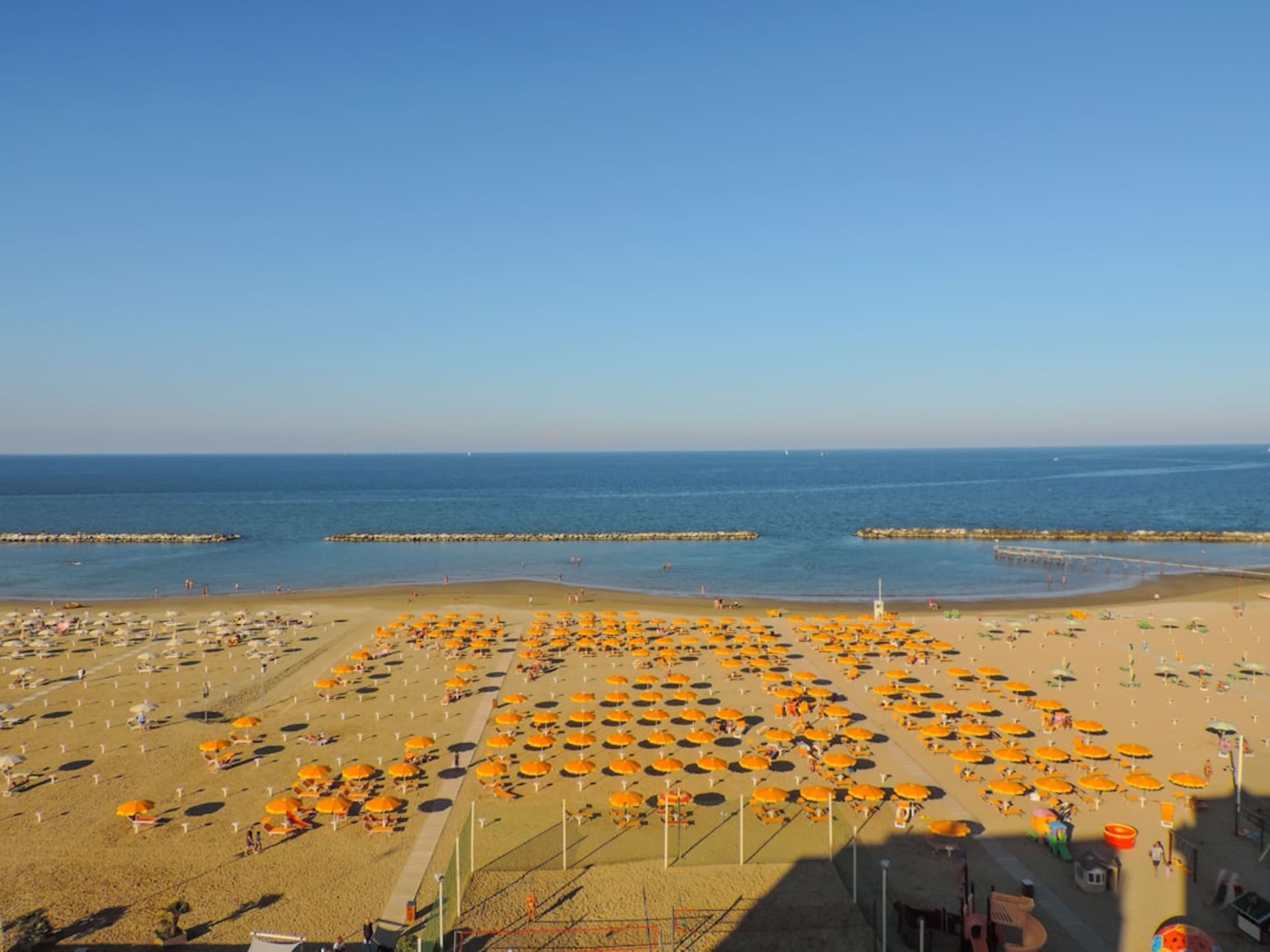
Fellini's hometown, where a Roman arch and a Renaissance temple built for a mistress sit two blocks from Italy's most unapologetic beach strip.
I’ll admit my expectations for Rimini were low — I’d heard “beach resort” and pictured wall-to-wall sunbeds and not much else. What I hadn’t accounted for was that Rimini has been continuously inhabited since the Romans founded it as Ariminum in 268 BC, at the point where the Via Flaminia met the Via Emilia, and that history hasn’t gone anywhere; it’s just standing quietly a few streets back from the umbrellas.
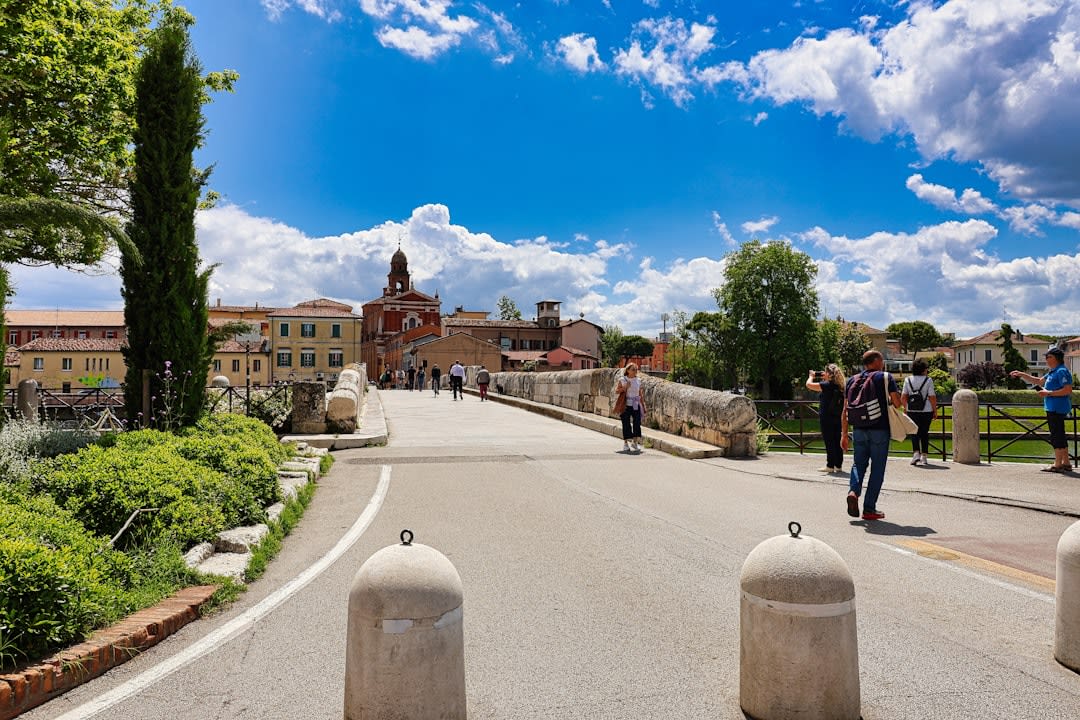
The Ponte di Tiberio, a five-arched bridge of Istrian stone begun under Augustus and finished under Tiberius around 21 AD, still carries foot and vehicle traffic across the Marecchia river two thousand years later — no small feat of Roman engineering, and remarkably it survived Allied bombing in WWII when much of the rest of the city didn’t. A short walk away, the Arco d’Augusto is the oldest surviving Roman triumphal arch in northern Italy, built in 27 BC to mark the completion of the Via Flaminia. I stood under it at dusk while scooters buzzed past on either side and thought about how casually Italians live alongside two-thousand-year-old monuments — no velvet rope, no ticket booth, just an arch you drive through on your way home.
The Temple Built for a Mistress
The strangest, most compelling building in Rimini is the Tempio Malatestiano, nominally the city’s cathedral but really a Renaissance vanity project. Sigismondo Pandolfo Malatesta, Rimini’s ruthless 15th-century lord, had architect Leon Battista Alberti wrap a Gothic church in a radical new classical shell, intending it as a shrine to himself and his mistress (later wife) Isotta degli Atti — their intertwined initials are carved throughout the interior. The pope was so offended he had Sigismondo symbolically “damned” in effigy. It remains unfinished, Alberti’s facade abruptly stopping partway up, and somehow that incompleteness makes it more affecting, not less.
Fellini’s Beach
Federico Fellini was born here in 1920, and Rimini’s beach — flat, endless, lined with rows of striped umbrellas and beach clubs called bagni — clearly shaped the dreamlike, slightly absurd visual language of his films. There’s now a Fellini museum spread across the old Castel Sismondo and the Fulgor cinema where he watched movies as a boy. Walking the beachfront promenade at sunset, past families still finishing gelato and old men playing cards outside the bagni, I understood better why his films look the way they do — Rimini has a specific, sun-bleached, carnival melancholy that’s hard to describe until you’ve stood in it.
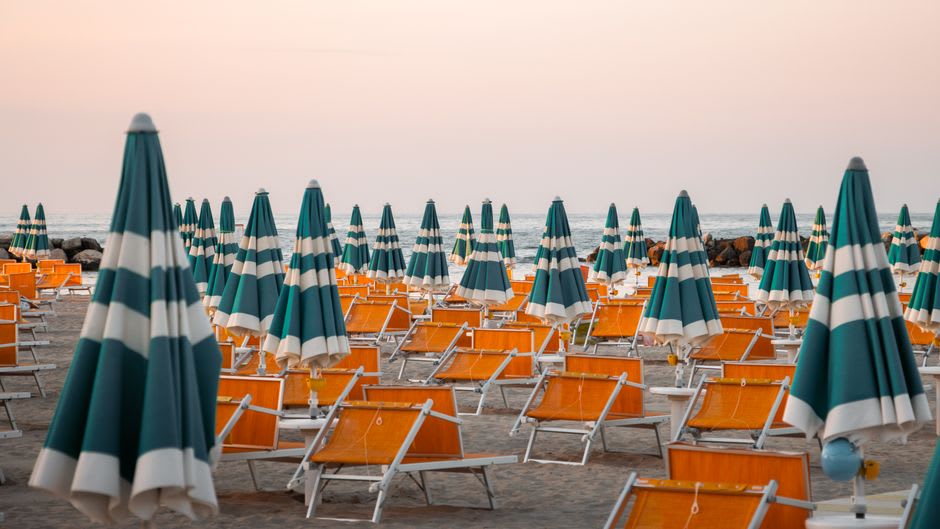
When to go: June or September for warm sea and thinner crowds — August is when all of Italy descends on the Riviera Romagnola, and the beach clubs fill shoulder to shoulder.