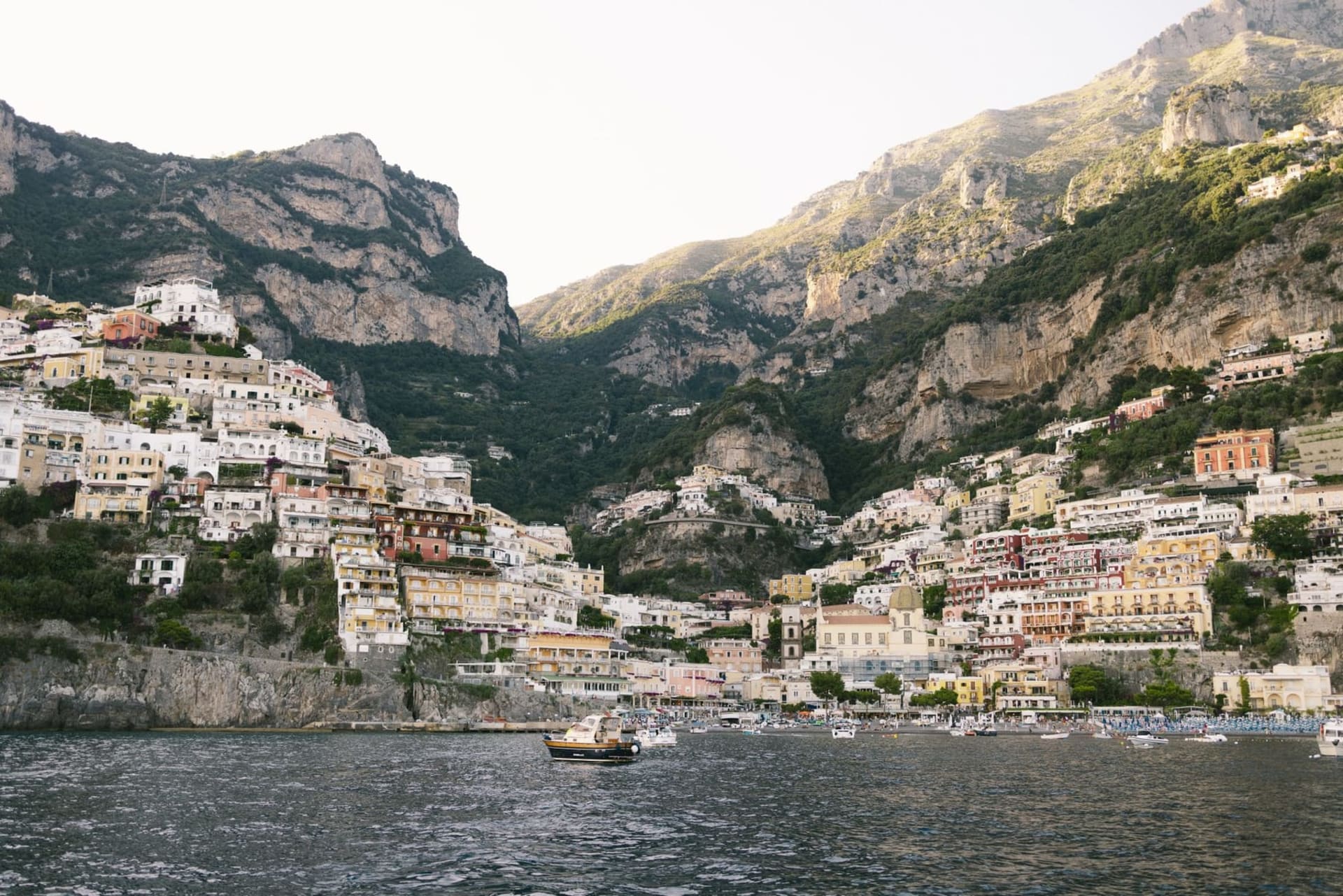
The most vertically dramatic village on the Amalfi Coast — all pastel terraces, bougainvillea, lemon groves, and staircases that double as streets.
I had been warned about Positano. Everyone had been warned about Positano. Too expensive, too crowded, too photographed — the kind of place that exists more as a screensaver than a real village. What no one warned me was how quickly it would undo that cynicism, somewhere between the first set of stairs and the smell of lemon rind hitting warm stone.
The Geometry of the Village
Positano is essentially a cliff that someone decided to live on. Via Cristoforo Colombo zigzags down from the coastal road in a series of ramps and stairs so steep that mopeds sound genuinely aggrieved climbing them. By the second morning, Lia and I had stopped counting steps and started thinking in terms of altitude gain — up to the Frazione Montepertuso for coffee, down to the Spiaggia Grande for afternoon light, back up through the tangle of ceramic-tiled stairways that pass for residential streets in the upper quarter.
The verticality means the village never quite shows you its whole face. Every turn reveals another terrace draped in bougainvillea, another glimpse of the Faraglioni di Positano rising from the sea, another cat asleep on a warm wall. You never arrive — you just keep discovering.
What I Didn’t Expect to Find
The unexpected thing about Positano is that it functions. Beneath the ceramics shops and the linen boutiques, there is an actual village — old men playing cards at Bar Internazionale, fishermen still launching boats from the northern end of the beach before the tourist crowds arrive. One morning I wandered past the Chiesa di Santa Maria Assunta just as Mass was ending, and watched the congregation spill out into the narrow Via dei Mulini: grandmothers in black, a priest mopping his forehead, a boy kicking a bottle cap down the alley. The Madonna with the Black Face inside the church dates to the thirteenth century. Most visitors walk past without going in.
The Table and the Plate
I ate spaghetti alle vongole at a restaurant with six tables crammed onto a terrace above the beach. I ate it again two days later. The clams were local, the pasta was hand-cut, and the white wine from the Furore vineyards up the coast had the particular mineral quality that comes from grapes grown on volcanic terracing. I ordered sfogliatella for breakfast every single morning from a bakery on Via Rampa Teglia. There are worse ways to spend a week.
When to go: May and early June hit the ideal window — warm enough to swim, before the August crowds make the stairways feel like rush hour. Late September offers the same light with noticeably thinner crowds and cooler evenings on the terraces.