Pisa
"A city that spent eight centuries listing sideways and somehow never fell over — literally or otherwise."
Everyone comes for the tilt and leaves remembering the marble — a city that got typecast by its own architectural accident.
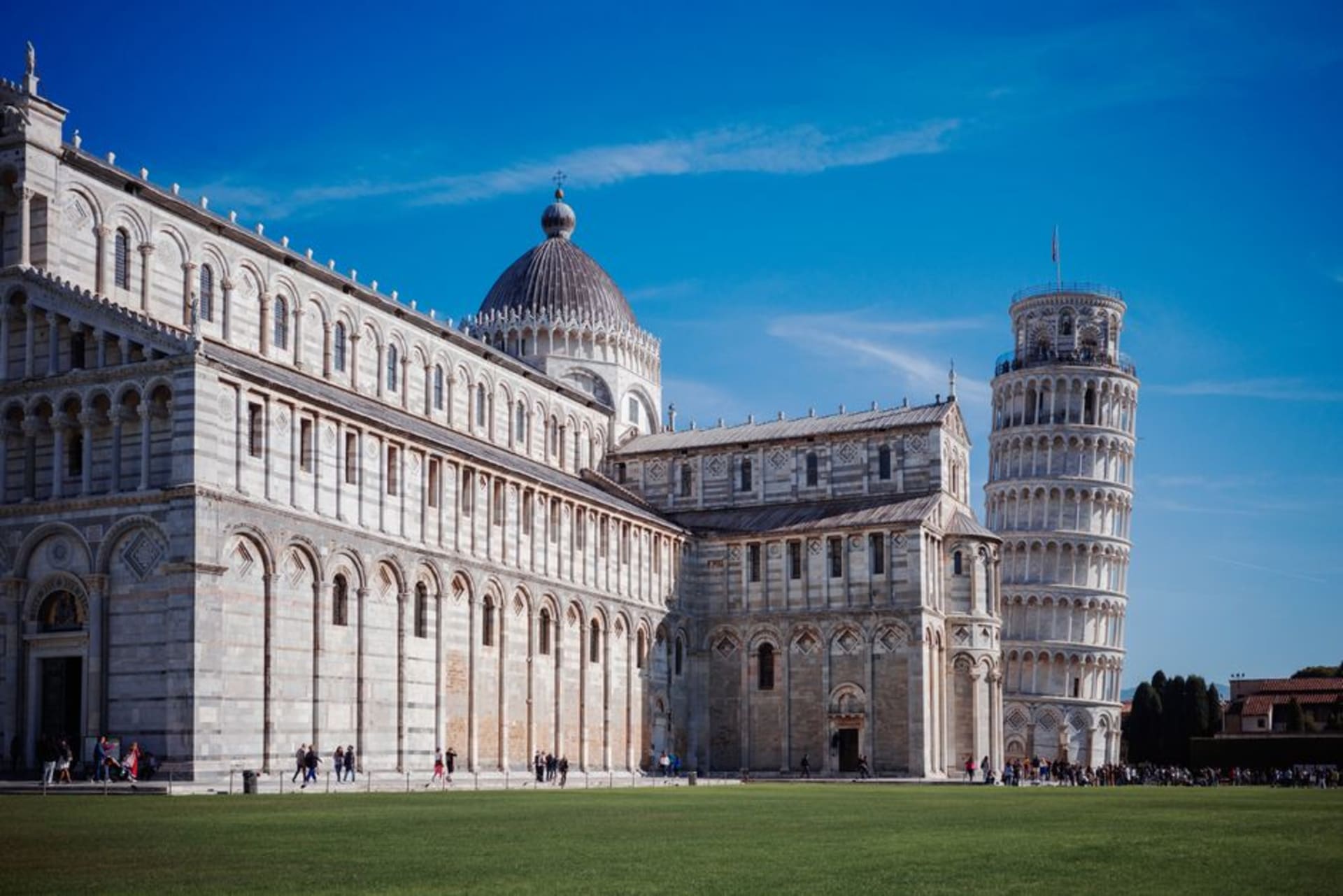
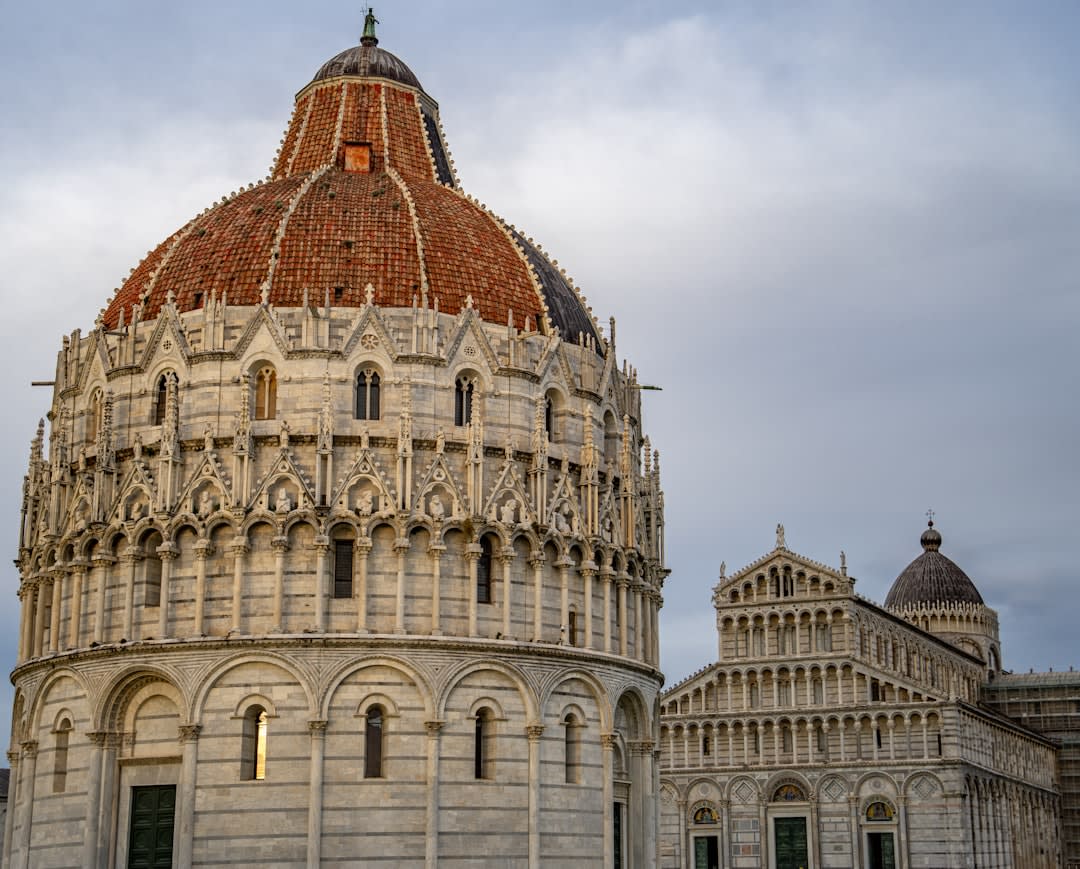
I’ll admit I went to Pisa expecting to roll my eyes. The postcard shot — tourists lined up pretending to push the tower back upright — felt like exactly the kind of thing I’d usually avoid. Then I stood on the grass of the Campo dei Miracoli, the Field of Miracles, and understood why people have been making the pilgrimage for nine hundred years. It isn’t just the lean. It’s that the tower sits alongside a cathedral and a baptistery so luminously white, so improbably harmonious, that the whole ensemble reads like a single sculpture rather than three separate buildings started a century apart.
The tower itself began tilting almost immediately after construction started in 1173 — the soft, unstable subsoil of this old riverbed couldn’t bear the weight evenly, and by the time builders reached the third story the lean was already visible. What followed is one of history’s great examples of architectural stubbornness: work stopped for nearly a century (lucky timing, since the pause let the ground settle), then resumed with each new floor angled slightly to compensate, which is why the tower is subtly banana-shaped if you look closely rather than a straight line tilted from the base. Engineers in the 1990s finally stabilized it by removing soil from the north side, correcting the tilt by about 40 centimeters — enough to save it without erasing the personality that makes it famous.
Beyond the Tilt
What surprised me most was how little of Pisa most visitors actually see. The Campo dei Miracoli sits at the edge of the historic center, and the tour buses tend to disgorge, snap photos, and leave within the hour. But walk fifteen minutes south along the Arno and you’re in a real university city — Pisa’s university, founded in 1343, is one of Italy’s oldest, and Galileo Galilei taught mathematics here before the tower’s tilt reportedly inspired his (probably apocryphal) gravity experiments dropping objects from its top. Student life keeps the center genuinely lived-in rather than embalmed for tourism: cheap wine bars, secondhand bookshops, bicycles chained three-deep along the riverbanks.
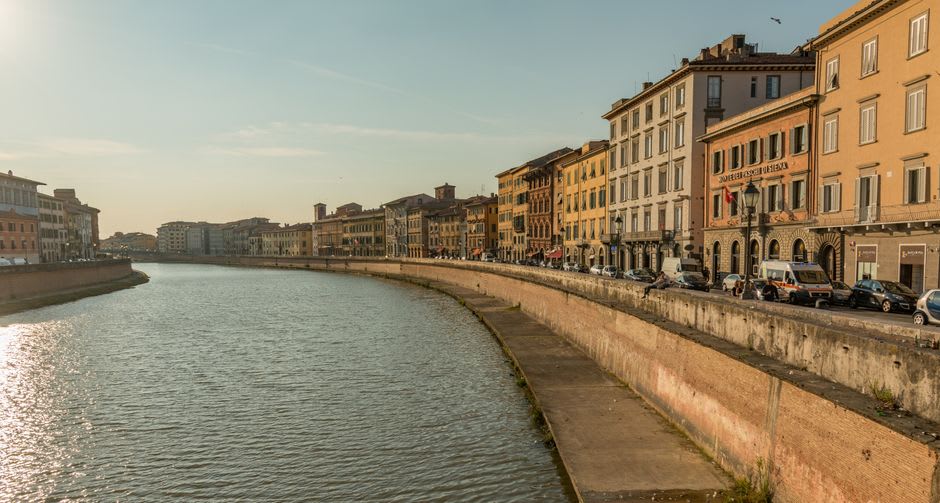
The Arno itself cuts the city in two, lined with pastel palazzi that catch the evening light in a way that reminded me, oddly, of a quieter Florence — Pisa was once its rival, a maritime republic powerful enough to fund all that marble on the strength of trade with the eastern Mediterranean before the harbor silted up and the city’s fortunes faded. Santa Maria della Spina, a tiny Gothic chapel perched right on the riverbank, looks like a jewel box dropped by accident along the water — spend five minutes there and you’ll understand Pisan Gothic better than any guidebook paragraph could explain it.
When to go: April, May, or late September, when the Campo dei Miracoli is walkable without shoulder-to-shoulder crowds and the light on the marble is at its best in early morning or just before sunset.