
Pienza
"Most utopias stay on paper. Pienza is the rare one you can actually walk through in twenty minutes."
A pope decided in 1459 that his hometown should become the ideal Renaissance city, and somehow, astonishingly, it happened.
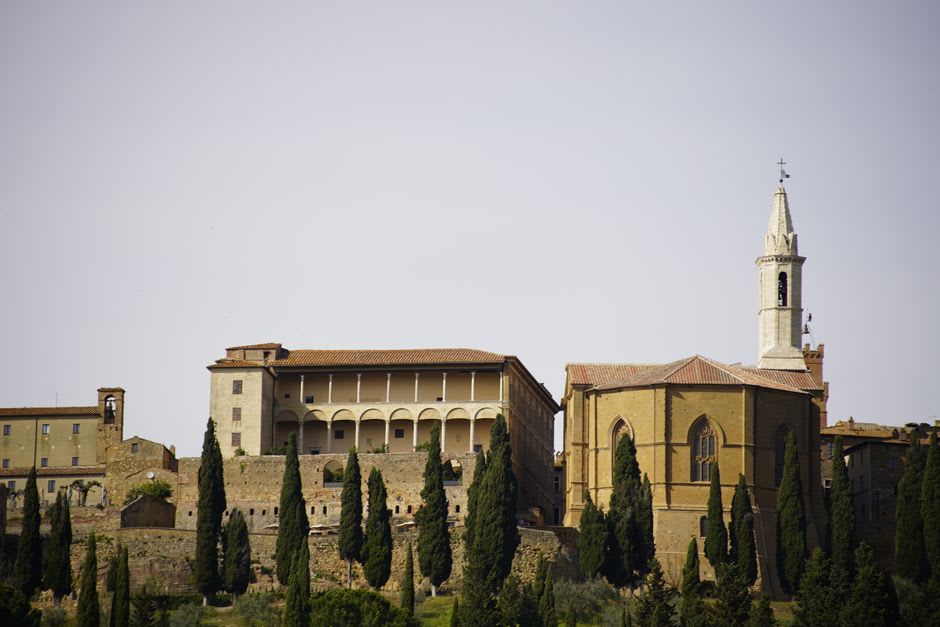
Pienza is small enough that you can cross the entire historic center on foot in the time it takes to finish an espresso, and that scale is precisely the point. In 1459, Pope Pius II — born Enea Silvio Piccolomini in this same small hamlet, then called Corsignano — decided to rebuild his birthplace as a model Renaissance town, a physical demonstration of humanist ideals about harmony, proportion, and civic beauty. He hired the architect Bernardo Rossellino, a student of Leon Battista Alberti, and gave him roughly three years and a tight budget to remake the town center from scratch. What resulted, the Piazza Pio II, is often cited as the first deliberately planned example of Renaissance urban design in Europe — not a city that evolved organically over centuries, but one composed all at once, like a piece of architecture at the scale of an entire piazza.
Standing in that square, you can feel the intention in every angle. The cathedral, the Palazzo Piccolomini, the Palazzo Vescovile, and the town hall are arranged in a deliberate trapezoid rather than a simple rectangle, a trick of perspective that makes the piazza feel larger and the cathedral facade more commanding than its actual modest size would suggest. The Palazzo Piccolomini’s rear loggia frames the Val d’Orcia through three arched openings like a permanently mounted painting — Pius II reportedly designed the garden and view specifically so that nature itself became part of the architectural composition, a very humanist idea: that the wild countryside and the ordered city should be in visible conversation with each other.
The Cheese Town
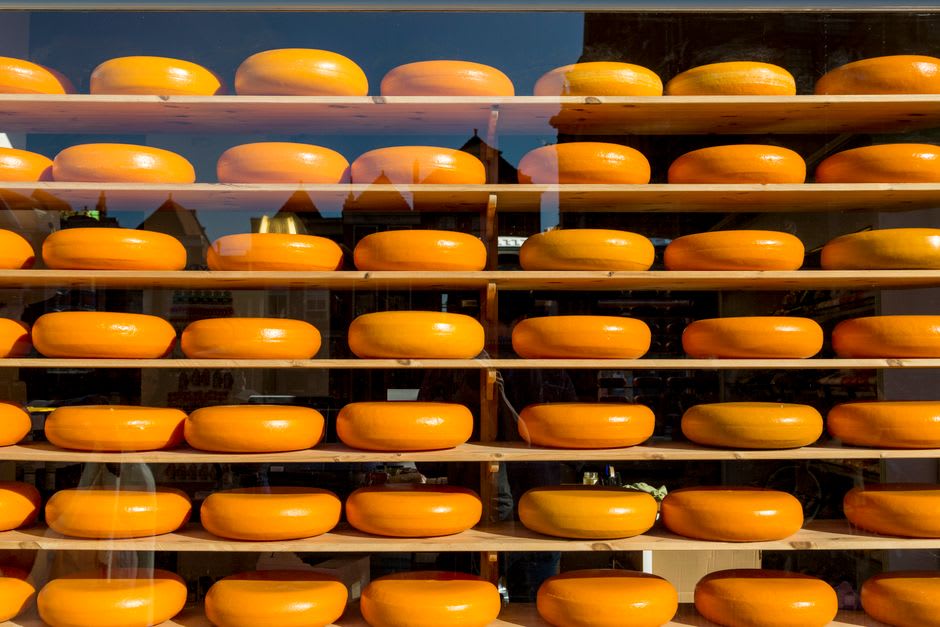
Pienza’s other identity, considerably less lofty than papal urban planning, is pecorino. The hills around town have grazed sheep for centuries, and Pienza’s pecorino — aged in everything from straw to walnut leaves to volcanic ash, depending on the producer — has a devoted following well beyond Tuscany. Wander the main street and nearly every other shopfront is a formaggeria with wheels of cheese stacked in the window at every stage of aging, from fresh and mild to the aged, crumbly, almost parmesan-like versions that pair with the local honey or a drizzle of chestnut miele. I bought more cheese than I could reasonably carry and don’t regret a gram of it.
Walk the short ring path along the town’s southern walls — Pienza never grew large enough to need extensive fortifications, so this stroll takes maybe ten minutes — and the Val d’Orcia opens up below in the same cypress-and-wheat panorama that made this valley a UNESCO World Heritage site. It’s the kind of view that photographs well but somehow always undersells the real thing: the light shifting across the hills, the small farmhouses scattered at improbable distances, the sense of a landscape that has looked essentially like this since Pius II first stood there and decided it deserved a city built to match.
When to go: September for the Fiera del Cacio cheese festival, or late spring when the Val d’Orcia’s wheat fields are green rather than the parched gold of high summer.