Parma
"Parma feeds you before it tries to impress you, and somehow both things land harder for it."
A city so confident in its ham and cheese that it barely bothers mentioning it also gave the world Verdi and one of Correggio's greatest domes.
Emilia-Romagna is Italy’s food valley, and Parma is arguably its capital, a claim it backs up with two products protected by law and geography: Prosciutto di Parma, cured in the hills south of the city where a particular breeze off the Apennines does the work no factory can replicate, and Parmigiano Reggiano, the real thing, aged in wheel-lined warehouses for a minimum of twelve months and often twenty-four or more, its rind stamped with its birthplace like a passport. I toured a caseificio outside town on a cold morning, watched cheesemakers hand-cut curds with a tool called a spino that hasn’t changed shape in centuries, and ate a sliver of thirty-month Parmigiano so different from the pre-grated stuff in a green can that it felt dishonest they share a name. This is food taken as seriously as any cathedral, and Parma has one of those too.
Correggio’s Trick of the Eye
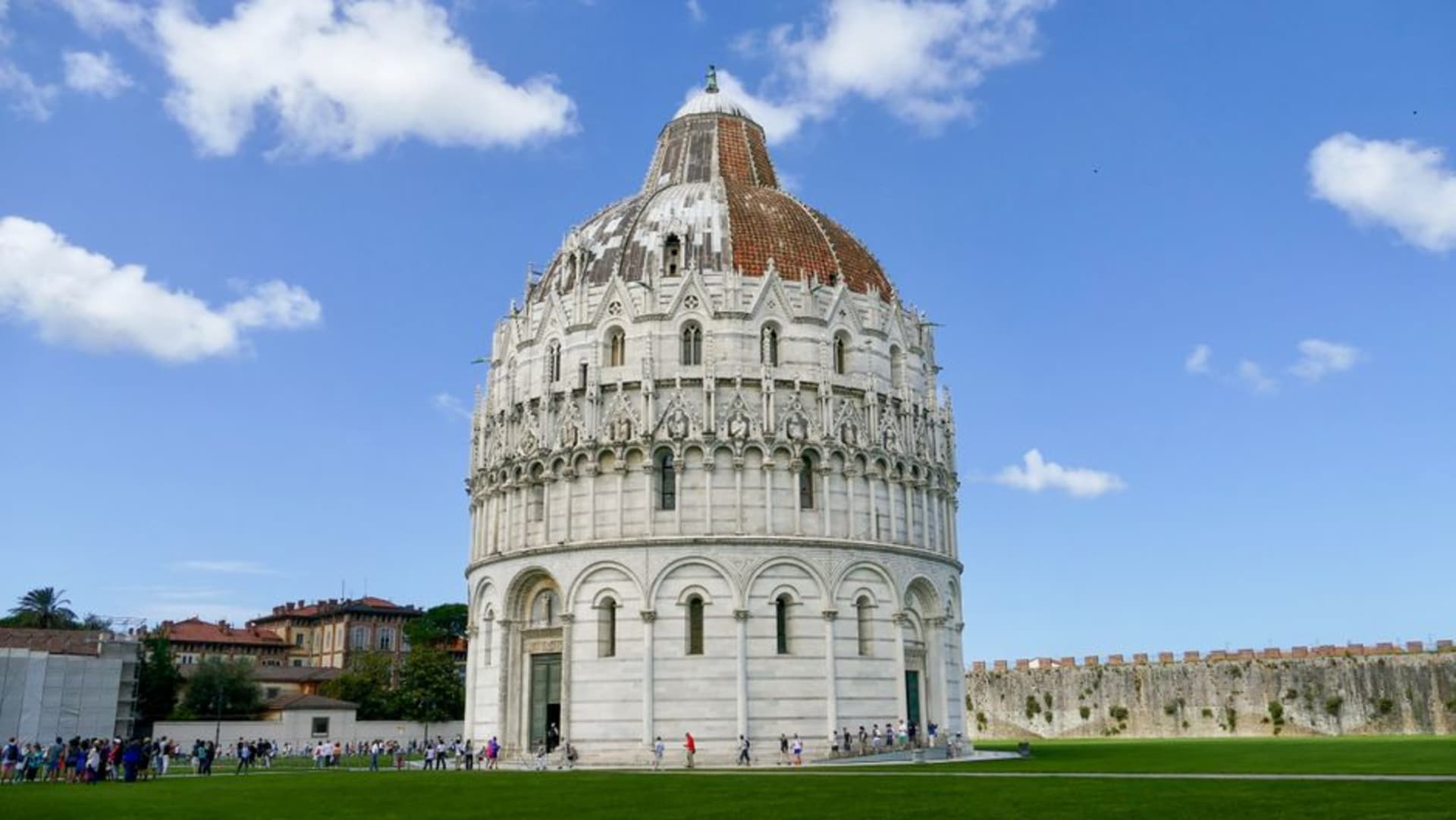
Speaking of cathedrals: the Duomo di Parma, consecrated in the twelfth century, is a fairly standard Romanesque affair from the outside, all pink Verona marble and a leaning campanile. Then you walk in, look straight up into the dome, and Correggio has painted the Assumption of the Virgin as a swirling vortex of limbs and clouds and ascending saints, one of the earliest and most audacious examples of illusionistic ceiling painting in Western art — a technique called sotto in sù, “seen from below,” that would go on to influence Baroque ceiling painters for the next two centuries. Vasari reportedly said it looked like a “stew of frogs’ legs” when he first saw it, which tells you more about sixteenth-century taste than about the painting, because four hundred years later it still makes people’s necks crane and their mouths open involuntarily. The adjacent Baptistery, a pink-and-white octagon by Benedetto Antelami, is a masterpiece of its own that gets unfairly overshadowed by its neighbor.

Verdi’s City
Giuseppe Verdi was born just outside Parma, in the hamlet of Roncole, and the entire province treats him less as a historical figure than as a beloved and slightly demanding relative. The Teatro Regio, Parma’s opera house, hosts an audience famously considered the harshest and most knowledgeable in Italy — loggionisti in the upper gallery who will boo a flat note without mercy, a tradition that terrifies visiting singers and delights everyone else. I didn’t catch a performance, but I did wander the elegant streets around Piazza Garibaldi at aperitivo hour, glass of Lambrusco in hand — properly dry and fizzy, nothing like the sweet export version — and felt the particular Emilian confidence of a place that knows exactly how good it has it and doesn’t need to raise its voice about it.

When to go: September and October, when the new Parmigiano wheels are being pressed, the ham cellars are at full production, and Verdi Festival performances still run at the Teatro Regio before the winter opera season proper begins.