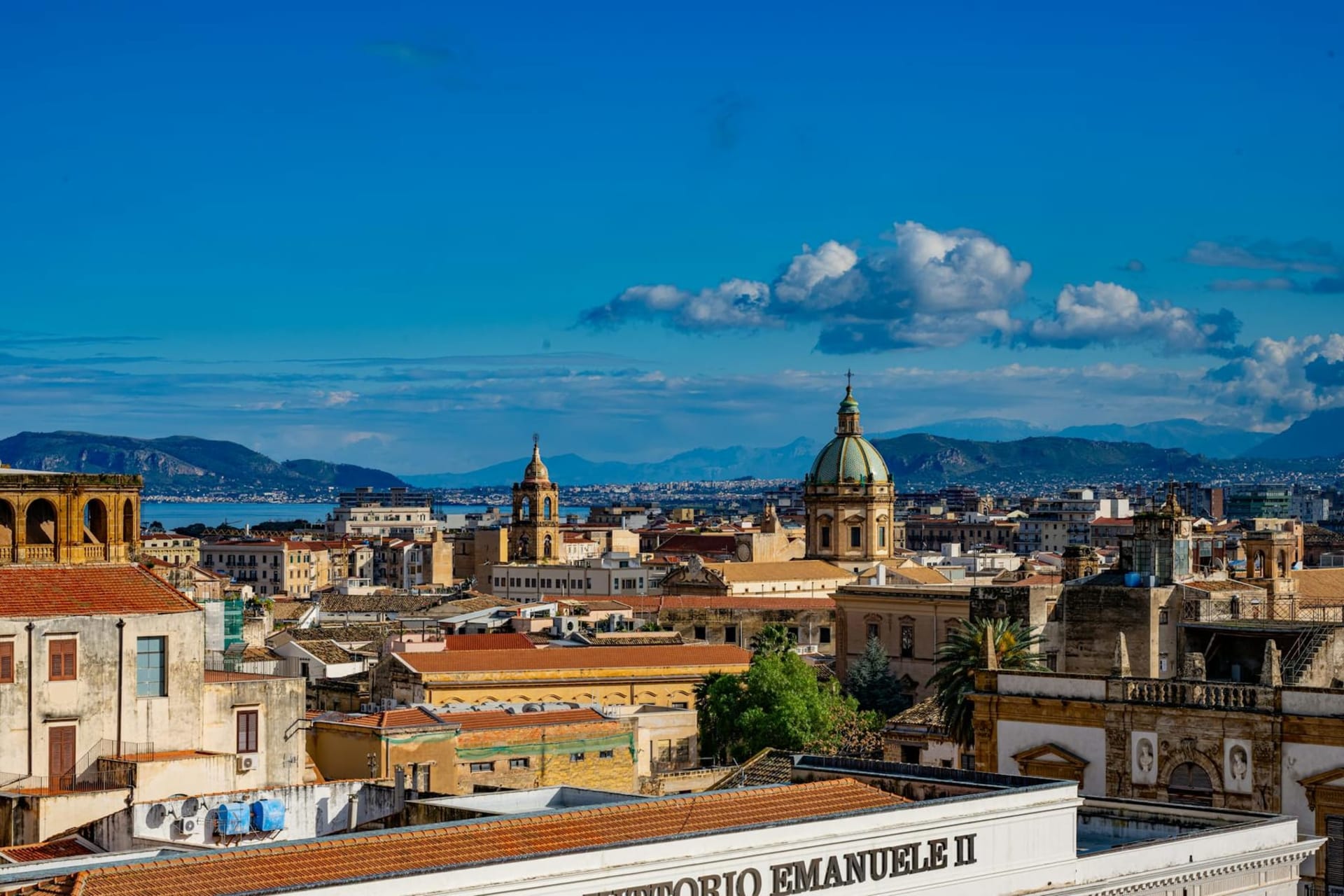
Palermo
"Palermo is where every civilization that ever conquered Sicily left its best recipe."
Sicily's chaotic, sensory capital where Arab-Norman churches stand beside street markets that smell of spices, saffron, and grilled swordfish.
I came to Palermo expecting architecture. I stayed for the food, and left slightly overwhelmed by both.
The city announces itself through smell before anything else. Walking into the Ballarò market on our first morning, Lia grabbed my arm and stopped mid-stride — not from danger, but from the sheer density of it: cumin and coriander from the spice stalls, charcoal smoke from the stigghiola vendor grilling lamb intestines over an open flame, the cold salt-and-iodine hit off the crushed ice piled beneath swordfish steaks the size of my forearm. Ballarò has been a market since the Arab occupation of the ninth century, and it still carries that weight — vendors shouting in a dialect so thick with Arabic and Norman and Spanish that Italian itself sounds like a guest language.
Arab-Norman Light
The thing no guidebook prepares you for is how the Cappella Palatina makes you feel. I had seen photographs. I thought I understood. But standing inside Roger II’s private chapel, under a ceiling of honeycomb muqarnas carved by Fatimid craftsmen and surrounded by Byzantine mosaics shimmering in candlelight, I felt the ground shift slightly beneath my sense of European history. This was built in 1132, when Palermo was likely the most cosmopolitan city in the Western world — Arab architects, Greek mosaicists, Norman kings, all working in the same room. The gold tesserae catch the light differently at different hours; we went back twice.
The Unexpected Pastry
The surprise came on Via Maqueda, late afternoon, when I ducked into a pasticceria almost at random to escape the heat. I ordered what I thought was a plain brioche. It arrived filled with gelato — pistachio, dense and electric green — and the combination of warm bread and cold cream in the heavy Sicilian afternoon was so specific and so right that I stood there eating it on the pavement, unable to move. Lia found me like that five minutes later and ordered the same thing without a word of explanation needed.
We ate arancine at the Focacceria San Francesco, pasta con le sarde at a no-name trattoria off Piazza Kalsa, and cassata from a nun’s convent near the Oratorio del Rosario. Every dish tasted like a layer of the city’s history made edible — saffron from the Arabs, pine nuts from the Greeks, lard from the Normans.
When to go: April through June, before the summer heat turns the city into a slow oven. October is also beautiful — the light goes amber and the tourist crowds thin out to something manageable.