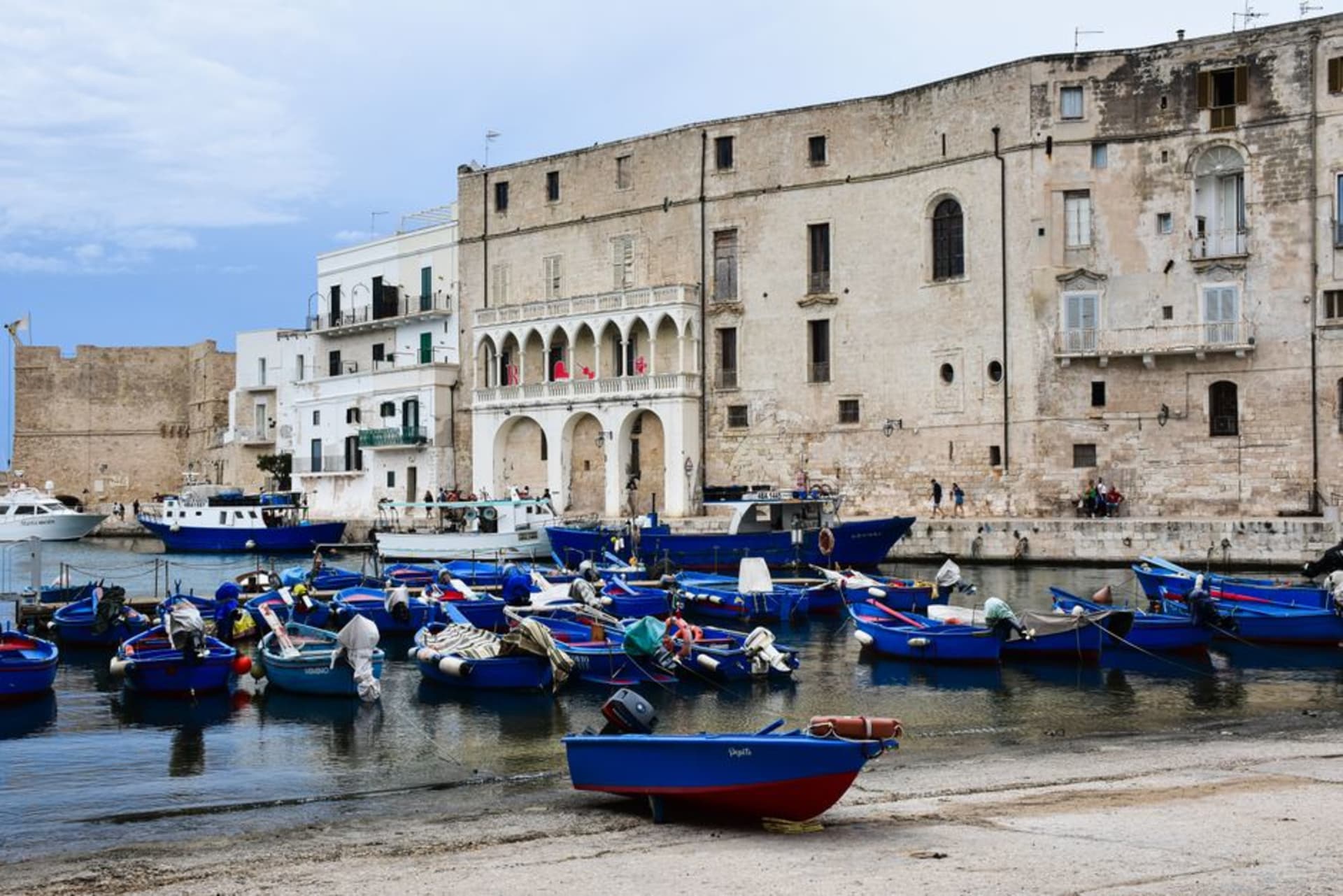
Otranto
"I stood on the ramparts at dawn looking east and realized I was as close to Greece as I was to Rome — Otranto has always been a hinge, not an edge."
Otranto sits at the easternmost edge of Italy, close enough to Albania that on a clear day you can see the mountains across the strait — a border town in every sense, layered with Greek, Byzantine, and Ottoman history and fronted by some of the bluest water in the Adriatic.
Otranto is the closest point in mainland Italy to the Balkans, and it feels it. The strait here narrows to under 100 kilometers, and for centuries that proximity made this small port town one of Italy’s most fought-over gateways — Greek colony, Byzantine stronghold, and site of a brutal 1480 Ottoman siege that ended with the martyrdom of hundreds of townspeople who refused to convert, later canonized as the Martyrs of Otranto. Their bones are still kept in the Cattedrale di Santa Maria Annunziata, stacked in glass-fronted cases behind the altar, which is a genuinely sobering thing to encounter after walking in off a sunny piazza expecting only architecture. The cathedral’s real showpiece, though, is underfoot: a twelfth-century mosaic floor, one continuous narrative stretching the length of the nave, depicting the Tree of Life alongside King Arthur, biblical scenes, zodiac signs, and assorted beasts in a style that looks almost folk-art naive and completely unlike anything else I’ve seen in an Italian church.
Between Castle Walls and Open Water
The Castello Aragonese anchors the old town’s edge, a formidable pentagon of stone built and rebuilt across the Byzantine, Angevin, and Aragonese periods specifically because Otranto kept needing to be defended. I walked the ramparts early one morning before the heat set in, the sea a hard, saturated blue below and fishing boats just heading out, and it was easy to understand why this particular stretch of coast needed fortifying generation after generation — whoever controlled Otranto controlled the shortest crossing between Italy and the Balkans. Inside the walls, the old town is a tight knot of white and pale stone streets selling cartapesta figures, local ceramics, and taralli from shopfronts that have clearly been doing this a long time, without the overproduced gloss that creeps into some of Puglia’s more Instagrammed towns.
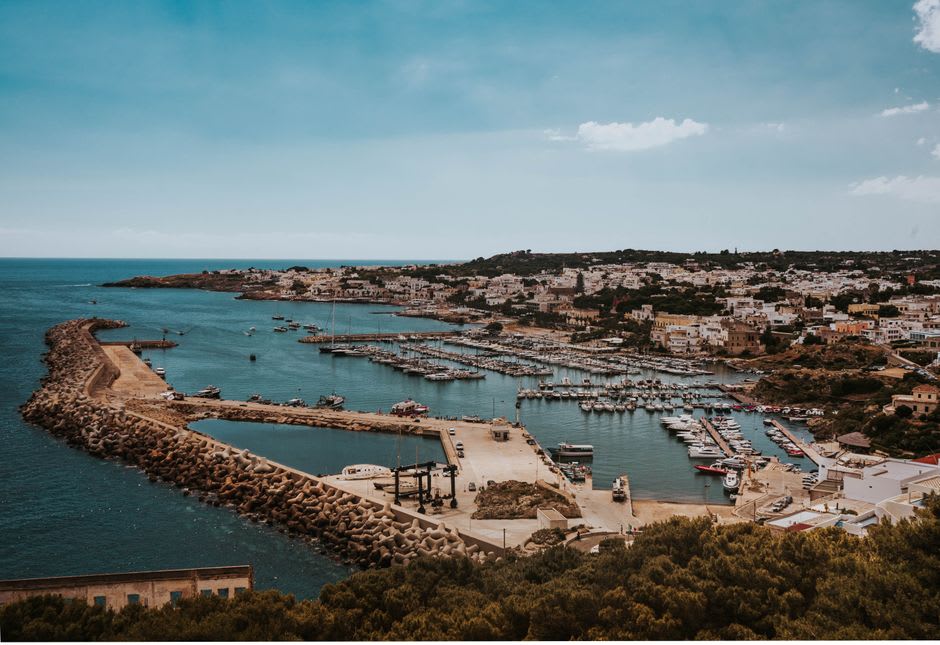
The Bay and the Baia dei Turchi
South of town, the coastline turns genuinely spectacular. The Baia dei Turchi — named, grimly, for the 1480 Ottoman landing — is a curved bay of pale sand backed by pine forest, the water running through shades of turquoise and green that seem physically implausible until you’re actually standing in them. I swam there for most of an afternoon and then walked the coastal path north back toward town, past the Torre del Serpe watchtower and a run of small rocky coves where locals were free-diving off the ledges without much ceremony. The whole stretch of coast from Otranto down through the Baia delle Orte feels less developed than Puglia’s Adriatic towns further north, quieter, with fewer beach clubs and more actual pine forest coming right down to the rock.

When to go: Late June and September offer warm sea and full sun without August’s peak crowds; come at sunrise for the ramparts and cathedral before the day-trippers arrive from Lecce.