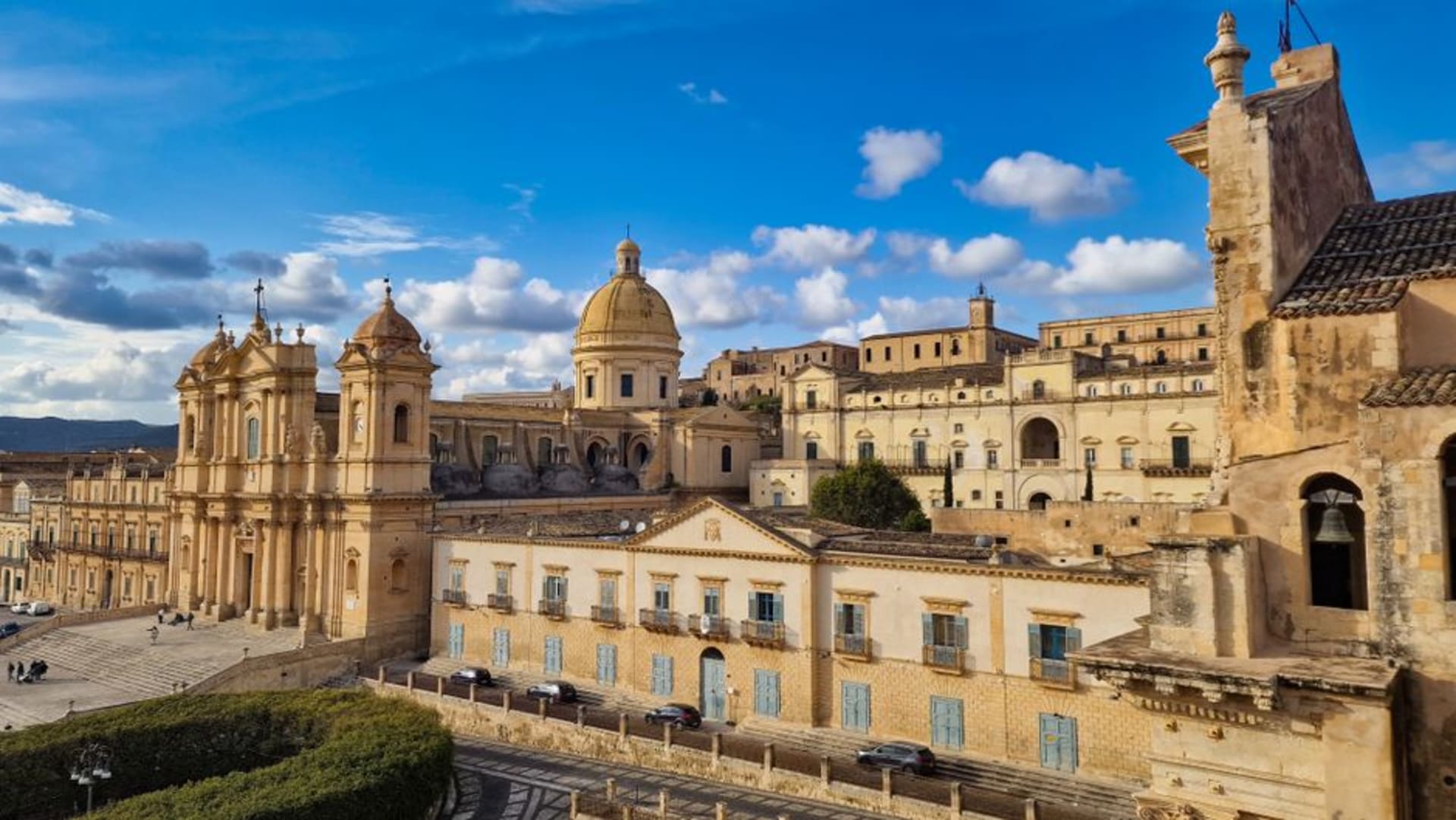
A Baroque city built from scratch after an earthquake, and somehow the disaster produced the most beautiful stone in Sicily.
Noto exists because the old Noto — Noto Antica, up in the hills — was flattened by the catastrophic earthquake of 1693, the one that leveled much of southeastern Sicily in a matter of minutes. What followed was one of the more remarkable urban planning exercises in European history: architects and nobles rebuilt the town from nothing on a new site, all at once, in the full flush of Sicilian Baroque style, using a local limestone that turns honey-gold and almost pink when the late afternoon sun hits it. The result is a city that looks less like it evolved over centuries and more like it was designed as a single, unified stage set — because in a sense, it was.
I walked up Corso Vittorio Emanuele, the main axis of the town, on my first evening there, and understood immediately why photographers chase this street at golden hour. Palazzo after palazzo unfolds in matching stone, balconies held up by grotesque carved figures — grimacing faces, lions, cherubs — that the Baroque masons used as a kind of architectural punctuation. The Cattedrale di San Nicolò anchors the top of a wide staircase that has become the town’s unofficial living room, locals and tourists alike sitting on the steps as the stone shifts through shades of amber into dusk.
The Palaces and Their Balconies
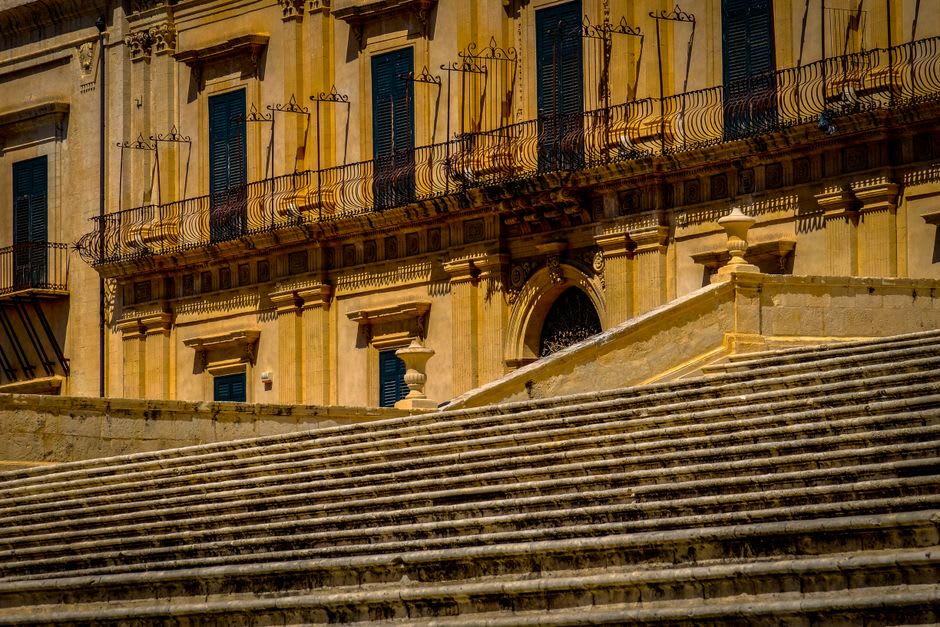
Noto’s real texture is in the details rather than the monuments alone. Palazzo Nicolaci di Villadorata has the most famous balconies in Sicily — six of them along Via Corrado Nicolaci, each supported by a different grotesque figure carved with almost comic exuberance. I spent longer than I meant to just standing in the street craning my neck at them, and I wasn’t alone; a small crowd does this daily, cameras tilted upward, necks at odd angles. Every May the street becomes the runway for the Infiorata, when it’s carpeted in elaborate flower-petal designs — an event Pierre would tell you to plan a trip around if the dates align, because the combination of Baroque stone and thousands of fresh petals is unlike anything else on the island.
Slower Streets
Duck off the Corso and Noto gets quieter fast. The Chiesa di San Carlo lets you climb its bell tower for a rooftop view over the whole theatrical ensemble of domes and facades, all in that same warm stone, which from above reads like a single continuous composition rather than a collection of separate buildings. Down at street level, the granita here — almond, or mulberry in season — served with a soft brioche for breakfast, is a proper Sicilian institution, and I fell into the local habit fast: espresso in the afternoon, granita in the morning, which sounds backwards until you’ve tried it in thirty-five degree heat.
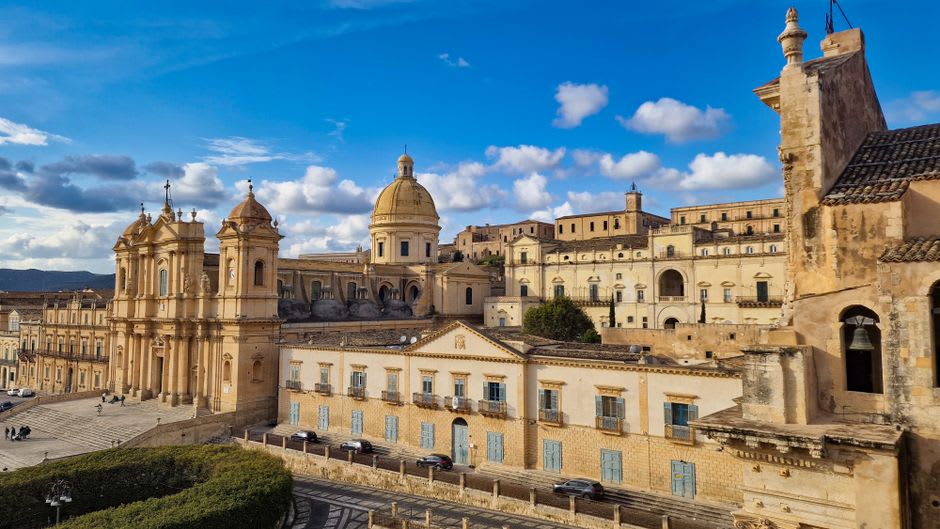
What stays with me about Noto isn’t any single building but the coherence of the whole — a town that had every reason to rebuild cheaply and quickly after disaster, and instead chose to make something unified and grand. UNESCO recognized as much when it listed the town, along with the other Val di Noto towns, as a World Heritage Site in 2002. Wander the surrounding countryside a little too, if you can — the baroque towns of Modica and Scicli share the same DNA, rebuilt by the same generation after the same earthquake, each with its own inflection on the style.
When to go: Third weekend of May for the Infiorata flower festival, otherwise September and October for warm days, cooler evenings, and stone that photographs best without the peak-summer haze.