Montepulciano
"I came for the Vino Nobile and stayed because the whole town turned out to be built on top of it."
A ridge-top town built almost entirely of wine cellars with a city stacked on top, and I mean that literally.
Montepulciano sits along a narrow limestone ridge at over 600 meters, the highest of the great Tuscan hill towns, and the climb up from the parking areas at the base tells you everything about why it exists where it does — this was defensible high ground fought over for centuries by Florence and Siena, changing hands more than once before Florence finally secured it for good in the sixteenth century. But the real story of Montepulciano isn’t military, it’s underground. The entire town is honeycombed with cantine, wine cellars carved into the tufa rock beneath the streets, some of them Etruscan or Roman in origin and repurposed for centuries of continuous winemaking. Walking the main street, the Corso, you pass shopfront after shopfront that’s really just the entrance to a cave system extending back under the buildings, racks of aging Vino Nobile disappearing into the dark.
Vino Nobile di Montepulciano earned Italy’s first DOCG designation in 1980, the country’s highest wine classification, and the Sangiovese-based reds here have a history that predates the appellation by centuries — Renaissance-era poets were already praising the local wine as “nobile,” a wine fit for nobles, long before any bureaucrat made it official. I did a cellar tasting one afternoon that started with an ordinary shopfront door and ended three levels underground in a barrel room lit only by a few bare bulbs, the temperature dropping noticeably with each staircase, and it’s genuinely disorienting how much of the town exists below the version you see from the street.
The View From the Top
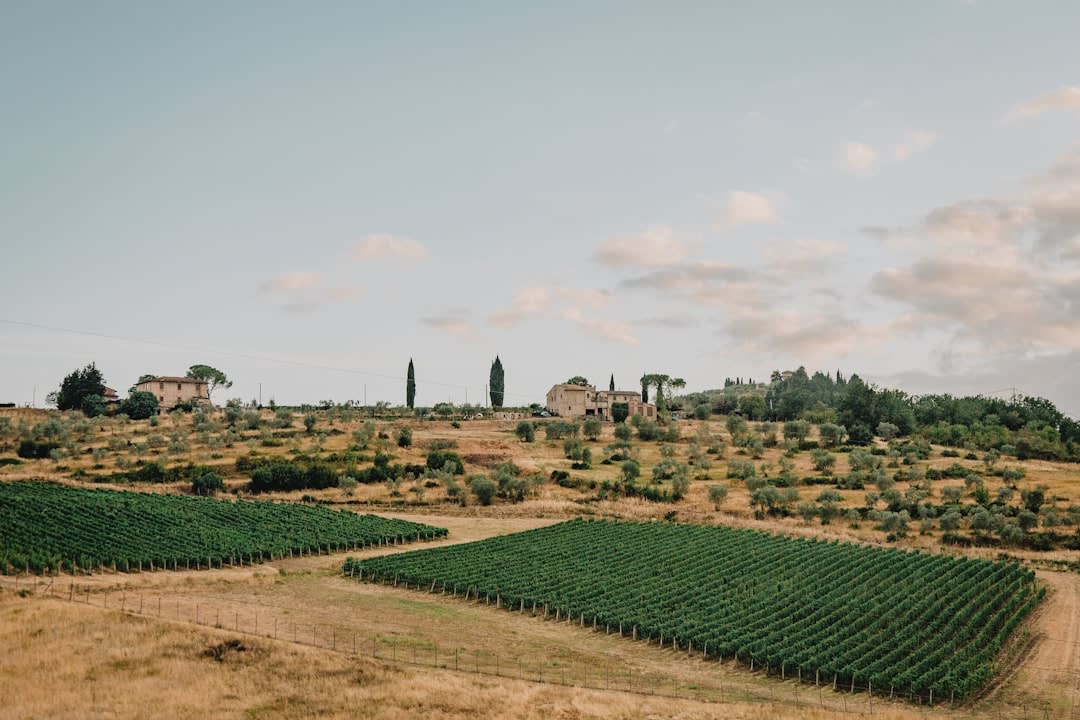
Climb to the very top of the ridge and you reach the Piazza Grande, anchored by a severe, unfinished-looking cathedral and the crenellated Palazzo Comunale, whose tower is deliberately reminiscent of Palazzo Vecchio in Florence — a not-so-subtle architectural statement of allegiance once the town fell under Florentine control. Climb the tower itself, and on a clear day the view stretches across the entire Val d’Orcia, the UNESCO-listed valley of cypress-lined roads and rolling wheat-gold hills that has become shorthand for the Tuscan landscape in a thousand films and postcards. I remember standing up there at golden hour and understanding, finally, why painters from this region were obsessed with the geometry of hills — from up on that tower, the valley genuinely arranges itself into the kind of composed, layered landscape you’d otherwise assume was artistic exaggeration.
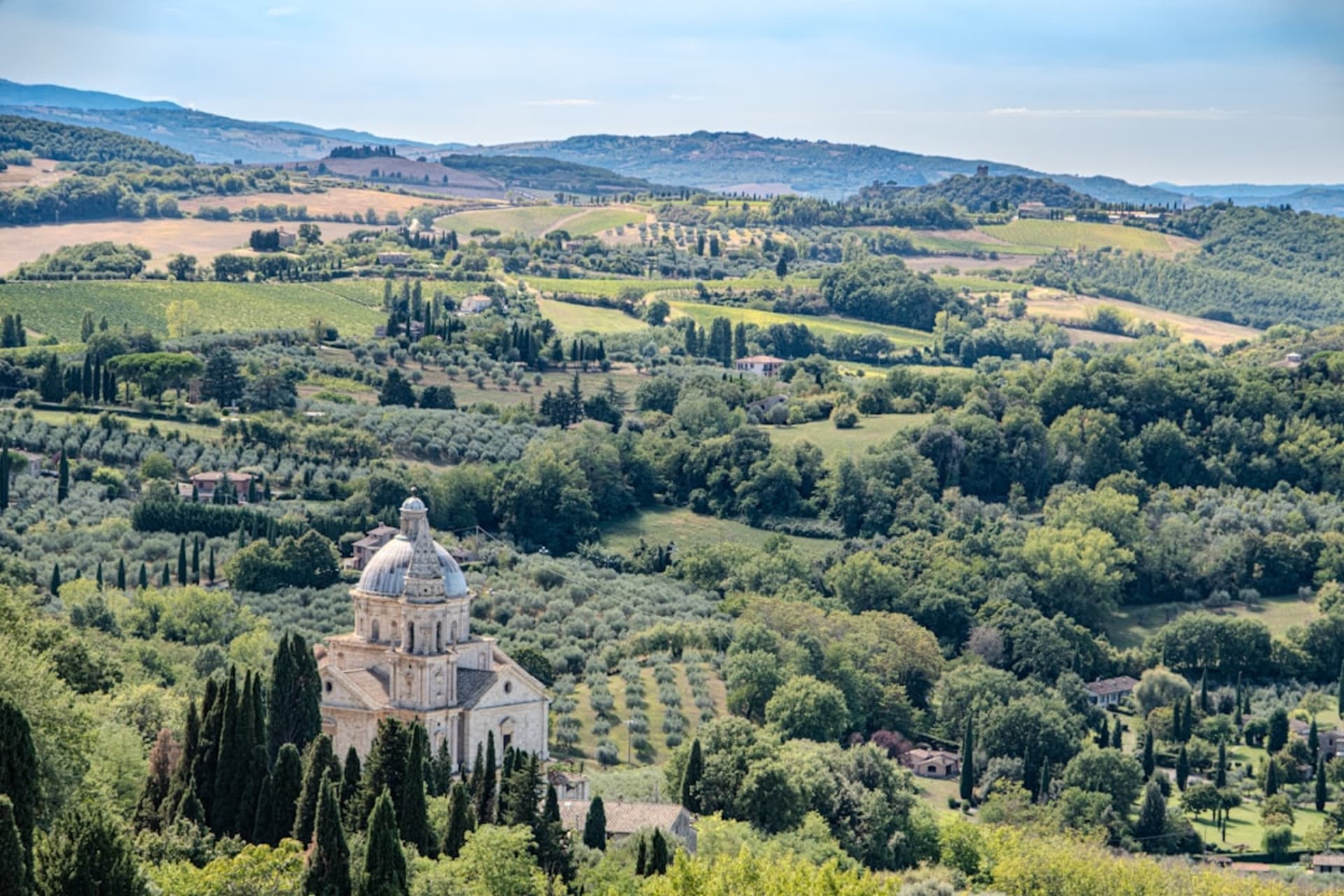
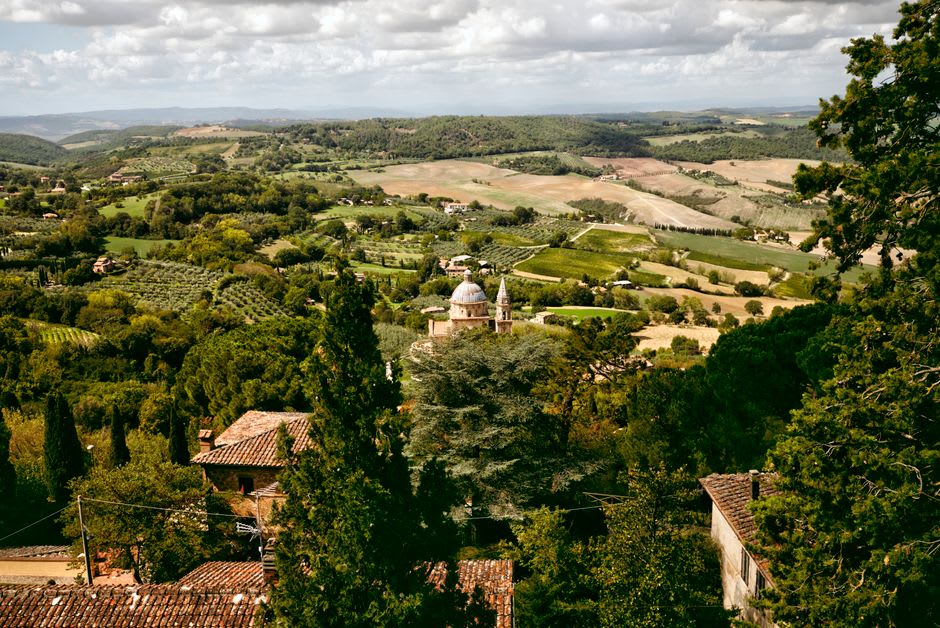
Just outside the walls, the Renaissance church of San Biagio, designed by Antonio da Sangallo the Elder, sits alone in a meadow below the town — a perfect symmetrical Greek-cross building in honey-colored travertine that architecture students still study as a textbook example of High Renaissance planning. Seeing it from above, isolated and glowing in late light, was worth the walk down and back up on its own.
When to go: Late August for the Bravio delle Botti, a barrel-rolling race between the town’s contrade, or September and October for grape harvest and the cellars at their liveliest.