Lecce
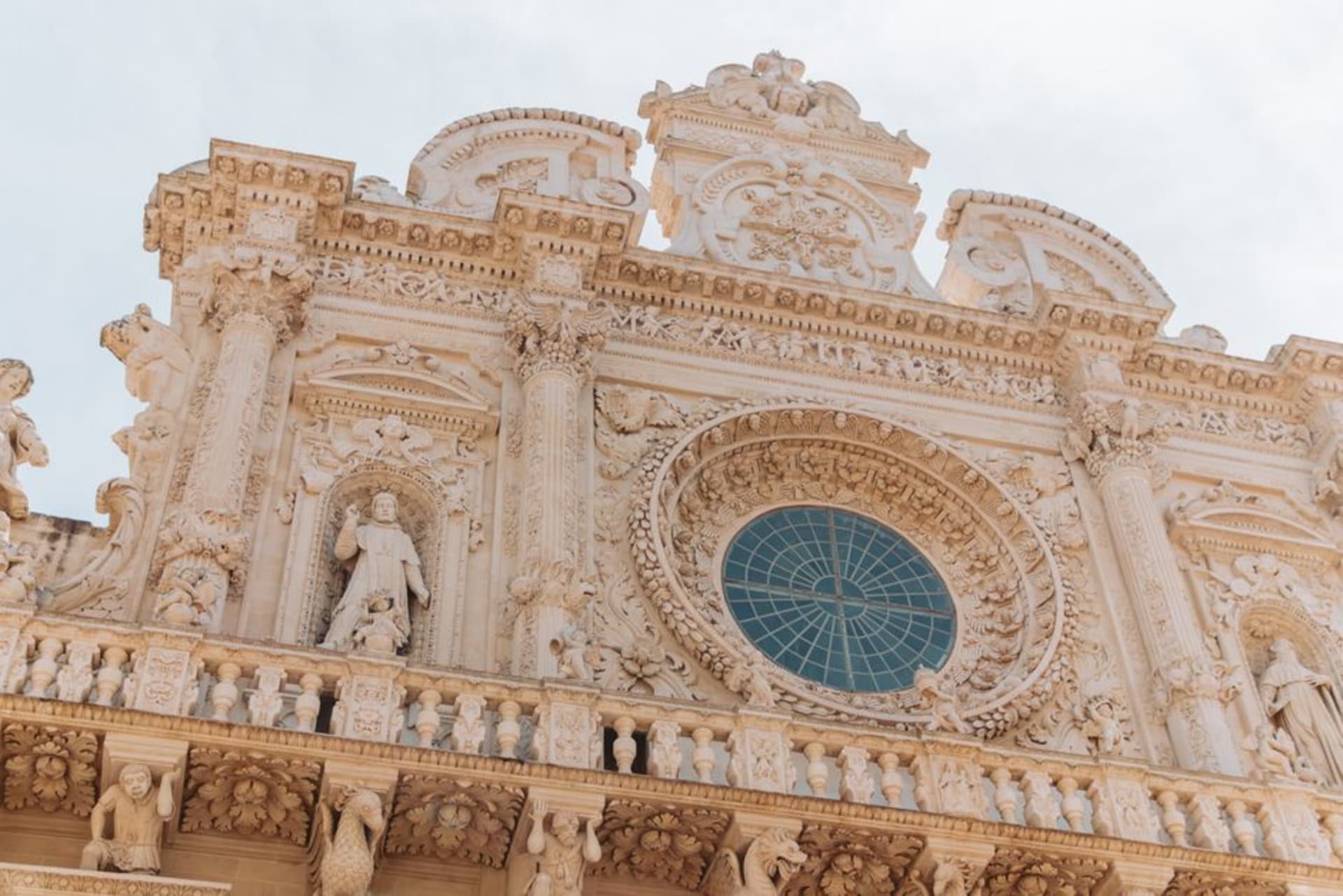
"Somewhere around the fourth gargoyle riding an elephant on the facade of Santa Croce, I gave up trying to count the details and just let the whole church overwhelm me."
Lecce carves its honey-colored limestone into Baroque excess so extreme locals call it barocco leccese, and after three days wandering its churches I stopped being surprised and started just looking for the next gargoyle.
Lecce sits deep in the Salento, the heel of Italy’s boot, far enough south and east that most tourists heading to Puglia stop at the trulli of Alberobello and never make it here — which is their loss and, selfishly, was my gain, because I walked through Lecce’s historic center for three days without ever feeling crowded. The city is built almost entirely from Pietra Leccese, a local limestone soft enough to carve when freshly quarried but that hardens with air exposure, and it was this quirk of geology that let 17th-century sculptors go completely, gloriously overboard. The result is barocco leccese, a regional strain of Baroque so dense with ornament — cherubs, garlands, grotesques, entire menageries of carved animals — that art historians treat it as its own category, distinct from Roman or Neapolitan Baroque.
Santa Croce and the Architects Who Couldn’t Stop
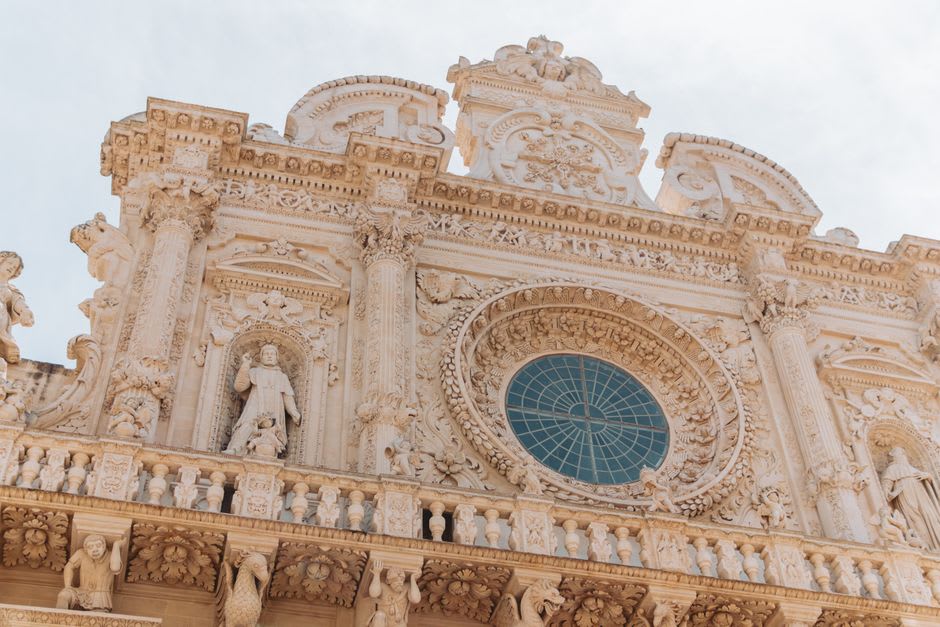
The Basilica di Santa Croce took over 150 years to complete, spanning the 16th and 17th centuries and passing through the hands of several architects, most notably Gabriele Riccardi and later Giuseppe Zimbalo, each of whom apparently decided the previous one hadn’t gone far enough. The facade is a wall of carved excess: a rose window ringed with cherubs and foliage, a balustrade lined with figures and beasts, and a lower register crowded with grotesque telamones — bearded men and mythical creatures straining under the weight of the structure above them, as if the building itself were commenting on how much it was carrying. I stood across the small piazza for a good twenty minutes just tracing details with my eyes, finding new carvings each time I thought I’d seen the whole facade. The interior, by contrast, is almost restrained, a coffered gilt ceiling and a quieter Renaissance calm that makes the walk back outside into that manic facade feel like stepping into a different century.
The Roman City Underneath
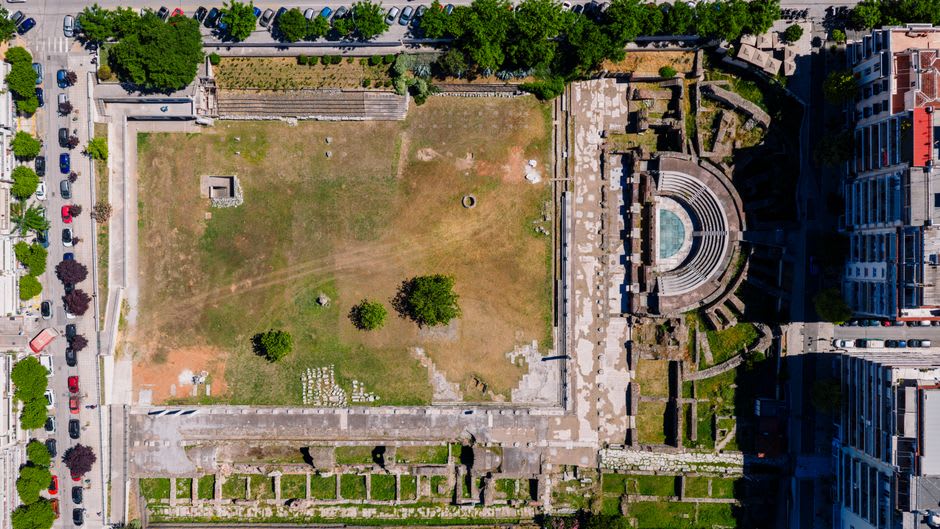
Lecce’s Baroque skin sits directly on top of a much older city. The Roman amphitheater, discovered only in the early 20th century during construction work in Piazza Sant’Oronzo, sits sunk several meters below the current street level, its curved tiers of seating still legible, once capable of holding around 25,000 spectators — evidence that Lecce, then called Lupiae, was a substantial Roman city on the road connecting Brindisi’s port to the rest of the empire. I ate a pasticciotto, the local custardfilled pastry that Salento takes as seriously as a national identity, at a café overlooking the excavated amphitheater, watching the two-thousand-year gap between Roman engineering and modern espresso close itself over completely, the way it only seems to in southern Italy. Sant’Oronzo, the column at the piazza’s edge topped with a bronze statue of Lecce’s patron saint, was actually shipped here from Brindisi’s harbor entrance in the 1660s — a monument literally relocated from one Salento city to another, which felt like an appropriately regional gesture.
In the evenings I found the real rhythm of the city away from the monuments, in the passeggiata through streets barely wide enough for two people, past workshops of cartapesta — papier-mâché figures, a Lecce specialty going back centuries, used for everything from nativity scenes to full-sized saints carried in processions. Salento cooking leans hard on what the land and sea provide: orecchiette with turnip tops, raw seafood from the nearby Adriatic and Ionian coasts, olive oil from groves that stretch out from the city in every direction. I never once felt like Lecce was performing for visitors. It just happened to be extraordinary, and mostly kept to itself about it.
When to go: May, June, or September, when Salento’s heat is manageable and the beaches along the nearby coast at Torre dell’Orso and Otranto are still warm without August’s crowds.