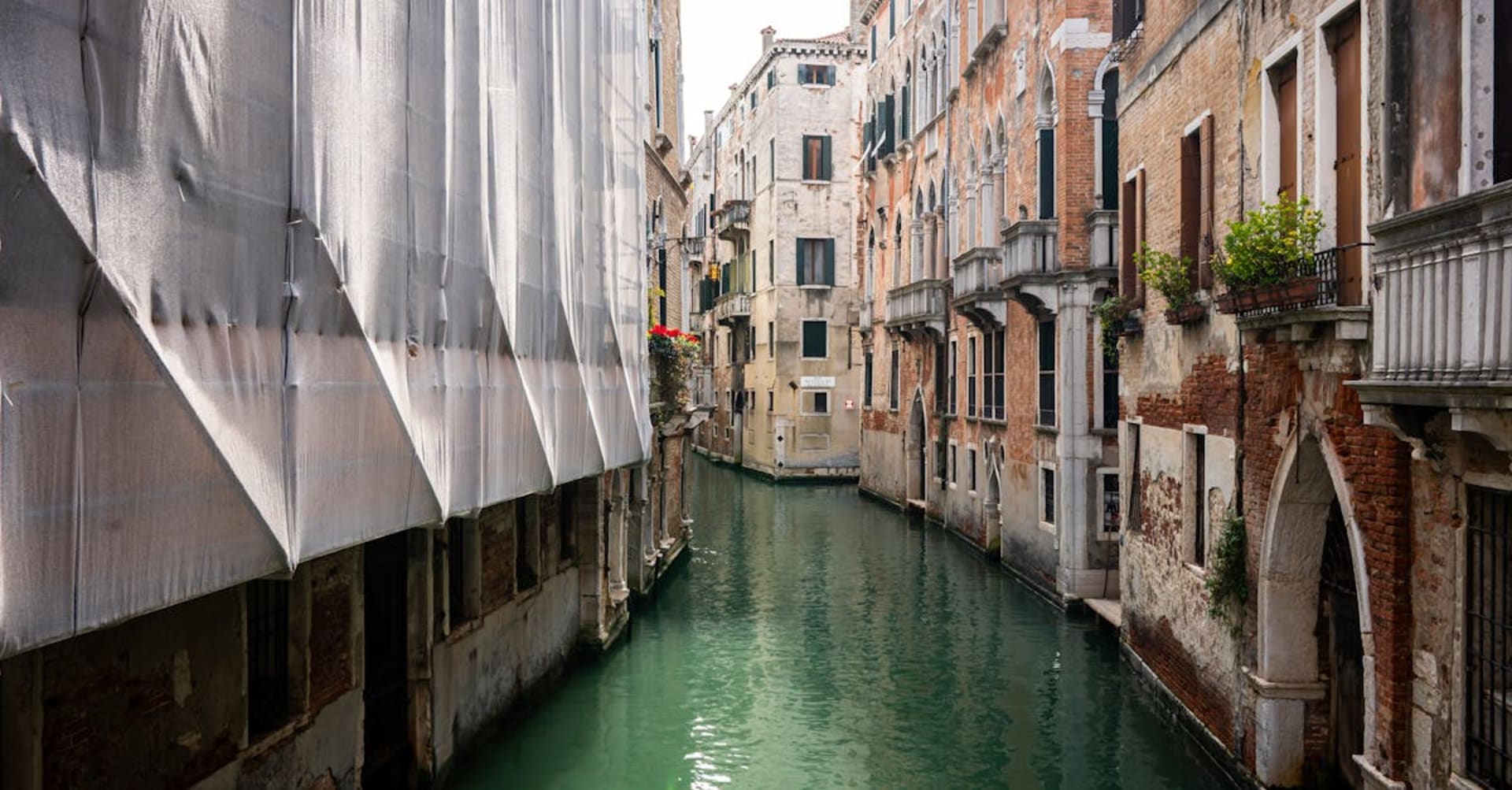
Venice should not exist. A city of marble palaces built on wooden pilings driven into a lagoon, connected by four hundred bridges, served by boats instead of buses — it defies every practical instinct and rewards every romantic one. St. Mark’s Basilica glitters with Byzantine gold mosaics. The Grand Canal curves through the city like a liquid boulevard, lined with palazzi that lean and fade with an elegance that only centuries of saltwater can bestow. I arrived by train, and the moment I stepped out of Santa Lucia station and saw the Grand Canal where a street should be, I understood why people have been writing love letters to this city for a thousand years.
The Grand Canal and Beyond
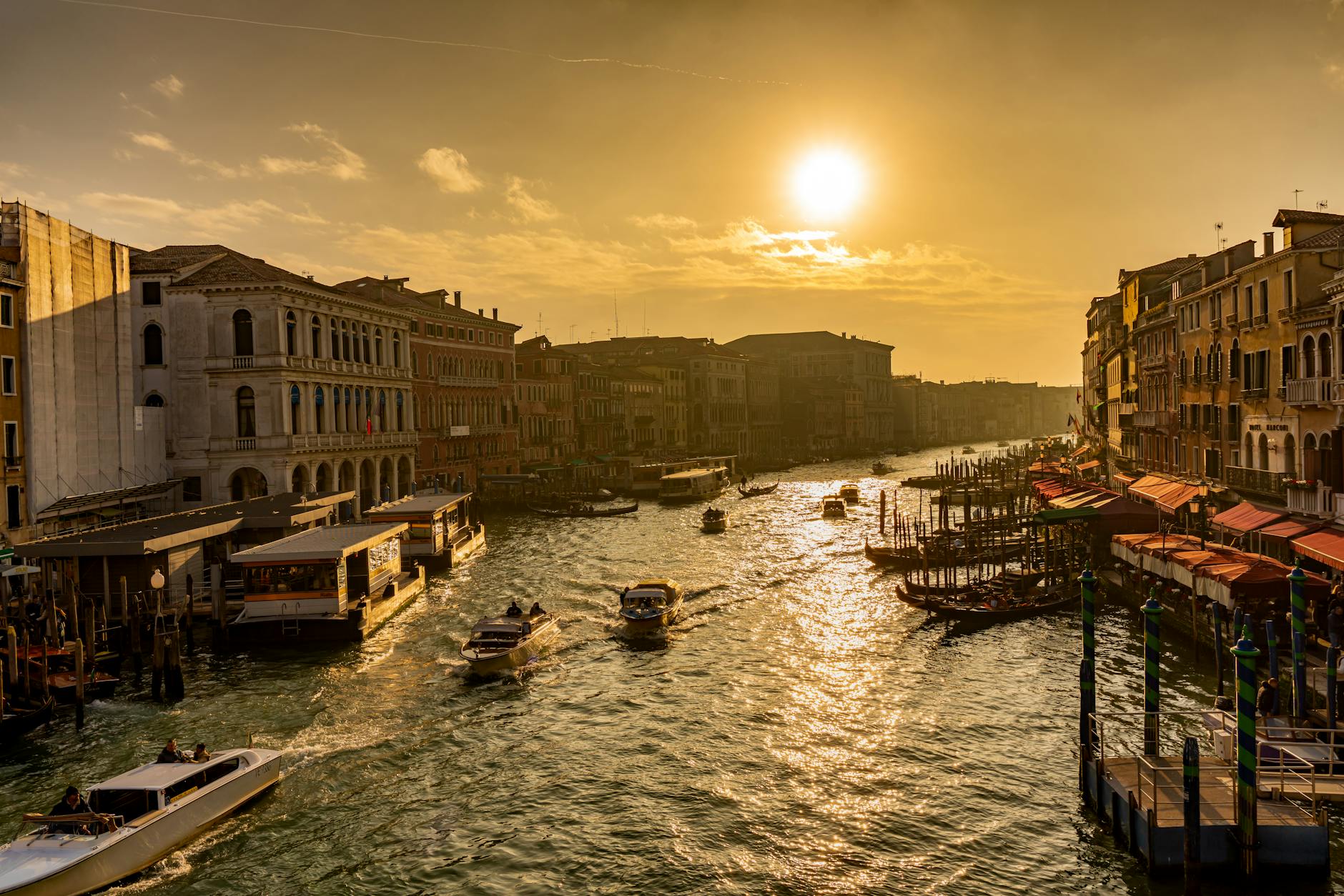
Take the vaporetto — the water bus — down the Grand Canal at least once, preferably at sunset, when the palazzi glow in shades of ochre and rose and the light does things to the water that make you distrust your own eyes. But the real Venice lives in the side canals, the sottoporteghi — those narrow passages that dive under buildings and emerge into unexpected courtyards — the bridges you cross without a destination, the dead ends that turn out to be the best thing you find all day. I spent three days deliberately not following my map, and each wrong turn delivered something — a workshop where a man was gilding a picture frame, a canal so narrow the buildings nearly touched overhead, a bakery selling fritelle to a queue of school children.
The Neighborhoods
The secret to Venice is getting lost in its outer sestieri. Dorsoduro holds the Peggy Guggenheim Collection and quiet canal-side bars where you can drink a spritz and watch the boats pass. Cannaregio is where Venetians actually live, its fondamente lined with bacari serving cicchetti — Venetian tapas — and small glasses of wine for prices that the tourist center has forgotten. The Jewish Ghetto, the world’s first, is here too — a somber, fascinating square of tall buildings where the community was confined for centuries and where the synagogues still operate. Castello stretches east toward the Arsenale, the shipyard that built the fleet that made Venice a maritime empire, and its streets grow quieter the further you walk from San Marco.
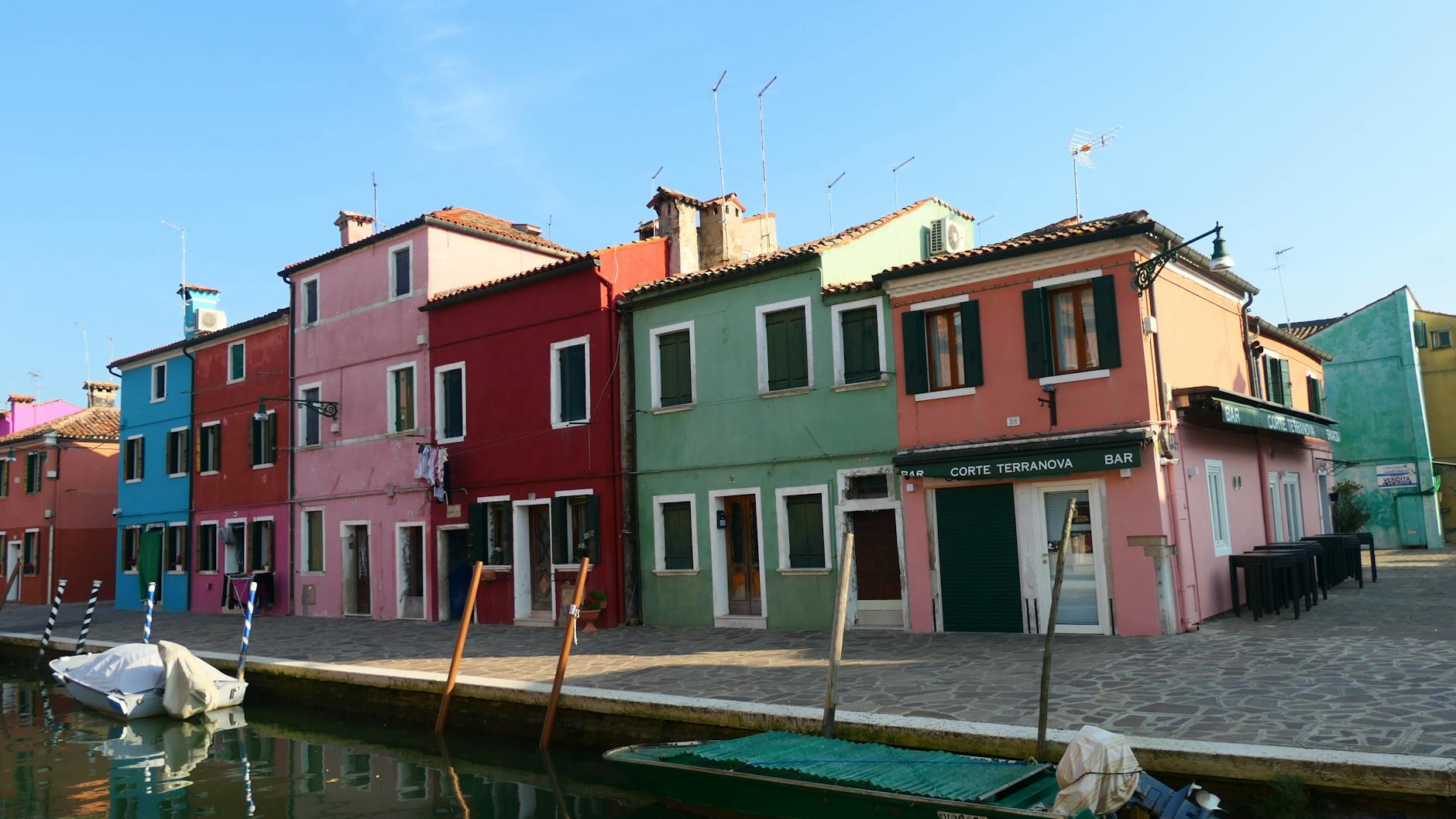
The islands of Murano and Burano offer glassblowing and houses painted in colors so vivid they seem competitive — as if each homeowner looked at the neighbor’s facade and thought, I can do louder. Burano’s fish restaurants serve risotto di go — made from a tiny lagoon fish that tastes like concentrated sea — and the lace-making tradition, though diminished, still produces work of remarkable delicacy.
The Problem and the Point
Venice is sinking. The acqua alta floods are more frequent. The cruise ships — now banned from the Giudecca Canal, thankfully — spent years eroding the foundations. The population has dropped below fifty thousand, replaced by Airbnbs and souvenir shops. All of this is true. And yet. Wake early and walk the city before the day-trippers arrive: Venice at dawn belongs to the cats, the pigeons, and you. The light on the lagoon at six in the morning, the sound of water lapping against stone, the complete absence of cars — these things exist nowhere else on earth, and their fragility is part of what makes them precious.
When to go: April through June or October through November. February brings Carnevale and its extraordinary masks. November brings fog, which Venice wears better than any city alive — the buildings half-dissolving into mist, the canals turning silver, the whole city becoming a watercolor of itself.