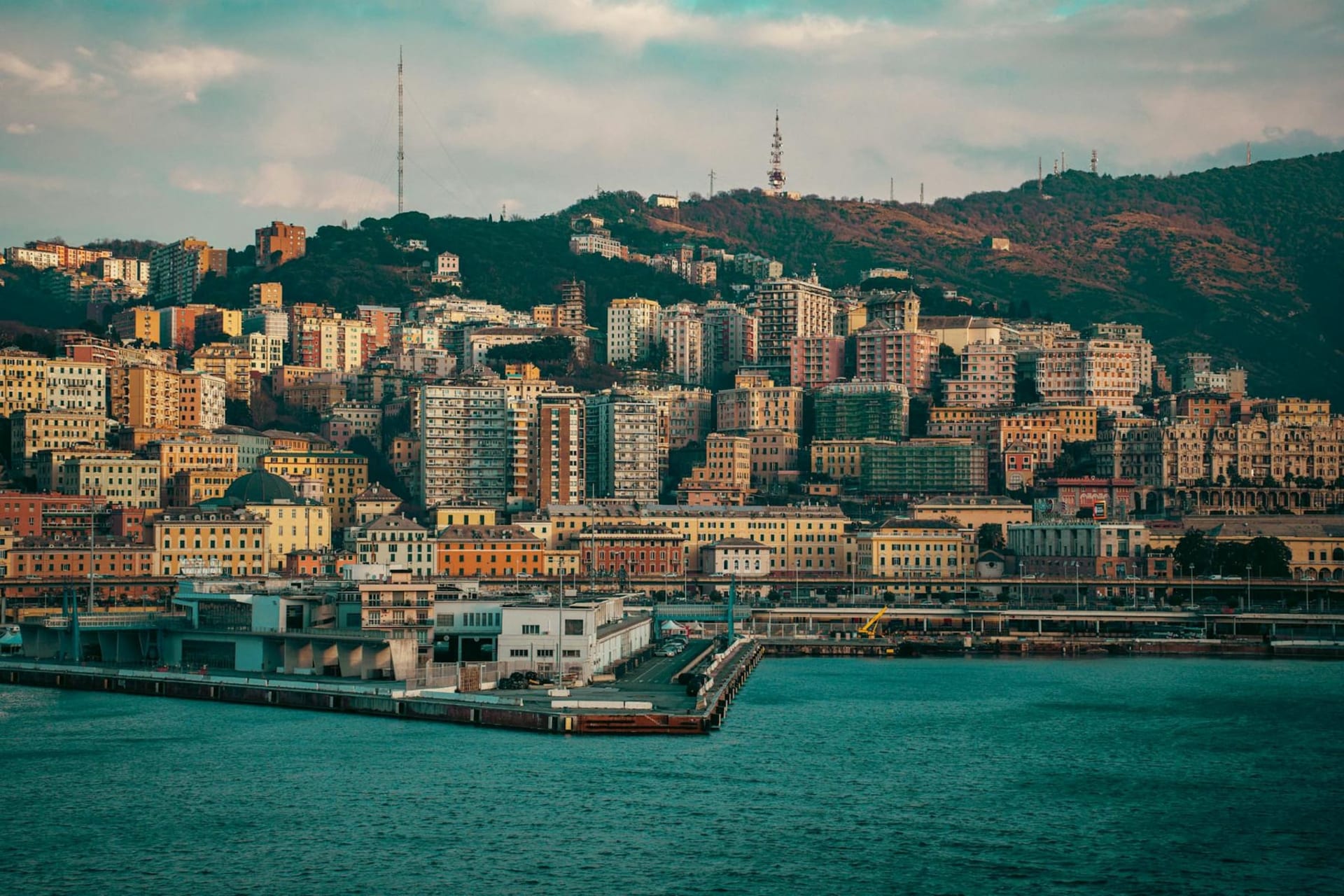
Genoa
"Genoa doesn't perform for tourists; it simply is, magnificently and on its own terms."
A gritty, golden, misunderstood port city whose narrow medieval caruggi alleys hide Renaissance palaces, Caravaggio paintings, and exceptional pesto.
I arrived in Genoa on a Tuesday, which turned out to be exactly the right day — no particular reason, just that the city was going about its business and had no interest in acknowledging me. The port smelled of diesel and salt and something faintly sweet I couldn’t place. A man in a wool vest was arguing with someone on a balcony above Via del Campo. A tabby cat sat on a marble threshold that looked older than the French republic. I felt, immediately, that I was going to like it here.
The Caruggi
Genoa’s old town is a labyrinth. The caruggi — those medieval alleys so narrow two people can barely pass — don’t appear on any mental map I could construct and keep. Lia and I spent our first morning genuinely, happily lost somewhere between the cathedral of San Lorenzo and the Porto Antico, following a smell of focaccia that kept leading us deeper rather than out. The alley walls are blackened with centuries of maritime soot, but at certain angles, around noon, a shaft of light drops in and turns the stone briefly golden. That contrast — grime and sudden luminosity — is the visual grammar of the entire city.
These aren’t picturesque alleys staged for photographs. People live stacked inside them. Laundry crosses overhead. A pharmacy, a shrine to the Madonna, a Senegalese grocery, a focacceria open since 1963 — all within thirty meters of each other on Via San Luca.
Palaces, Paintings, and Pesto
What surprised me, genuinely stopped me mid-stride, was stepping into the Palazzo Rosso on Via Garibaldi and finding a Caravaggio I had never thought to look for — Ecce Homo, brutal and tender in equal measure, hanging in a room of near-perfect silence. The Strada Nuova, now called Via Garibaldi, is a UNESCO-listed strip of Renaissance palaces built by the merchant aristocracy to out-dazzle each other. From the outside they are imposing. Inside they are extravagant in a way that feels almost reckless.
The pesto I ate at a small trattoria off Piazza delle Erbe — made with Ligurian basil so fragrant it smells almost floral, not herbal — was the best I have had anywhere. Served over trofie pasta, with green beans and potatoes cooked into the same pot, it tasted like an argument against simplification.
The Port at Dusk
The Porto Antico, redesigned by Renzo Piano, opens up the waterfront after the tightness of the caruggi. I walked it at dusk, the cranes of the working port still visible beyond the aquarium, the Lanterna lighthouse holding the last light. Genoa does not soften itself for the evening.
When to go: April through June and September through October offer mild temperatures and manageable crowds. July and August grow humid and busy; winter can be grey but the city empties out and the caruggi feel even more authentically themselves.