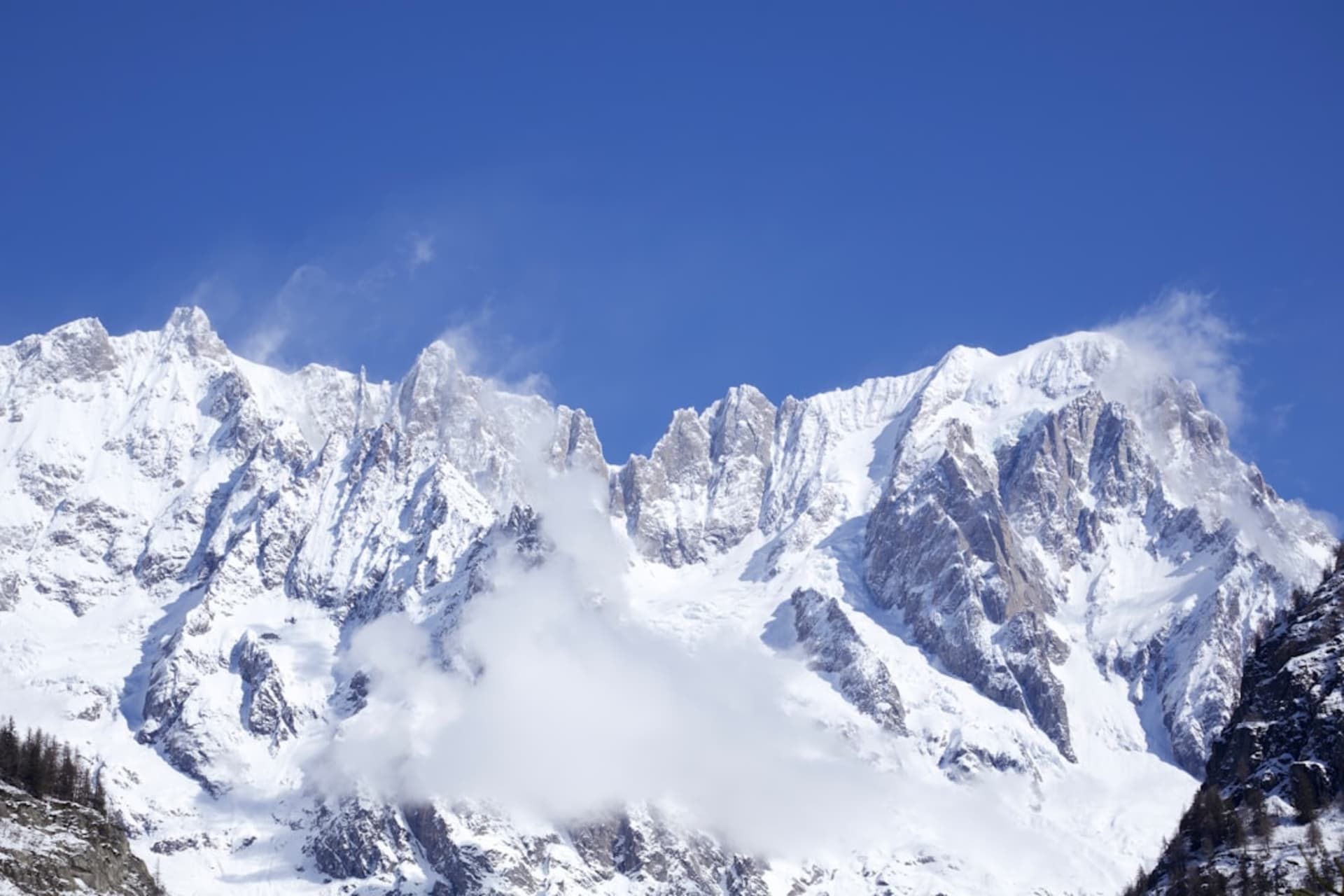
Courmayeur
"I have been to a lot of mountain towns that market themselves as being under a great peak — Courmayeur is the only one where the peak actually seems to be looking back."
The Italian side of Mont Blanc, where the mountain drops so directly into the town that the cable car to the glacier starts practically at the edge of the espresso bars.
Courmayeur sits at the foot of Mont Blanc’s Italian flank, and unlike most alpine resort towns, which tend to angle themselves discreetly at the base of their mountain, Courmayeur seems to have been built with the specific intention of never letting you forget what is looming over it. Walk down the pedestrian Via Roma at golden hour, past the boutiques and the gelaterias, and the massif’s granite spires — the Aiguille Noire de Peuterey, the Dent du Géant, the whole jagged skyline of the Mont Blanc range — catch the last light directly above the rooftops, close enough that the scale takes a second to process. The town has been a base for climbers since the earliest days of Alpine mountaineering; the Società delle Guide di Courmayeur, founded in 1850, is one of the oldest mountain guide associations in the world, and the climbing museum in town, the Museo Alpino Duca degli Abruzzi, still holds relics from nineteenth-century first ascents by guides whose names are now attached to half the routes on the massif.
Up to the Glacier
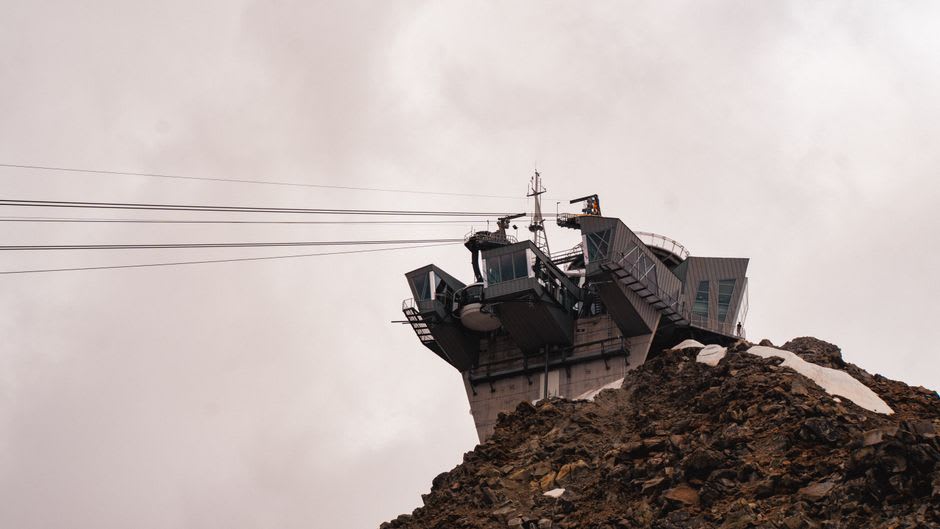
What sets Courmayeur apart from most resort towns is how directly it connects you to genuine high-mountain terrain without requiring you to be a climber yourself. The Skyway Monte Bianco cable car, opened in 2015 to replace an older line, rotates slowly inside its cabin as it climbs from the valley station at Pontal d’Entrèves to Punta Helbronner at nearly 3,500 meters, delivering you onto a viewing platform surrounded by glaciers with France and Switzerland visible on either side of the Mont Blanc massif on a clear day. I went up in early October, past the summer crowds, and stood on that platform in a t-shirt-turned-parka combination watching cloud shadows move across the Vallée Blanche far below — the same glacier that off-piste skiers and the famous Mont Blanc cable car route into Chamonix on the French side eventually descend through. It is one of the only places in the Alps where you can go from a cappuccino at nine in the morning to standing among crevasses and seracs by ten thirty without touching an ice axe.
The Val Ferret and the Quieter Side of the Massif
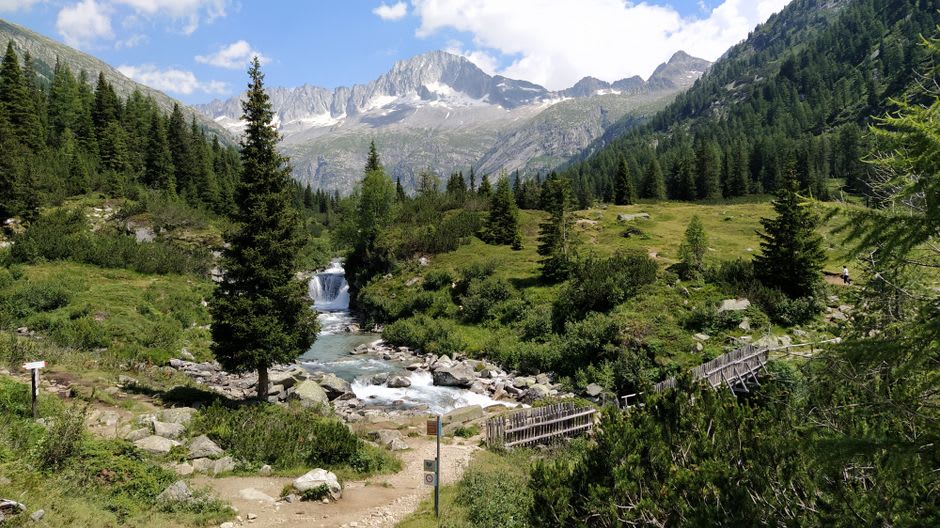
For all its reputation as the glossier, more polished counterpart to Chamonix across the tunnel, Courmayeur’s real strength for me was the Val Ferret, the quiet valley running northeast from town along the base of the massif’s less-photographed side. It is one leg of the Tour du Mont Blanc, the multi-day trekking circuit that loops the entire massif through Italy, France, and Switzerland, and even a short afternoon walk up the valley from the hamlet of Lavachey rewards you with unobstructed views of the Grandes Jorasses, a wall of rock and ice that gets a fraction of the attention Mont Blanc’s summit does despite being, by most climbers’ accounts, the more dramatic face. I stopped at a small rifugio along the trail for a plate of mocetta, the region’s cured chamois meat, and polenta concia thick with Fontina, while a group of actual mountaineers at the next table planned a route in a mixture of Italian and French that I only partially followed but fully enjoyed listening to.
When to go: Come in September for the Skyway with far fewer crowds and still-open hiking trails, or in winter, December through March, if skiing the Monte Bianco ski area is the point.